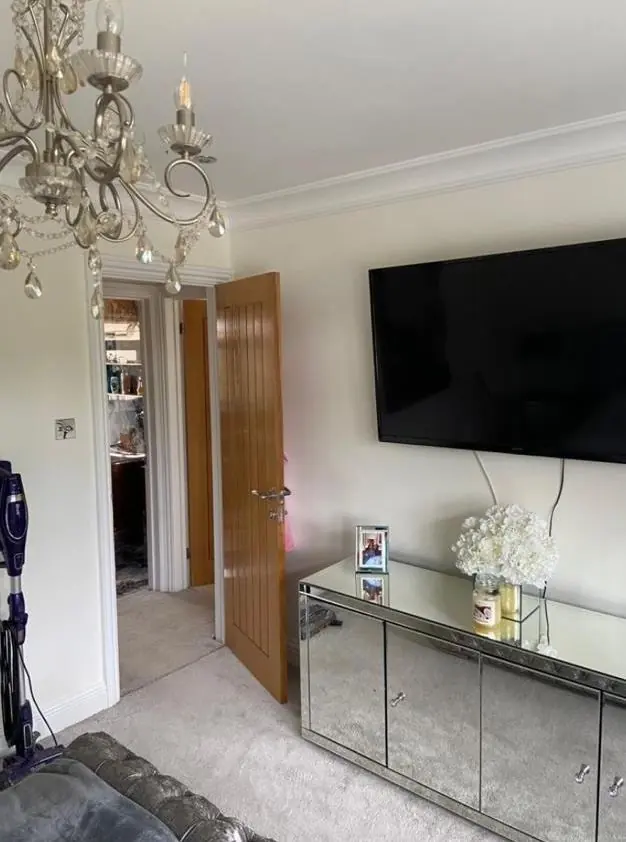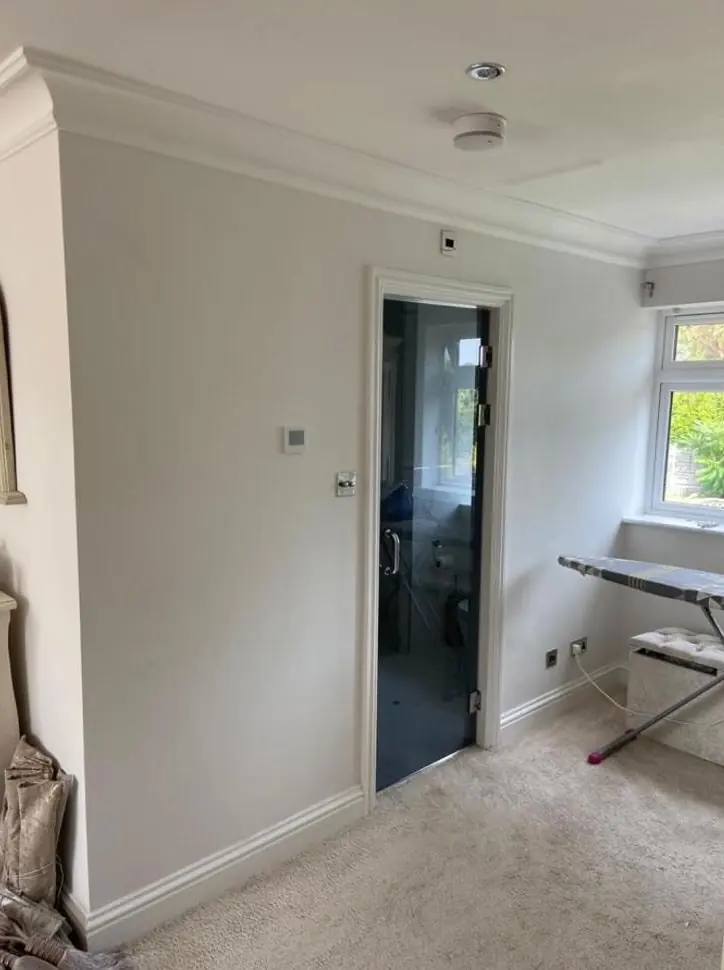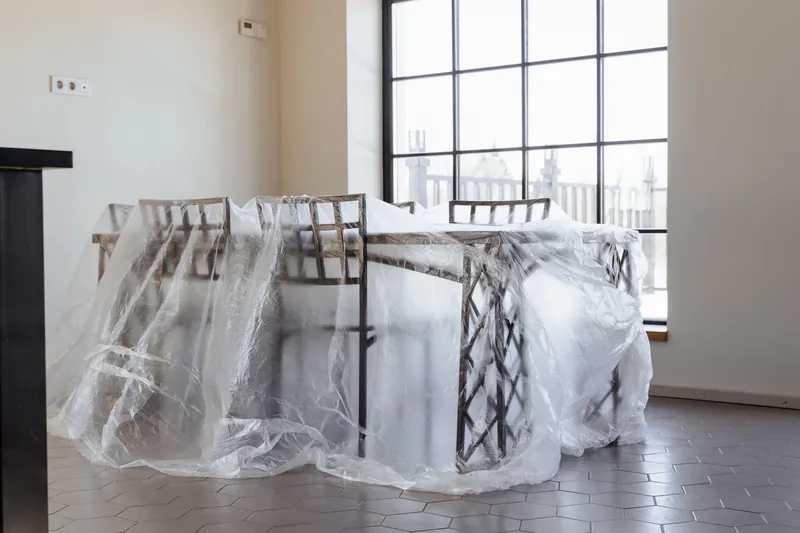
To get ready for a decorator, clear the room of breakables, pictures, curtains and small furniture, empty anything big that is staying, and agree in writing what is being painted and when. On the day, the decorator needs power, water, a toilet, heating on and somewhere to park.
Getting ready for a decorator comes down to three jobs: clear the room of anything breakable or valuable, agree in writing what is being painted and when, and sort out the practical bits the decorator needs on the day. Do those and the first morning goes on painting rather than shifting your belongings.
Here is the order most people find easiest:
- At the quote visit: agree what you clear, what the decorator moves and what is in the price.
- A week before: confirm dates, colours, paint supply and parking, and start emptying furniture.
- The day before: take down pictures and curtains, clear surfaces and vacuum along the skirting.
- On the morning: heating on, a clear route in, pets shut away, and a quick walk round with the decorator.
How do I get a room ready for a decorator?
Empty the room of small, fragile and personal things, take down pictures, mirrors and curtains, and either move the furniture out or tell the decorator what is staying. Dulux’s checklist says to take down photos, mirrors and ornaments and store them somewhere safe, clear the room of furniture if you have the storage space, and remove curtains and blinds. The decorator then sheets, masks and protects whatever is left.
The split between your jobs and the decorator’s is worth agreeing at the quote visit, because it varies. Here is how it usually falls:
| Task | Usually you | Usually the decorator |
|---|---|---|
| Ornaments, photos, books, electronics, anything valuable | Yes, out of the room | No |
| Pictures, mirrors and the TV off the wall | Yes | Will fill the fixing holes if agreed |
| Curtains and blinds down | Yes, ideally | Will take down poles and tracks if asked |
| Small and light furniture out | Yes | No |
| Heavy furniture (wardrobes, sofas, beds) | Empty them first | Often moved to the middle and sheeted, agree this beforehand |
| Dust sheets, masking, floor protection | No | Yes, confirm it is included |
| Filling, sanding, caulking | Only if agreed | Yes, it is part of the preparation they priced |
| Socket and switch plates loosened, radiators | No | Yes, as agreed in the quote |
The table is a general guide, not a rule. Some decorators move all the furniture as part of the price, others want the room empty. Ask, and get the answer written on the quote.
What should you sort out a week before?
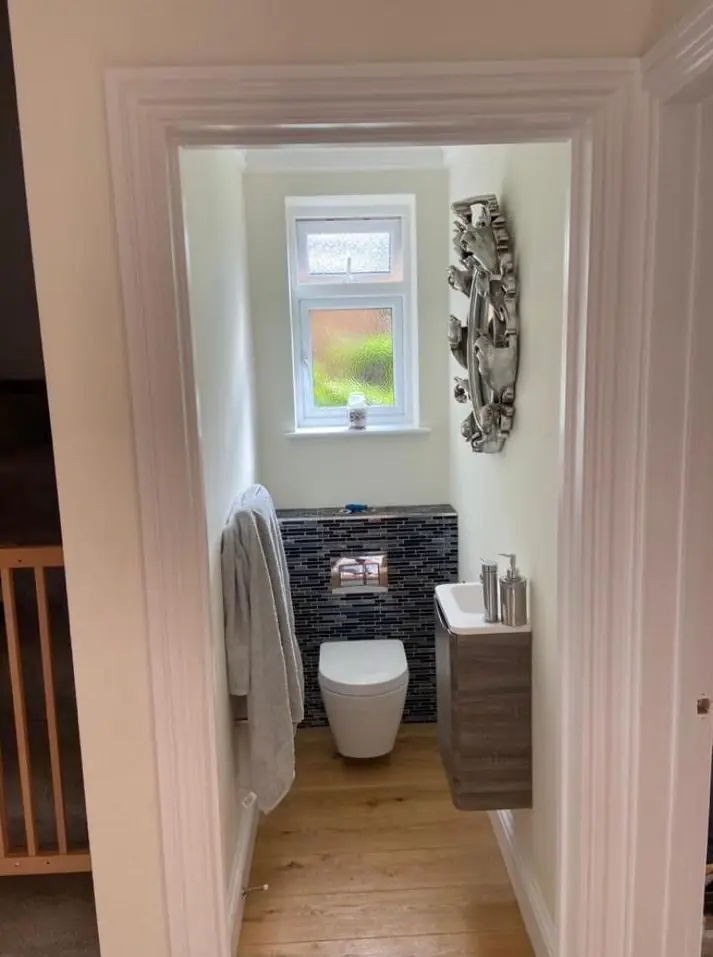
A week out, confirm the start date, the rooms and surfaces, and who supplies the paint. Pick your colours, settle any parking, and plan where children, pets and anyone with asthma will be. Citizens Advice says to get the quote in writing, agree start and finish dates, avoid paying upfront where you can and not agree to a deposit of more than 25%, always with a receipt.
- Colours and finishes chosen. A late colour change can mean a different paint order and sometimes an extra coat. If you are still torn, try tester patches on two walls and look at them morning and evening before the start date.
- Who buys the paint. If you are supplying it, Dulux’s checklist says to make sure you have enough before work starts so the job does not stall halfway. Ask the decorator for quantities. If they supply it, check the brand and finish are on the quote.
- The scope in writing. Doors one side or both? Inside the cupboards? Ceilings included? Anything not written down is easy to argue about later.
- Insurance and contact details. Citizens Advice also suggests you ask what insurance the trader holds and get their full contact details before work starts. Our guide on how to choose a painter and decorator covers the questions to ask.
- Empty the furniture. Wardrobes, chests of drawers and bookcases are lighter and safer to move once emptied, so do that over the week rather than the night before.
Do I need to move furniture before the decorator arrives?
Move what you can, and agree the rest. If you have space elsewhere, take small and light furniture out completely. Big pieces can stay in the middle of the room under sheets, as Dulux suggests, but empty them first.
A UK trade forum guide on getting a room ready for a decorator says most decorators will insist all breakables are moved out by the homeowner before work starts, and some insist on the furniture being moved too. Once a room is sheeted and tight, things get knocked, so agree who moves what before the start date. A free spare room or landing space close by helps a lot. The decorator can park furniture, stack tools and store curtains there, so they don’t crease and the working room stays clear.
As a rough guide, leave about a metre clear in front of every wall being painted. A decorator on steps needs room to move them along the wall without lifting them over a sofa. Anything fixed to the wall that you want painted behind, such as shelving or a wall-mounted TV, needs to come down or be agreed as “paint around”.
What does a decorator need from you on the day?
Four things: power, water, a toilet and somewhere sensible to park. The decorators’ forum guide lists electricity, water and access to a toilet as the essentials, plus control of the heating because it changes drying times. Add a key or an agreed arrival time, and a clear route from the door to the room being painted.
- Heating. Keep the house at a normal living temperature and don’t switch the heating off to save money while the work is on. The forum guide notes heating affects drying times, and Dulux Trade warns not to use paint in extreme temperatures. That matters in a Nene valley autumn when the windows are running wet in the morning.
- Access. Clear the hallway, the stairs and the route to an outside tap or sink. Shoes, bikes and the school-run pile often get in the way.
- Alarms. If you have a house alarm or a smart lock, agree how the decorator gets in and out, and show them the alarm panel if they will be there alone.
- Pets. Keep cats and dogs out of the room. Wet paint, open tins and dust sheets are all trouble for curious animals.
Where can a decorator park in Northampton?
Off-road parking on your drive is easiest, so leave a space free if you can. In the terraced streets of Semilong, St James or Far Cotton, or in permit zones, that is not always possible. West Northamptonshire Council issues parking waivers for vehicles that need constant access during works, applied for online and paid by card.
The council’s page says a waiver can allow parking on single yellow lines where no loading restriction applies, and in permit, pay and display or time-limited bays. Double yellow lines and disabled or loading bays are usually excluded. At the time of writing the page lists £17.50 for the first day per 5-metre space, £11 for each extra day up to three, or £55 for a week, with up to two weeks per application. The council decides each case and rarely issues waivers to private cars, so ask your decorator whether they need one and who applies. If you have a visitor permit, that may be simpler.
Should I fill holes or wash the walls myself first?
Usually not, unless you have agreed it. Filling, sanding and cleaning down are normally part of the preparation the decorator has priced, done to the standard the finish needs. If you want to save money by doing some prep yourself, agree exactly what, and finish the day before so the painter can start straight away, as Dulux advises.
Two jobs are worth doing yourself. First, vacuum the carpet edges along the skirting boards. Dulux advises vacuuming carpet edges and skirting first so dust isn’t blown onto paint before it dries. Second, tell the decorator about anything you know is wrong: a damp patch that keeps coming back, a crack that reopens every winter, or a wall that was patched badly. A decorator can only price for what they are told about or can see.
What not to do: don’t strip wallpaper the week before “to help” unless that is agreed. Stripping can pull off loose plaster, and the room may then need more repair than was quoted. Don’t sand old paintwork yourself either, for the reason in the next section.
Older house? Tell the decorator before they start
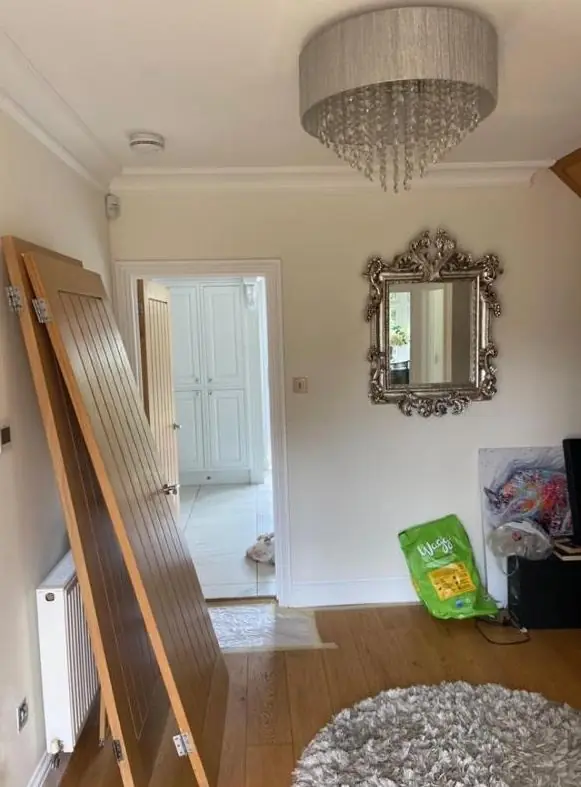
If your house was built before the 1980s, there may be lead in the older layers of paint, especially on woodwork, window frames and original doors. HSE lists removing paint coatings in properties built before the 1980s, burning off with blow lamps or gas torches, and dry sanding old paint as the jobs where people are most at risk from lead.
For paint in poor condition, HSE advises a combination of chemical paint stripper, wet abrasive paper and on-tool extraction, a light wet sand for paint in good condition, and stripping only paint that is flaking, chipping or a risk to children. That matters most in homes with young children, because dust settles on floors and windowsills. Tell your decorator the age of the house and which paintwork looks original, and ask how they plan to prepare it. Many of Northampton’s Victorian terraces and pre-war semis still have original doors, skirting and sash windows under decades of paint.
If you are not sure about the age of the house or the paint, say so at the quote visit. It is far easier to plan the preparation then than to change method halfway through.
Can you live in the house while a decorator works?
Yes. Interior decorating is usually done with people living at home, room by room. The two things to plan for are fumes and rooms being out of use. Asthma + Lung UK notes that paints and paint strippers can contain VOCs, which can irritate eyes, nose and throat, and that keeping rooms well aired by opening windows helps protect against indoor air pollution.
Water-based emulsions usually have less smell than solvent-based gloss and undercoat, which also take longer between coats. Dulux Trade’s undercoat page gives a minimum of 6 hours before gloss goes on, and at least 16 hours between gloss coats. In practice, a bedroom with freshly glossed doors and skirting may be better slept in elsewhere for a night, with the window open.
If anyone in the house has asthma, ask for low-odour, water-based products where possible and plan for them to stay out of the room during painting. Hallway, stairs and landing jobs are the hardest to work around, because they are the route through the house. Our page on hallway, stairs and landing decorating explains how that work is usually staged.
Room-by-room: what to clear
Each room has its own clutter. Kitchens and bathrooms often take longer to clear because of what sits on worktops and around the bath. Bedrooms are mostly about emptying furniture. Use this as a checklist the day before.
| Room | Clear before the decorator arrives |
|---|---|
| Living room | Ornaments, photos, books, plants, TV and speakers, curtains, rugs if you want them protected |
| Bedroom | Bedside clutter, clothes off chairs, wardrobe and drawers emptied if they are being moved, bedding packed away |
| Kitchen | Worktops cleared, small appliances away, magnets and calendars off the walls, food covered or put away |
| Bathroom | Toiletries, towels, bath mat, shower curtain, toilet roll holder and anything on the windowsill |
| Hall, stairs and landing | Coats, shoes, bikes, pictures up the stairs, the console table, anything on the landing |
| Child’s room | Toys, stickers and wall decals, night lights, anything small enough to be lost under a sheet |
For more on what a full interior job covers, from ceilings to skirting, see our interior painting in Northampton page.
When to do it yourself and when to get a decorator in
If you are painting one room yourself, the same preparation applies: clear it, protect it and keep it aired. Once the job involves several rooms, a hallway and stairwell, old paintwork on an older house, or new plaster, a decorator will usually save you time and get a more even, durable finish.
Dean has over 30 years in the trade and visits before quoting, so you can agree there and then what you need to move, what we move and what is in the price. You get a free written quote that sets that out. To arrange a visit, call 07539 779 036 or send your details through the contact page.
Sources
- How to prepare your home for painters, Dulux (accessed 2026-10-09)
- Getting a Room Ready for a Decorator, The Decorators Forum UK (accessed 2026-10-09)
- Before you get building work done, Citizens Advice (accessed 2026-10-09)
- Frequently asked questions on lead, Health and Safety Executive (accessed 2026-10-09)
- Parking waiver or dispensation, West Northamptonshire Council (accessed 2026-10-09)
- Air pollution and allergies at home, Asthma + Lung UK (accessed 2026-10-09)
- Improving indoor air quality, Asthma + Lung UK (accessed 2026-10-09)
- Dulux Trade Undercoat, Dulux Trade (accessed 2026-10-09)
Header photo: MART PRODUCTION on Pexels. Photos of our own work appear further down the page.
Last updated by Dean, DH Painter & Decorator.