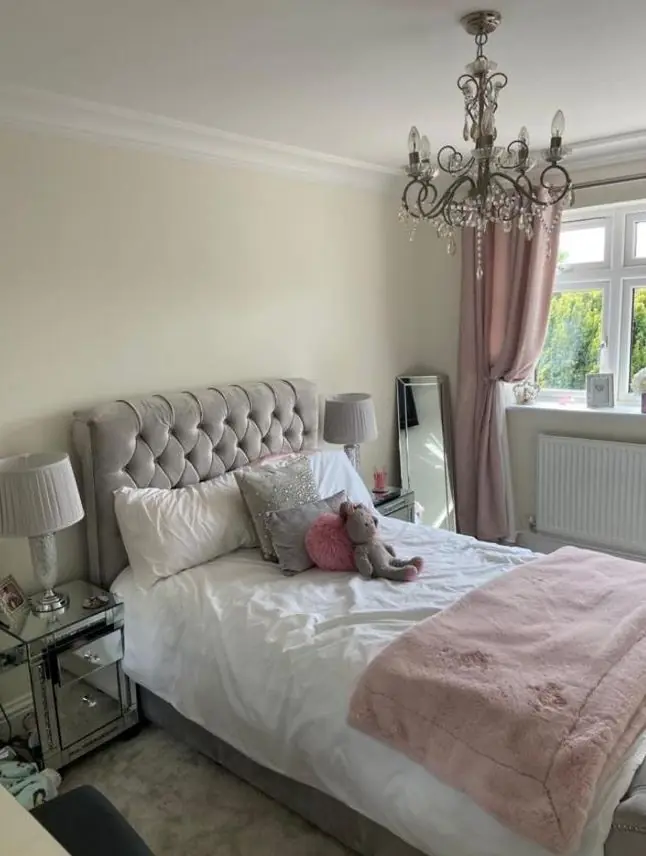
DH Painter & Decorator offers wallpaper hanging in Northampton and nearby towns, including stripping old paper, wall repairs, lining paper, feature walls and full rooms. Dean and the team have over 30 years of experience hanging everything from lining paper to patterned designer wallcoverings, with precise pattern matching. Quotes and advice are free.
Wallpaper hanging in Northampton, from bare walls to the last seam
Wallpaper hanging in Northampton is one of those jobs that looks simple until you try it. Walls are rarely straight, corners are rarely square, and a pattern that’s slightly off at the ceiling is obvious from across the room. DH Painter & Decorator has been hanging paper for over 30 years, and Dean and the team take the same care with a single feature wall as with a whole room of heavy designer paper.
We handle the full process: stripping old paper, repairing and preparing the walls, lining where needed, and hanging your chosen paper with tight seams and a properly matched pattern.
What our wallpapering service includes
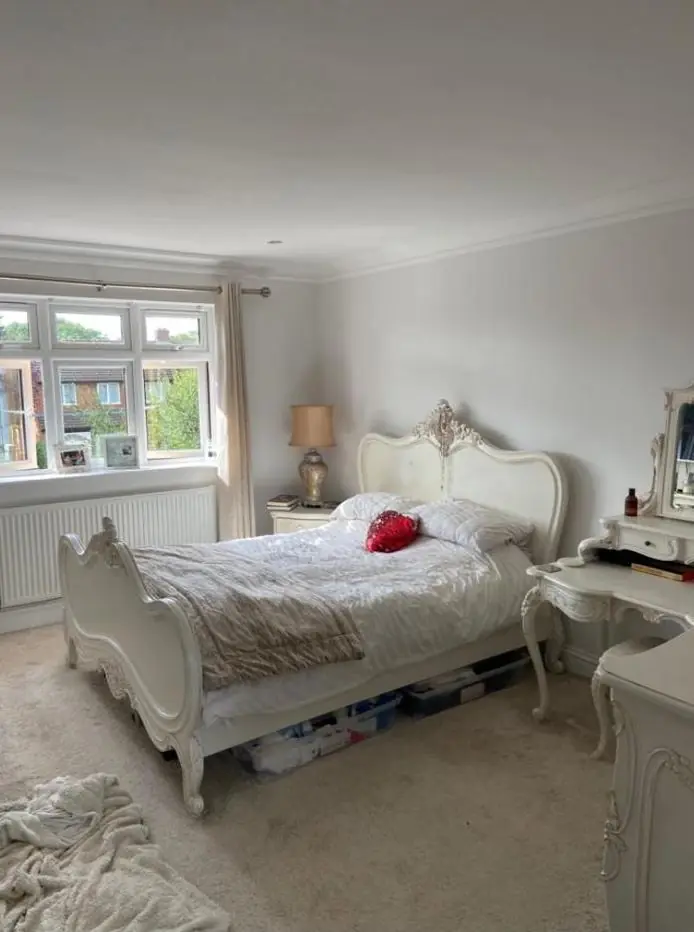
If you need a wallpaper hanger in Northampton, here’s what we cover:
- Stripping old wallpaper, including stubborn layers and painted-over paper
- Wall repairs, filling and sanding before any new paper goes up
- Hanging lining paper, either as a base for wallpaper or as a smooth surface for paint
- Feature walls and chimney breasts in bold prints or textures
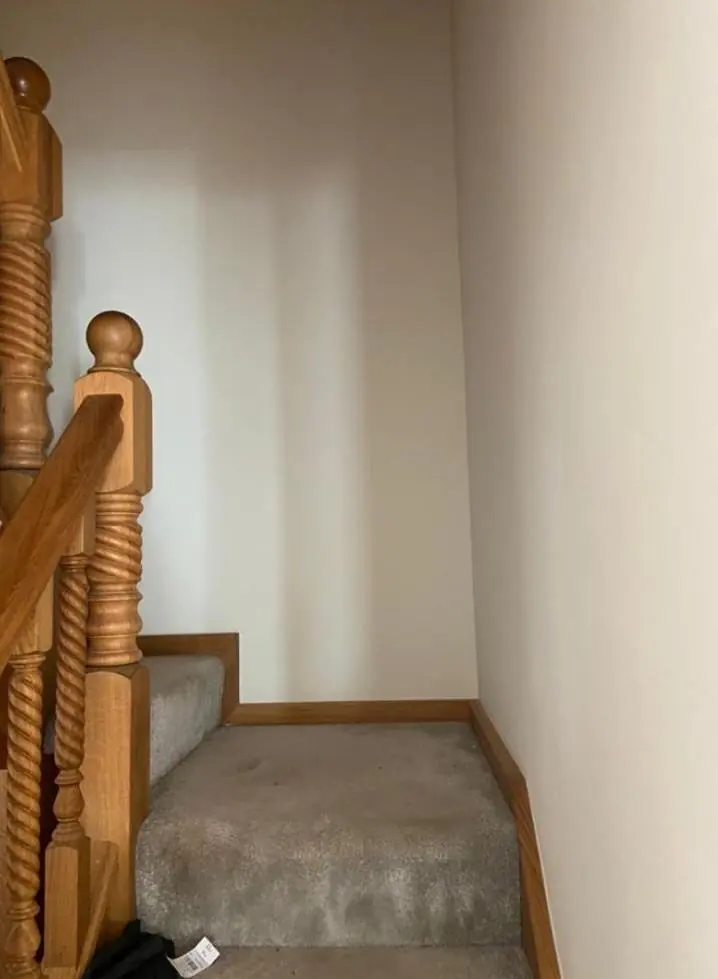
- Full rooms, stairwells and ceilings
- Traditional pulp papers, vinyls, non-woven papers and embossed or textured papers
Many customers pair a papered feature wall with painted walls in a coordinating shade. Our colour consultation can help you pick paint colours that pull the pattern together rather than fighting it.
How we hang wallpaper, step by step
1. Home visit and free quote
We look at the room, the condition of the walls and the paper you have in mind. Some papers are far more demanding than others, and large pattern repeats need more rolls, so we’ll check the roll label with you and help you work out how many to order. We then give you a written quote covering stripping, preparation and hanging.
2. Protecting the room
Furniture is moved and covered, floors are sheeted, and switch and socket plates are loosened safely so the paper can be trimmed neatly behind them. Stripping creates a lot of wet debris, so protection goes down before any steamer comes out.
3. Stripping old paper
Most old paper comes off with a steamer and a scraper. Vinyl papers often have a top layer that peels away dry, leaving a backing to soak and remove. We work carefully, because heavy-handed scraping gouges plaster and turns a stripping job into a replastering job. If paper has been painted over several times, it takes more patience, and we’ll allow for that in the quote.
4. Wall preparation
Once the walls are bare, we wash off old paste residue, fill cracks and holes and sand the filler smooth. New or very porous plaster is sized with diluted paste or a suitable primer, so the paste doesn’t soak in too fast and the paper can be slid into position. Walls that are sound but uneven are often best lined first.
5. Lining paper
Lining paper is hung before the finish paper on older, patched or slightly rough walls. It gives an even surface, helps the top paper dry evenly and hides minor imperfections. When lining under wallpaper, we traditionally hang it horizontally so its joints never line up with the joints of the finish paper.
6. Hanging and pattern matching
We set out the room before cutting a single length, working out where the pattern will sit at the ceiling line and where the final, least visible join will fall, usually behind a door or in a corner. The first drop is hung to a plumb line, not to the corner, since corners are rarely true. Each length is matched to the last, smoothed out from the centre to push out air, and trimmed at the ceiling and skirting.
7. Finishing and clean-up
Seams are checked and any paste is wiped from the face of the paper straight away, before it dries and leaves a shine. Switch plates go back on, the offcuts and old paper are bagged up, and the room is left clean.
Paste-the-wall or paste-the-paper
How a paper is hung depends on what it’s made of, and the roll label tells you which method it needs.
| Paste-the-wall | Paste-the-paper | |
|---|---|---|
| Typical papers | Non-woven papers and many modern designs | Traditional pulp, many vinyls, embossed and lining papers |
| How it’s hung | Paste rolled onto the wall, dry paper applied straight from the roll | Paper pasted on a table, folded and left to soak before hanging |
| Soaking time | None | Needed, and must be consistent for every length |
| Stretch and shrink | Stays dimensionally stable | Can expand when wet and shrink as it dries |
| Removal later | Often strips off dry in full lengths | Usually needs soaking or steaming |
With paste-the-paper products, consistent soaking time is what keeps each length the same size. If one drop soaks longer than the next, the pattern can drift out of match or gaps can open at the seams as it dries.
Pattern types and why they matter
- Free match, such as plain textures or stripes, where lengths can be hung without lining up a design
- Straight match, where the pattern lines up horizontally across each drop at the same height
- Half-drop match, where the pattern repeats diagonally, so every other length is offset by half the repeat and uses more paper
Large repeats and half-drop patterns create more waste, which is why ordering the right number of rolls matters. Always check all rolls share the same batch number, because slight shade differences between batches show up clearly on a wall.
Feature walls
A feature wall is a good way to use a bold or expensive paper without committing a whole room to it. Chimney breasts, the wall behind a bed and the wall behind a sofa are the usual choices. Because the wall is so visible, it’s where precise centring of the pattern really pays off. If you want an effect wall without paper, our decorative finishes offer another route.
Problems we sort out
- Lifting seams and bubbles on existing paper
- Walls damaged by previous stripping
- Paper hung over paper, sometimes several layers deep
- Mismatched patterns and visible joins from earlier DIY
How long wallpapering takes
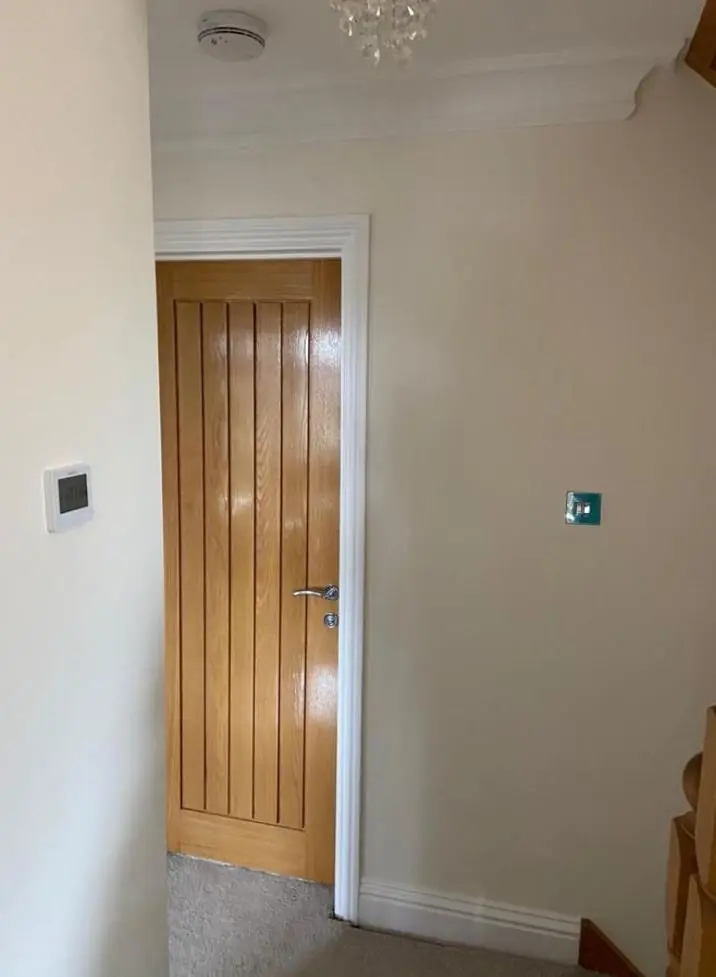
A single feature wall can often be stripped, prepared and papered in a day. A full room with stripping and lining usually takes a few days, as the lining paper needs to dry before the finish paper goes on. Stairwells take longer because of the height and the long drops. We’ll give you a realistic timescale with your quote.
Getting your room ready
Buy all your rolls in one go from the same batch, plus a spare in case of damage or future repairs. Clear small items from the room, take down pictures and shelves, and let us know about any radiators you’d like removed so we can paper behind them. Keep the room at a steady, moderate temperature while the paper dries, as rapid heating can cause shrinkage at the seams.
Why choose DH Painter & Decorator
We bring over 30 years of experience, a handpicked team of skilled craftsmen, full insurance and free quotes and advice. You can read our customer reviews, and customers often mention attention to detail, which is exactly what wallpaper demands. As one put it:
“He did an excellent job; takes great pride in his work and has good attention to detail.”
Wallpapering in Northampton and nearby
We hang wallpaper in homes across Northampton and regularly work in surrounding towns and villages such as Market Harborough and Daventry. If you’re searching for a wallpaper hanger near me anywhere in the county, give us a call. We often combine papering with interior painting so ceilings, woodwork and the remaining walls are finished in the same visit.
Book wallpaper hanging in Northampton
For a free quote on wallpaper hanging in Northampton, call Dean on 07539 779 036 or get in touch online. Tell us about the room and the paper you’ve chosen, and we’ll arrange a visit.