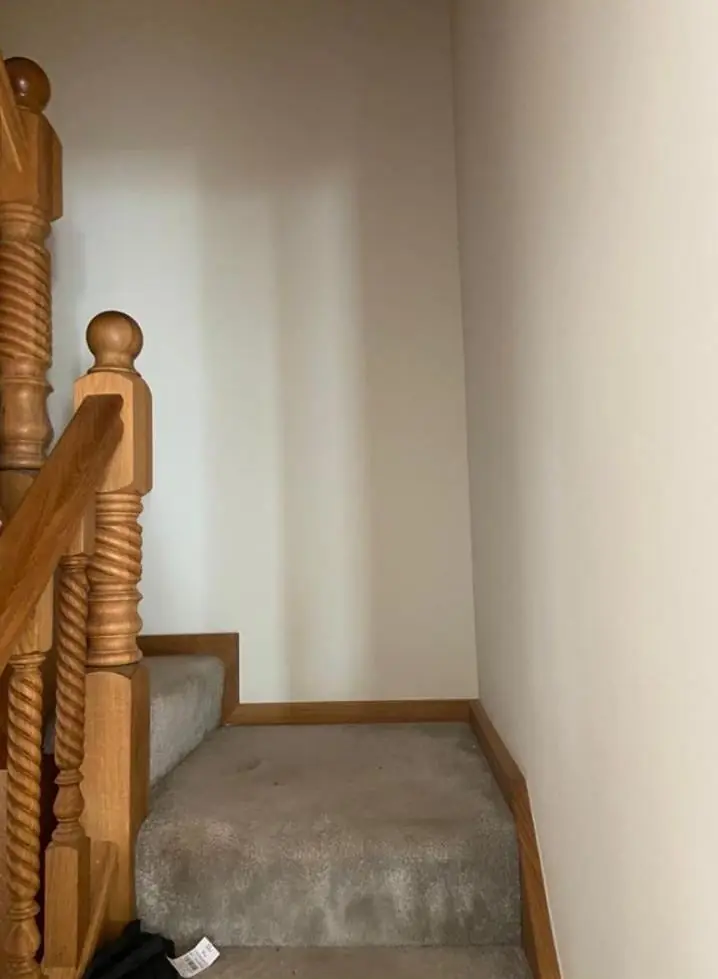
DH Painter & Decorator carries out hallway, stairs and landing decorating in Northampton and nearby towns. Dean and the team set up proper stairwell access, prepare walls and woodwork thoroughly, and use durable finishes that stand up to daily traffic, including banisters and spindles. Over 30 years' experience, with free quotes and advice.
Hallway, stairs and landing decorating in Northampton
The hallway is the first thing anyone sees when they come in and the part of the house that takes the most wear. It is also the hardest area to decorate. There’s a tall wall over the stairs that you can’t reach from a normal stepladder, a lot of woodwork packed into a small space, and a staircase everyone still needs to use while the work is going on. Hallway, stairs and landing decorating in Northampton is a job we’re asked about often, largely because it is the one most people don’t want to tackle themselves.
DH Painter & Decorator has over 30 years’ experience with this kind of work. A customer review puts it simply:
“Dean did some painting and decorating in my hallway, landing and stairs for me recently. He did an excellent job; takes great pride in his work and has good attention to detail.”
Safe access over the stairwell
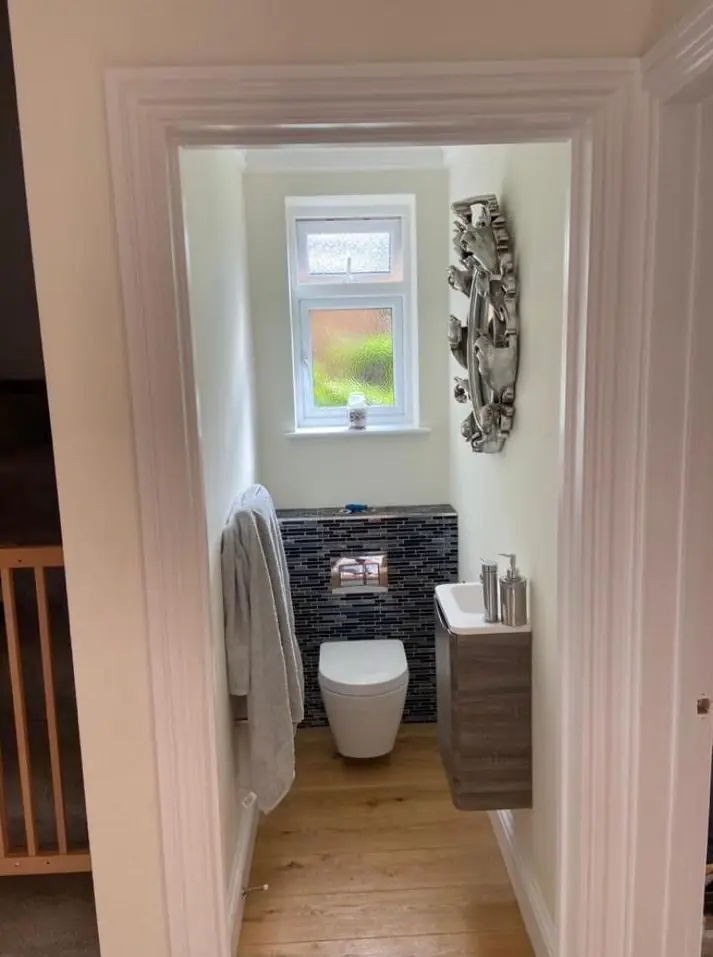
The drop over the stairs is where DIY attempts usually stall, and where accidents happen. A ladder balanced on a stair tread, or a plank resting on the banister, isn’t safe. We use equipment designed for stairwells:
- Combination or stair ladders with legs that adjust independently, so they stand level on different steps.
- Adjustable stair platforms that give a flat, stable working surface above the stairs.
- Staging boards spanning between properly set-up ladders or trestles, so the top of the stairwell wall and the landing ceiling can be reached safely.
The right setup depends on the shape of the staircase. A straight flight in a terraced house is different from a dog-leg or a half-landing in a larger detached home, and a stairwell that rises through three storeys needs more planning again. We work out the access when we come to quote, so it’s reflected properly in the price and the programme.
Finishes that stand up to daily traffic
Hallway walls get brushed by coats, bags, pushchairs, bikes and hands on the way up the stairs. Ordinary matt emulsion marks quickly and doesn’t wash well, so the finish choice matters more here than in almost any other room.
| Surface | What we’d usually suggest | Why |
|---|---|---|
| Hall and stairwell walls | Durable or scrubbable matt, or eggshell | Wipes clean without shiny patches |
| Ceilings and stairwell ceiling | Standard matt emulsion | Hides imperfections, not touched |
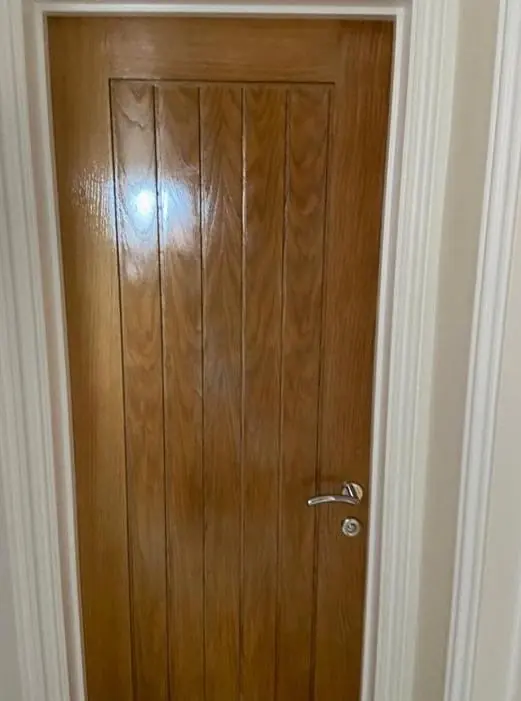
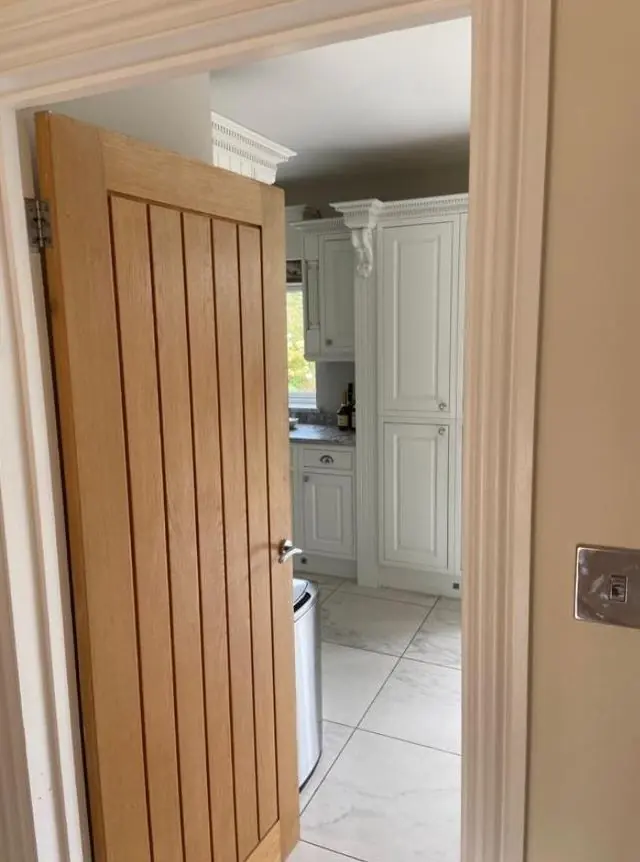
| Skirtings, strings and doors | Satinwood or gloss | Takes knocks from feet and hoovers |
| Spindles and newel posts | Satinwood | Hard-wearing and easy to wipe |
| Handrail | Varnish, or satinwood if painted | Constant hand contact needs a tough surface |
Lower walls that take the most punishment can be given a tougher finish than the upper part, sometimes split with a dado rail or wall panelling. Scuffed stairwell plaster with lots of cracks may be better covered with lining paper first, and hanging lining paper can be built into the job.
Banisters and spindles
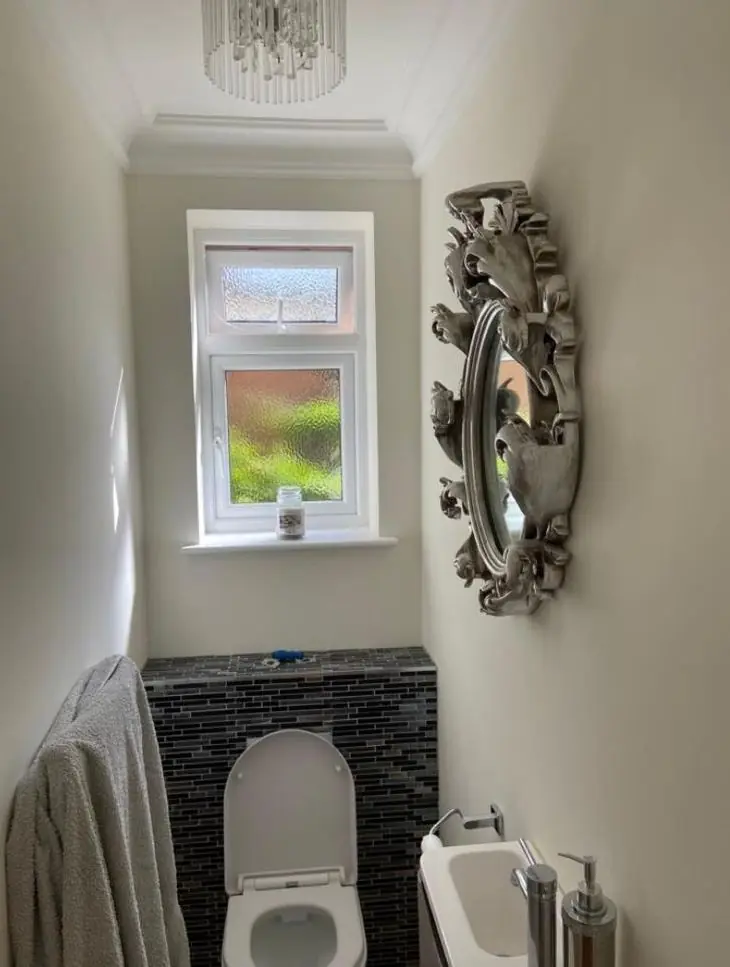
Spindles take longer than anything else on a staircase. Each one has four faces and usually turned detail, and there can be forty or more in a typical house. They’re sanded, any splits or loose joints filled, and then painted one at a time with a brush, working top to bottom and checking the back faces for runs that are easy to miss from the stairs.
Many staircases in 1970s, 80s and 90s houses have varnished pine spindles and handrails. Painting over that varnish needs thorough sanding and a primer suited to shiny surfaces, otherwise the new paint chips quickly. A common look is white or coloured spindles with a varnished or natural wood handrail. We mask the handrail precisely so the line between paint and wood stays sharp.
The same principles apply to all the other woodwork in a hallway. Our page on door and skirting painting covers knotting, caulking and the choice between oil and water-based paint in more detail.
How a hallway, stairs and landing job runs
We work from the top down: landing ceiling and stairwell ceiling first, then walls, then woodwork. That way nothing drips onto finished surfaces below. Stair carpets and hall floors are covered with dust sheets, with non-slip protection on the treads. Where the job allows, we keep the stairs usable throughout, and we’ll let you know if there’s a short period when access needs to be limited. If painted stair treads are part of the job, alternate steps can be painted on different days so you can still get up and down.
Because hallways connect every other room, colour choice has to work with what’s visible through each doorway. Our colour consultation is useful here, especially in narrow, dark halls where light direction can change a colour dramatically.
Hallway decorators around Northampton
This work sits within our wider interior painting service, and we cover Northampton and the surrounding towns and villages. We regularly work in places such as Kettering and Earls Barton. If you’re searching for a decorator near me who can handle a tall stairwell properly, Dean is happy to come and look.
For a free, no-obligation quote on your hallway, stairs and landing, call 07539 779 036 or ask for a free quote online.