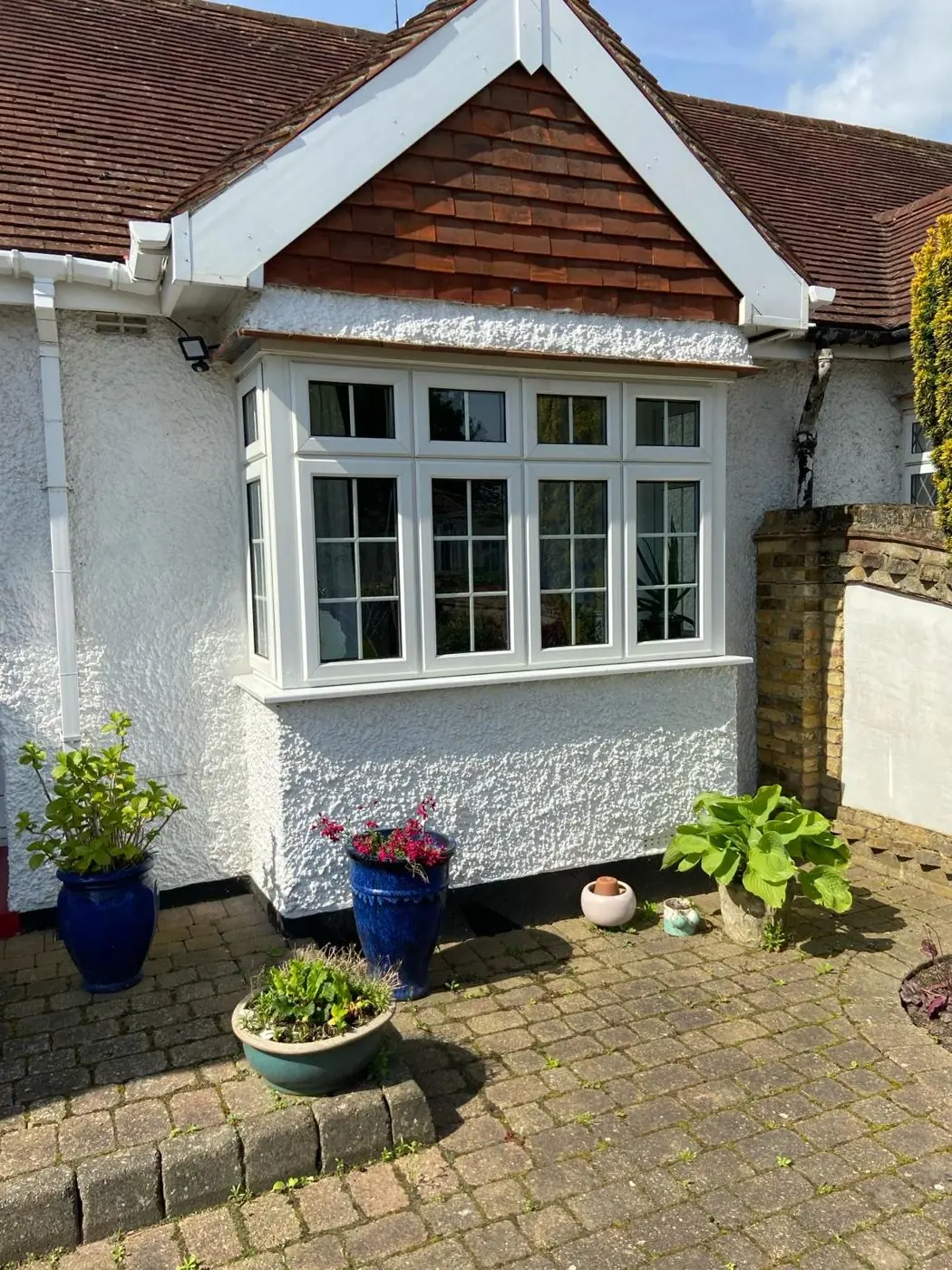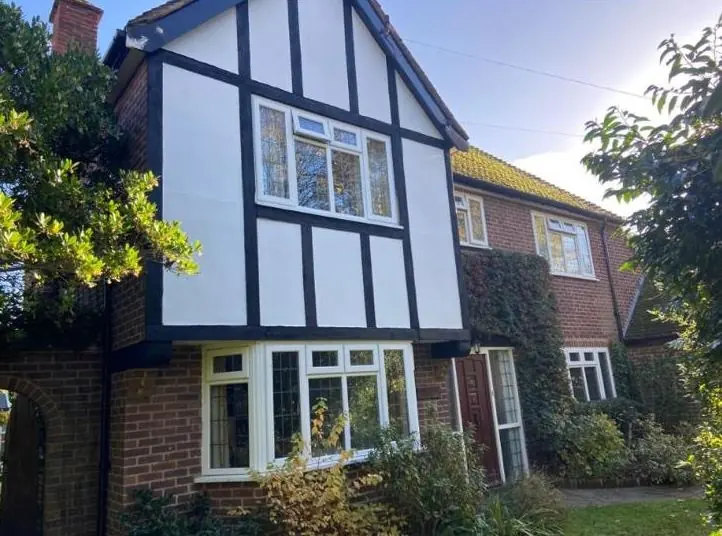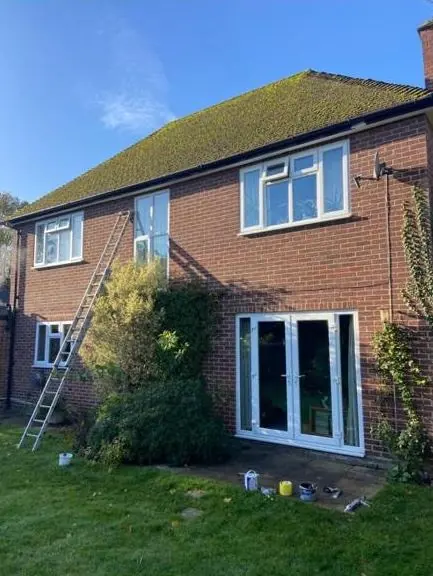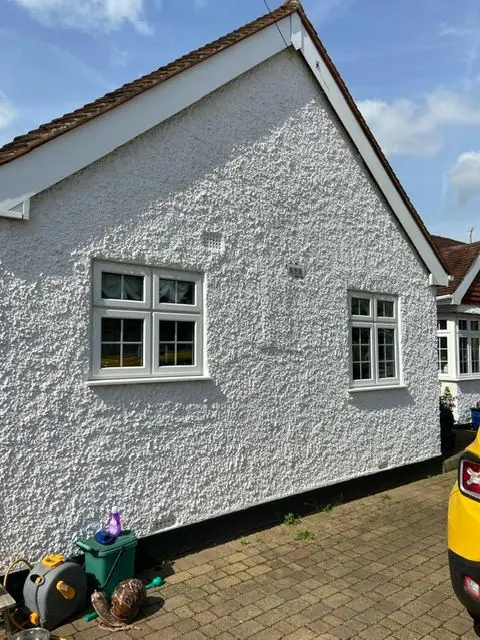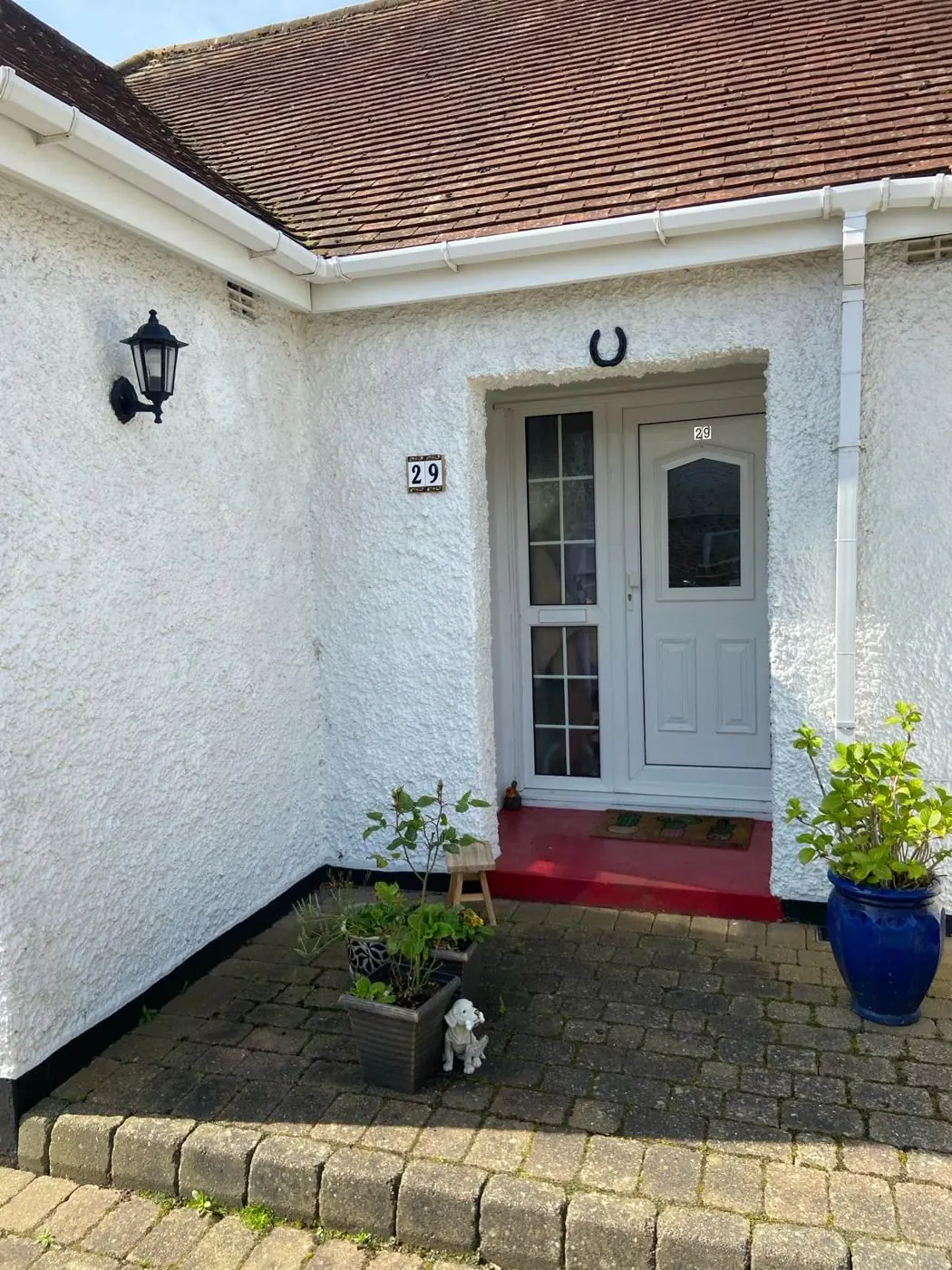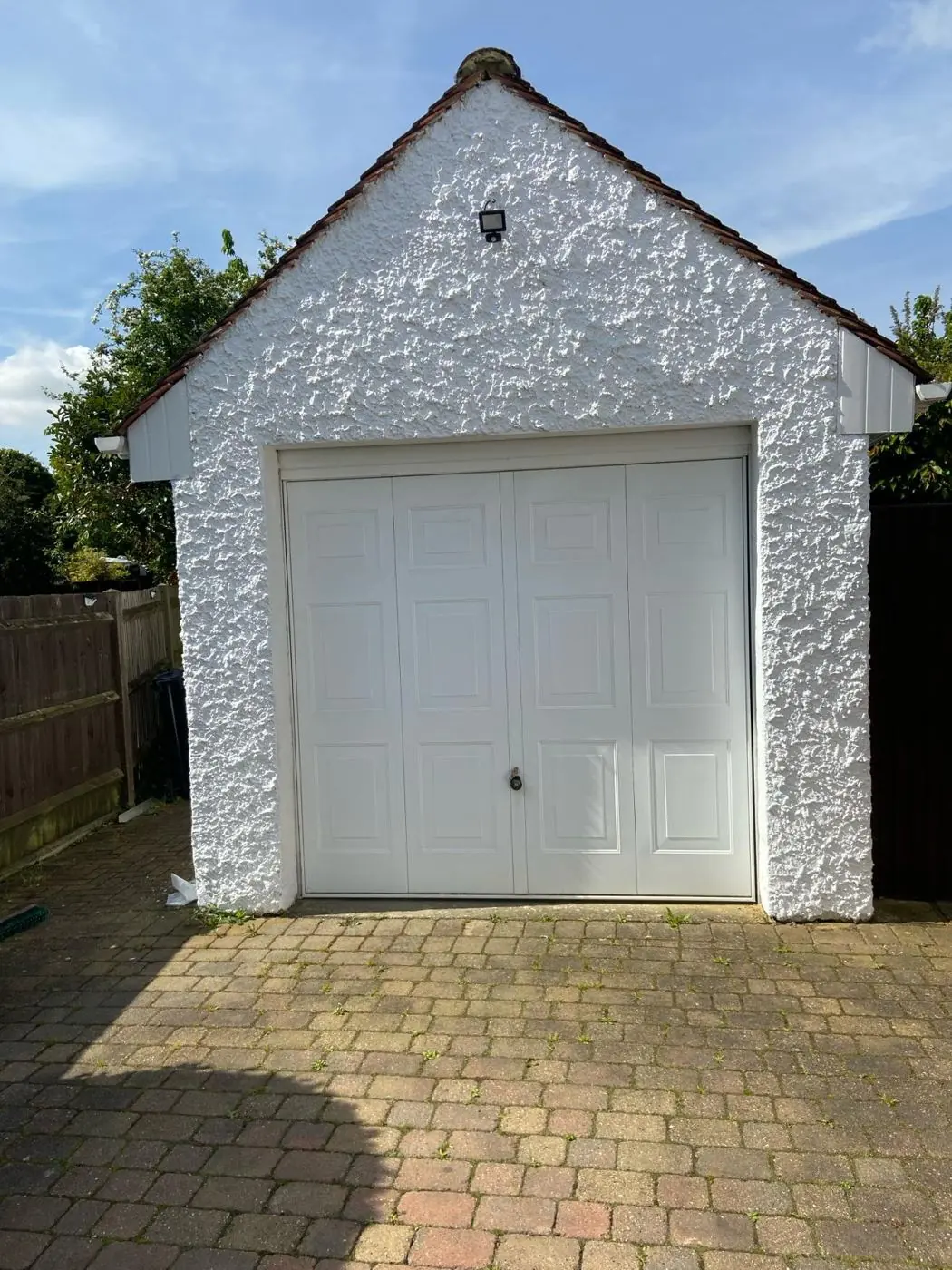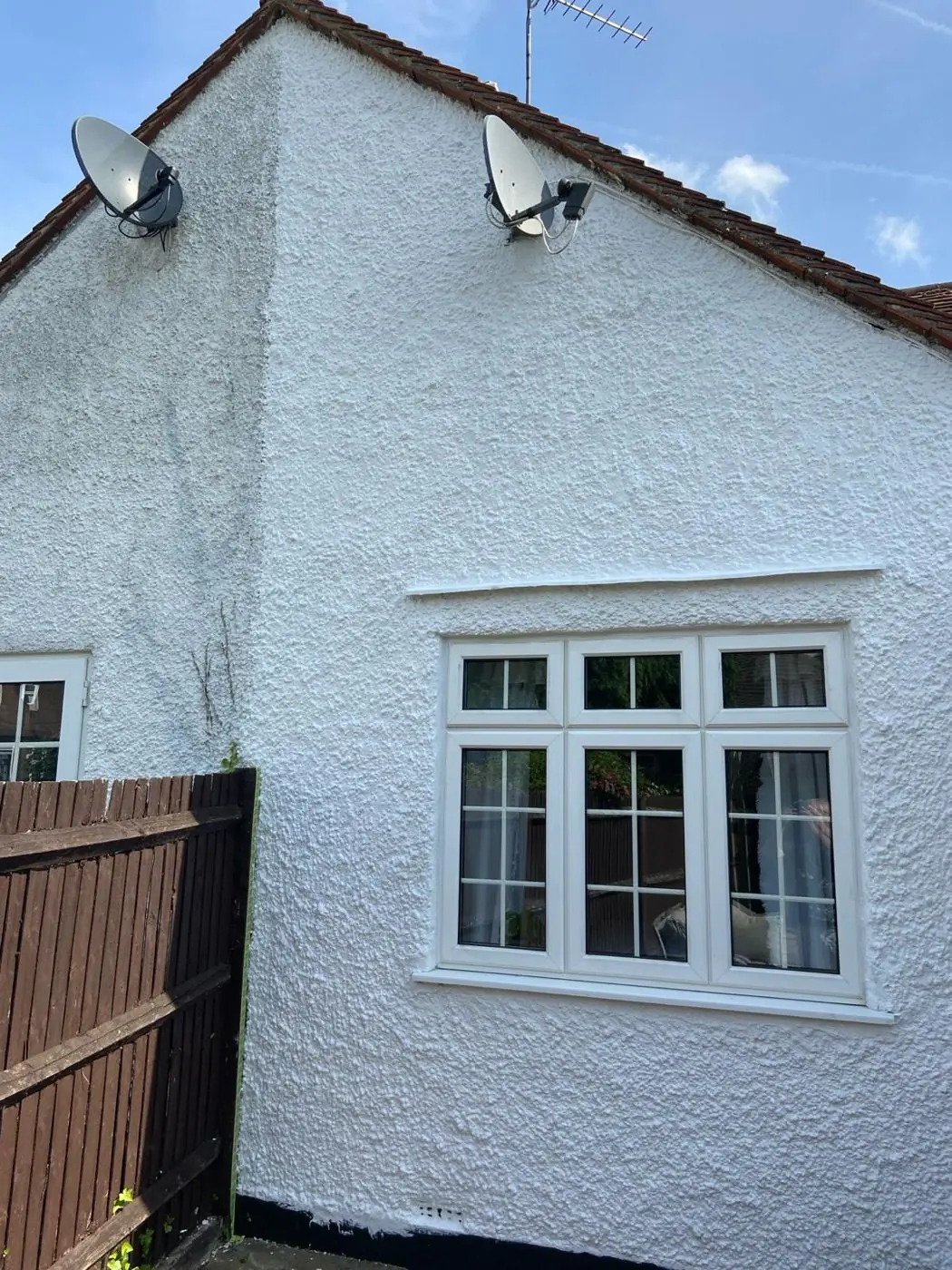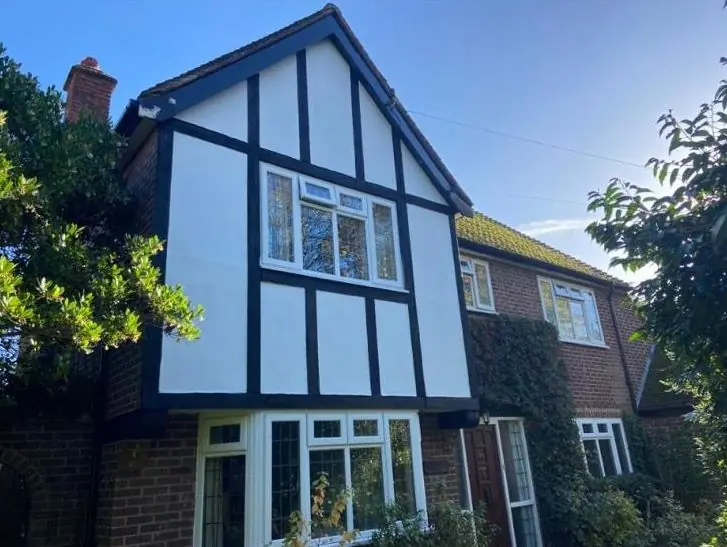
Painting render and roughcast well depends on cleaning, repairs, stabilising chalky surfaces and two coats of breathable masonry paint in dry, mild weather. DH Painter & Decorator, with over 30 years' experience, paints render, roughcast and pebbledash across Northampton and nearby towns, and offers free written quotes after an inspection.
Painting render and roughcast is one of the most effective ways to smarten up a house, but it is also one of the easiest jobs to get wrong. Masonry paint on a textured wall behaves very differently from emulsion on plaster. Skip the cleaning or the stabiliser and the new coat can start flaking or growing green within a couple of winters. This guide explains the surfaces, the preparation, the paint and the weather, so you know what a good job involves.
We are DH Painter & Decorator, based in Northampton with over 30 years’ experience. A lot of houses around Northamptonshire have rendered, roughcast or pebbledashed walls, so this is work we do regularly.
Render, roughcast and pebbledash: what’s the difference?
All three are coatings applied over brick or block, and people often use the names loosely. The differences matter because they change how much paint a wall takes and how long it takes to cover.
- Smooth render is a sand and cement (or modern polymer) coat finished flat or with a light float texture. It is the quickest to paint, but shows every patch and crack.
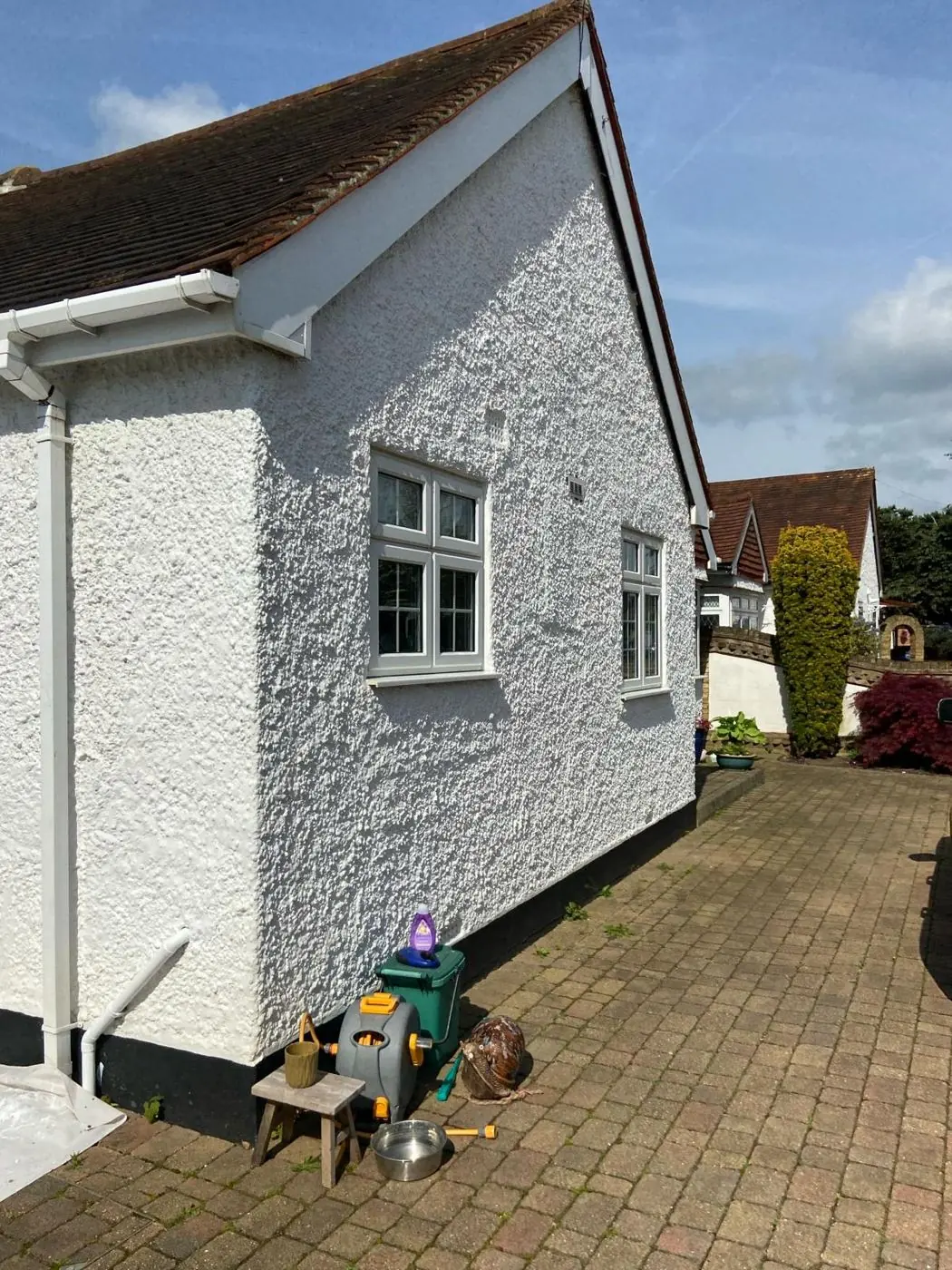
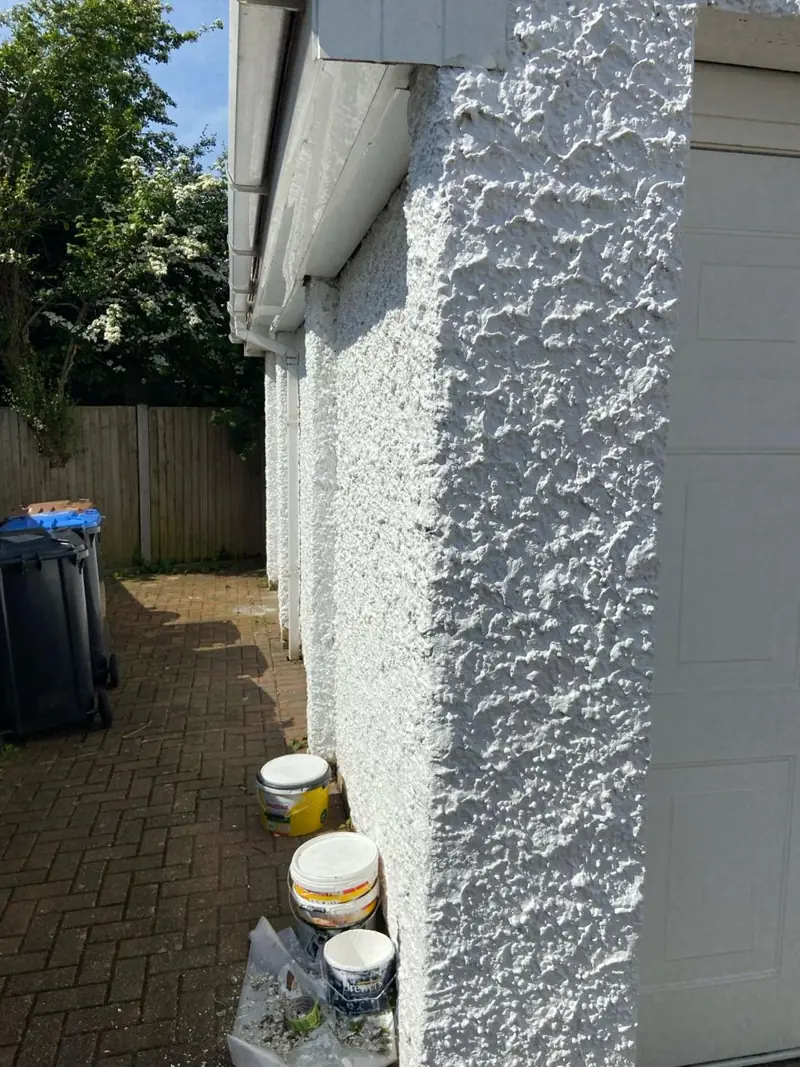
- Roughcast has small stones mixed into the final wet coat, which is then thrown at the wall. It gives a coarse, lumpy texture that holds dirt and takes a lot of paint.
- Pebbledash has small pebbles or chippings thrown onto a wet render coat so they stick to the surface. It is common on houses from the interwar and post-war decades, and it is the most awkward to paint well.
Some modern houses also have through-coloured or silicone renders. These are designed to be left unpainted, and they need a specialist approach if you do want to change the colour. It is worth checking which you have before buying paint.
Preparing render and roughcast for painting
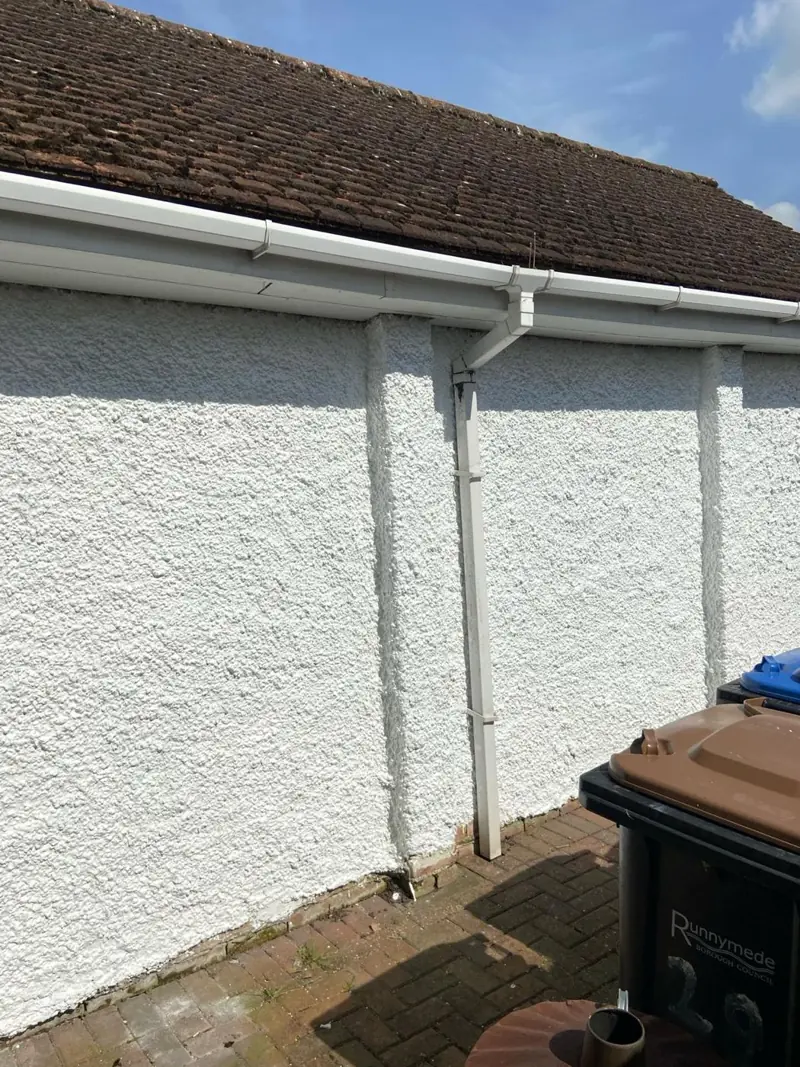
Preparation decides how long the paint lasts. On a textured wall, most of the effort goes in before a brush is lifted.
| Step | What it involves | Why it matters |
|---|---|---|
| Inspect | Tap for hollow or blown areas, check cracks, look for damp and failed sealant | Paint won’t fix loose render; it needs repairing first |
| Clean | Brush off loose material, wash down, apply a fungicidal wash to algae and mould | Growth left under paint comes back through it |
| Repair | Fill cracks with an exterior filler or suitable mortar, patch small blown areas | Water getting behind the render causes most failures |
| Stabilise | Apply a masonry stabilising primer to chalky or powdery surfaces | Binds the surface so topcoats don’t peel |
| Protect | Mask windows, doors, sills and paths, sheet plants and drives | Masonry paint is hard to remove from glass and paving |
| Paint | Usually two coats of exterior masonry paint, cut in neatly at edges | One coat rarely gives even cover on texture |
The chalk test
Rub the palm of your hand firmly across the old paint. If it comes away white or coloured, the surface is chalking. Painting straight over it is a common cause of new coats peeling in sheets. A stabilising solution soaks in and locks the surface down before the first coat goes on.
Algae, mould and green staining
North-facing walls and anywhere shaded by trees tend to go green. Painting over it traps spores that grow back through the new coat. A fungicidal wash, left to work and then brushed off, gives the paint a clean base. Many masonry paints also contain a fungicide to slow regrowth.
Choosing the right masonry paint
Exterior masonry paint comes in two broad types. Smooth masonry paint suits render and most roughcast. Textured masonry paint contains fine aggregate and helps hide hairline cracks and patchy surfaces, though it takes more paint. Both should be breathable, so moisture inside the wall can escape rather than blistering the coating.
Colour affects the job too. Whites and pale creams need more coats to cover a darker old colour evenly. Very dark colours can absorb heat on sunny elevations, which some manufacturers advise against on certain surfaces. Our colour consultation can help if you are unsure.
How to paint pebbledash and roughcast
The texture is the challenge. A standard roller skips over the gaps between stones, leaving pinholes of old colour. On pebbledash and roughcast, decorators usually use a long-pile masonry roller, then work paint into the texture with a brush where needed. Around windows and doors, the edges are cut in by brush.
It is slow, careful work, and the wall will take noticeably more paint per square metre than smooth render. That is a big part of why roughcast costs more to paint than it looks.
“I contacted Dean to get the outside of the house painted; the house is all roughcast render. He has done a fantastic job; the house is looking brand new.” (a customer review)
DIY or a professional?
A single-storey garage wall or a low garden wall is a reasonable DIY job if you are patient and have the right roller. A full house is different. You are working at height for days, often from ladders on uneven ground, and consistent coverage across a large textured area is hard to achieve alone.
A professional brings proper access equipment, knows when to stabilise and how to repair, and will plan the work around the weather. On most two-storey houses, the fascias, soffits and rainwater pipes are best done at the same time while the access is up. We cover that on our fascia and soffit painting page.
What affects the cost of painting render
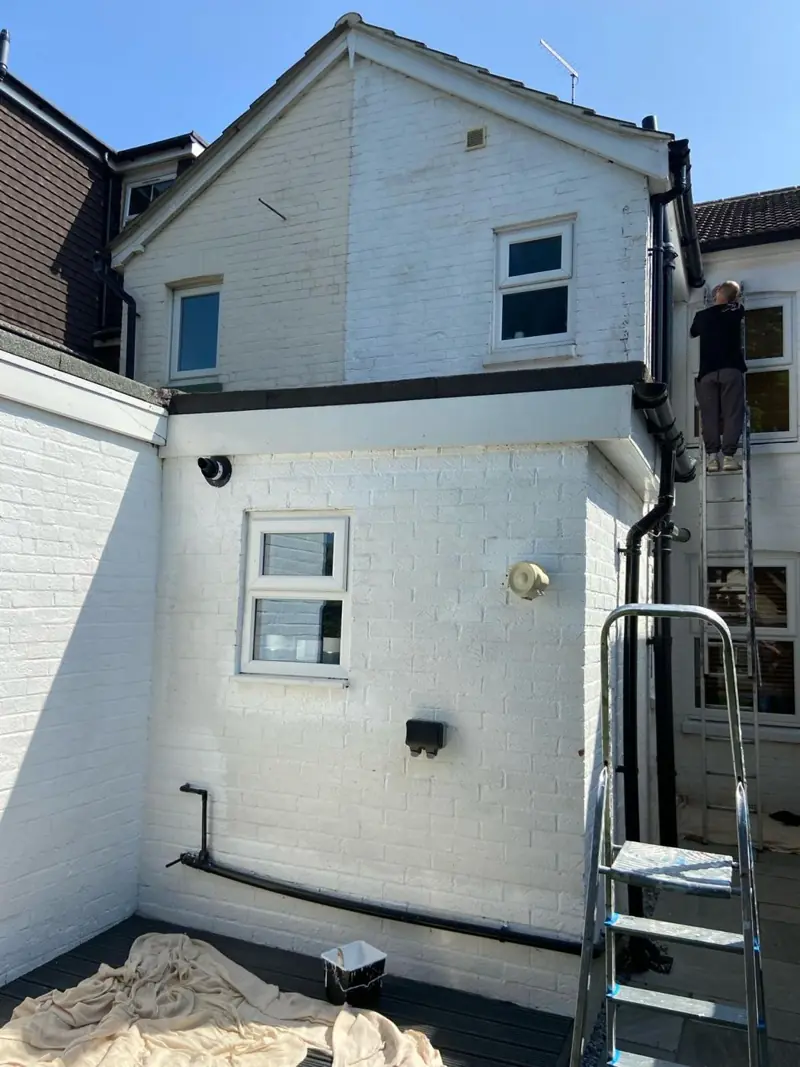
We don’t give prices on this page, because every wall is different. These are the things that change the time and materials involved:
- Surface type, with pebbledash and roughcast taking longer than smooth render
- Height and access, including whether a tower or scaffold is needed
- Amount of repair, from hairline cracks to blown sections
- Algae, chalking or failed old paint that needs extra treatment
- Colour change and the number of coats needed
- Number of windows, doors and pipes to cut in around
Our guide to decorating costs gives broader context on how quotes are built.
Weather and timing
Masonry paint needs dry weather and mild temperatures to cure properly. Most manufacturers ask for air and surface temperatures above roughly 5 to 10°C, no rain for a few hours after application, and no frost overnight. In practice, late spring to early autumn is the best window in the East Midlands. Our article on the best time of year for exterior painting goes into more detail.
Wet walls are as much a problem as wet weather. Render soaks up rain, so after a heavy downpour it needs time to dry out before painting, even if the sun is back out.
Painting render and roughcast with DH Painter & Decorator
Dean and the team paint render, roughcast and pebbledash across Northampton and nearby towns such as Rushden. Every job starts with an inspection, and our quote sets out the cleaning, repairs, stabilising and coats involved. You can read more on our render and masonry painting service page.
For a free written quote, call 07539 779 036, email office.dhpainter@gmail.com or send us a message.