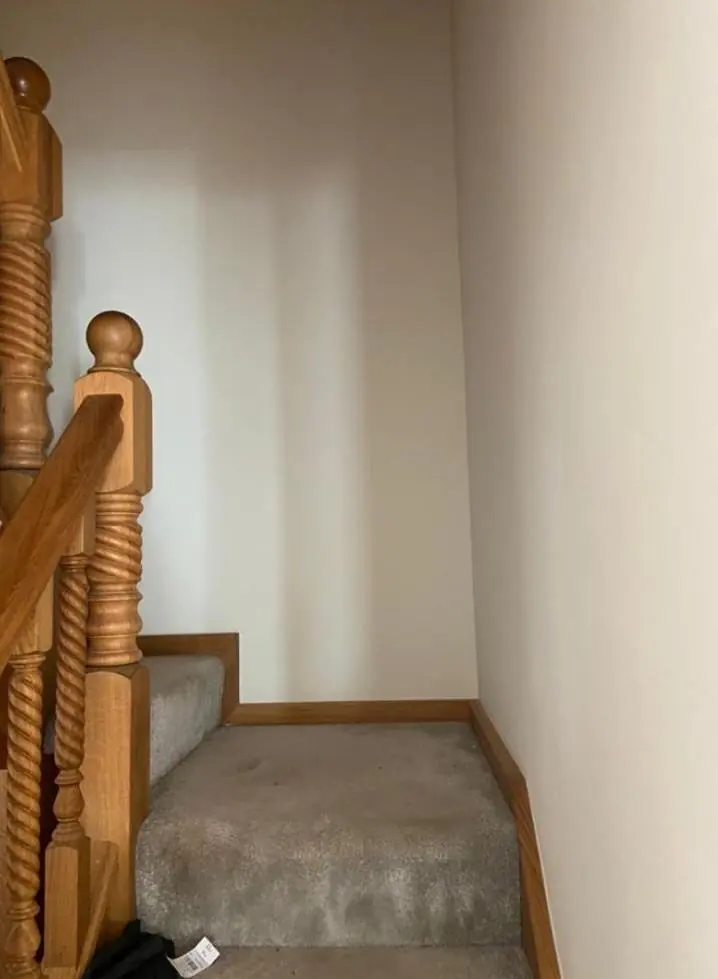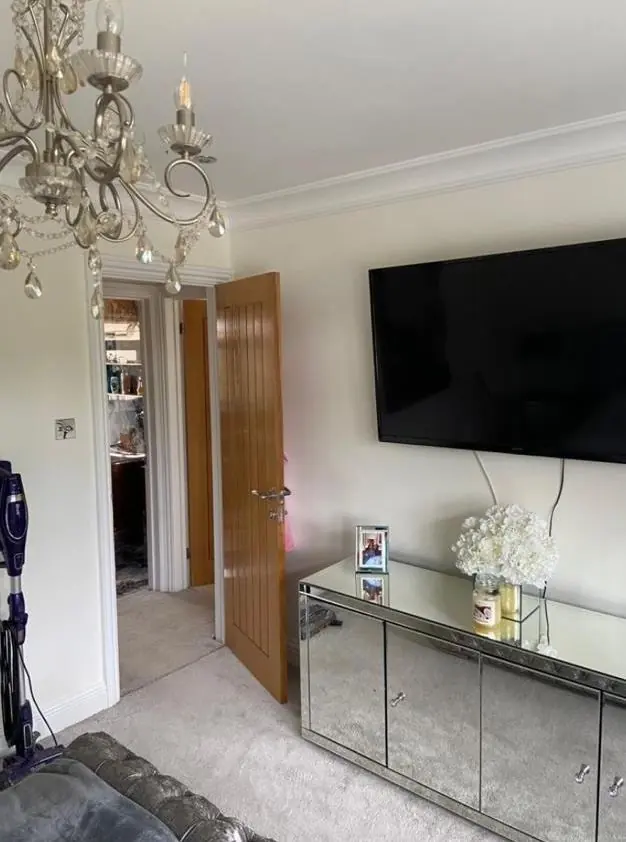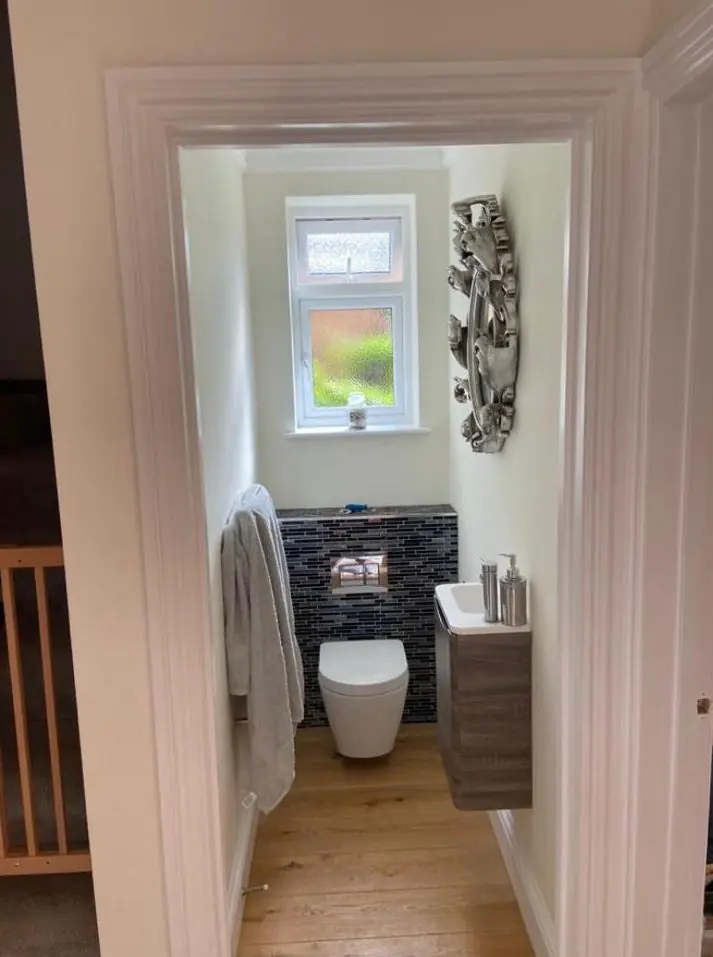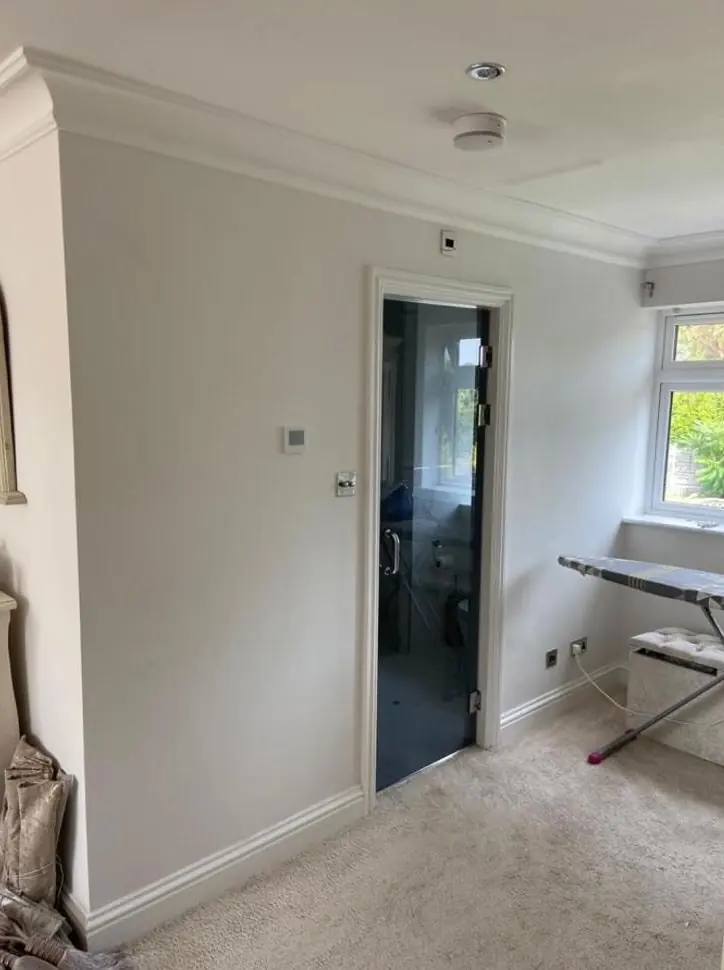
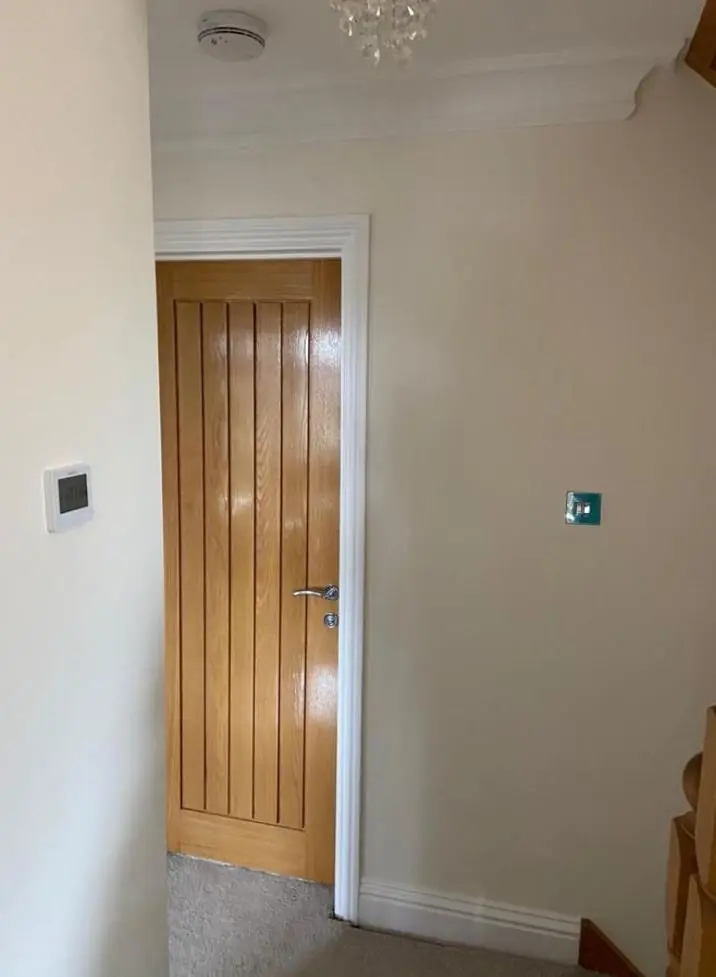
DH Painter & Decorator handles door and skirting board painting in Northampton and the surrounding area, along with frames, architraves, banisters and oak doors. Dean and the team bring over 30 years' experience to the prep that matters: sanding, knotting, filling and caulking, then water or oil-based satinwood or gloss. Quotes are free.
Door and skirting board painting in Northampton
Woodwork is what people notice when they look closely at a decorated room. Chipped skirting, yellowed gloss, runs on door panels and gaps where the skirting meets the wall make fresh walls look unfinished. Door and skirting board painting in Northampton is a big part of what DH Painter & Decorator does, whether as part of a full room or a job on its own.
One customer’s review mentions the extras that came alongside an exterior job: “painted our bedrooms x2, did extra jobs for us like skirtings and door frames, and painted even our gates.” Woodwork is often the finishing touch that makes the rest of the decorating look right.
Preparation: where good woodwork painting starts
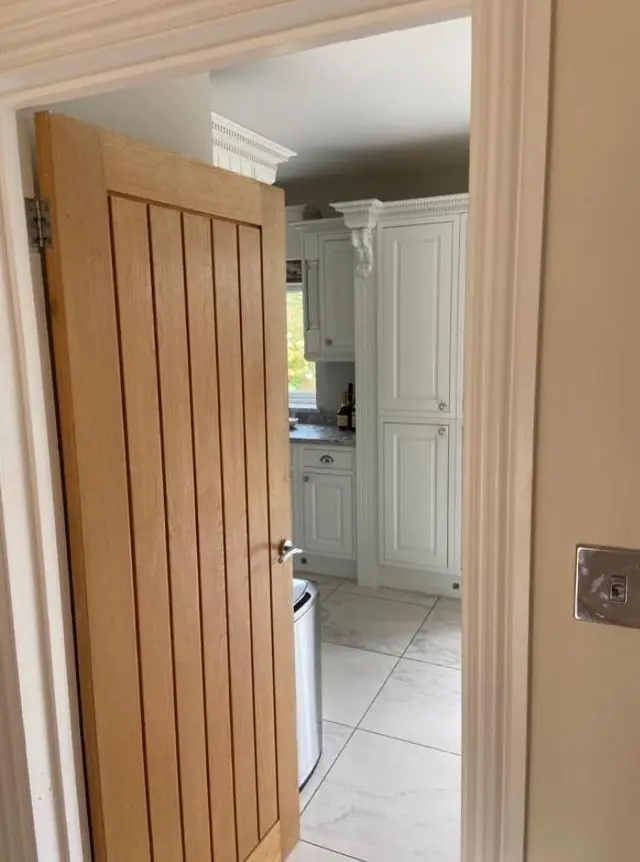
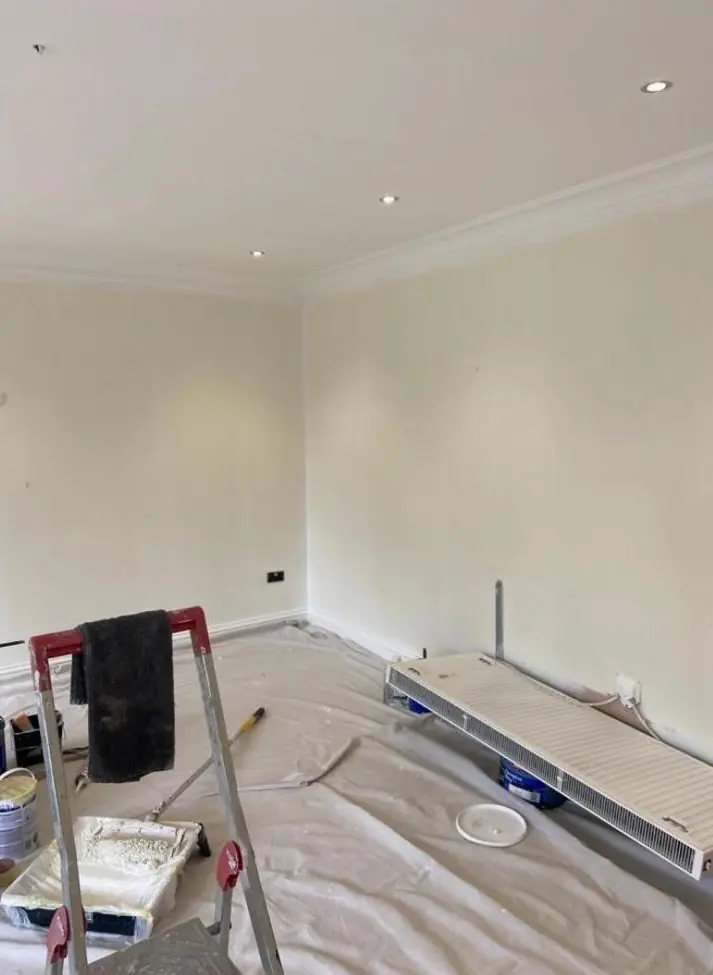
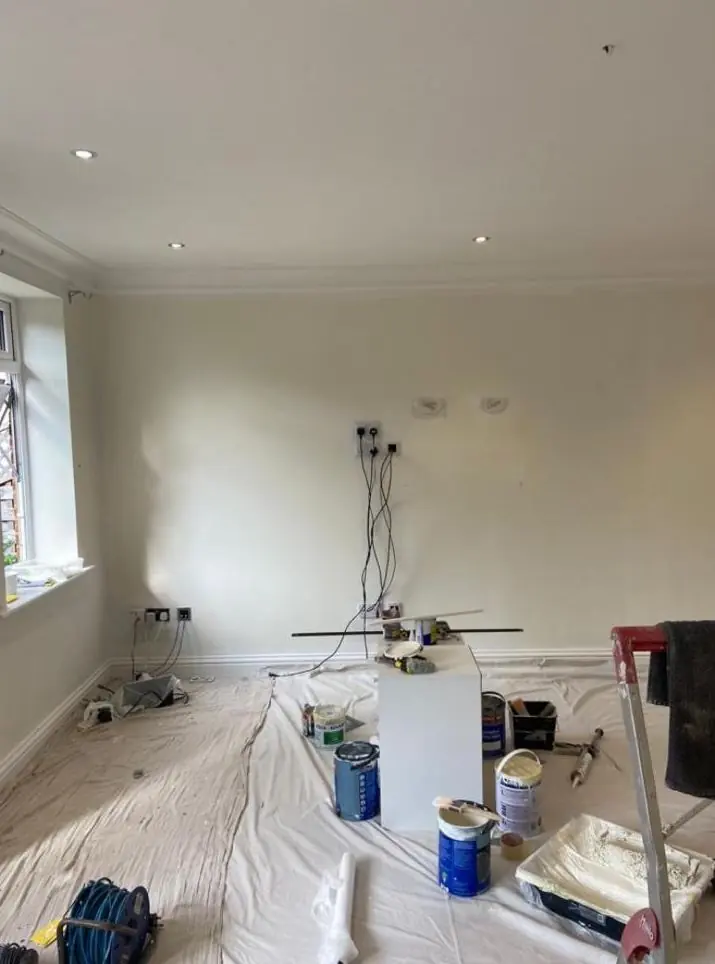
With woodwork painting in Northampton homes, most of the time on the job goes into preparation rather than painting. A glossy top coat shows everything underneath it, so the surface has to be right first.
- Cleaning and degreasing: skirtings and door edges near handles carry grease and grime that stop paint bonding.
- Sanding: existing gloss or satinwood is keyed with abrasive paper so new paint has something to grip.
- Filling: dents, old nail holes and splits are filled, left to harden and sanded flush. Deeper damage gets a two-part wood filler.
- Knotting: bare knots in softwood are sealed with knotting solution so resin can’t bleed through and leave brown rings.
- Spot-priming: any bare timber is primed before undercoat or finish coats.
- Caulking: gaps between skirting and wall, and around architraves, are run with flexible decorator’s caulk and smoothed.
Caulking makes a surprising difference. Most houses have a hairline gap along the top of the skirting where walls and floors have moved. Filling it with caulk gives a clean line between wall colour and woodwork. We’ll leave a gap where movement is too large for caulk to cope with and tell you why.
Oil-based or water-based: which paint for your woodwork
This is the question we’re asked most about woodwork. Both have a place, and the right choice depends on the timber, what’s on it already and how you want it to look.
| Water-based satinwood or gloss | Oil-based satinwood or gloss | |
|---|---|---|
| Yellowing | Stays white over time | Tends to yellow, especially away from daylight |
| Drying | Quick, often recoatable the same day | Slower, usually recoated the next day |
| Smell | Low odour | Strong solvent smell while drying |
| Flow and finish | Good modern products flow well but need a quick, confident hand | Flows out easily, hard glassy finish |
| Best for | Most interior woodwork, especially white | Some high-wear surfaces and traditional schemes |
Yellowing is the main reason many people switch. Oil-based white paint tends to yellow over time, and it is often most obvious on skirtings behind furniture or in darker hallways. Water-based paints hold their colour much better.
Switching from oil to water-based needs care. Water-based paint won’t bond reliably to old oil-based gloss without thorough sanding and a suitable primer or undercoat. Skip that step and it can peel or scratch off with a fingernail. Drying times vary between products, so we always follow the manufacturer’s guidance on the tin.
Doors, frames and architraves
Panel doors are painted in a set order so wet edges don’t dry into each other: the panels and mouldings first, then the centre vertical, then the horizontal rails, then the outer stiles, and the edges last. Laying off each section in the direction of the grain avoids the crossed brush marks that give away a rushed job.
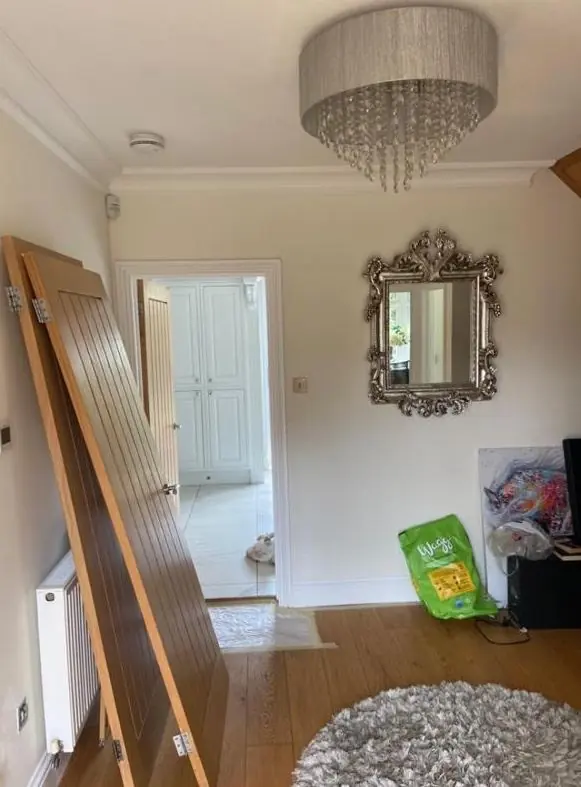
Where practical, doors are taken off their hinges and painted flat, which gives a smoother finish and less chance of runs. Handles, hinges and letter plates are removed or masked rather than painted round. Frames and architraves are done alongside, with the edge of the door frame usually matched to the room the door opens into.
Oak and hardwood doors: varnish or oil
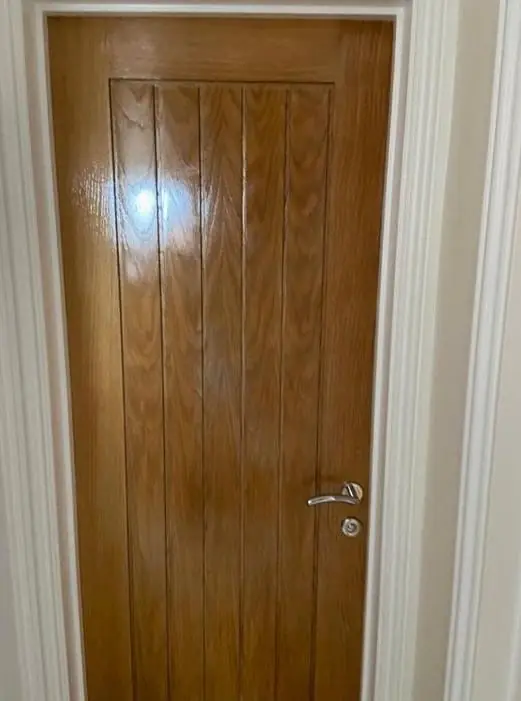
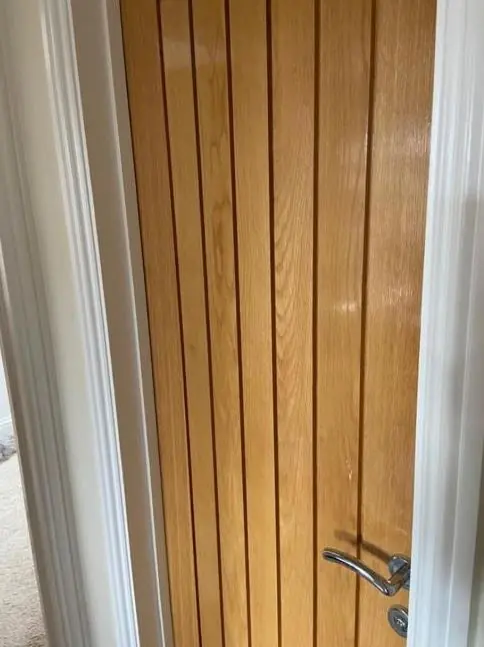
Solid oak and oak-veneered doors should rarely be painted. They’re usually finished with a clear varnish, a hardwax oil or a lacquer, depending on the look you want and what’s on them already.
Varnish gives a tough, sealed surface in matt, satin or gloss. Hardwax oils soak into the grain for a more natural look and can be topped up later without stripping. On veneered doors we sand gently, because the oak layer is thin and easy to sand through. New unfinished doors should be sealed on all six faces, including the top and bottom edges, to help stop them moving with changes in humidity.
The same understanding of timber applies outdoors, where we also handle staining timber gates and fences.
Colour choices for woodwork
Brilliant white gloss isn’t the only option. Many people now paint skirtings to match the walls, or choose a softer white that sits better with warm wall colours. If you’re changing the colour of your woodwork, our colour consultation helps you choose a shade and sheen that work with the walls. Woodwork is also a central part of our hallway, stairs and landing decorating, where banisters, spindles and doors take the most knocks.
Woodwork painting as part of a room or on its own
Most woodwork is painted as part of our wider interior painting service, but plenty of people just want the doors and skirtings refreshed. As a painter and decorator in Northampton, we also travel to nearby towns including Wellingborough and Daventry.
Fresh satinwood and gloss stay soft for a while after they’re dry to the touch, so we’ll advise keeping furniture back from skirtings and avoiding knocks for the first week or so while the paint hardens.
To get your doors, frames and skirtings looking right, call Dean on 07539 779 036 or ask for a free quote.