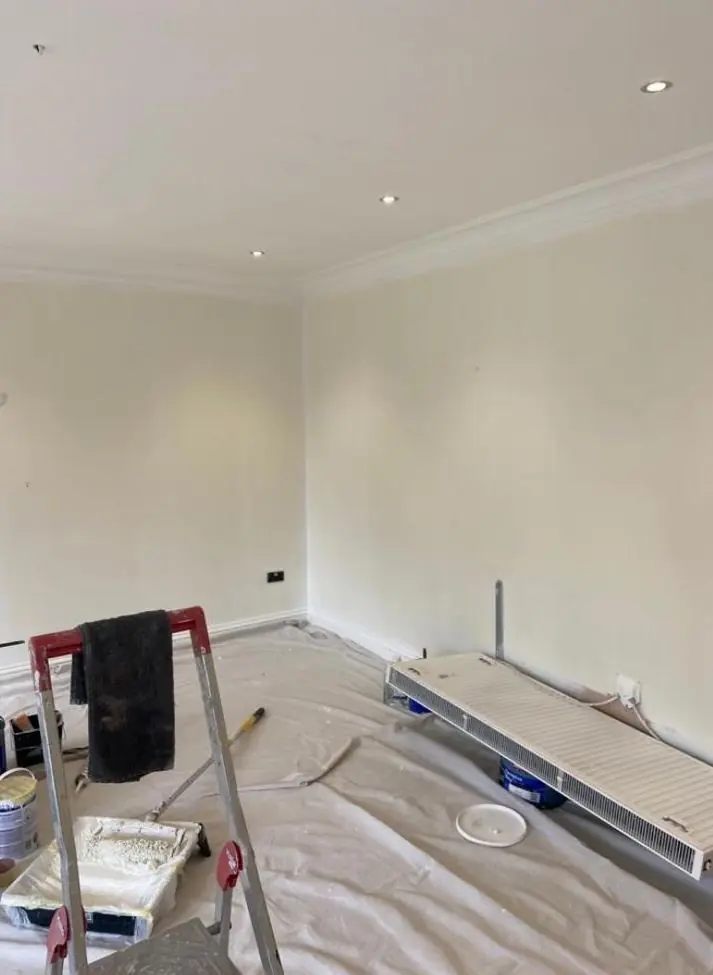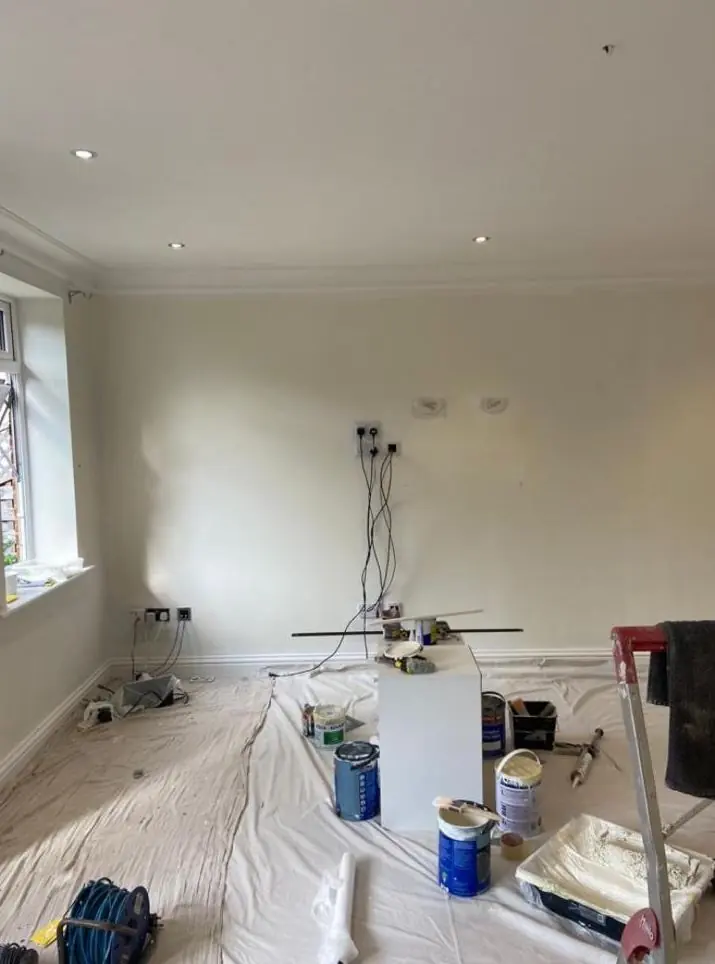
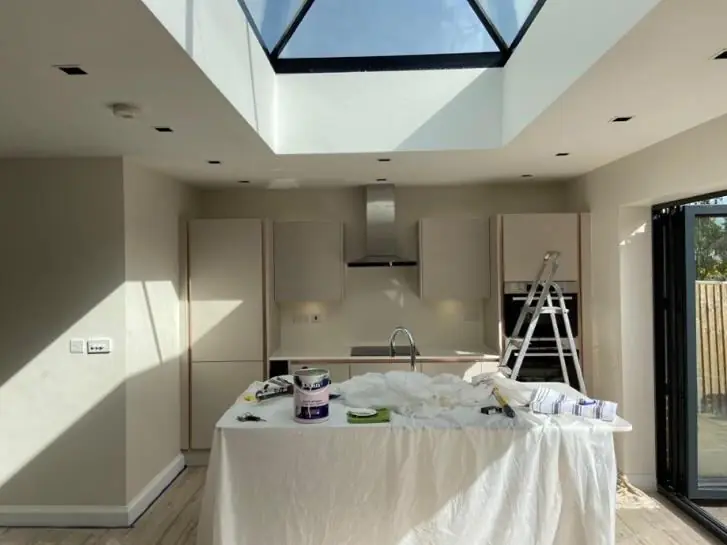
DH Painter & Decorator decorates new plaster and new extensions in Northampton and nearby towns. Once the plasterer and builder have finished, Dean checks the plaster is dry, applies a breathable mist coat, snags cracks and marks, paints new woodwork and finishes high ceilings and roof lantern upstands. Over 30 years' experience, with free quotes and advice.
Decorating new plaster and extensions in Northampton
Once your plasterer or builder has finished, we come in to decorate the new plaster and new woodwork so the extension or re-skimmed room is ready to use. That means checking the plaster is dry, sealing it with a mist coat, snagging, and applying the finish coats to walls, ceilings, skirtings and doors. We take on everything from a single re-skimmed bedroom to a large open-plan extension.
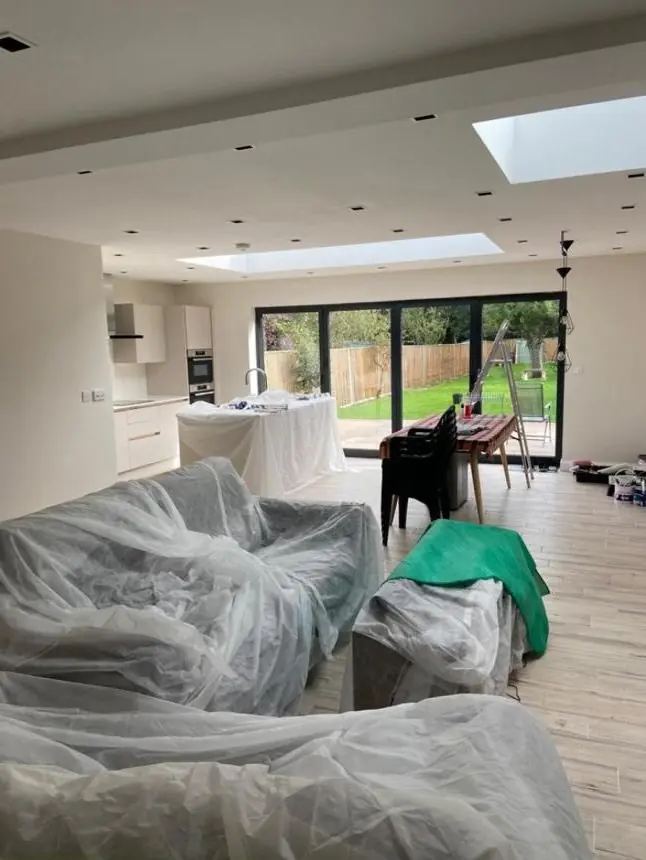
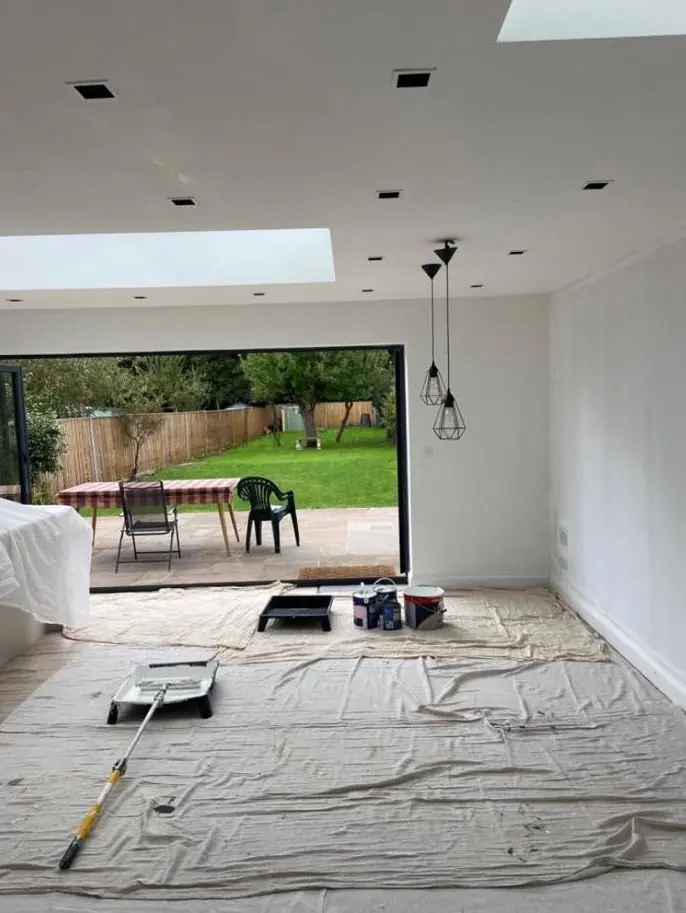
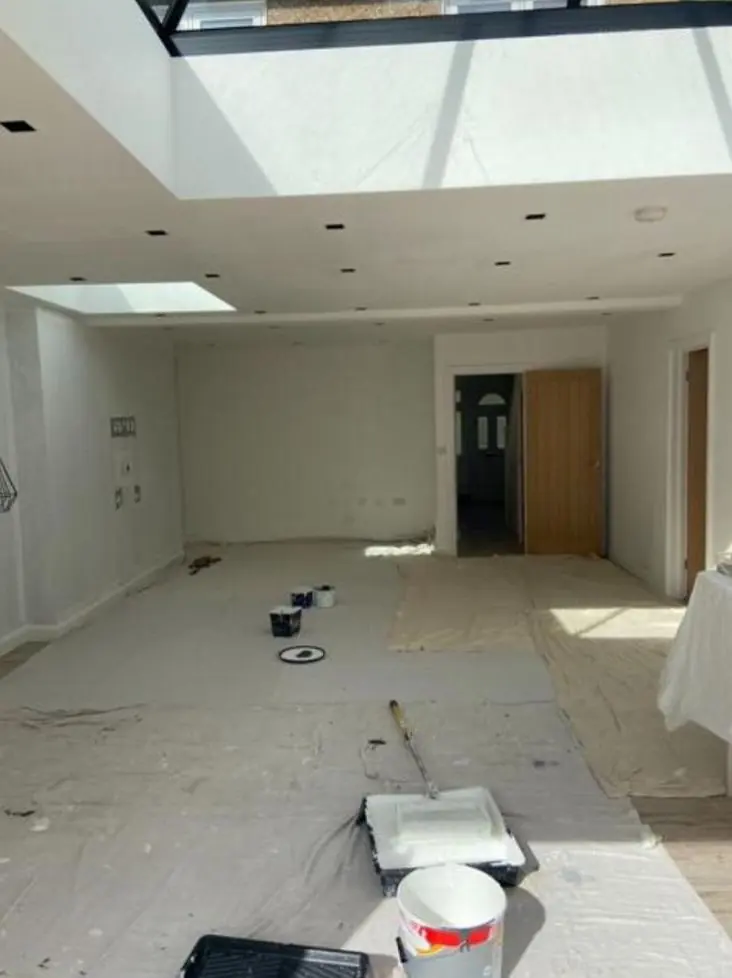
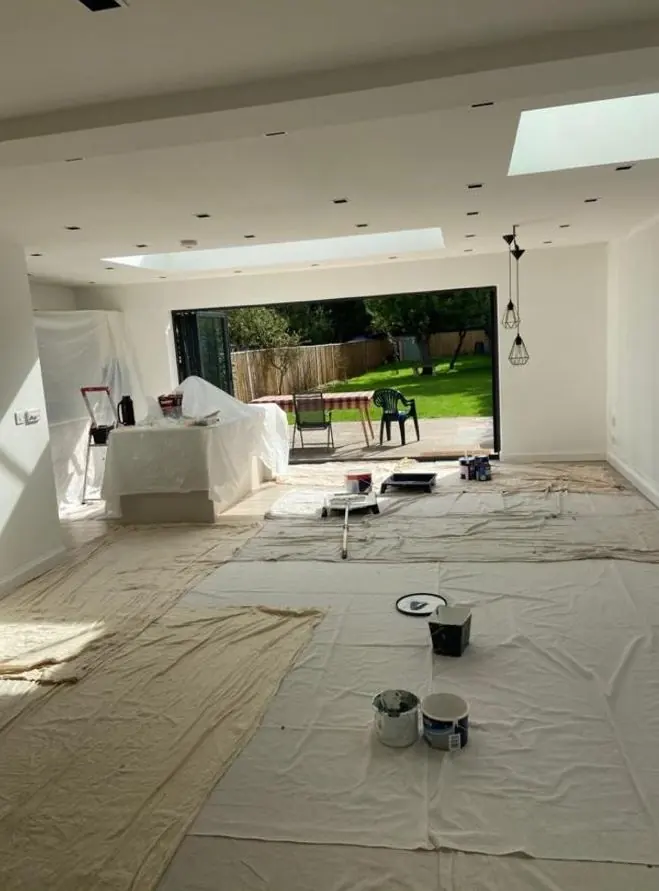
DH Painter & Decorator has over 30 years’ experience decorating new plaster. Our extension work includes an open-plan kitchen extension with a roof lantern, and you can see finished jobs in our work gallery.
What’s included when we decorate a new extension
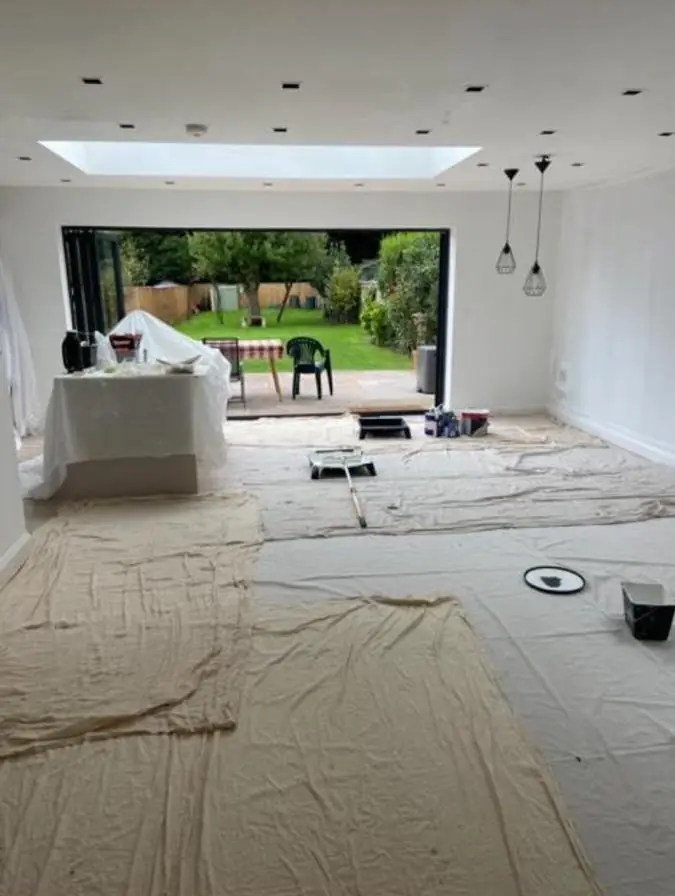
A new extension decorating job usually covers every new surface in the room, plus the joins where the old house meets the new. A typical quote includes:
- Checking the plaster is dry throughout, including corners, reveals and behind radiators.
- A breathable mist coat on all new plaster walls and ceilings.
- Filling, sanding and caulking cracks, trowel marks and dings the mist coat shows up.
- Two finish coats on walls and ceilings in your chosen colour.
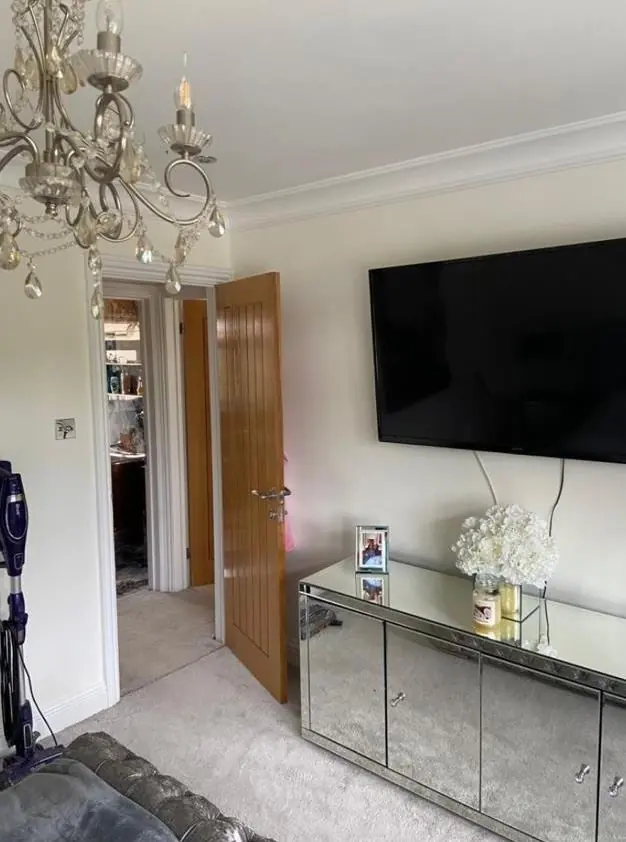
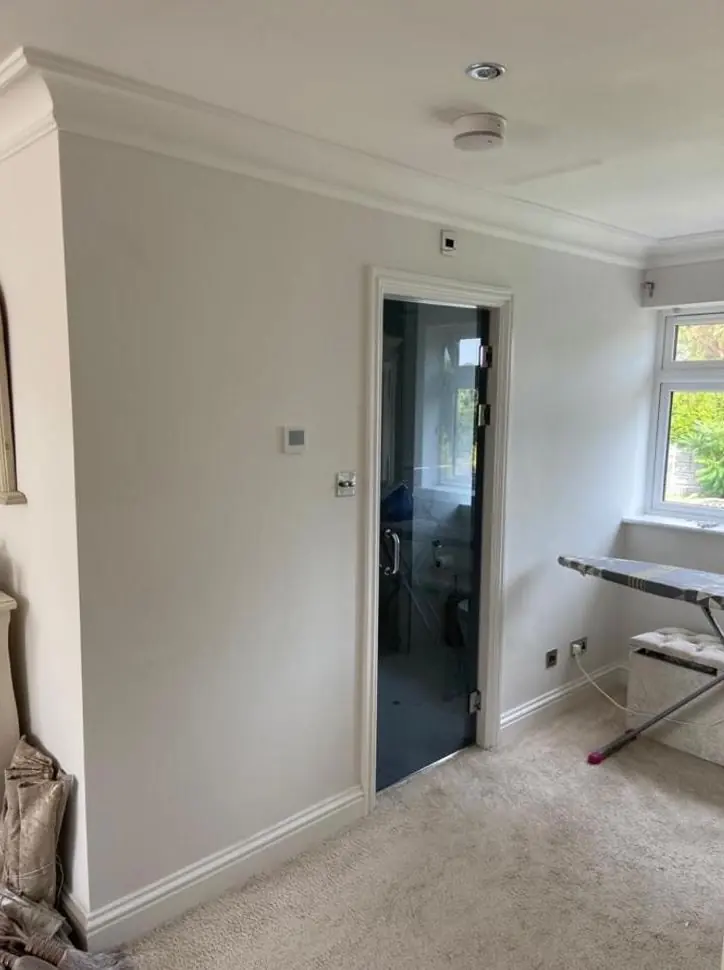
- Sealing, filling and painting new MDF skirtings, architraves, doors and frames.
- Plastered upstands around roof lanterns and vaulted ceilings, using a tower or podium.
- Protecting new floors, worktops and glazing throughout.
| Stage | What we do | What we check |
|---|---|---|
| Drying check | Inspect every wall and ceiling | Even, pale pink with no dark patches |
| Mist coat | Diluted breathable matt or new plaster primer | Even absorption, no flaking |
| Snagging | Fill, sand and caulk what the mist coat reveals | Hairline cracks, trowel marks, dings |
| Finish coats | Usually two full coats of the chosen emulsion | Solid colour, no grinning through |
| Woodwork | New skirtings, architraves and doors primed and painted | Sealed MDF edges, caulked joints |
Drying times and mist coats
New plaster must be fully dry before it is painted, and the first coat must be a breathable mist coat rather than ordinary vinyl emulsion. Paint too soon, or with the wrong product, and you get peeling, blistering or patchy colour within months. A thin skim over plasterboard dries far quicker than plaster on a new backing coat, and a winter extension with a drying screed takes longer again.
We check the plaster ourselves before we start, and we’ll tell you honestly if it needs more time. If you’d like the detail on drying, dilution and why contract matt is used, our guide to painting new plaster and mist coats covers it step by step.
Working around your builder and kitchen fitter
The best time to book a decorator for a new extension is before the kitchen or fitted furniture goes in. We usually finish the ceilings and mist-coat the walls first, then return for the finish coats and snagging once fitting is done. That way the areas behind appliances and wall units are sealed, and any knocks from the installation are put right at the end.
We’re happy to talk to your builder about sequencing. New MDF skirtings usually arrive primed, but cut ends and routed edges are bare and need sealing before filling, caulking and top coats. Our door and skirting painting page covers that side of the job in more detail.
Roof lanterns and high ceilings
Roof lanterns and vaulted ceilings need safe access and extra care at snagging, because light falling across them shows every flaw. The plastered upstand around a lantern is several feet above the floor and often over the middle of the room, so we use a mobile tower or podium rather than a stepladder, and protect new flooring and worktops before it goes up.
Lantern frames are usually factory-finished aluminium or uPVC, which we mask and protect rather than paint. A shade that looks soft in the old part of the house can look much paler under a lantern, so we’ll give you colour and finish advice when you book to help the old and new parts of the house work together.
Snagging new plaster properly
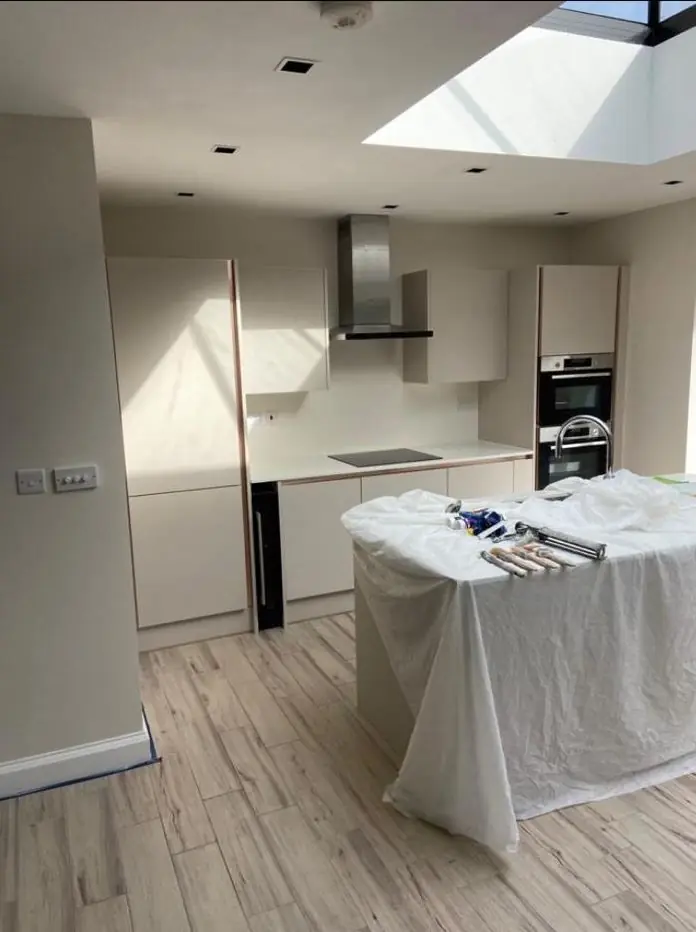
Snagging is where a new extension goes from nearly finished to properly finished. The mist coat shows up defects you can’t see on bare plaster. Typical snags include:
- Hairline cracks at plasterboard joints and where old walls meet new.
- Trowel marks, pin holes and small ridges on the skim.
- Dings on corners from other trades carrying materials through.
- Gaps at the wall and ceiling junction and around new window reveals.
We fill, sand and spot-seal these before the finish coats. New buildings also move a little as timbers and blockwork dry out over the first months, so some fine shrinkage cracks can appear later. That’s normal, and we’ll explain what to expect.
What decorating an extension costs
The price depends on the size of the extension, ceiling height, the amount of new woodwork and how much snagging the plaster needs. Our painter and decorator cost guide gives typical UK ranges as a rough guide; your written quote, after we’ve seen the room, is what counts.
Covering Northampton and nearby towns
We decorate new plaster and extensions across Northampton, and it is part of our wider interior painting work. From our Northampton base we also cover towns such as Towcester and Rushden, plus villages across the county.
For a free quote on decorating new plaster or a new extension, call Dean on 07539 779 036 or ask for a free quote online.
Last updated by Dean, DH Painter & Decorator.