
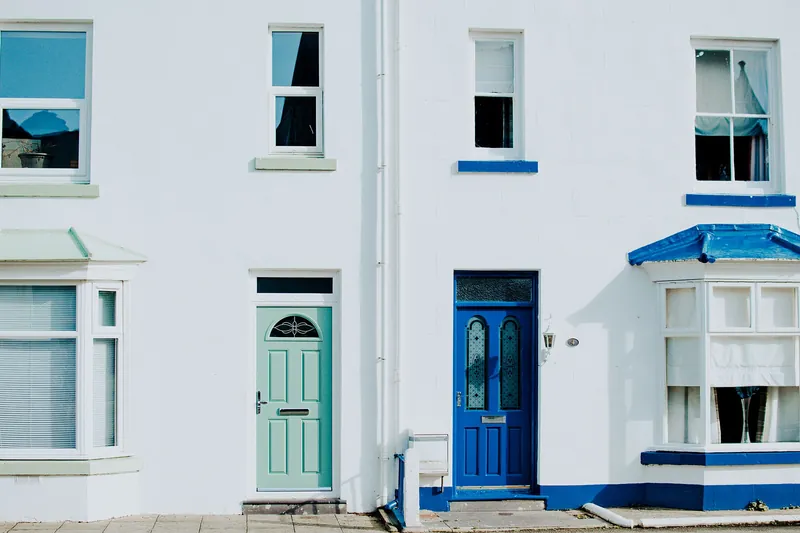
Yes, you can paint uPVC windows and doors. Done properly it should last at least five years, and paint makers claim 10 to 15. Use a paint made for uPVC, clean and key the frames first, and paint on a dry day above 10°C. Check your window guarantee before you start, and think twice about dark colours on sunny elevations.
Can you paint uPVC windows and doors?
Yes. uPVC windows, doors, fascias and composite doors can be painted, and the paint will last for years if three things are right: a paint made to stick to plastic, a frame that has been cleaned and keyed, and dry weather above 10°C. The bigger questions are your window guarantee and how dark you want to go.
Painting makes most sense when the frames work well but look tired: yellowed white uPVC on a 1990s house, a front door that doesn’t suit the brickwork, or a mix of window colours after a partial replacement. If the frames are draughty, misted between the panes or the sashes have dropped, paint won’t fix that. Spend the money on repairs or replacement first.
How long does paint on uPVC last?
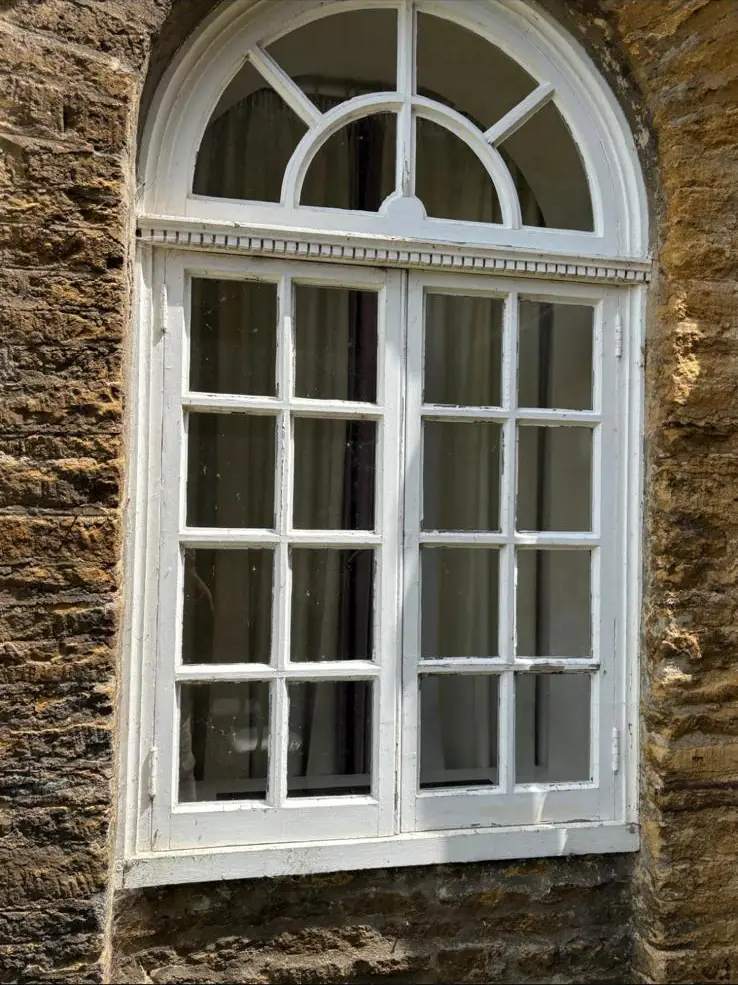
Homebuilding & Renovating says you should get at least five years from painted uPVC windows if the job is done properly. Sheltered elevations usually outlast sunny, exposed ones. Paint makers claim more: Ronseal lists 10 Year Protection for its uPVC paint, Rust-Oleum says its uPVC paint resists cracking, peeling and blistering for up to 10 years, and Zinsser quotes up to 15 years for AllCoat Exterior. Treat those as best-case figures under ideal conditions.
What usually wears paint fastest: south- and west-facing frames that bake in the afternoon sun, bottom rails and sills where rain sits, and opening edges that rub every time the window shuts. Zinsser’s AllCoat technical data sheet recommends an extra coat on high-exposure areas such as sills and fascia boards, and that’s worth doing whichever paint you choose.
Best paint for uPVC: three products compared
Use a water-based paint sold specifically for uPVC, or a multi-surface exterior paint whose data sheet names uPVC. Ordinary exterior gloss and masonry paint aren’t formulated for smooth plastic, so adhesion is the weak point. The three products below are widely stocked in the UK, and the figures come from each maker’s own page or data sheet.
| Product | Primer needed? | Recoat | Application conditions | Maker’s durability claim |
|---|---|---|---|---|
| Ronseal uPVC Paint | No | 4 hours | Dry day above 10°C, no rain expected | 10 Year Protection |
| Rust-Oleum uPVC Door & Window Paint | No (self-priming) | After 4 hours | 10–25°C, not in direct sun or with rain imminent | 10 year performance |
| Zinsser AllCoat Exterior Satin | No (self-priming) | 1 hour at 20°C | 10–32°C, humidity under 85%, no direct sun | Up to 15 years |
Sources: Ronseal uPVC Paint, Rust-Oleum uPVC Door and Window Paint, Zinsser AllCoat Exterior Satin data sheet. All three recommend two coats. Ronseal says you may need a third over a dark colour. Zinsser’s sheet says full adhesion and hardness take 7 days, which matters more on windows than anywhere else because the sashes close against the frame.
Finish is mostly taste. Satin is a common choice on windows because it hides minor marks. Matt looks modern but tends to show handprints sooner on a front door.
Will painting uPVC void my window guarantee?
It might. The Federation of Master Builders’ uPVC window guide says some companies state that painting voids any warranty left on the windows, and recommends checking with your installer first. If your windows or doors are still inside their guarantee period, ask the installer or manufacturer in writing before you paint. A guarantee on a paint tin covers the paint, not the frame.
Two more checks before anyone picks up a brush. Ronseal says new uPVC should be left at least 12 months before painting, so freshly fitted frames have to wait. And if you are a leaseholder, the Planning Portal notes that you may need your landlord’s or management company’s permission for work on windows and doors.
Can you paint uPVC windows anthracite grey or black?
You can, but dark colours carry more risk on plastic because they don’t reflect the sun’s heat the way white does. In a 2017 Glass Times trade report, residents of south-facing flats with anthracite grey PVCU windows complained of sashes sticking as temperatures rose. An inspection found the profile had warped from the sun’s heat, and the fabricator hadn’t used steel reinforcement. The window firm quoted said darker windows don’t have the heat-reflective qualities of white PVCU.
That case involved factory-made dark windows, not painted ones, but a white frame painted anthracite will also absorb more heat than it was built for. A sensible rule is to keep big, sunny elevations and large opening sashes in mid tones, and save the darkest colours for small or shaded frames and front doors. If you are set on a dark colour everywhere, ask the window manufacturer whether the profile is reinforced and whether they allow it.
What not to paint on a uPVC window
Don’t paint the rubber gaskets, the glass, hinges, handles, locks or drainage slots, and don’t paint over a wood-grain foil or vinyl wrap without checking first. Rust-Oleum states its uPVC paint is not suitable for vinyl-wrapped doors, and its matt uPVC paint page says it hasn’t been tested on ASA plastic, so do a test patch first on anything you’re unsure of.
- Gaskets and seals: painted seals harden, stick to the sash and tear when the window opens. Mask them or cut in neatly beside them.
- Hardware: take handles off where you can. Paint on hinge mechanisms and keeps can stop windows closing properly.
- Drainage slots: the little covered slots on the bottom of the frame let rain out. Paint them shut and water collects inside the frame.
- Foiled frames: wood-grain and coloured foils are a laminated film, not paint. Check the tin and test first.
How a decorator paints uPVC windows and doors, step by step
On an exterior painting job, the order of work for uPVC is clean, key, mask, then two thin coats, with time for the paint to harden before the windows shut tight. Most of the hours go into the first three steps.
- Check the frames. Look for loose beads, failed seals, cracked corners or old paint that is peeling. Ronseal says flaking or cracked old paint should be sanded with 120 grit sandpaper.
- Clean and degrease. Wash with warm soapy water, rinse and let it dry fully. Zinsser’s data sheet says to remove all existing mould and mildew first, which matters on north-facing frames where green growth collects in the corners.
- Key the surface. Ronseal recommends 180–220 grit sandpaper, or a light sand with 240 grit over old paint in good condition. Wipe off the dust and wear a dust mask.
- Mask. Tape the glass edge, gaskets and any fixed hardware. Lay dust sheets under each window.
- Paint in order. Open the sash and do the inside edges and rebates first, then the sash face, then the outer frame and finally the sill. Keep coats thin, because heavy paint on the opening edges is what causes sticking later.
- Second coat and the sill. Recoat at the time on the tin. Zinsser’s data sheet says to add an extra coat to high-exposure areas such as sills.
- Let it harden. Close sashes gently without pressing hard into the seals, and treat them with care for the first week while the paint reaches full hardness.
Should you brush, roll or spray uPVC?
For a few windows or one door, a good synthetic brush and a small foam roller give a tidy finish. Spraying gives the smoothest, most factory-like result on a whole house, but the masking takes longer than the spraying. Homebuilding & Renovating says to cover at least a metre around each door or window so spray mist doesn’t settle where it isn’t wanted, and warns a sprayer isn’t as easy as a brush, so practise first.
Rust-Oleum says its uPVC paint can go through an electric sprayer if you dilute with water by 10–20% for spraying. Cars, neighbours’ walls and conservatory roofs all need covering, and a breezy day is a bad day to spray outdoors.
When is the best time to paint uPVC outside?
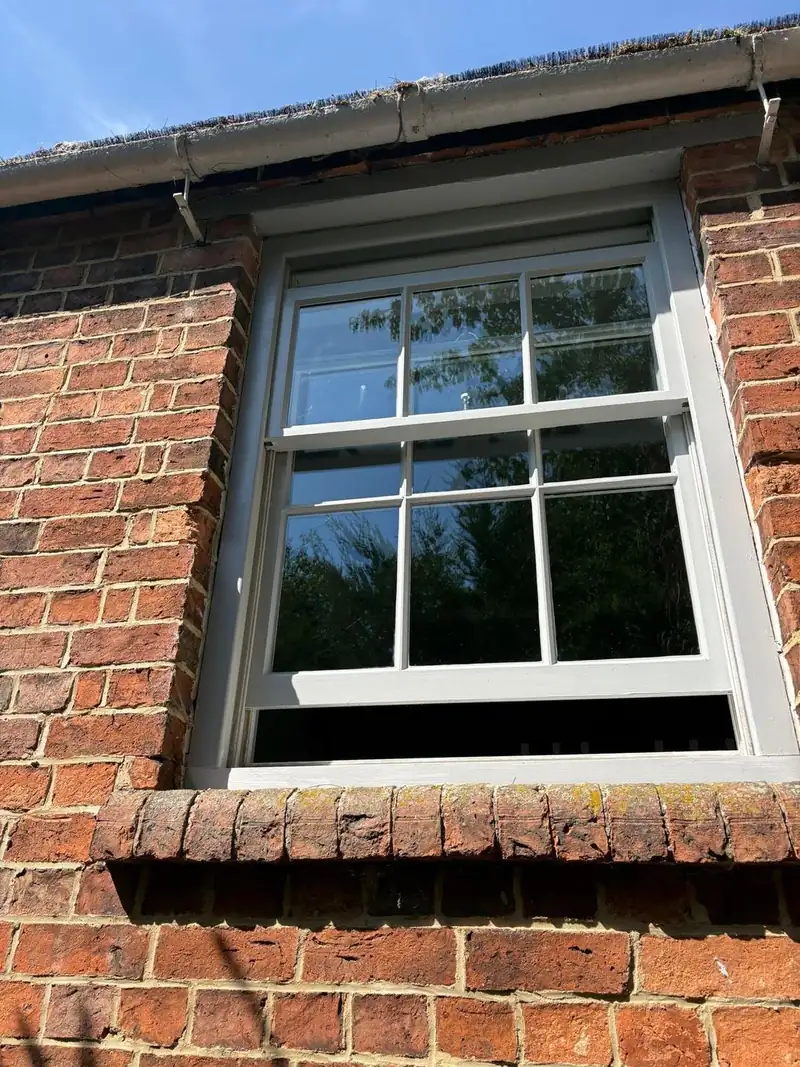
Paint uPVC on a dry day with air and surface temperatures above 10°C and no rain, fog or condensation due before the paint has cured. Zinsser’s data sheet sets the range at 10–32°C with humidity under 85%, tells you to avoid direct sunlight and keep a wet edge to avoid lap marks, and warns against painting if rain, frost, fog or condensation is likely.
Around Northampton that usually means late spring to early autumn, starting once any morning mist has burnt off. Spring and autumn bring plenty of damp, foggy mornings, and condensation settling on fresh paint can leave a dull, patchy finish. Follow the sun round the house: paint east-facing frames in the afternoon and west-facing ones in the morning. Our guide on when to paint outside in the UK goes into the seasons in more detail.
Is painting uPVC cheaper than replacing it?
Usually, when the frames still work. The FMB guide says uPVC windows can cost anywhere from £520 to £2,890 per window, and lists £3,100 to £6,710 for 6 to 10 casement windows. Those are national guide figures, and the guide notes they don’t include installation. Painting costs a fraction of that, but the price depends on how many frames you have, access at height, the state of the existing surface and whether it’s sprayed or brushed.
Our painter and decorator cost guide for Northampton explains how decorators price exterior work. For your own windows, only a quote after someone has looked at them gives a real figure.
Do you need permission to paint uPVC windows?
Usually not. The Planning Portal says repainting window and door frames counts as repairs, maintenance and minor improvements, which normally don’t need planning permission. The exceptions are listed buildings, which need listed building consent for significant external work, and homes covered by an Article 4 Direction, which removes some permitted development rights.
West Northamptonshire Council says the area has 117 conservation areas, and a number of them have Article 4 Directions that further restrict permitted development rights. If you live in a conservation area, which includes plenty of central Northampton and many ironstone villages, check with the council before changing the colour of front-facing windows or doors.
Signs your painted uPVC needs attention
Check painted frames once a year, ideally in spring. Ronseal advises checking for imperfections every year. Sand back any loose areas and touch up before small faults spread.
- Peeling on the bottom rail or sill: usually water sitting there, or paint applied to a damp or dirty frame. Sand back to sound paint and recoat.
- Hairline cracks at the corners: often the frame moving with heat, more likely on dark colours and sunny sides.
- Sashes sticking or tearing paint when opened: too much paint on the opening edges, or the window was shut before the paint hardened.
- Powdery, faded surface: the coating weathering. Wash it, key it and recoat before it breaks down further.
DIY or hire a decorator?
A single front door or a couple of ground-floor windows can be done yourself if you’re patient with the cleaning and masking. Get help when there are upstairs frames, fascias and soffits at height, or a whole house you want sprayed to a factory finish. Do the same if the frames are still under guarantee or you want a dark colour on sunny elevations.
Before you get prices, dig out the paperwork for your windows: the installer’s name and the guarantee dates tell you whether painting is your call yet. Dean works as a painter and decorator in Northampton and paints uPVC windows, doors and fascias and soffits as part of our exterior painting service. He also covers towns further out, such as Rushden and Market Harborough. Call 07539 779 036 for a free written quote, and he’ll tell you plainly whether your frames are worth painting.
Sources
- uPVC Paint (product page and application guidance), Ronseal (accessed 2026-10-09)
- uPVC Door and Window Paint, Rust-Oleum Colours UK (accessed 2026-10-09)
- uPVC Paint Matt Finish (product page), Rust-Oleum Colours UK (accessed 2026-10-09)
- Technical Data Sheet: AllCoat Exterior Satin, Zinsser UK / Tor Coatings (accessed 2026-10-09)
- AllCoat Exterior Satin (product page), Zinsser UK (accessed 2026-10-09)
- Painting uPVC windows: how to get the best results, Homebuilding & Renovating (accessed 2026-10-09)
- uPVC windows guide, Federation of Master Builders (HomePicks) (accessed 2026-10-09)
- PVCU pains, Glass Times (accessed 2026-10-09)
- Doors and windows: planning permission, Planning Portal (accessed 2026-10-09)
- Conservation areas, West Northamptonshire Council (accessed 2026-10-09)
Header photo: Lisa Fotios on Pexels. Photos of our own work appear further down the page.
Last updated by Dean, DH Painter & Decorator.


