
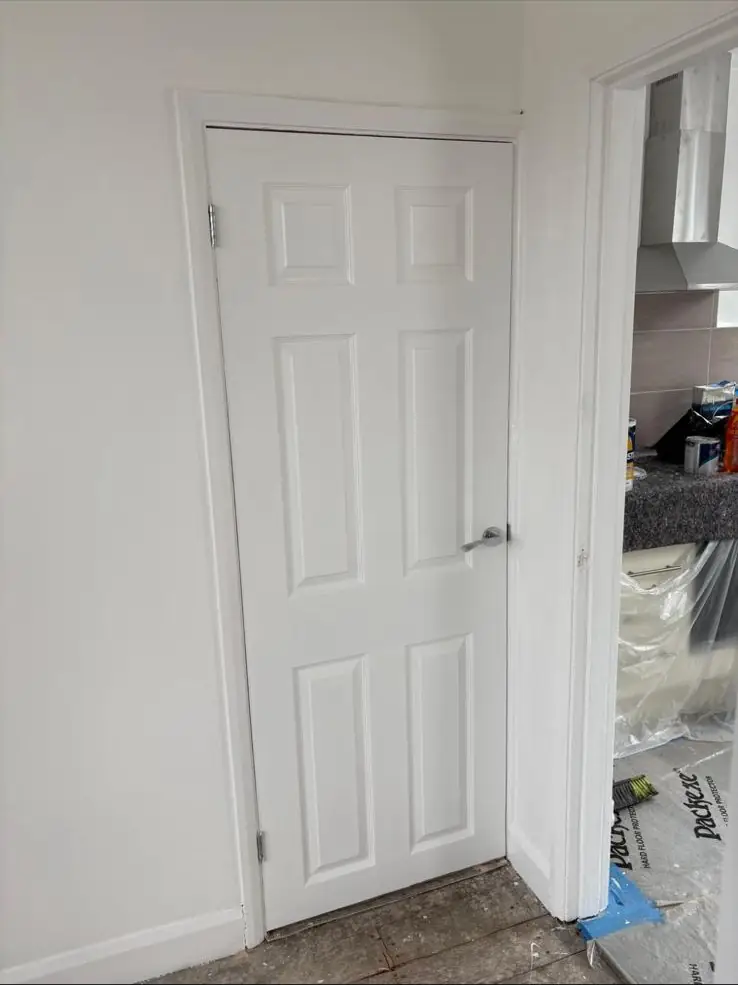
For most interior woodwork, a water-based satin is the safest choice: easy to wipe, with a gentle sheen that hides small flaws. Eggshell gives a softer, flatter look that suits period rooms and deep colours, while gloss gives a traditional high shine but shows every dent, so it needs smooth, well-prepared timber. Check the sheen figure on the maker's page, because one brand's eggshell can be as shiny as another's satin.
The short answer: satin for most woodwork
For most interior woodwork in a lived-in home, a water-based satin is the safe middle choice: tough enough to wipe, with enough sheen to look finished but not so much that it shows every dent. Choose eggshell for a softer, flatter look, especially in period rooms and deep colours. Choose gloss when you want a traditional high shine and the timber is in good, smooth condition.
Two things complicate that answer: the names on the tin don’t mean the same thing from brand to brand, and the finish you pick decides how much preparation the wood needs.
What is the difference between eggshell, satin and gloss?
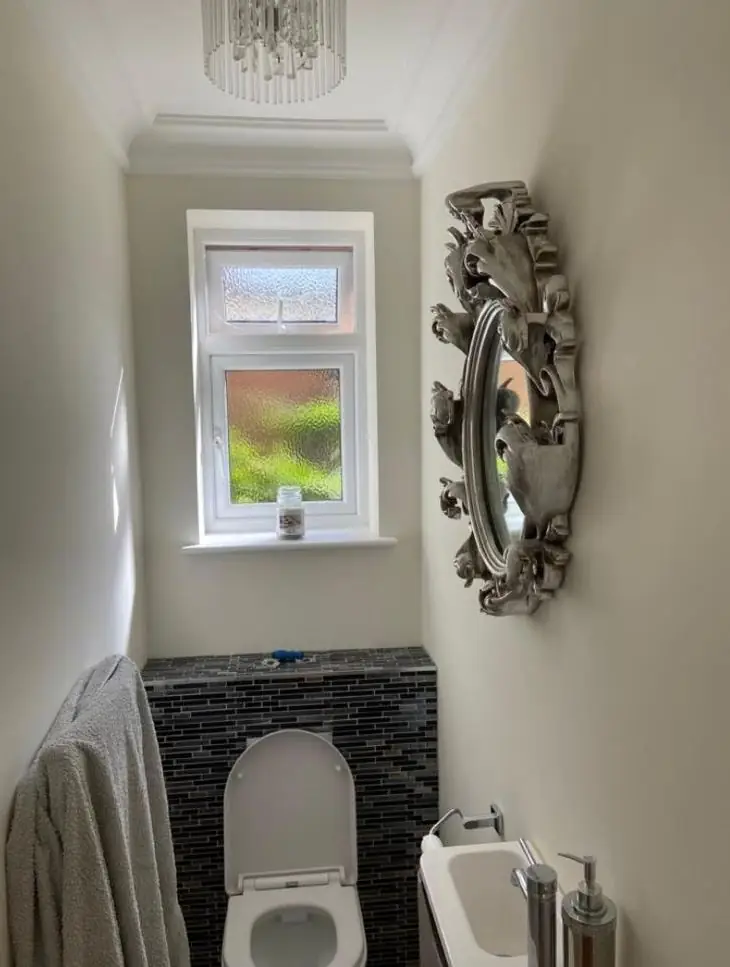
The difference is sheen: how much light the dry paint reflects. Eggshell is the lowest of the three, satin sits in the middle and gloss is the highest. Dulux’s guide to paint finishes places eggshell between matt and silk, giving woodwork a classic look; says satin on woodwork helps hide imperfections; and describes gloss as a shiny, light-reflecting finish that needs a smooth surface to look its best.
More sheen brings two things together: a surface that is a little easier to wipe clean, and a surface that shows more of what is underneath it. Light skims across a glossy skirting and picks out every dent, filler patch, brush mark and grain line. A low-sheen eggshell scatters that light, so the same board looks calmer and flatter.
| Eggshell | Satin (satinwood) | Gloss | |
|---|---|---|---|
| Look | Low sheen, soft and flat | Mid sheen, gentle shine | High shine, reflective |
| Shows dents and brush marks | Least | Some | Most |
| Wipe-clean | Good on quality woodwork eggshells | Good | Very good |
| Prep needed for a good result | Thorough | Thorough | The most: smooth, filled, de-nibbed |
| Suits | Period rooms, deep and muted colours, a match to matt walls | Most modern homes, family woodwork, white skirtings and doors | Traditional schemes, front doors, a sharp contrast with matt walls |
Is eggshell the same sheen in every brand?
No. “Eggshell” is a name, not a fixed measurement, and the spread between brands is wide. Farrow & Ball’s own range shows it clearly: its Flat Eggshell has a 20% sheen, while its Modern Eggshell has a 40% sheen, and the maker lists that one under its features as a satin finish. Read the sheen figure, not just the name.
The Dulux Trade product called Diamond Eggshell is different again. The maker describes it as a tough and cleanable emulsion with a mid-sheen finish, lists it for interior walls, ceilings and masonry as well as wood, and aims it at busy areas that need frequent cleaning. For a more durable finish on wood, the same page points you to Diamond Satinwood instead. Buy it expecting a heritage woodwork eggshell and you may be surprised.
Two practical rules follow from this:
- Match the product, not the word. If your doors are in one brand’s eggshell and you touch up with another’s, the sheen can look visibly different side by side.
- Check the datasheet. Sheen percentage, recommended surfaces and recoat time are on the maker’s product page or technical datasheet. A decorator will read it before a job starts.
Which finish hides imperfections best on old woodwork?
Eggshell hides the most, gloss the least. On old doors and skirtings with years of dents, chips, layered paint and slightly wavy edges, a low sheen makes those faults far less obvious. Gloss on the same board will show each one, often more than the old paint did, because a fresh high-shine coat throws light more evenly than a dull, worn one.
This is a common way for a DIY job to disappoint. Someone sands a hallway skirting lightly, applies a bright new gloss, and the result looks worse than before. The paint is fine. The board was never smooth enough for that level of shine.
A quick way to judge it before you buy: hold a torch flat against the woodwork at night, so the beam runs along the surface. Every shadow you see is something a glossy finish will show. If there are lots of them and you are not planning to fill and sand them all, pick satin or eggshell.
- Raking light: hallways with a window at one end, and landings with a skylight, show woodwork flaws the most. Lower sheen helps there. See our notes on hall, stairs and landing decorating.
- New MDF: smooth, factory-primed MDF skirting and architrave is much more forgiving under a higher sheen, because the surface starts flat.
Which finish is most hard-wearing for skirting and doors?
In general, the higher the sheen, the easier the surface is to wipe, so gloss and satin have the edge for scuffed skirting, door edges and stair spindles. The gap is smaller than it used to be. Modern water-based woodwork eggshells are made to take knocks: Farrow & Ball says its Modern Eggshell is washable and wipeable and can withstand knocks, scuffs and stains.
What matters more than the finish name is the type of product. A woodwork paint, satinwood or gloss built for doors and skirting will outlast a wall paint put on wood. The Dulux Trade Diamond Satinwood, for example, is designed for high-traffic areas such as corridors, stairways and access areas, and the maker says it protects surfaces from scratches, stains, handprints and grease.
Give whichever paint you choose time to harden before it gets hard use. Paint can be touch dry in hours and still mark easily for days afterwards, so put furniture back carefully and don’t scrub new woodwork in the first week or so.
Oil-based or water-based, and does it change the answer?
Yes. The base of the paint matters as much as the sheen, mainly for yellowing and drying time. Dulux Trade’s problem-solver guide says solvent-based paints tend to yellow because of the way they cure, and lists lack of light (behind pictures or appliances, inside cupboards) and heat from radiators as causes. It says top-quality water-based paints do not tend to yellow, and the UK Diamond Satinwood is sold as non-yellowing.
The drying times are very different too, and they change how long a room is out of use:
| Product (maker’s figures) | Base | Recoat time |
|---|---|---|
| Dulux Trade High Gloss | Solvent | 16 to 24 hours, over an undercoat |
| Dulux Trade Quick Dry Satinwood | Water | 4 to 6 hours |
| Farrow & Ball Modern Eggshell (40% sheen) | Water | 4 hours |
| Farrow & Ball Full Gloss (95% sheen) | Water | 4 hours |
So you are not stuck with a choice between yellowing oil gloss and a lower sheen. Water-based full gloss exists, and so does water-based satin and eggshell. Dulux notes that drying time depends on temperature and humidity; in a cold, damp house or on a foggy autumn day, allow longer.
If your woodwork already has oil-based gloss on it, water-based paint won’t grip it reliably without preparation. Clean it, sand it thoroughly to take the shine off, and use a suitable primer or undercoat before the new finish. Skip that step and new water-based paint can scratch off old gloss with a fingernail. That preparation, not the top coat, is where most of the time goes on door and skirting painting.
Should skirting, doors and frames all be the same finish?
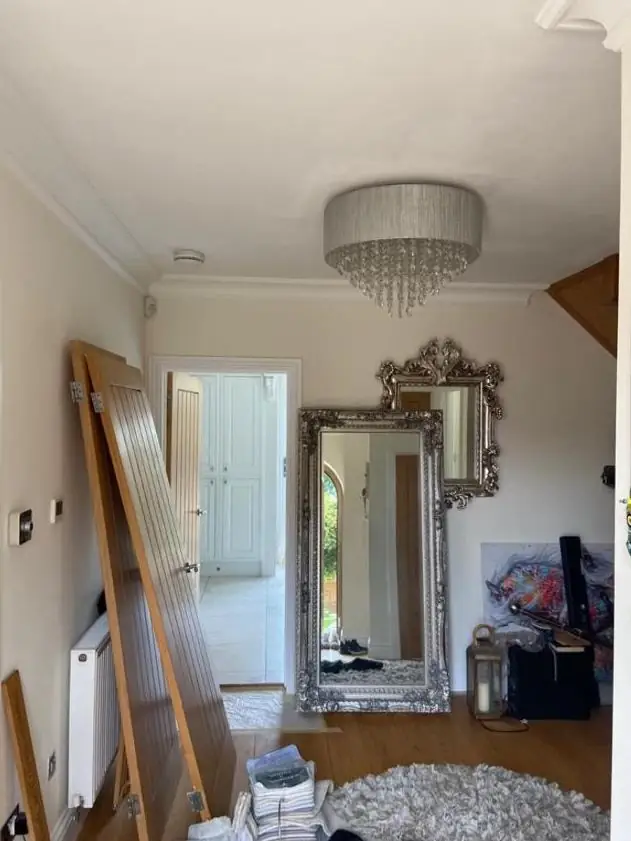
Usually, yes. Keep one finish on all the woodwork in a room, and ideally through connected spaces like a hall, stairs and landing. Doors, frames and skirting sit next to each other, so a satin door against eggshell architrave looks like a mistake rather than a choice, even in the same colour.
There are sensible exceptions:
- Front doors are often done in gloss for a traditional look (Farrow & Ball lists its Full Gloss for exterior timber, including entrance doors), while inside stays satin or eggshell.
- Walls and woodwork in one colour look best with a clear but small step in sheen, such as matt walls with eggshell woodwork. Gloss against matt in the same colour gives a stronger contrast.
- Kitchen cabinets and furniture can take their own finish, since they read as furniture rather than part of the joinery.
If you want help pairing a colour and sheen across rooms, that is what a colour consultation covers.
Matching the finish to the age of your house
The age and style of the house is a good guide. Older, hand-made joinery suits a lower sheen; newer, flat machined timber and MDF can carry more shine. These are starting points, not rules.
- Victorian and Edwardian terraces (common in areas like Phippsville): original four-panel doors and deep skirtings usually carry decades of paint layers. Eggshell softens the bumps and suits heritage colours. Gloss is the traditional finish but needs serious prep to look right.
- 1960s to 1980s estates: flat doors, plain architrave and softwood skirting do well in satin, which wipes easily and doesn’t make the plain shapes look harsh.
- New builds: smooth MDF skirting and moulded doors arrive primed and flat. Satin is the usual finish; eggshell gives a softer modern look.
If your home is older and the woodwork still carries its early coats, take care before sanding. The British Coatings Federation says lead pigments were taken out of most paints in the 1960s and removed from decorative paints entirely by the early 1980s, and that wood painted before the 1960s could contain significant levels. Its advice is to keep the surface wet, use waterproof abrasive paper and never dry sand, with no children or pregnant women in the area while the work goes on. The HSE lists stripping old lead paint from doors and windows under its heading “When are you most at risk?”, so if you are unsure, have it tested or get a professional in.
How do you test a finish before committing?
Buy a small tin and paint a test piece rather than a sample on the door itself. An offcut of skirting or a piece of MDF, primed and given two coats, shows the real sheen. Look at it in daylight and again at night under your own lamps, held against the wall colour.
- Decide on the colour first. Deep and muted colours usually look richer in eggshell; brilliant white often looks crisper in satin or gloss.
- Check the woodwork with a torch held flat to the surface, as above.
- Check what is on it now by rubbing a hidden spot with a cotton bud and methylated spirit: water-based paint usually softens, while oil-based paint is generally unaffected. That tells you whether you need to key and prime before a water-based finish.
- Read the maker’s page for sheen, recoat time and suitable surfaces.
- Buy the same product for every area that will sit side by side.
Should you paint your woodwork yourself?
A single room of sound, previously water-based woodwork going over in the same type of paint is well within DIY reach. Take your time on the sanding and filling, keep a wet edge, and don’t overwork the brush. Satin and eggshell are more forgiving than gloss if this is your first go.
It makes sense to get a decorator in when the woodwork has thick, chipped or oil-based layers, when you want gloss and the boards aren’t smooth, when a hall, stairs and landing all need doing, or when the paint may contain lead. Whoever does it, settle the sheen room by room before anyone opens a tin, and buy the whole job in one brand so the finish matches from door to skirting. Dean, a painter and decorator in Northampton, can look at your doors and skirting, tell you what is on them now and recommend a finish that suits the timber and the room. See our door and skirting board painting page, or call 07539 779 036 to arrange a free quote.
Sources
- Dr Dulux: paint finishes explained, Dulux UK (accessed 2026-10-09)
- Modern Eggshell, Farrow & Ball (accessed 2026-10-09)
- Flat Eggshell, Farrow & Ball (accessed 2026-10-09)
- Full Gloss, Farrow & Ball (accessed 2026-10-09)
- Dulux Trade Diamond Eggshell, Dulux Trade (AkzoNobel) (accessed 2026-10-09)
- Dulux Trade Diamond Satinwood, Dulux Trade (AkzoNobel) (accessed 2026-10-09)
- Dulux Trade Quick Dry Satinwood, Dulux Trade (AkzoNobel) (accessed 2026-10-09)
- Dulux Trade High Gloss, Dulux Trade (AkzoNobel) (accessed 2026-10-09)
- Professional painter problem solver: yellowing, Dulux Trade Australia (accessed 2026-10-09)
- Lead: when are you most at risk?, Health and Safety Executive (HSE) (accessed 2026-10-09)
- HS 032 Lead in painted surfaces: repainting and removal, guide for the general public (December 2015), British Coatings Federation (hosted by the Painting & Decorating Association) (accessed 2026-11-16)
Last updated by Dean, DH Painter & Decorator.


