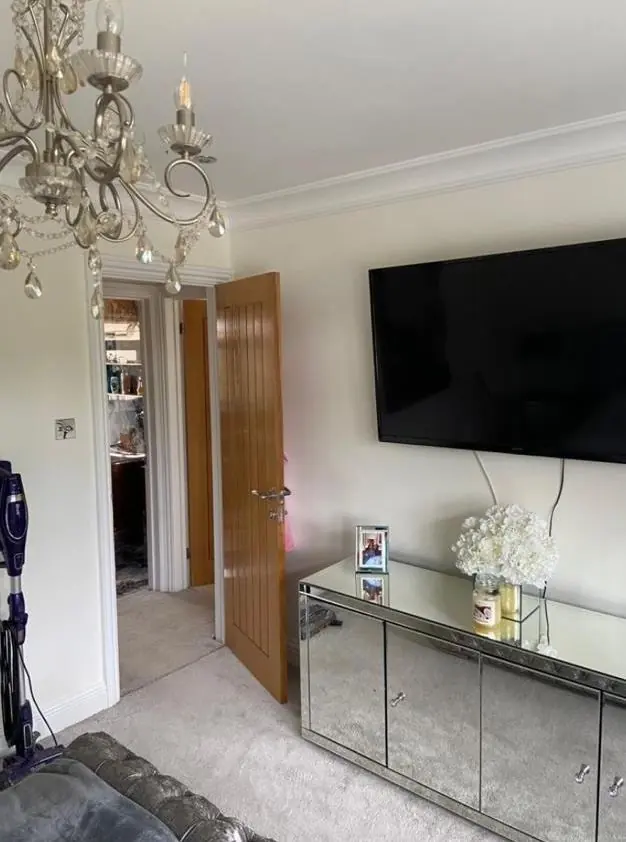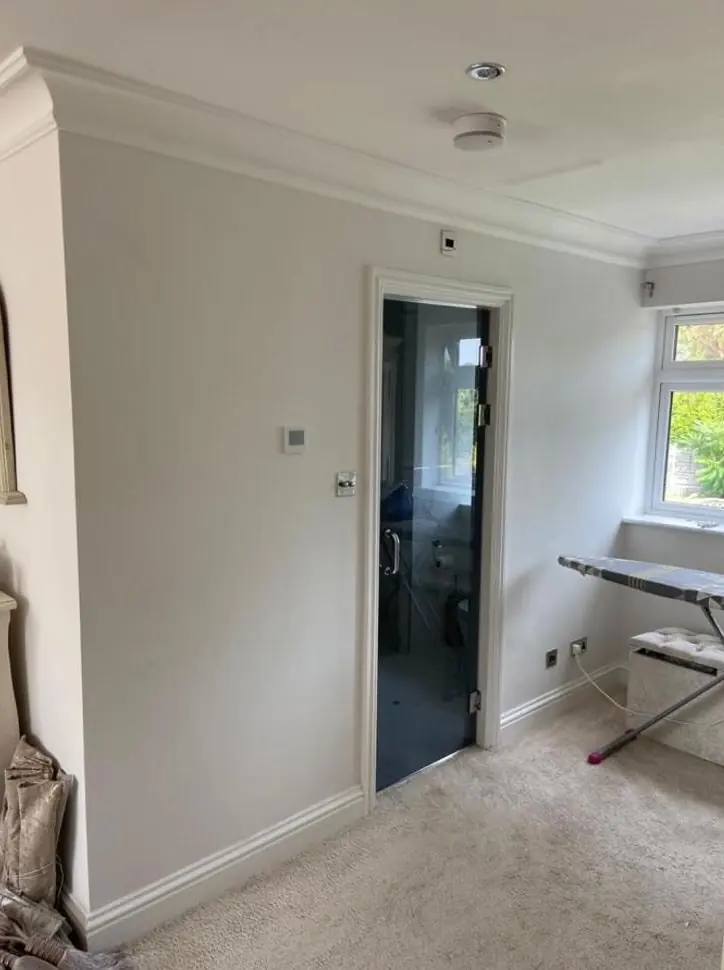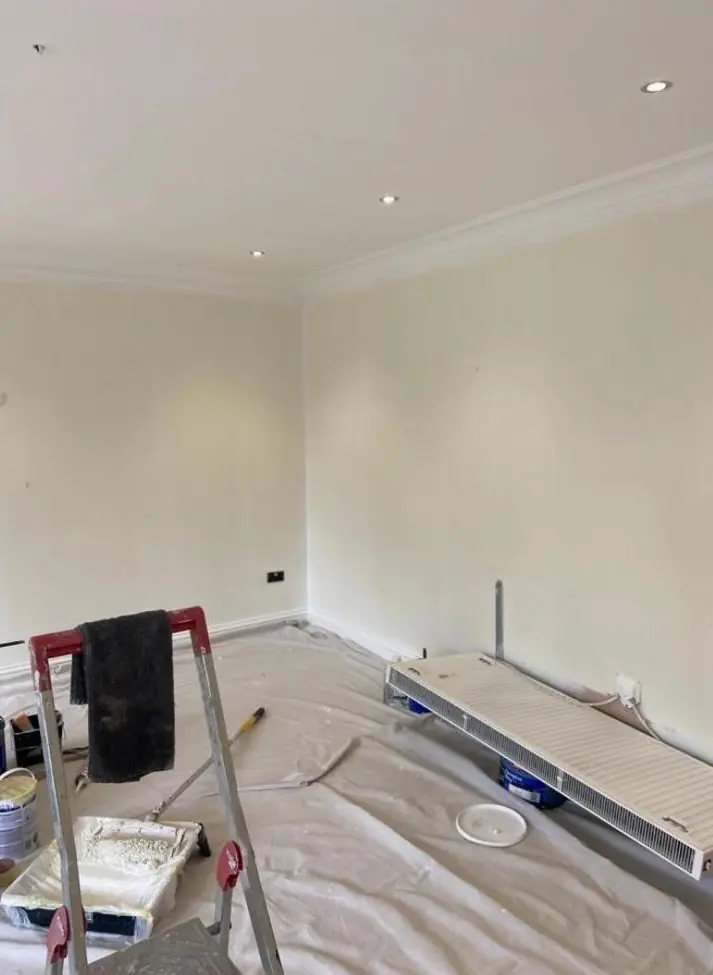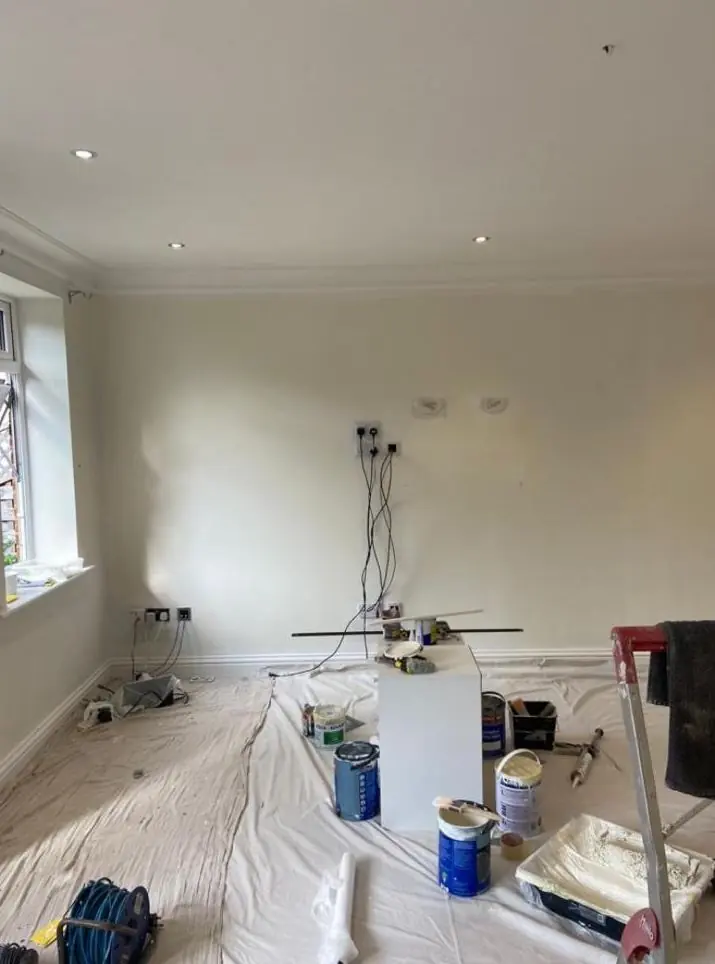
Painting the walls and ceilings inside a typical 3-bedroom house costs about £2,550 to £4,500 in the UK, going by MyJobQuote's 2026 room-by-room averages added together. Woodwork, repairs, high ceilings and VAT can push it higher, and the hall, stairs and landing has the highest price range of any single area.
How much does it cost to paint the inside of a 3-bedroom house?
Painting the walls and ceilings inside a typical 3-bedroom house costs about £2,550 to £4,500 in the UK. That is the total you get by adding up the room-by-room national averages in MyJobQuote’s 2026 room painting cost guide for the seven areas in a typical 3-bed. Doors, skirtings and other woodwork, heavy repairs and VAT can all push it higher.
Whole-house figures quoted online vary a lot because the phrase “paint a 3-bed house” can mean anything from a quick refresh of magnolia walls to a full strip-back of every door and banister. Homebuilding & Renovating gave “around £2,000-£3,000” as a rough guide for a three-bedroom house, but that article was published in March 2022 and labour costs have moved since. The useful thing is to build the number yourself, room by room, so you can see where the money goes.
What does each room cost? A room-by-room breakdown
A typical 3-bed semi has seven areas to paint: living room, kitchen, bathroom, three bedrooms and the hall, stairs and landing. Adding up MyJobQuote’s national averages (updated September 2026) for walls and ceilings gives about £2,550 to £4,500. Its separate supply-only paint figures for the same rooms come to about £305 to £1,825, which is roughly what the paint alone would cost if you did it yourself.
| Area (MyJobQuote room type) | Cost range | Paint only, supply cost | Timescale |
|---|---|---|---|
| Large living room (20 to 30m²) | £500 to £990 | £55 to £350 | 1.5 to 2 days |
| Kitchen (10 to 15m²) | £250 to £500 | £35 to £225 | 5 to 7 hours |
| Bathroom (6 to 9m²) | £150 to £300 | £25 to £175 | 5 to 7 hours |
| Main bedroom (large bedroom, 14 to 20m²) | £350 to £660 | £45 to £275 | 1 to 1.5 days |
| Second bedroom (small bedroom, 10 to 12m²) | £250 to £400 | £35 to £200 | 1 day |
| Box room (7 to 9m²) | £175 to £300 | £30 to £175 | 4 to 6 hours |
| Hall, stairs and landing (35 to 40m²) | £875 to £1,350+ | £80 to £425 | 1.5 to 2 days |
| Total | £2,550 to £4,500 | £305 to £1,825 | Around 7 to 9 working days |
Source: room figures from MyJobQuote (last updated 17 September 2026), added together by us. The paint column comes from the guide’s separate supply-only table. These are national averages for painting walls and ceilings, not a price list and not our rates. MyJobQuote also puts decorator day rates at £150 to £250 outside London and £250 to £350 in London, which is why the time column matters as much as the money column.
Which? gives a wider spread. Its survey of nine Which? Trusted Traders, gathered in November 2025 and published in May 2026, put the walls and ceiling of a medium room (about 3.3m x 3m) at £250 to £1,100 and the walls only of the hall, landing and stairs of an average three-bedroom house at £400 to £1,600, both excluding VAT and assuming the plaster is in good condition. The gap between the low and high ends tells you how much the condition of a house, and the decorator, changes the figure.
Why does the hall, stairs and landing cost so much?
The hall, stairs and landing has the highest price range of any area in MyJobQuote’s guide, at £875 to £1,350+ for walls and ceilings. The walls are tall, the ceiling over the stairs is out of reach, and access has to be set up safely before any painting starts. If the woodwork is included, spindles, newel posts and handrails are slow, careful work by hand.
A stepladder balanced on a stair is not a safe platform. The HSE’s guidance on ladders says they can be a sensible option for low-risk, short-duration tasks but should not automatically be your first choice. A decorator will usually bring a stair platform or a combination ladder with boards, and that set-up time is built into the price. It is a common reason to hand the stairwell to a decorator even if you paint the bedrooms yourself. Our hallway, stairs and landing decorating page explains how that job is done.
How much extra is the woodwork?
Woodwork is usually priced separately from walls and ceilings, and it is one of the biggest variables in a whole-house figure. Skirtings, architraves, door frames, doors, window boards and banisters all need sanding, filling, an undercoat and a top coat, and that is slower than rolling a wall.
Which? puts the woodwork in one medium room (skirting boards and one door frame, not the door itself) at £70 to £650 when the old gloss is sound, rising to £90 to £1,200 where old gloss has to come off first, with 1 to 2 days for each, excluding VAT. Multiply that across seven rooms, add both faces of every internal door and the staircase, and it is easy to see how a house moves from the bottom of the range to the top. If you are choosing what to cut, walls and ceilings refresh a house quickly, while woodwork is where you notice tired, yellowed gloss. Our door, skirting and woodwork painting page covers what proper prep involves.
What makes one 3-bed house cost more than another?
Two 3-bed houses with the same number of rooms can be priced thousands of pounds apart. The things that move a quote are the condition of the plaster, ceiling height, the amount of woodwork, colour changes, how much furniture is in the way, and whether the decorator is VAT registered.
- Age and ceiling height. New homes built to the government’s nationally described space standard, where a council has adopted it, need a floor-to-ceiling height of at least 2.3m for at least 75% of the floor area, and a two-storey 3-bed needs a gross internal area of at least 84m² to 102m² depending on how many people it is designed for. A Victorian terrace around Abington often has taller ceilings, coving and picture rails, which means more wall to cover and more cutting in.
- Plaster condition. Cracked ceilings, blown plaster and old wallpaper scars need filling, sanding and sometimes lining paper before any paint goes on. Settlement cracks can appear in newer houses too, including on the estates at Grange Park.
- Colour changes. Going from a deep colour to a pale one, or covering water stains that need a stain block, usually adds a coat.
- Lived-in or empty. An empty house between tenants or before a move-in is quicker to paint than a furnished one where every room has to be cleared, sheeted and put back.
- Paint choice. Paint is a small part of the bill. MyJobQuote says paint and supplies often make up as little as 10 to 15% of a standard job using budget or mid-range paint, though premium paint or extra coats can take it to a third or more.
- VAT. A decorator must register for VAT once their taxable turnover goes over £90,000 over a rolling 12 months, according to GOV.UK, and then add VAT at the standard rate of 20%. Check whether a quote includes it before comparing.
Our painter and decorator cost guide for Northampton goes through each of these factors in more detail, including day rates and wallpapering.
How long does it take to paint a 3-bedroom house?
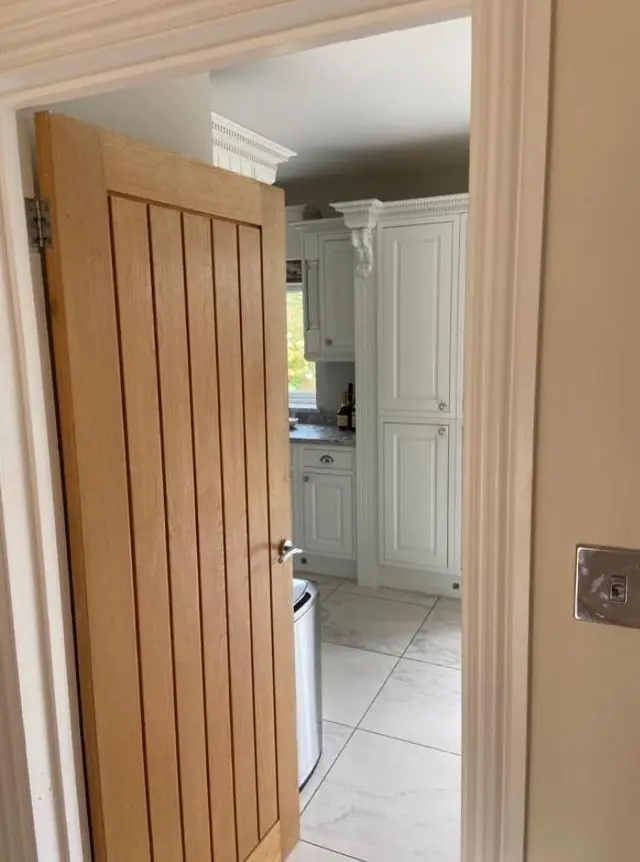
MyJobQuote’s room timescales add up to around seven to nine working days for one decorator to paint the walls and ceilings of a 3-bed house. Woodwork, repairs and drying time come on top. Which? allows 1 to 2 days for the woodwork in a single medium room, so a full repaint including doors and the staircase can run to two weeks or more.
Drying time is part of the schedule. A common trade emulsion such as Dulux Trade Vinyl Matt lists a recoat time of 2 to 4 hours and says the normal process is two full coats, so a decorator plans the day around it, often moving between rooms while one dries. Gloss and undercoat on woodwork take longer between coats, which is one reason woodwork is usually left until the walls are finished.
How is a whole house usually painted, and in what order?
A decorator usually works top down in each room and saves the hallway for last. Inside a room the order is ceiling, then walls, then woodwork, so drips and dust only ever fall onto surfaces that have not been finished yet. Across the house, the stairwell goes last because everything else travels through it.
- Survey and plan. Walk every room, note repairs and agree which rooms are done in which order, so you can keep living in the house.
- Clear and protect. Furniture to the middle of the room, floors and fittings covered, switch plates loosened.
- Prepare. Fill, sand, caulk gaps along skirtings and frames, and spot-prime repairs and stains.
- Ceilings, then walls. Two coats of emulsion, cutting in before rolling.
- Woodwork. Sand, undercoat where needed, then the top coat.
- Hall, stairs and landing last. Once the rest of the house is finished and furniture is back in place.
Older houses add one step before sanding anything. Paint on original woodwork may contain lead. The HSE’s guidance on lead in construction says lead pigments were widely used in paints for homes until the 1960s and were not removed from all commonly used paint until the early 1980s. It warns against overheating leaded paint with blow lamps or gas torches, suggests wet abrasive paper, and advises stripping old paint only if it is flaking, chipping, giving off dust or a risk to children. If your house has its original doors, skirtings or sash windows, ask the decorator how they will deal with it.
How can you keep the cost down?
The cheapest way to cut a whole-house quote is to reduce the decorator’s time rather than buy cheaper paint. Clearing rooms yourself, keeping ceilings and woodwork white, and agreeing exactly which surfaces are included all bring the price down without lowering the finish. Phasing rooms can help cash flow, but each extra visit adds set-up time.
- Empty the rooms, or at least clear shelves, pictures and small furniture before work starts.
- Keep to one ceiling colour and one woodwork colour across the house, which saves cutting in and paint.
- Strip wallpaper yourself only if you are sure the plaster underneath will survive. Damaged plaster costs more to fix than the stripping saved.
- Do the bedrooms yourself and leave the stairwell and woodwork to a decorator, if you have the time.
- Ask for a quote that lists each room and each surface, so you can drop items rather than haggle over a lump sum.
When is DIY sensible, and when should you get a decorator?
Painting a bedroom or two yourself is a reasonable weekend job if the walls are sound and the colour is staying similar. A whole house is different. Seven areas, a stairwell that needs safe access, a lot of woodwork and possible lead paint in an older home add up to a lot of careful work to fit around a job and family.
A decorator makes sense when the stairwell needs doing, when there are cracks or stains to deal with, when the woodwork is tired, or when you want the whole house finished in one go before a move or a new tenancy. If that sounds like your house, Dean has over 30 years in the trade and will visit, look at every room and give you a free written quote. Call 07539 779 036, or read more about our interior painting in Northampton. National averages are a starting point. A written quote after a visit is the only real figure.
Sources
- How much to paint a room? (room painting cost guide), MyJobQuote (accessed 2026-10-09)
- How much do painters and decorators cost?, Which? (accessed 2026-10-09)
- Cost to paint a house: the price of painting inside and out, Homebuilding & Renovating (accessed 2026-10-09)
- Dulux Trade Vinyl Matt product information, AkzoNobel (Dulux Trade) (accessed 2026-10-09)
- Technical housing standards: nationally described space standard (PDF), GOV.UK (Ministry of Housing, Communities and Local Government) (accessed 2026-10-09)
- When to register for VAT, GOV.UK (HMRC) (accessed 2026-10-09)
- VAT rates, GOV.UK (HMRC) (accessed 2026-10-09)
- Ladders and stepladders, Health and Safety Executive (accessed 2026-10-09)
- Lead: health risks in construction, Health and Safety Executive (accessed 2026-10-09)
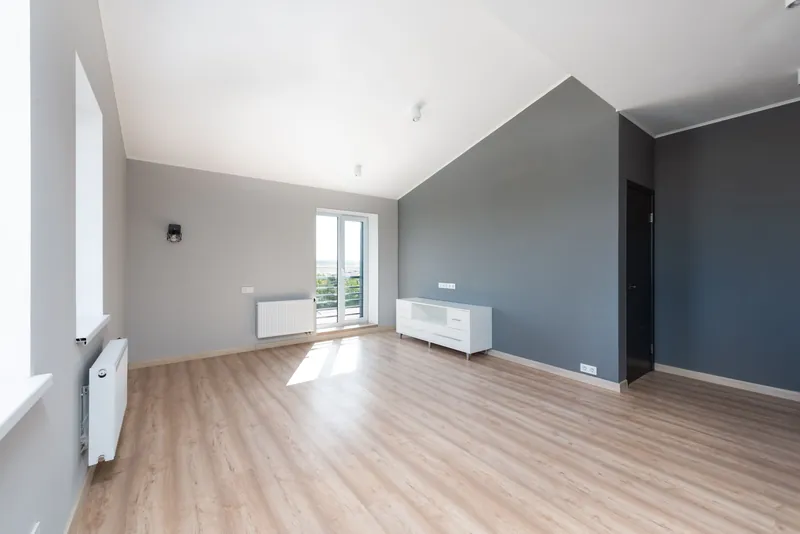
Header photo: Max Vakhtbovych on Pexels. Photos of our own work appear further down the page.
Last updated by Dean, DH Painter & Decorator.