
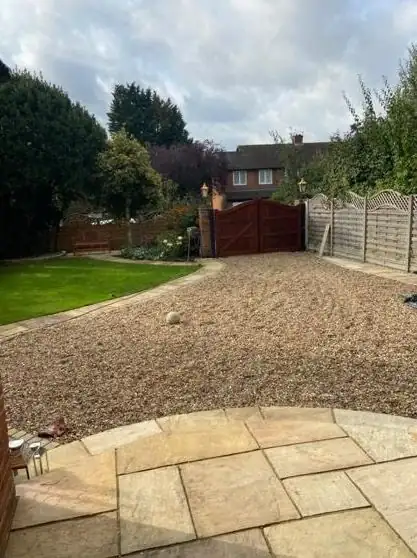


Abington's housing is old: over half its properties predate 1900 and nearly two in three homes are terraced. DH Painter & Decorator covers it from our Northampton base, about 1.6 miles north-east of the town centre, for inside and outside work on houses, flats, rentals and businesses.
| Fact | Detail | Source |
|---|---|---|
| Built before 1900 | 1,830 of 3,480 properties (52.6%) in the Abington MSOA; West Northamptonshire 12.3% | GOV.UK |
| Terraced homes | 64.6% of homes (Census 2021); West Northamptonshire 23.1% | Nomis (ONS) |
| Households renting privately | 42.8% (Census 2021); West Northamptonshire 19.1% | Nomis (ONS) |
| Conservation area | Abington Park, designated 30 January 2006, with an Article 4(2) direction sealed 16 April 2007 | West Northamptonshire Council |
| HMO licences | 212 in the Abington and Phippsville ward on the February 2026 register, second only to Castle ward | West Northamptonshire Council |
| Flood risk | Sampled points on Wellingborough Road, Adams Avenue, Cedar Road and the park lakes outside EA Flood Zones 2 and 3 | planning.data.gov.uk |
Old, terraced and largely rented: Abington’s homes in figures
Abington’s housing is much older than the West Northamptonshire average, and the official counts show it. The Valuation Office Agency’s 2026 council tax figures for the Abington MSOA (the statistical area the House of Commons Library names Abington) record 1,830 of its 3,480 properties as built before 1900. That is 52.6%, against 12.3% across West Northamptonshire. Another 12.4% went up between 1900 and 1918, so roughly two homes in three were already standing when the First World War ended.
The 2021 Census fills in the rest. 64.6% of homes in the same area are terraced, nearly three times the West Northamptonshire share of 23.1%, and only 4.2% are detached. 42.8% of households rent privately, more than double the 19.1% across the council area. Three bedrooms is the most common size, at 44.4% of households.
For a decorator those numbers add up to a familiar set of jobs. Lime plaster and lath ceilings that crack rather than flex. Woodwork with a century of paint on it, some of it lead-based. Narrow halls that are also the only way in for ladders and dust sheets. Shared hallways and rented rooms that need hard-wearing finishes on a deadline. Those figures are why interior painting and landlord decorating come up first on this page.
The park edge: a conservation area with an Article 4 direction
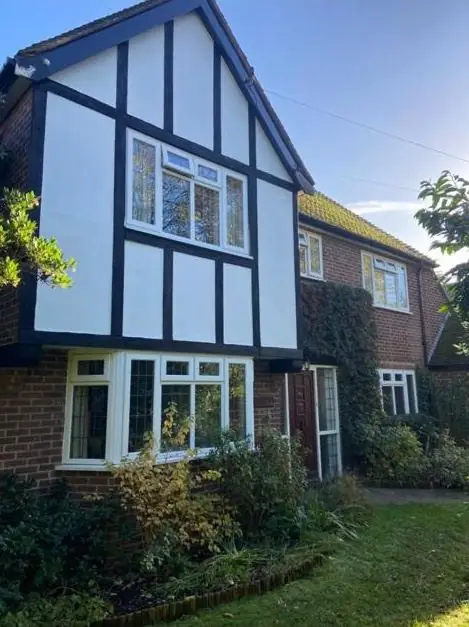
The houses facing Abington Park are a different stock from the terraces behind them. Most went up in the first quarter of the 20th century, with a few into the 1930s, individually designed and often in the Arts and Crafts manner, on Christchurch Road (begun in 1905 as the Alexandra Park Estate), Abington Park Crescent, Park Avenue South and the park end of Wellingborough Road and Abington Avenue. The Northamptonshire Historic Environment Record calls their quality and consistency unique in Northampton for that date. They became part of the Abington Park Conservation Area on 30 January 2006.
The council’s 2005 assessment describes what holds the group together: red brick, clay tiles, smooth or pebbledash render on the upper storeys, half-timbered gables and white-painted timber sashes and casements. Its repair guidance asks for external joinery to be painted in gloss rather than stained and for decorative ironwork to keep a gloss system in its original colours, and it rules out textured or impermeable paint on render.
In April 2007 the old borough council added an Article 4(2) direction, which West Northamptonshire Council still lists. Among other things it removes permitted development rights for painting any part of a house, or a wall, fence or gate in its grounds, that faces a highway. In practice a new colour on a front elevation inside the boundary needs planning permission first. Repainting in the existing colours is normally treated as maintenance, though the council is the one to confirm that for a particular address. Most of Abington’s terraced streets lie outside the conservation area.
Wellingborough Road, and the buildings to leave unpainted
Wellingborough Road is the district’s working street. The Food Standards Agency register lists a near-continuous run of restaurants, cafés, bars and shops from Sainsbury’s at 195-201 to The Abington at 383, with estate agents, care providers and offices in between, several of them in late-Victorian buildings with carved stone dressings.
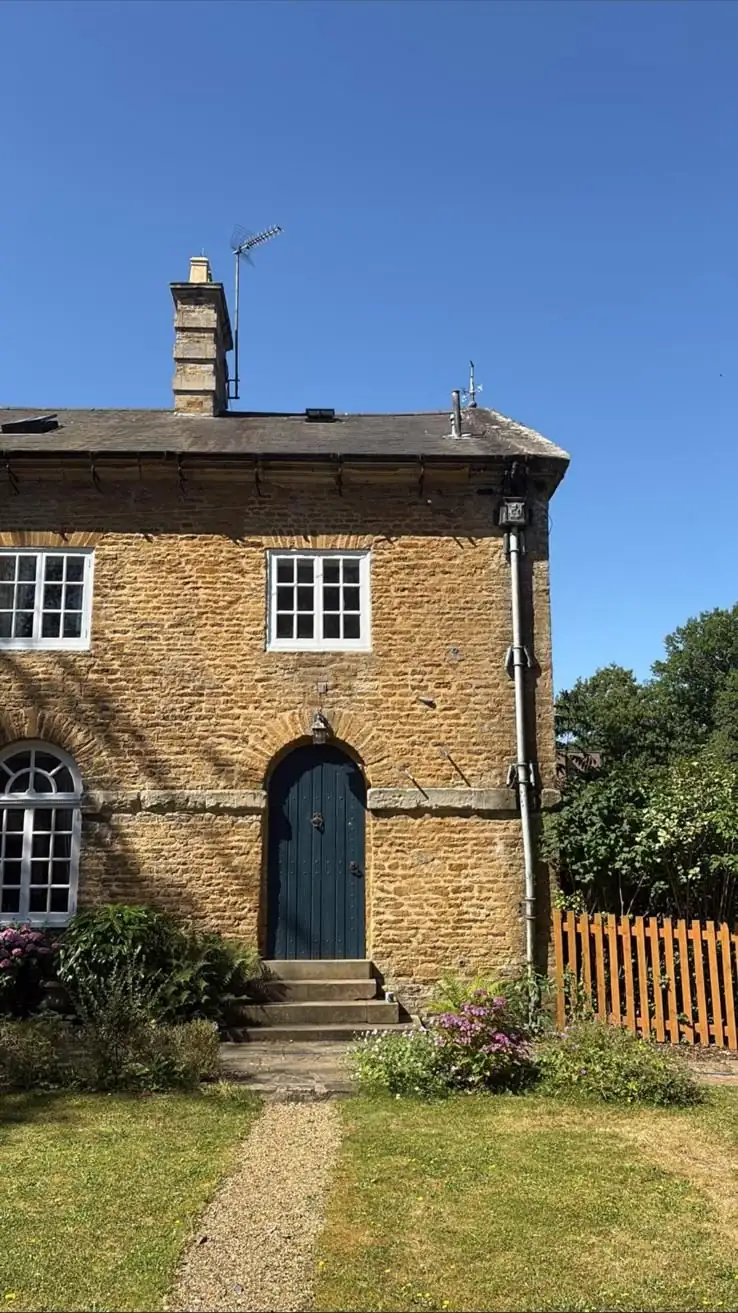
That stone is the thing to protect. The Grade II listing for the Abington Hotel, built in 1898 to designs by Matthew Holding, goes out of its way to say that black and red paint on its ground-floor stonework spoils the building. The same thinking applies to stone sills, lintels and bays on brick houses, and above all to Abington’s listed stone buildings: Archway Cottages on Wellingborough Road, The Cottage on Christchurch Road and the 1846 former almshouses at 1-4 Abington Cottages, all squared rubble. On those, any painting is confined to the timber, where the listing allows it, and the masonry stays bare. The one rendered landmark is New Ways at 508 Wellingborough Road, Peter Behrens’s Grade II* house of 1925-6, which was designed with whitewashed cement render from the start.
Services in Abington, grouped by the work
Each service has its own Abington page with the local detail that matters for it. In short:
Inside the house
- Interior painting: walls, ceilings and woodwork in pre-1900 rooms, where crack repair and old plaster set the pace.
- Hallways, stairs and landings: shared halls in converted houses and tall stairwells in the three-storey houses.
- Doors, skirtings and woodwork: original joinery under lead-era paint, and Crittall steel windows on some 1930s houses.
- Wallpaper hanging: period papers in Arts and Crafts houses, on walls that are seldom plumb.
- Decorative finishes: pargetting, painted house names, stained glass and Art Nouveau porches that call for fine brushwork.
- Colour and finish advice: schemes that fit the park houses’ documented palette, and light in narrow terrace rooms.
- New plaster and extensions: flat conversions, rear extensions and the homes built since the 1980s.
Outside
- Exterior painting: what the Article 4 direction means for front elevations, and terrace fronts that sit on the pavement.
- Render and masonry: pebbledash, roughcast and smooth render, and when painting them needs permission.
- Fascias and soffits: deep Arts and Crafts eaves and cast-iron gutters under the park’s horse chestnuts.
- Metal gates and railings: ironwork repaired and repainted rather than replaced, listed railings included.
- Fence and gate staining: long garden boundaries on Abington Park Crescent, and back fences reached through the house.
Businesses and rented property
- Landlord decorating: re-lets and licensed HMOs in the ward with the second-highest HMO licence count on the council’s 2026 register.
- Commercial painting: care homes, nurseries and offices in converted park-edge houses and in Burlington House.
- Shopfront painting: the Wellingborough Road frontages, with their stone dressings left as stone.
Before Dean quotes: access, parking and the lie of the land
Abington sits about 1.6 miles north-east of Northampton town centre in a straight line, out along the Wellingborough Road, and we cover it from our Northampton base. Three practical things shape most jobs here. Parking on the terraced streets is on-street and tight, so materials arrive in small, planned loads. Northampton’s Victorian terraces typically open straight onto the pavement, which puts ladder feet on a public footway. And where a terrace has no rear access, everything for the back of the house is carried through the hall; Northampton Town Council’s April 2023 minutes describe rubbish on Cedar Road having to come through the house to the kerb.
Flooding is not a factor for the housing. Points sampled in November 2026 on Wellingborough Road, Adams Avenue, Cedar Road and by the park lakes all fell outside Environment Agency Flood Zones 2 and 3; the local flood-warning area covers a few streets by the Nene, south of the park. The ground does fall from Wellingborough Road into the park valley, so some park-facing houses sit lower and more sheltered under trees, which slows drying and encourages algae.
Dean looks at the job, explains what each surface needs and puts the quote in writing. Our painter and decorator cost guide explains how a quote is built up, and the guide to choosing a decorator lists what to ask anyone you invite round.
Sources
- Abington Park, Wikipedia (accessed 2026-11-16)
- Abington and Phippsville, Wikipedia (accessed 2026-11-16)
- Abington, Northamptonshire, Wikipedia (accessed 2026-11-16)
- Heritage and non-heritage Article 4s and Local Development Orders (LDOs), West Northamptonshire Council (accessed 2026-11-16)
- Northampton Supplementary Planning Documents (SPDs) and other guides, West Northamptonshire Council (accessed 2026-11-16)
- 254 Wellingborough Road (rear of), Northamptonshire Historic Environment Record (accessed 2026-11-16)
- Abington Park Conservation Area, Northamptonshire Historic Environment Record (accessed 2026-11-16)
- Mobbs Miller House Including Front Walls, Railings & Gates, Christchurch Road, Northamptonshire Historic Environment Record (accessed 2026-11-16)
- No.369 Wellingborough Road (Front Building of Manfield Shoe Factory), Northamptonshire Historic Environment Record (accessed 2026-11-16)
- 1 to 4 Abington Cottages, Northampton, British Listed Buildings (accessed 2026-11-16)
- Abington Abbey (Museum), Abington, British Listed Buildings (accessed 2026-11-16)
- Archway Cottages, Northampton, British Listed Buildings (accessed 2026-11-16)
- Listed Buildings in Northampton - Abington Ward, Northampton, Northamptonshire, British Listed Buildings (accessed 2026-11-16)
- The Abington Hotel, Abington, British Listed Buildings (accessed 2026-11-16)
- The Cottage, Abington, British Listed Buildings (accessed 2026-11-16)
- Council Tax: stock of properties, 2026 (table CTSOP4.1, build period), Valuation Office Agency (accessed 2026-11-16)
- Census 2021 accommodation type, MSOA E02005671 (Abington), Nomis (ONS) (accessed 2026-11-16)
- Census 2021 tenure, MSOA E02005671 (Abington), Nomis (ONS) (accessed 2026-11-16)
- Census 2021 number of bedrooms, MSOA E02005671 (Abington), Nomis (ONS) (accessed 2026-11-16)
- MSOA names (Abington = West Northamptonshire 030), House of Commons Library (accessed 2026-11-16)
- Census 2021 accommodation type, West Northamptonshire, Nomis (ONS) (accessed 2026-11-16)
- Census 2021 tenure, West Northamptonshire, Nomis (ONS) (accessed 2026-11-16)
- Abington Park Conservation Area Assessment and management plan (December 2005), West Northamptonshire Council (accessed 2026-11-16)
- Abington Park Conservation Area map, West Northamptonshire Council (accessed 2026-11-16)
- Article 4(2) Direction 2007: Abington Park Conservation Area, West Northamptonshire Council (accessed 2026-11-16)
- HMO public register, February 2026, West Northamptonshire Council (accessed 2026-11-16)
- Food hygiene register: Wellingborough Road, Northampton, Food Standards Agency (accessed 2026-11-16)
- New Ways, Northampton, British Listed Buildings (accessed 2026-11-16)
- Planning committee minutes, 26 April 2023, Northampton Town Council (accessed 2026-11-16)
- Flood risk zone lookup, Abington, planning.data.gov.uk (accessed 2026-11-16)
- Flood warning area 055FWFPUNE06, Environment Agency (accessed 2026-11-16)
- Jackson Grundy estate agents, Abington branch, OnTheMarket (accessed 2026-11-16)
Last updated .