
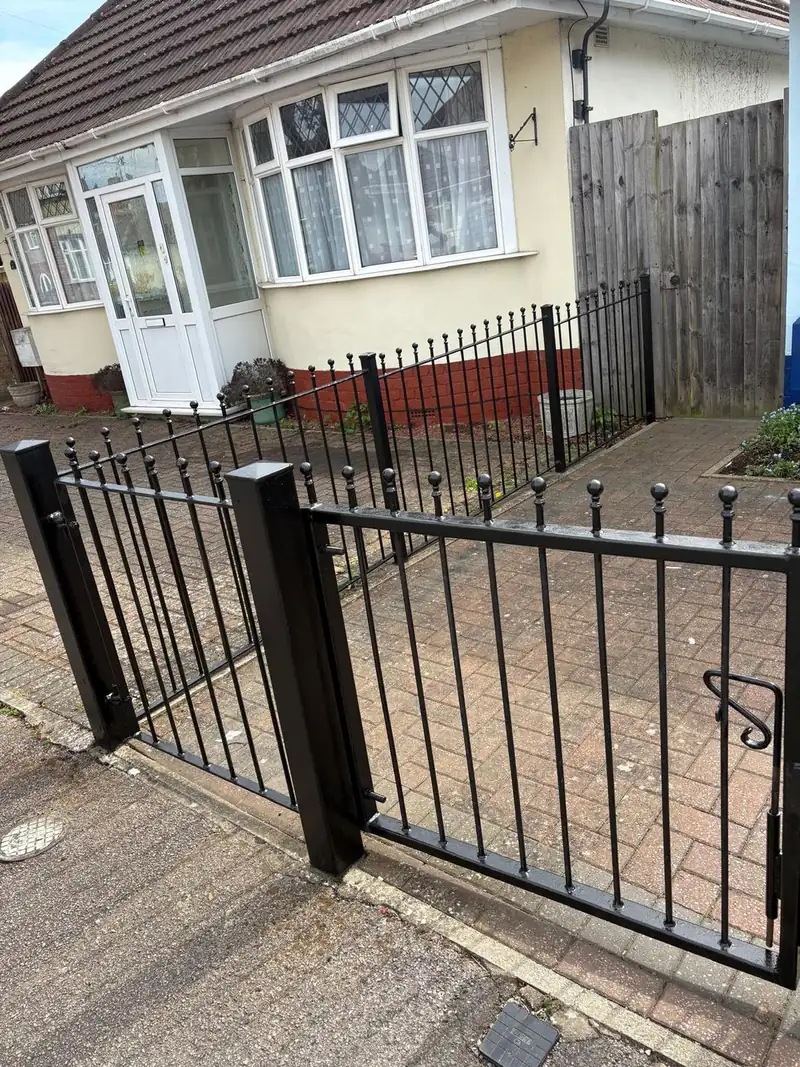
To stop rust coming back on a metal gate or railing, remove all loose rust and flaking paint, treat or prime any bare or pitted metal the same day, then apply two coats of an exterior metal paint, working it into joints and bottom rails. Preparation matters as much as the tin: paint over loose rust and the rust keeps spreading underneath.
Why does rust come back through new metal paint?
Rust comes back because it was never fully removed or sealed. Paint over loose rust and the rust keeps growing underneath, lifting the new film from below. The usual weak points are the bottom rail, the feet of the posts, welded joints, scrolls, hinges, and anywhere a flat top lets rain sit. Good metal paint can only protect sound metal it is stuck to.
That is why the old advice to “just give it a coat” lets people down. A fresh coat looks fine for a summer. Often by the following winter you see orange pinpricks along the edges, then blisters on the bottom rail, then flakes. Under each flake is the same rust that was there before, now with a lid on it holding moisture in.
In Northampton the Nene valley adds its own problem. Damp autumn mornings and river fog leave metal wet with dew well into the day, and paint put onto a cold, damp bar struggles to bond. A decorator will usually wait until the metal is dry to the touch and stop early enough that the coat can firm up before the evening damp comes back.
What is the best metal paint for gates and railings?
For most outdoor ironwork the best choice is a direct-to-rust exterior metal paint over thorough preparation, with a dedicated primer on any metal that needs one. Iron and mild steel can take a direct-to-rust paint. Galvanised steel and aluminium need a special primer first. Heavily pitted metal benefits from a rust treatment or high-build primer before the topcoat.
The table uses Hammerite products as worked examples, with figures taken from each product page. Other trade metal paints follow similar principles, so read the tin for whatever you buy.
| Product type (example) | Use it on | Coats and recoat | Conditions and notes |
|---|---|---|---|
| Solvent-based direct-to-rust paint (Hammerite Direct to Rust Smooth) | Rusty or bare iron and steel; sound old paint after a patch test | 2 coats on bare or rusty metal, 1 on sound painted metal; recoat after 4 hours | Ideal application temperature 8°C to 25°C; about 5 m² per litre; clean up with brush cleaner and thinner |
| Water-based direct-to-rust paint (Hammerite Ultima) | Metal and rust without a primer, per the maker | 2 coats; recoat after 4 hours | 7.5 m² per litre; brushes wash out in warm soapy water; maker claims a durable finish for up to 12 years |
| Primer for non-ferrous metal (Hammerite Special Metal Primer) | Stainless steel and non-ferrous metals, including galvanised, aluminium, chrome, brass and copper | Recoat after 2 hours | Don’t apply below 5°C or when there is a risk of rain or frost |
| Rust treatment for pitted steel (Hammerite No 1 Rust Beater) | Heavily pitted areas of rust | 2 coats, 6 hours apart; topcoat after at least 6 hours, 24 hours for best results | High-build finish; ideal application temperature 8°C to 25°C |
| Rust converter (Hammerite Kurust) | Small rust patches, chips and scratches | 1 coat; topcoat after 3 hours | Turns blue-black as it reacts; if there’s no change after an hour, apply again |
The solvent-based direct-to-rust paint can react with some existing coatings, so Hammerite says to test a patch on painted metal and wait an hour; if the old paint wrinkles or lifts, it all has to come off. And the same page says galvanised, zinc and aluminium need the special primer first, so check what your gate is made of before you buy.
How to prepare a rusty metal gate, step by step
Take everything loose back to firm metal, wash off grease and dirt, let it dry fully, then treat or prime bare and pitted areas before the end of the day. Preparation is most of the job on a rusty gate. On a badly rusted gate, brushing, scraping and priming can take longer than the finish coats.
This is the order a decorator will usually follow on metal gate and railing painting:
- Check for lead first on old railings (see the next section) before you scrape or sand anything.
- Scrape off flaking paint with a stiff scraper, working along each bar.
- Wire brush the rust back to a firm surface. A wire wheel in a drill speeds up flat bars and rails. Scrolls, collars and finials need a hand brush and abrasive paper.
- Feather the edges of sound old paint so the new coat doesn’t show a hard step.
- Wash and degrease. Hammerite’s preparation steps call for diluted detergent, a rinse with clean water, and full drying.
- Treat and prime the same day. Bare steel can flash rust in damp air, so any bright metal you’ve exposed should be covered before you pack up.
- Two finish coats, top to bottom, with the brush worked into joints and the undersides of rails. Hammerite’s guidance is to make sure all edges and corners are covered and not to over-apply, as sagging will occur.
Leave the gate on its hinges unless it needs repair. Prop it open so you can reach both faces and the hinge side, and work the gate through a few times between coats so the paint doesn’t glue the hinges or latch.
Could the old paint on your railings contain lead?
If the railings are older than the 1960s, assume the lower layers may contain lead until a test says otherwise. The British Coatings Federation’s guide says lead pigments came out of most paints in the 1960s and that metal painted before then “could contain significant levels of lead”. Original railings on Northampton’s Victorian and Edwardian terraces fall squarely into that age bracket.
The same guide lists what not to do: no dry abrasive paper, no blow lamps or gas torches, no dry paint dust, and no bystanders in the area. If the old paint is sound, it calls overcoating “the safest option”. Where it has to come off, the BCF recommends wet abrasive paper or a chemical stripper, with all debris kept wet. It also suggests considering a professional decorator if old lead paint is present. The HSE lists “blast removal and burning of old lead paint” and “stripping of old lead paint” among the processes that give off lead dust, fume or vapour. For a long run of flaking Victorian railings near a family home, this is often the point where paying a professional makes sense.
Do you need permission to paint gates and railings?
Usually not. “The painting of the exterior of any building or work” is permitted development under Class C of the national permitted development rules, as long as it isn’t for advertisement, announcement or direction. There are two exceptions to check before you change colour: listed buildings, and conservation areas where the council has removed that right with an Article 4 direction.
West Northamptonshire Council’s listed buildings page lists new painting, or the removal of existing finishes, among external alterations that need consent, and says structures in the curtilage, including boundary walls, are usually treated as part of the listing. It is a criminal offence to carry out works affecting a listed building’s character without consent.
There is also a local example worth knowing. The Abington Park Conservation Area Article 4 direction (2007) removes permitted development rights for painting the exterior of any part of a dwellinghouse that fronts a highway, or any building or enclosure in its curtilage that fronts a highway. Front gates and railings are enclosures, so on those streets they fall within it. If you live in or near Abington and want to change the colour of front railings, ask the council’s conservation team first. Repainting like for like is a question to ask them too, rather than assume.
Choosing gloss, satin or hammered finish for railings
Black gloss is the traditional choice and sheds water well, but it shows up pits, dents and paint edges. Satin is more forgiving on old, pitted ironwork and looks less plastic on modern steel gates. On a heavily corroded Victorian railing that can never be made perfectly smooth, a satin finish tends to look tidier for longer.
Hammered-effect finishes hide more still. They suit garage-style gates and utility metalwork but look out of place on period railings. Whatever the sheen, dark colours disguise early rust bleed. Pale colours on metal show the first orange speck straight away. That is useful for spotting trouble early, but frustrating if you want the gate to look clean for years.
Should you repaint or replace a rusty gate?
Repaint when the metal is still solid under the rust, even if it looks bad. Replace or repair when bars have rusted through, the bottom rail crumbles when you scrape it, joints have split, or posts are loose where they meet the wall. Paint cannot hold together metal that has lost its strength.
A quick test is to scrape a rusty patch hard with a screwdriver. If it stops at firm, pitted metal, prep and paint will work. If the blade goes in, or flakes of laminated rust keep coming away in layers, the section needs a fabricator or blacksmith before any decorator.
| What you find | What it usually means | Sensible next step |
|---|---|---|
| Surface rust spots, paint mostly sound | Coating worn through at edges and joints | Spot prep, spot prime, one or two maintenance coats |
| Widespread flaking, firm metal underneath | Old coating has failed; rust spread underneath | Full strip of loose paint, rust treatment, prime, two coats |
| Deep pitting on bottom rails and post feet | Water has been sitting there for years | Rust treatment or high-build primer, extra coat on those areas |
| Holes, split joints, crumbling sections | Metal has lost strength | Repair or replace first, then paint |
| Railing feet cracking the wall or stone | Rust expanding inside the masonry | Needs repair to the fixing as well as paint |
For a sense of scale, MyJobQuote’s 2026 wrought iron cost guide says new wrought iron gates typically range from £310 to £590, with fitting around £120 to £240 for a single gate. It says railings start around £90 a metre and average about £180 per metre, and that painters charge on average between £120 and £320 a day. These are national figures, not local prices, and our guide to decorator day rates compares what other 2026 cost guides say. Access, the length of run, how bad the rust is, and how many scrolls and collars there are all move the figure. For local context see our painter and decorator cost guide for Northampton; the price for your own gates comes from a written quote once someone has seen the rust.
How often should metal gates and railings be repainted?
Check them every spring and touch in any chips before rust takes hold, rather than waiting for a full repaint. MyJobQuote says it is a good idea to paint wrought iron every 2 or 3 years. Dealing with small chips as they appear helps the main coating last between full repaints.
The cheapest maintenance is a quick look along the bottom rail and the hinge side after winter. A chip treated with a rust converter and a dab of paint is a small job. Left for a couple of winters, the same chip can turn into a strip-back job. Plan any bigger repaint for a dry spell; our guide to the best time for exterior painting covers temperatures and seasons.
Should you paint gates and railings yourself?
A single garden gate in fair condition is a reasonable weekend job if you are patient with the preparation and the weather. A long run of front railings on an older house is different. There is more of it, it may carry lead paint, it is often next to the pavement, and the finish is on show to the whole street.
Do the screwdriver test on the worst patches first, because it tells you whether you need a painter or a fabricator. If your gates or railings have reached the flaking, pitted stage, Dean, a painter and decorator in Northampton, can look at them, tell you honestly which they need and give you a free written quote. You can see how we approach the work on our metal gate and railing painting service page, or call 07539 779 036.
Sources
- Hammerite Direct To Rust Metal Paint, Smooth Finish, Hammerite (AkzoNobel) (accessed 2026-10-09)
- Hammerite Ultima Metal Paint, Smooth, Hammerite (AkzoNobel) (accessed 2026-10-09)
- Hammerite Special Metal Primer, Hammerite (AkzoNobel) (accessed 2026-10-09)
- Hammerite No 1 Rust Beater, Hammerite (AkzoNobel) (accessed 2026-10-09)
- Hammerite Kurust, Hammerite (AkzoNobel) (accessed 2026-10-09)
- HS 032 Lead in painted surfaces: repainting and removal, guide for the general public (December 2015), British Coatings Federation (hosted by the Painting & Decorating Association) (accessed 2026-10-09)
- Lead: when are you most at risk?, Health and Safety Executive (accessed 2026-10-09)
- The Town and Country Planning (General Permitted Development) (England) Order 2015, Schedule 2 Part 2 Class C, legislation.gov.uk (accessed 2026-10-09)
- Listed buildings, West Northamptonshire Council (accessed 2026-10-09)
- Abington Park Conservation Area Article 4(2) Direction 2007, Northampton Borough Council (via West Northamptonshire Council) (accessed 2026-10-09)
- Wrought Iron Fence Cost (updated 3 September 2026), MyJobQuote (accessed 2026-10-09)
Last updated by Dean, DH Painter & Decorator.


