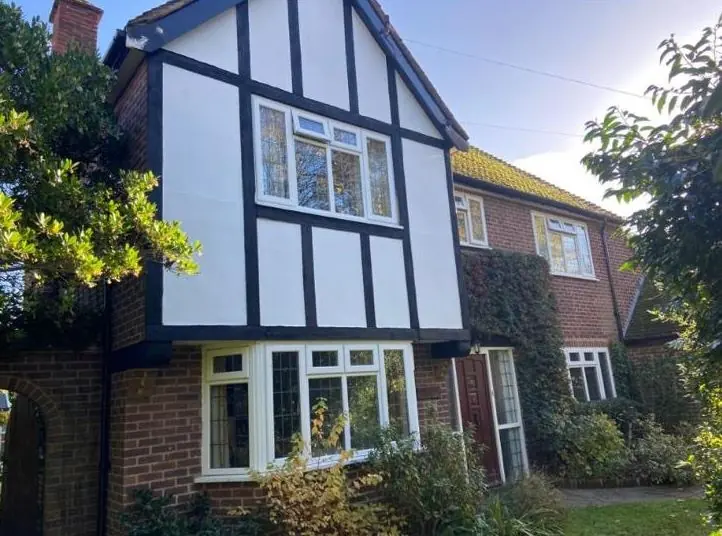
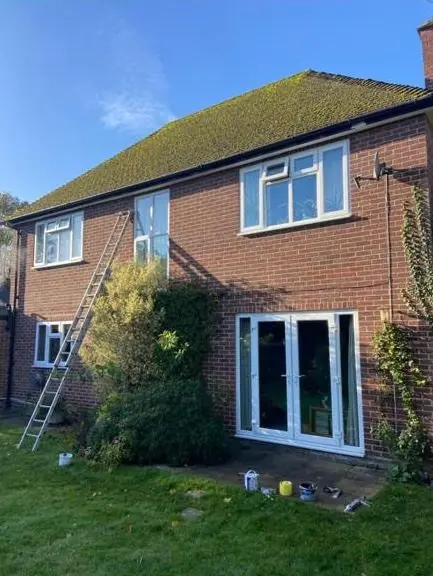
DH Painter & Decorator covers Towcester from our Northampton base, about 8 miles to the north-east. Dean, with over 30 years in the trade, decorates the town's Georgian and older buildings on Watling Street, its Victorian terraces and its newer estates, and gives free written quotes after a visit.
Painting and decorating in Towcester
DH Painter & Decorator covers Towcester from our Northampton base, about 8 miles to the north-east. Towcester is a market town on Watling Street, the Roman road that is now the A5, and its core has been lived in since Roman times. Edward the Elder fortified it in 917, and Bury Mount, the remains of an 11th-century motte-and-bailey castle, still stands in the centre. The town had 11,542 people at the 2021 Census, up from 2,743 in 1961. Most of that growth has gone south and west of the old core, and there are plans for about 3,300 more homes. Easton Neston’s parkland forms the eastern edge of the town, and Silverstone circuit is about 5 miles away.
For a decorator that history gives three quite different jobs: the historic centre along Watling Street, the Victorian streets to the west, and the newer estates beyond them. This page explains what each needs and how a job with us runs.
Watling Street: Georgian fronts over older buildings
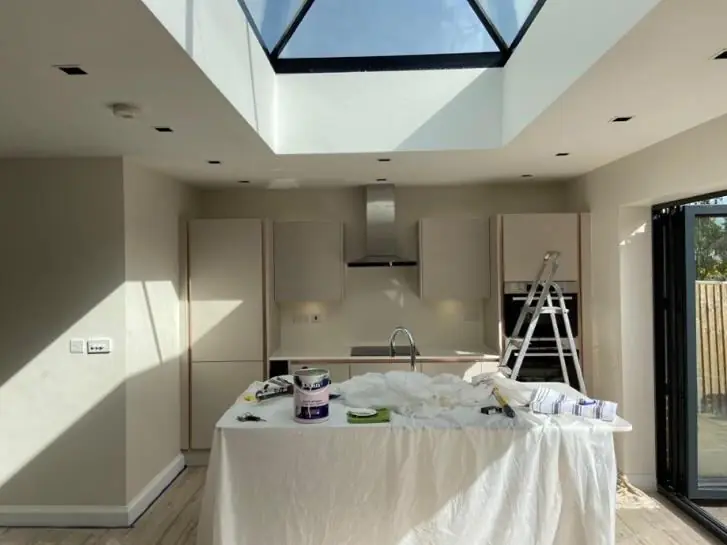
Most Watling Street facades date from the 17th century or later, and many were built over earlier timber-framed buildings that survive behind them. In the 18th and 19th centuries owners gave older houses fashionable Georgian fronts, so a room behind a sash window can still have beams, lime plaster and walls that lean. More than 20 coaching inns once served travellers on the road. The Saracen’s Head, an early 18th-century inn of coursed squared ironstone that Dickens wrote into The Pickwick Papers, still trades as a hotel, while elsewhere a blocked-in carriage arch is the only sign that a building was once an inn.
On these buildings we use breathable paints on lime plaster and old masonry, flexible fillers where a frame meets plaster, and slim paint films on the 6, 8 and 12-pane sashes so they still run. Bare ironstone and limestone ashlar, such as the Grade II* front of 157 Watling Street West, should stay unpainted. Our page on painting doors, windows and woodwork explains the joinery preparation.
The conservation area, Article 4 and listed buildings
The Towcester Conservation Area was first designated in June 1970 and amended in 1977, 1994 and 1998. The 2012 appraisal extended it to take in Richmond Road, Pomfret Road, Queens Road and part of Brackley Road. It notes that the white and cream finish on many central buildings, on painted brick and rendered stone alike, has become a characteristic of the area. A number of properties are covered by an Article 4 Direction, so works to their elevations fronting a highway, open space or waterway need planning permission. West Northamptonshire Council says such directions can cover exterior painting, doors and gates. The town also has 95 listed buildings: the Grade I Church of St Lawrence, three at Grade II*, including the Chantry House at 88 Watling Street, and 91 at Grade II.
So before any change of colour on a front in the centre, check with the council. Like-for-like repainting is usually straightforward, and Dean will hold a quote open until you have an answer.
A5 traffic and pavement-edge frontages
Buildings on Watling Street and Park Street stand right at the road edge in continuous rows. Ladders and towers for a front elevation go on the pavement beside heavy A5 traffic, so we plan barriers, a route for pedestrians and protection for parked cars before the first day. The town centre is an Air Quality Management Area, and road spray and exhaust film dirty street-facing paint faster than on a side street, so fronts are washed and degreased before preparation and finished in washable coatings. Behind the frontages, long narrow burgage plots run back to alleys such as Whittons Lane, Meeting Lane and The Ruins, which are often the way in to rear walls and extensions. Our exterior house painting page explains how we prepare each surface.
Victorian streets to the west
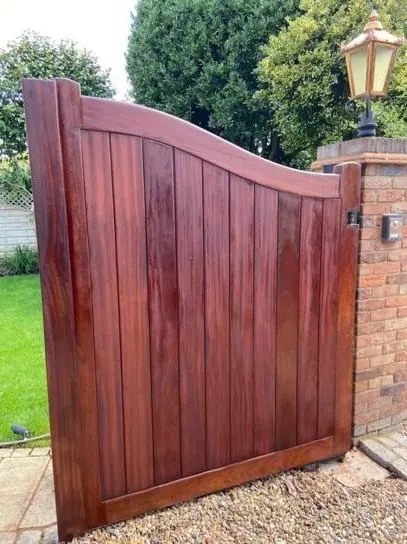
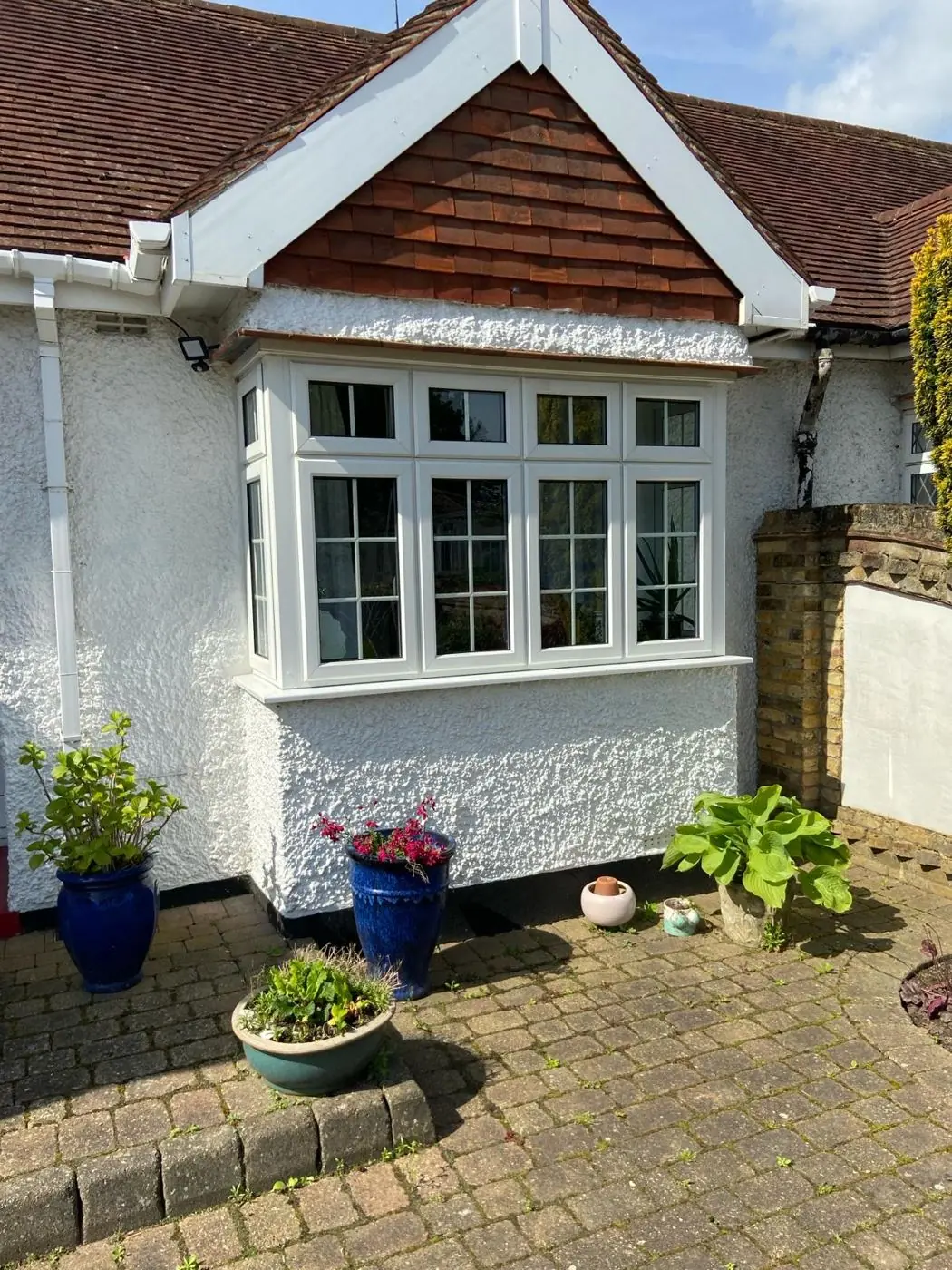
In the Victorian period the town spread west along Richmond Road, Queens Terrace and Pomfret Row, with small terraces behind Watling Street. The brick terrace at 160-164 Watling Street East was built in 1852-55 by the builder Thomas King. These red-brick houses are often painted white or cream, and many sit back behind low garden walls, which makes front access easier. Where sashes have gone to uPVC, the timber front doors, bargeboards and garden gates usually remain. These streets are now inside the conservation area, so repair and repainting is generally a better route than replacement.
Newer homes south and west of the town
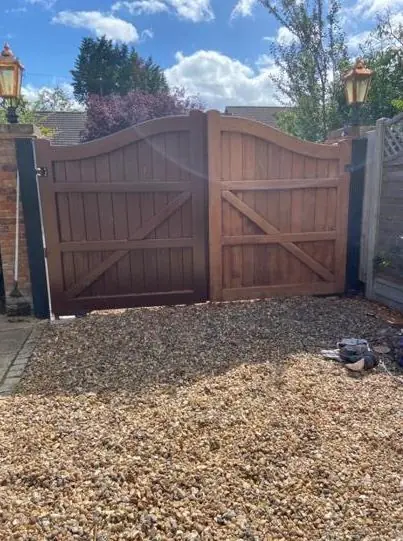
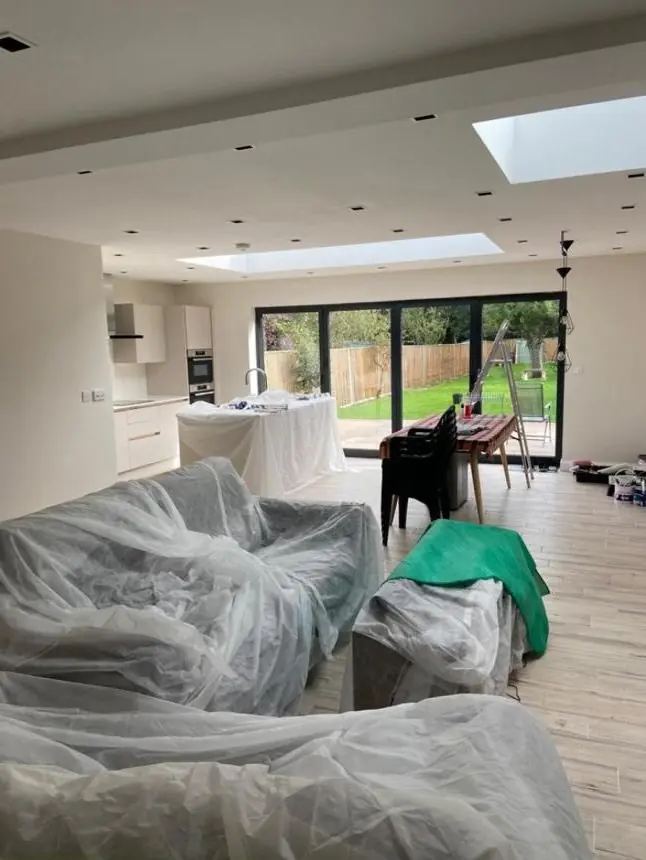
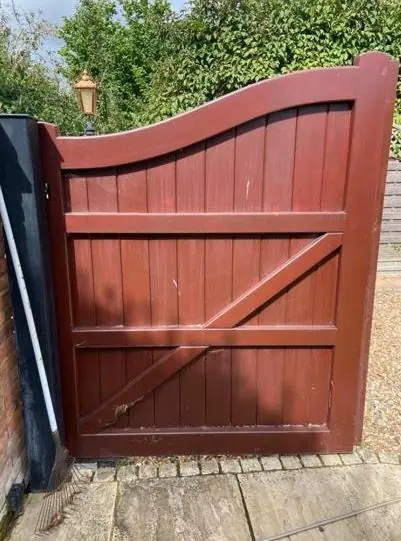
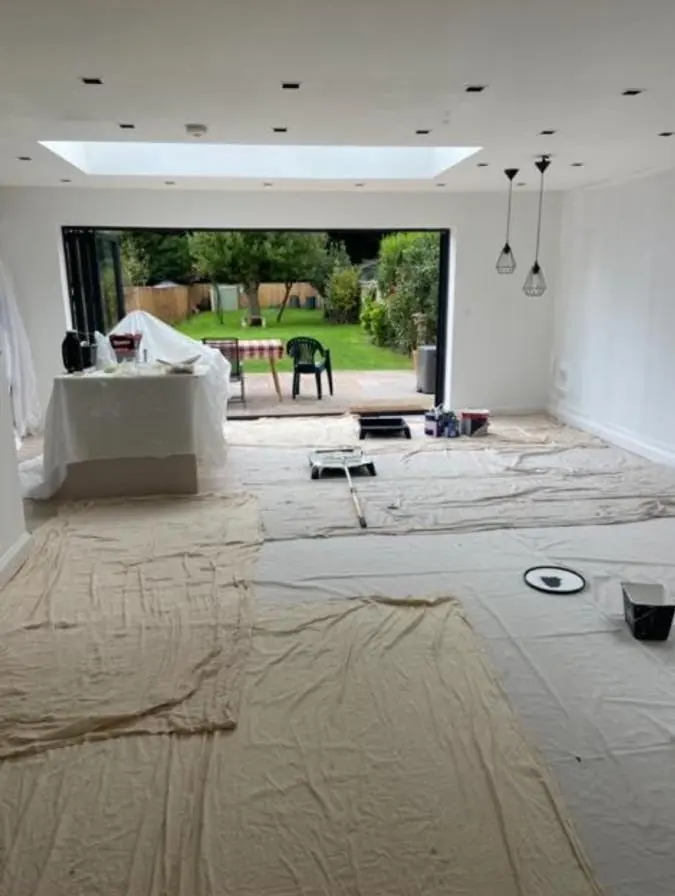
The 20th and 21st-century estates are a different job: modern brick, plasterboard and builder’s emulsion. A first proper redecoration usually comes a year or two after completion, once settlement cracks along ceiling lines and door frames have shown themselves, and new plaster in an extension needs a mist coat before any finish. Fascias, doors, fences and garden gates make up most of the outside work. Our new plaster and extension painting page covers that step by step.
On the eastern side, the River Tove and its water meadows form the edge of the town, with Silverstone Brook joining the river within it. Homes on the lower ground can see damp-related staining, so we treat mould, seal stains and suggest mould-resistant finishes where they help.
How a Towcester job runs, from first call to finish
A Towcester job runs in six stages, from your first call to a final walk-round together, and preparation is usually the longest of them.
| Stage | What happens |
|---|---|
| First call | You tell us about the property and the work. We arrange a time to visit. |
| Visit and quote | We look at the surfaces, access and prep needed, give advice on products and colours, and then send a free written quote. |
| Before we start | We agree on start dates, the order of rooms and anything you need to move or keep clear. |
| Preparation | We protect floors and furniture, then fill, sand, caulk, spot-prime and seal stains. This is usually the longest stage. |
| Painting | We apply the coats with proper drying time between them. Exterior work is planned around dry, mild weather. |
| Finish | We walk round with you, fix any snags, clear everything away and leave the house clean. |
Why choose DH Painter & Decorator in Towcester
We’re a Northampton-based firm with over 30 years in the trade, and Towcester is close enough for quick visits to quote and to check the weather. What we offer:
- Free quotes and straight advice, even if the answer is that a job doesn’t need doing yet
- Full insurance and training
- Careful attention to detail on edges, cutting-in and woodwork
- Customer reviews you can read before you decide
As one customer put it:
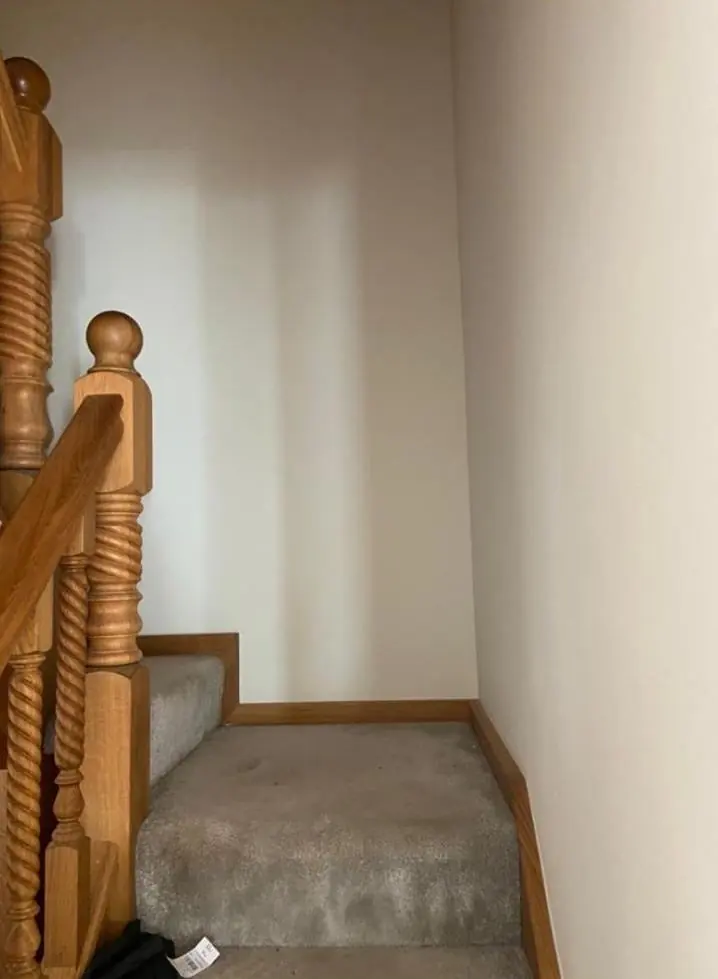
“Dean did some painting and decorating in my hallway, landing and stairs for me recently. He did an excellent job; takes great pride in his work and has good attention to detail.”
Our painter and decorator cost guide explains what affects the price of a job, but the written quote for your house is what counts.
Getting to you from Northampton
Towcester is about 8 miles south-west of Northampton town centre, and we also cover the villages around it, including Greens Norton, Paulerspury, Stoke Bruerne, Blisworth, Gayton, Pattishall and Roade. Further west, we cover Daventry too. The full list is on our areas we serve page. To arrange a visit, call Dean on 07539 779 036 or book a free quote online.
Last updated by Dean, DH Painter & Decorator.