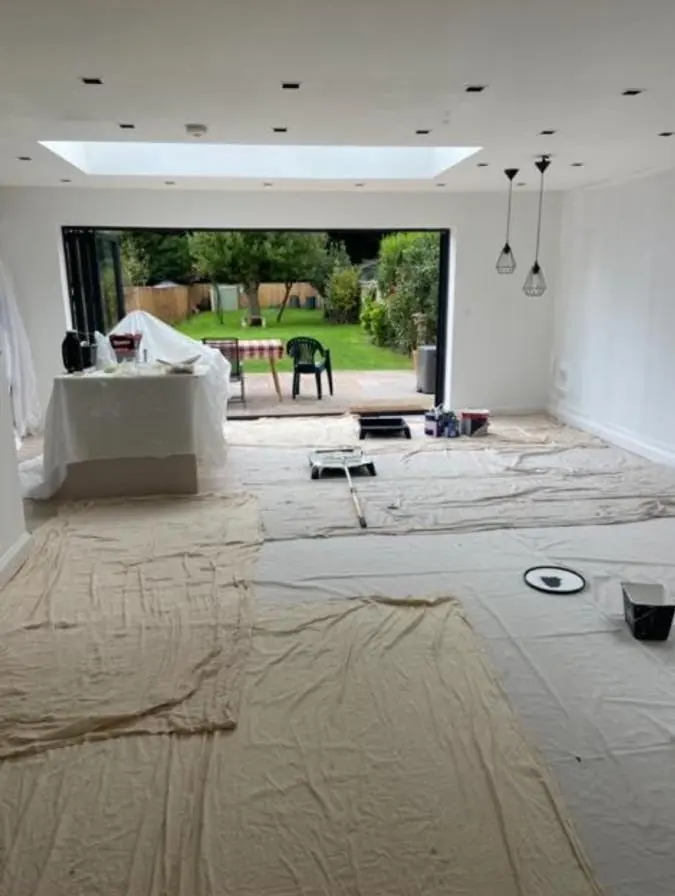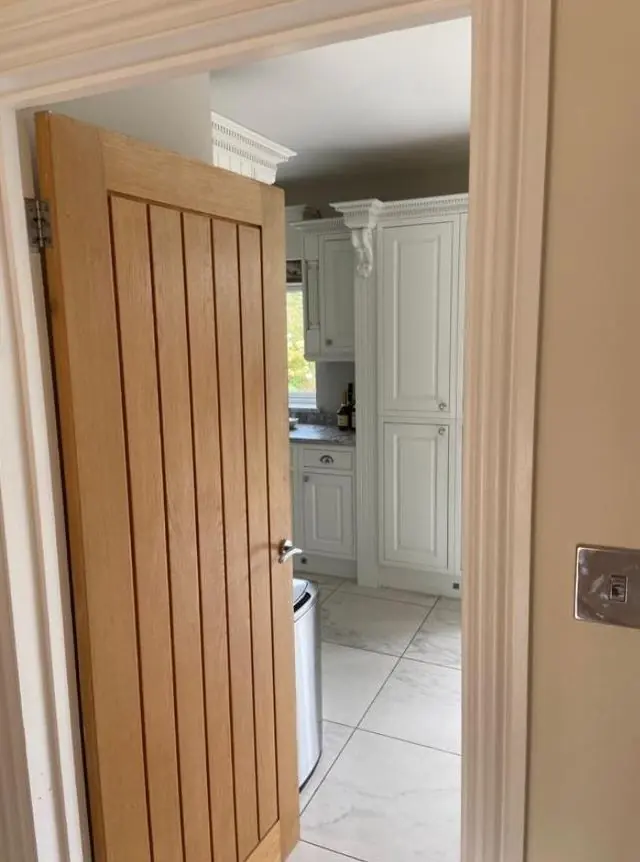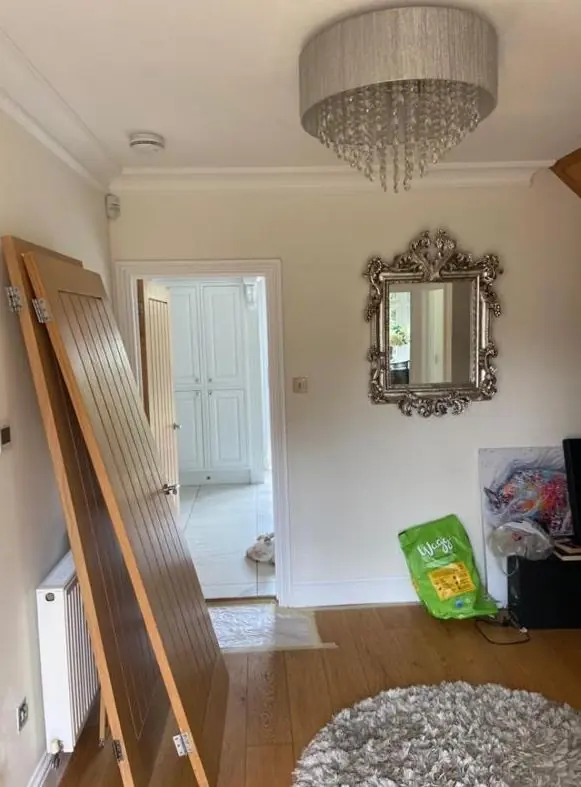
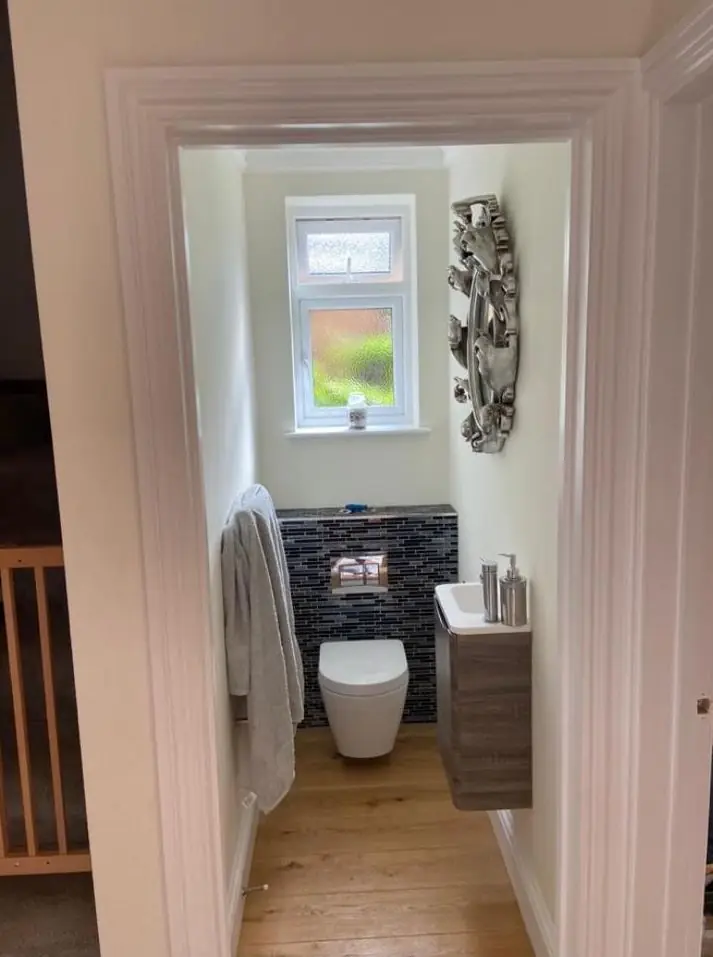
Duston, the large NN5 parish on Northampton's western side, is a 2.1-mile run from the town centre, and DH Painter & Decorator covers all of it. Dean brings over 30 years in the trade to work inside and out, from the conservation area's ironstone cottages to its interwar, post-war and 21st-century estates.
One parish, several Dustons
Duston is a big parish. The 2011 Census counted 15,498 people in 6,738 households, yet it grew out of a small ironstone village on Main Road. Harlestone Road and Bants Lane mark its northern and eastern edges, Upton parish lies to the south, and New Duston, to the north, is treated as a separate character area. Outside the conservation area, the 2015 Neighbourhood Plan splits the parish into six of these areas, and from a decorator’s point of view those areas are a good map of what your walls are made of.
The rest of this page walks through them. For each one, what matters is the age of the house, the material on the outside, and how easy it is to get a van and a ladder to the front door.
The ironstone village around St Luke’s
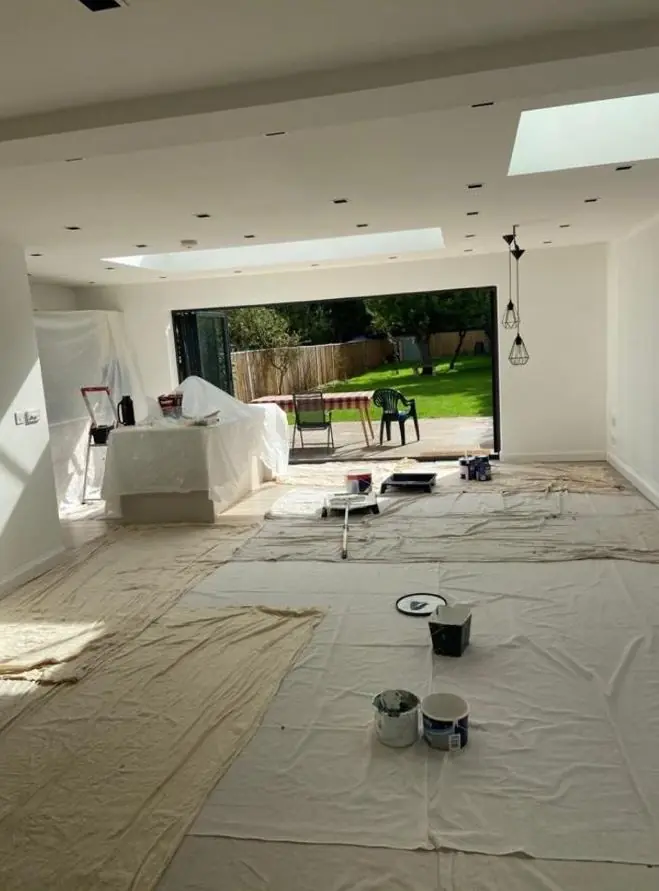
The old village sits around St Luke’s Church, a Grade I building begun in the late 12th century and restored in 1884. Viscount Palmerston allowed the first industrial ironstone quarry on land south of the village, worked from the mid-1850s into the 1900s, and the church, its churchyard walls and the older cottages are built of it. The Duston Conservation Area was designated in March 1977 and its boundary redrawn in October 2009. Inside it are 21 listed buildings and a further 20 on a draft Local List, spread along Main Road, Church Lane, Millway and Melbourne Lane.
Several of those buildings show exactly why a painter needs to slow down here. The cottage row at 7-11 Main Road is coursed ironstone, partly whitewashed, under thatch. The Cottage on Squirrel Lane is limewashed rubble. William Samwell’s Duston House of 1822 is stuccoed, and parts of The Old Vicarage are rendered in cream. Each calls for a breathable finish: limewash renewed as limewash, mineral paint where a mineral finish is already on, and crack-tolerant, vapour-open coatings on stucco. Bare ironstone stays bare, and so do the stone boundary walls that the 2009 appraisal values. Inside, lime plaster and low ceilings in the cottages suit breathable emulsions rather than vinyl paints.
The appraisal also names modern plastic windows and poor maintenance among the things eroding the area, and it singles out original sash windows near the Saxon Rise junction. Keeping timber sashes and doors painted is the simplest way to keep them. On a listed house, putting the same finish back is upkeep; a new colour, or taking off a historic finish, is a question for the council’s conservation officer before it is one for us. How we prepare outside surfaces in general is on the exterior painting page, and in the old village it is the choice of product that changes.
Kerrfield, Limehurst and the Chiltern Way streets
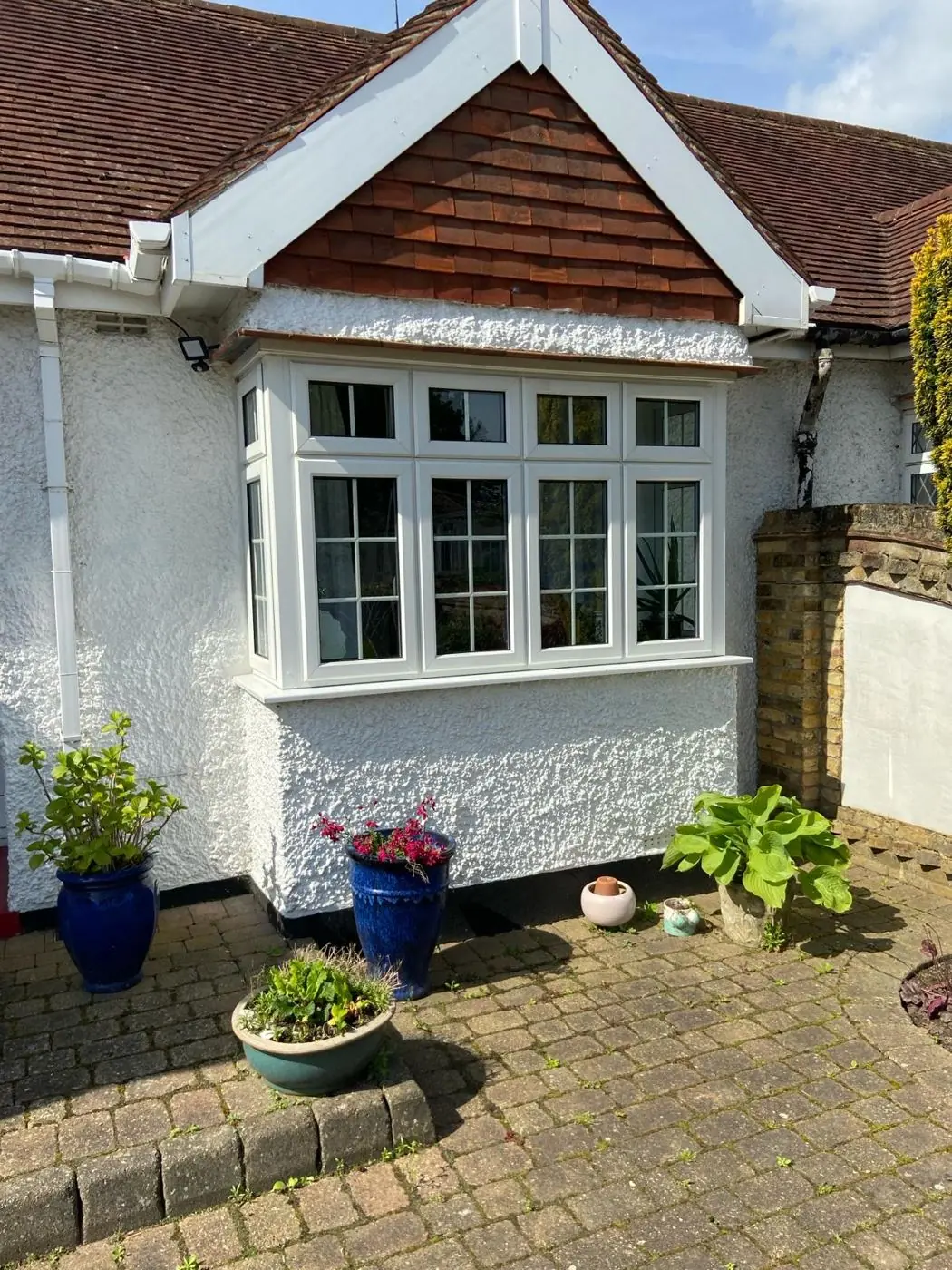
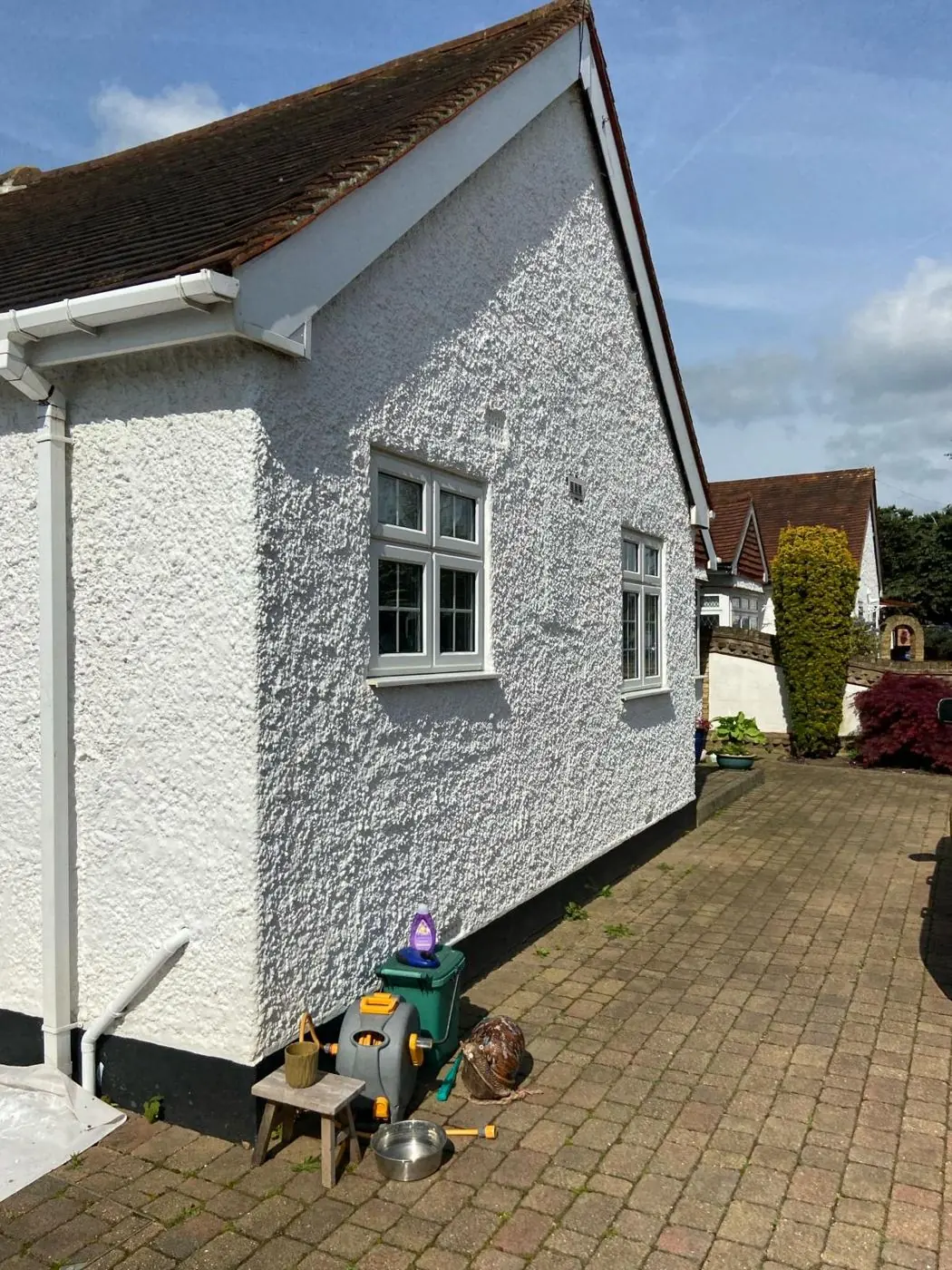
In July 1919 Sir Walter Kerr sold the Duston Manor estate at auction, and the land that came up for building became, in time, the Kerrfield Estate, where Berrywood Road meets Main Road. Its symmetrical semis and short terraces are brick and pebbledash under slate, with hipped and gabled roofs, hedges and picket fences. East of Main Road, Limehurst and Eastfield (1950s) and the Chiltern Way streets (1950s-60s) are brick with tiled roofs, evenly spaced windows and doors, and deep front gardens.
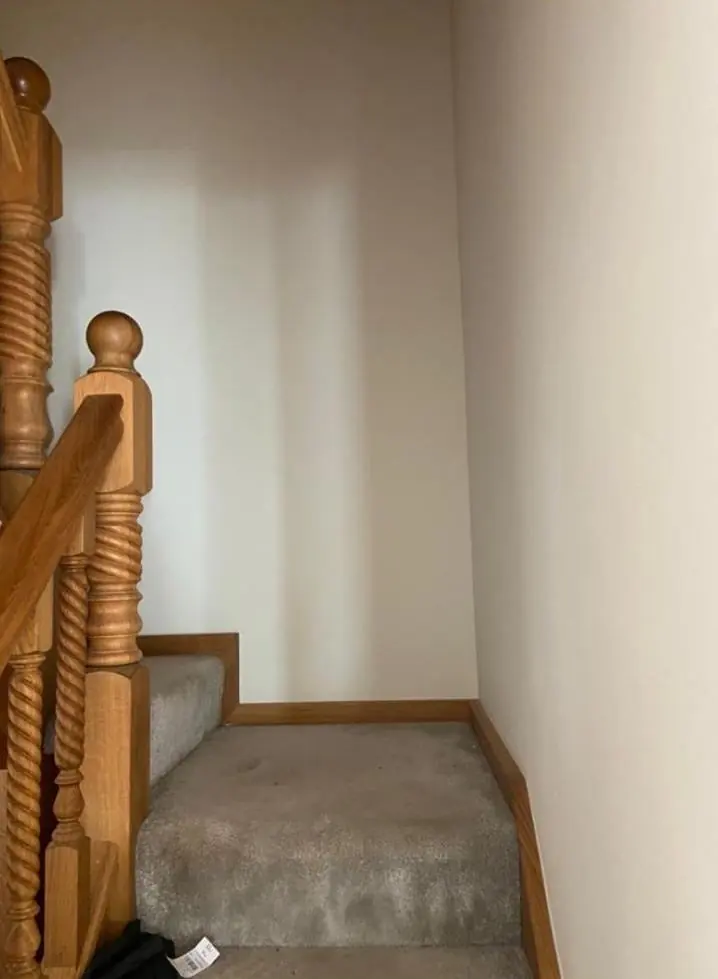
Policy BE1 of the plan counts that order as character worth keeping. In practice, when the pair or the row has a shared look, a front door or fascia shade picked to work with the neighbours keeps it, and a clashing one is noticed from the end of the street. Pebbledash on Kerrfield gets its hollow spots and cracks sorted before a flexible masonry coating goes on. Inside these houses the usual finds are woodchip painted over many times, skirtings rounded off by decades of gloss, and halls that take the daily knocks. Access over a stairwell is explained under hallway, stairs and landing decorating.
Weatherboard and footpaths: the Newton Road area
The 1960s-70s streets of East Duston, Clipston Way and Witton Road among them, follow a Radburn plan, with homes opening onto paths and small shared greens and parking kept in courts behind. Many of the homes are council owned, and they carry a lot of timber weatherboarding, which wants recoating every few years with a microporous finish if it is not to grey and split.
For a decorator, that layout means walking. Everything comes in on foot from the court, so before day one we settle which court, which path and what time, and nothing is left blocking the path between uses.
Homes on the Timken works and the old school sites
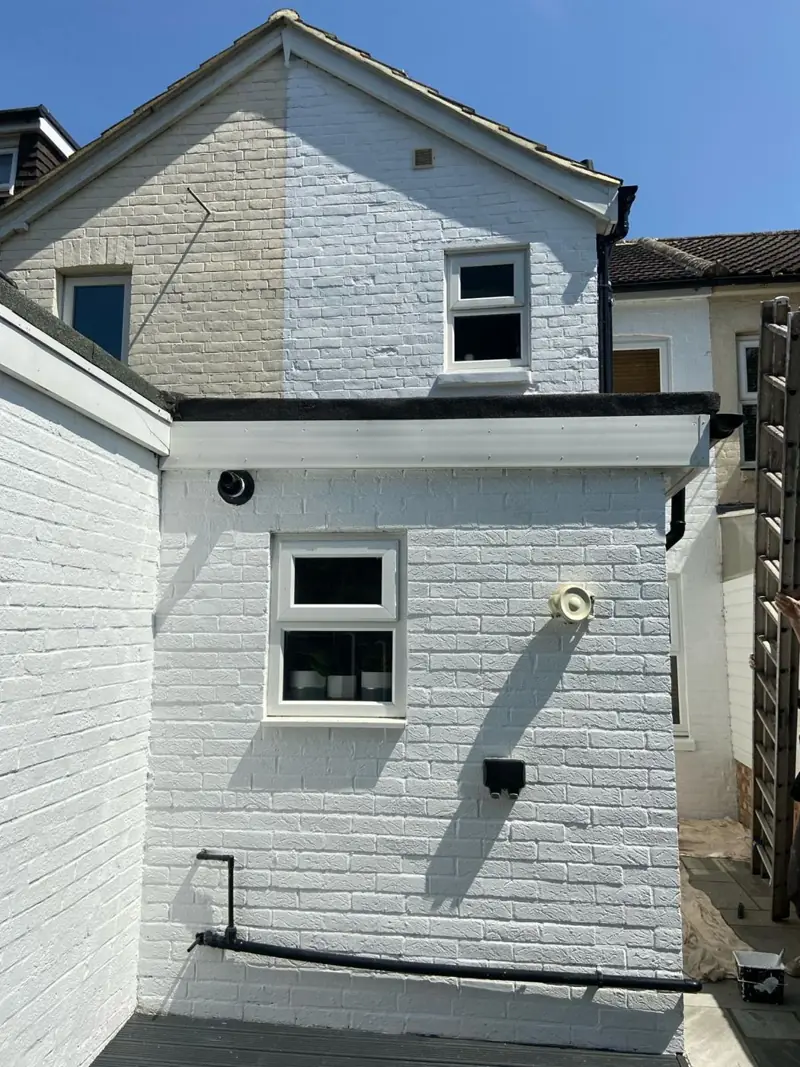
British Timken opened its roller-bearing works off Main Road in 1941. At its peak it employed over 4,000 people; production ended in 2002, and housing has since taken over most of the site, 231 homes having permission by 2014, on streets such as Timken Way North. The brick gate piers were kept on Main Road. Two former middle schools, Ryelands on Prestbury Road and Millway on Mill Way, have also given way to new homes.
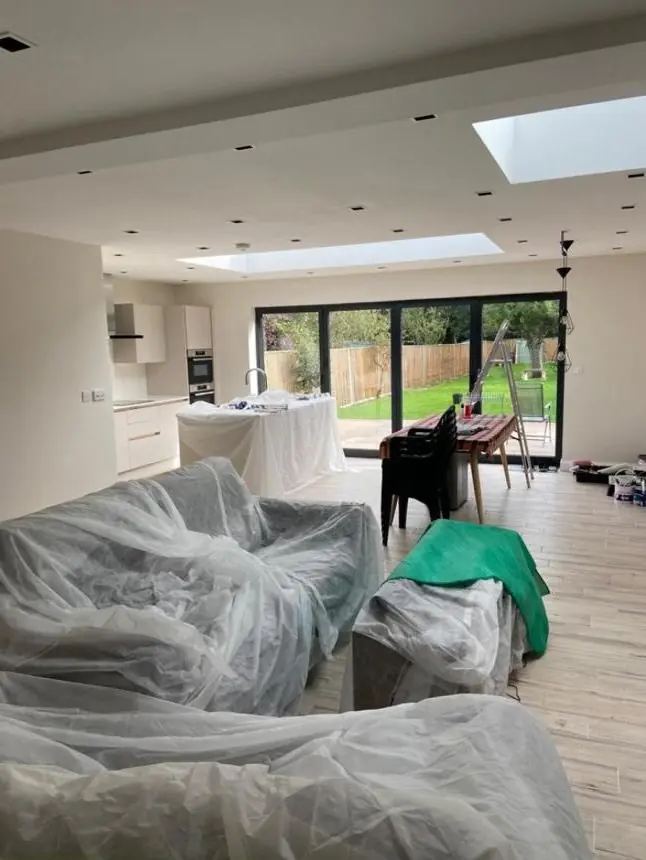
These newer houses bring the usual first-decoration work: thin builder’s emulsion that marks easily, hairline cracks where walls meet ceilings, and MDF joinery that was only ever primed. The plan also notes extension pressure on Duston’s large-garden detached houses and bungalows, and every extension means fresh skim that must be bone dry and mist-coated first; the steps are under new plaster and extension painting.
Main Road shops, pubs and the flats above
The Village Centre on Main Road had about 77 commercial premises in 2013, mostly convenience shops, hairdressers and services, many with flats above. It includes two Grade II listed pubs: The Squirrels, 17th or 18th century ironstone under thatch, and the Melbourne Arms on Melbourne Lane, early 19th century coursed ironstone under Welsh slate. The 2009 appraisal says many shopfronts in the centre already harm the conservation area and that replacements and signs should harmonise with it, so a repaint in heritage colours is a useful step for a trader. For the estates there is Limehurst Square, with shops, the library and the Parish Council offices, plus two four-shop parades.
Traffic is heavy along Main Road and there is little parking in the centre. Frontages close to the road collect grime, so they are washed before painting, and the van’s spot is fixed in advance. With five schools in the parish, we also keep arrivals clear of the school run.
Rented homes and booking a visit
Duston is mostly owner-occupied: the Neighbourhood Plan quotes 82% owner occupation, 10% private renting and 6% social housing. Rented homes are mainly the flats above Main Road shops and private lets on the estates, and they get the same practical approach between tenancies, with neutral, washable finishes and keys collected from the agent if needed.
Dean is fully insured and trained, and he quotes free once he has looked at the job. The factors behind a decorating price are explained in our cost guide. We also cover places further west towards Daventry, and every other place we cover is under areas we serve. For a job in Duston, ring Dean on 07539 779 036 or send a quote request.
Last updated by Dean, DH Painter & Decorator.