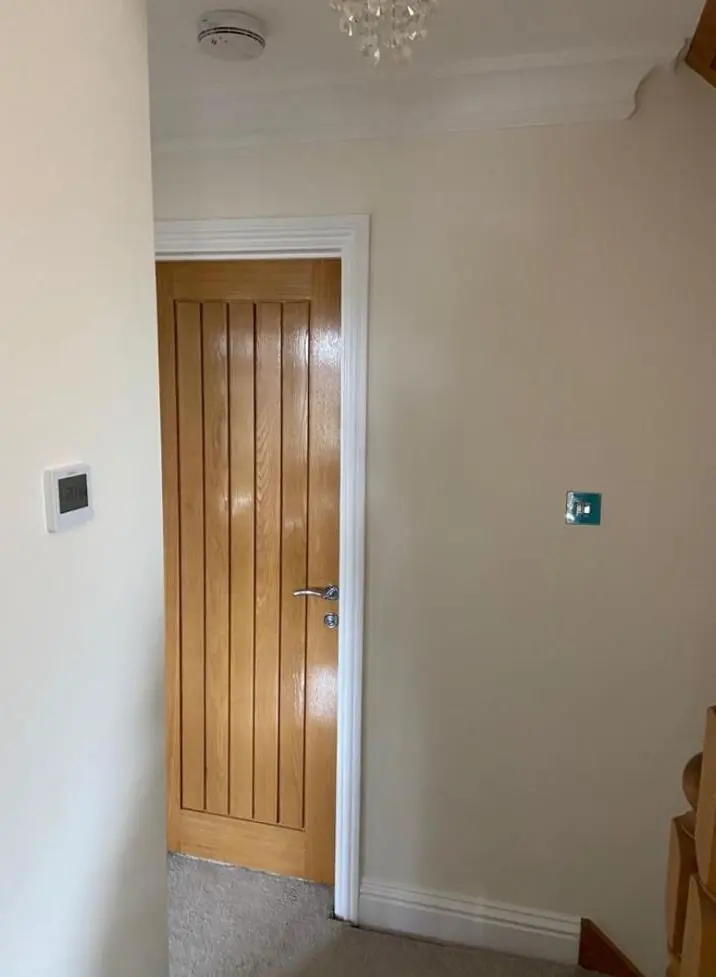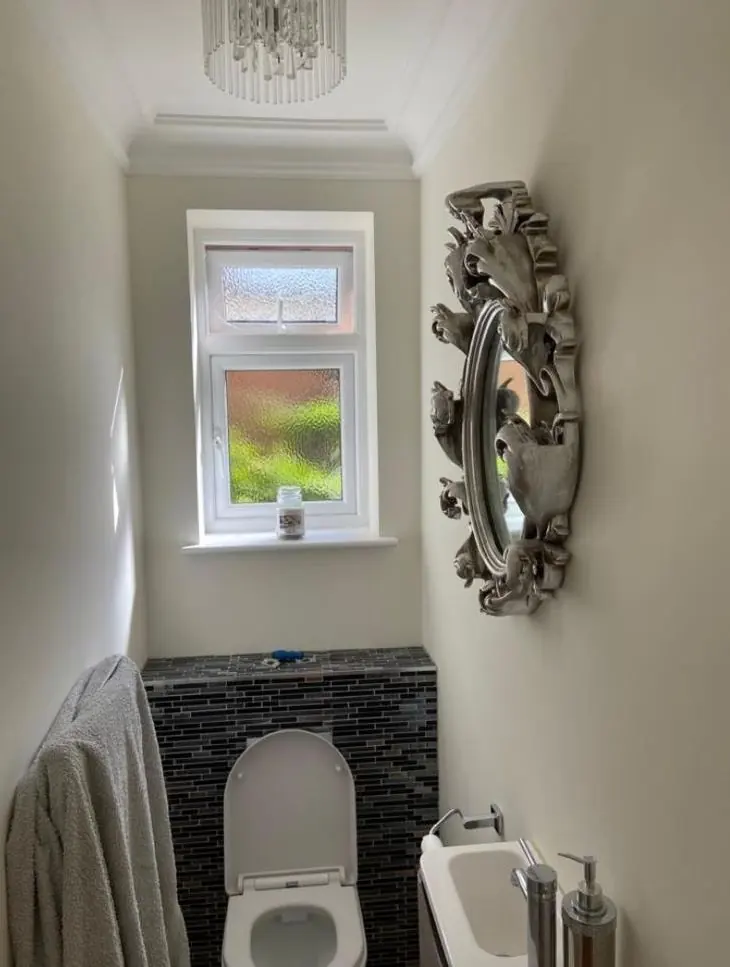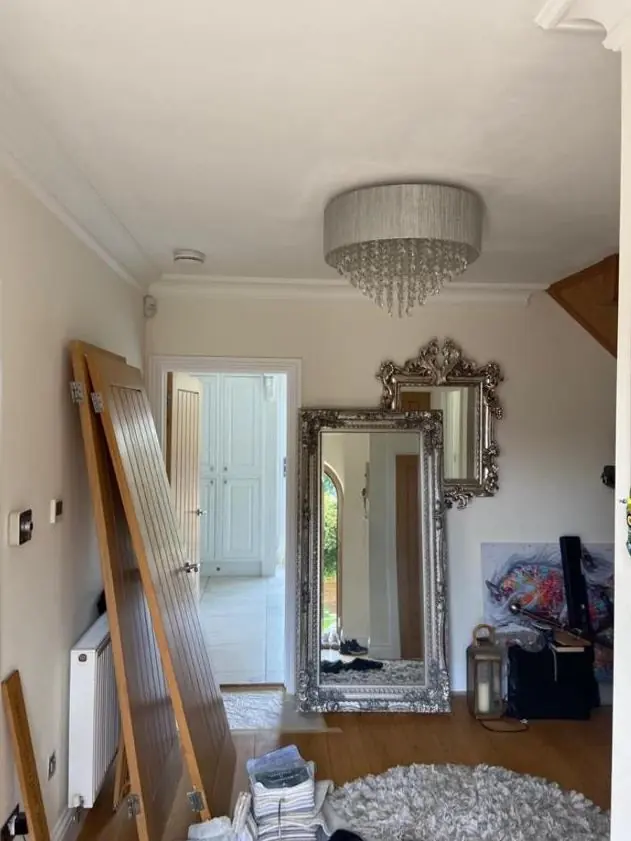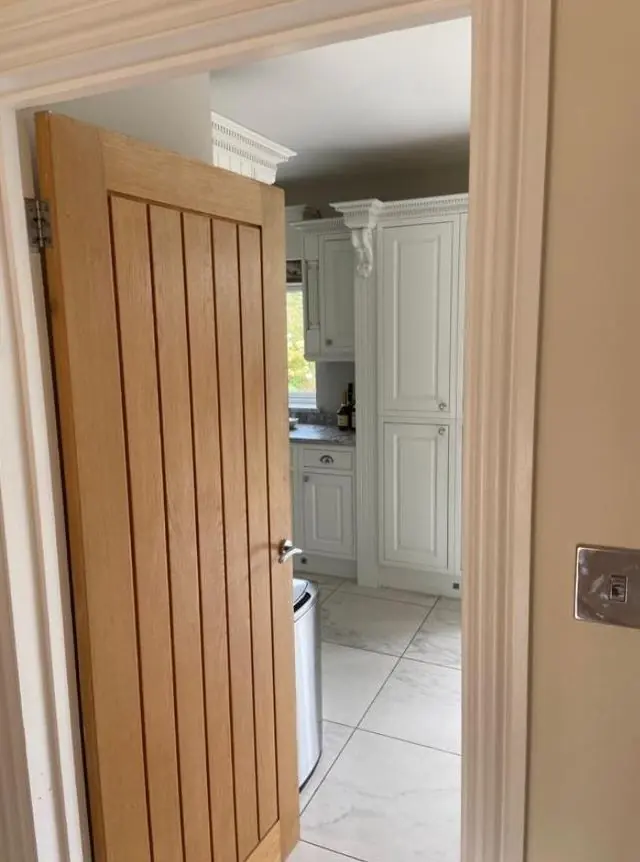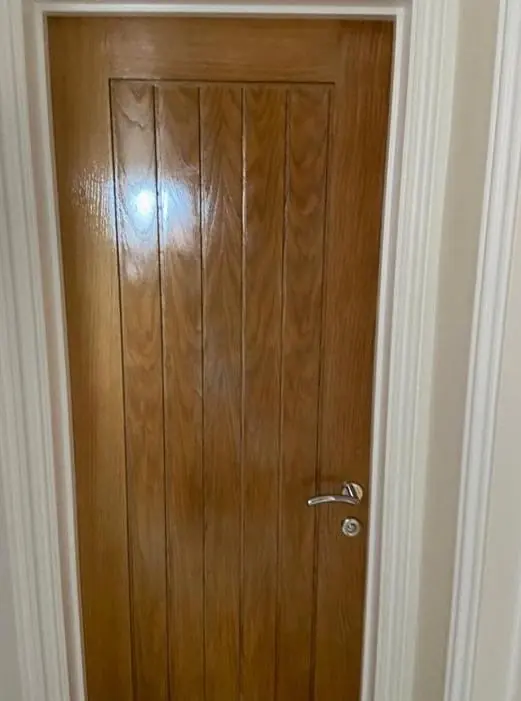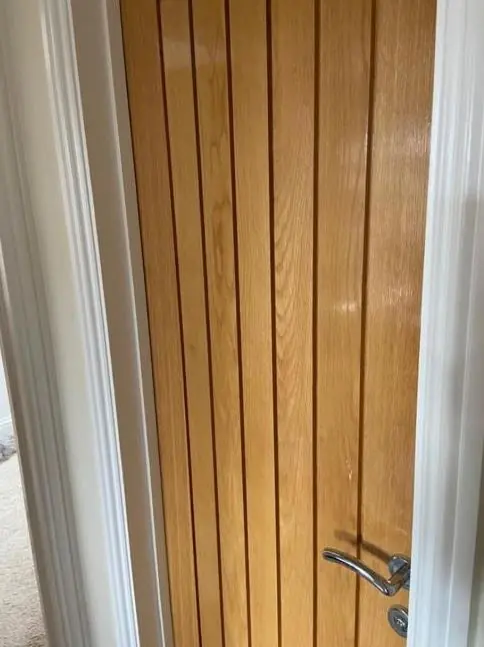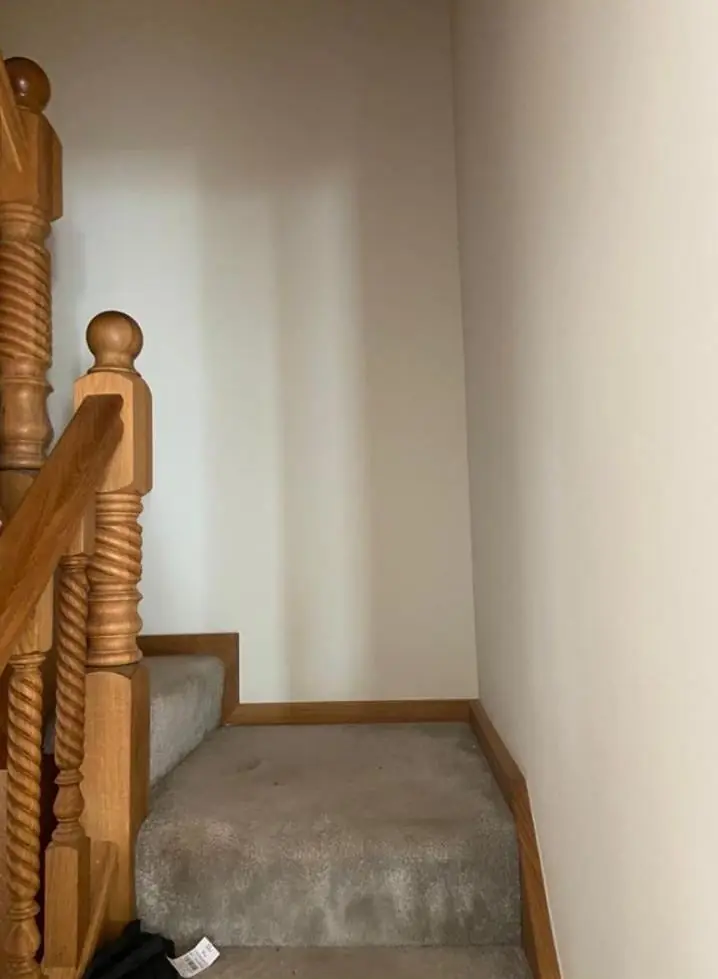
DH Painter & Decorator decorates hallways, stairs and landings across Kingsthorpe, NN2, the village north of Northampton where Harborough Road meets Welford Road. Dean covers tall Victorian stairwells, narrow stairs in old stone cottages, communal halls in converted flats and the simpler halls of estate houses and bungalows.
Tall stairwells in Kingsthorpe’s three-storey houses
The tallest stairwells in Kingsthorpe are in the 19th-century brick houses of the old village, such as the three-storey house at 17 Green End and the terraces of Vicarage Lane. When a stair rises through three floors, the wall above the top flight can be well out of reach of a normal ladder, and there is no floor underneath it to stand on.
For that wall we build a working platform across the stairwell, using a stair ladder on the treads and boards spanning to the landing, so the whole height can be reached safely and the platform can move as the work goes up. The ceiling and top wall are done first, then the platform comes down a stage at a time. On our main hallway, stairs and landing decorating page there is more on access equipment and finishes.
A practical point for Vicarage Lane: it is narrow, it is not a through road and the houses sit at the back of the pavement. Platforms, boards and dust sheets come in through the front door, so the hall has to be cleared before the kit arrives. We agree a drop-off time so nothing is left blocking the lane.
Stone cottages with steep, twisting stairs
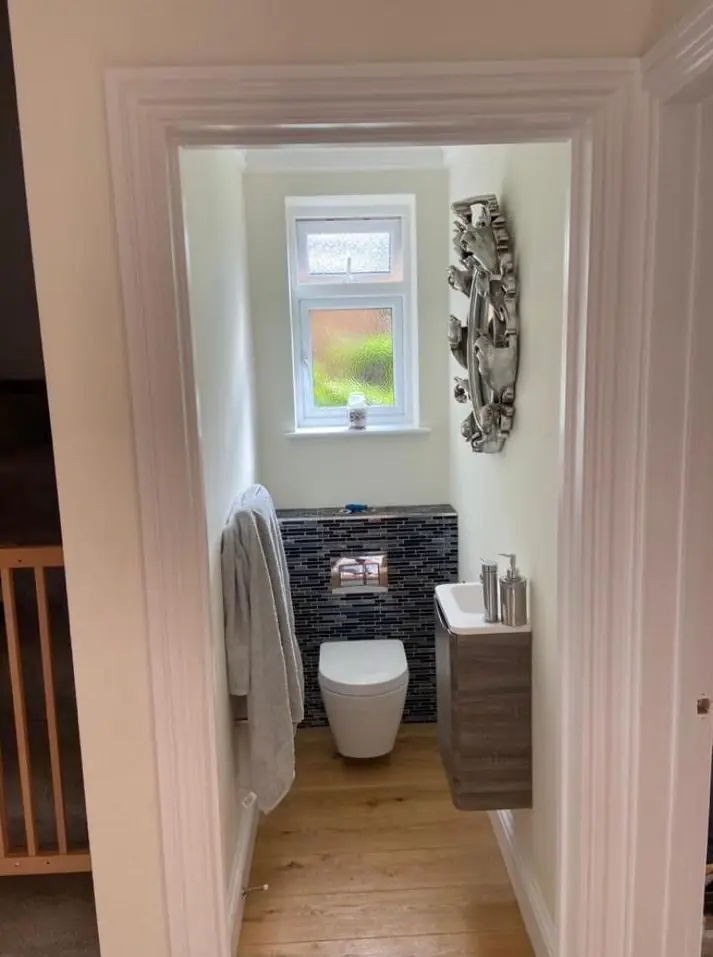
Stairs in the 17th and 18th-century sandstone cottages on The Green, Well Yard and Green End are a different job. They tend to be steep and tight, sometimes with a turn at the top, and the walls beside them are rarely flat or square. Low headroom over the landing means a lot of the work is done kneeling or from a small set of steps.
On these walls we fill and smooth enough to look tidy and leave the stair wall its natural roll. Where an older wall has been finished in lime, it needs a breathable paint so moisture can still escape, which matters in a village where springs rise from the ground, such as the Kings Well. Handrails and the edges of treads get a hard-wearing finish because on a narrow stair everyone touches the same places.
Shared halls in the Kingsthorpe Hall flats
Kingsthorpe Hall, built around 1775 by John Johnson of Leicester, is a Grade II* listed house now divided into flats. Its communal hall, stairs and landings are shared, so the decorating is usually arranged through a managing agent or residents rather than one owner.
- We agree colours, timing and access with whoever manages the building.
- Residents need to come and go, so we work in sections and keep a clear walkway.
- Wet-paint signs go on each level and handrails are done at the end of the day.
Because the building is listed, any change to historic fabric, and possibly to the decorative scheme, may need listed building consent. Whoever manages the building should confirm that before a start date is set.
Bungalow halls and estate staircases
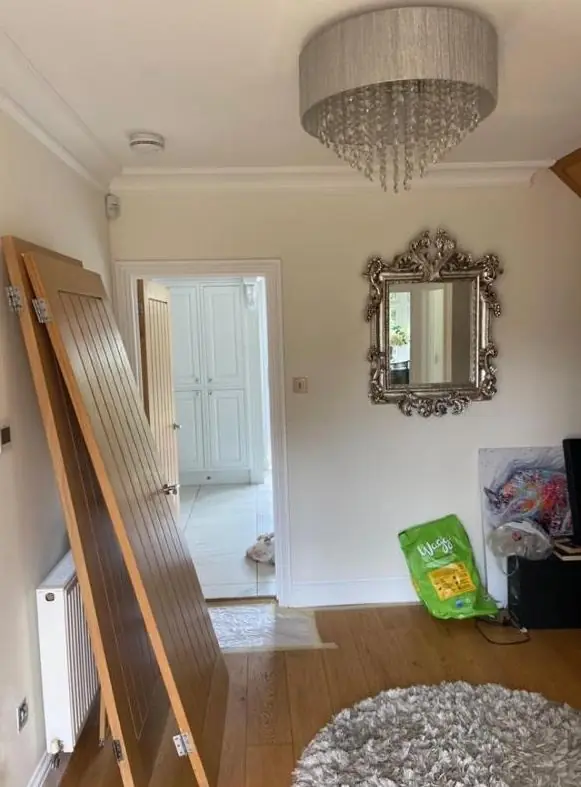
Not every Kingsthorpe hall is a challenge. The uniform row of hipped-roof bungalows built in the 1930s along The Green into Knights Lane is single-storey, so the work is about long, narrow corridors with many doors opening off them, where the woodwork takes as long as the walls. In a post-war house on the Obelisk or Spring Park estates, or the older Chalcombe Avenue and Hinton Road ones, a typical job is a straight two-storey flight with a spindle balustrade, and the banisters are often the slowest part.
Whatever the house, a hallway shows wear faster than any other room, so we lean towards scrubbable emulsion on the walls and durable eggshell or satin on the woodwork. You can find more about Kingsthorpe’s houses on our Kingsthorpe area page.
Last updated by Dean, DH Painter & Decorator.