
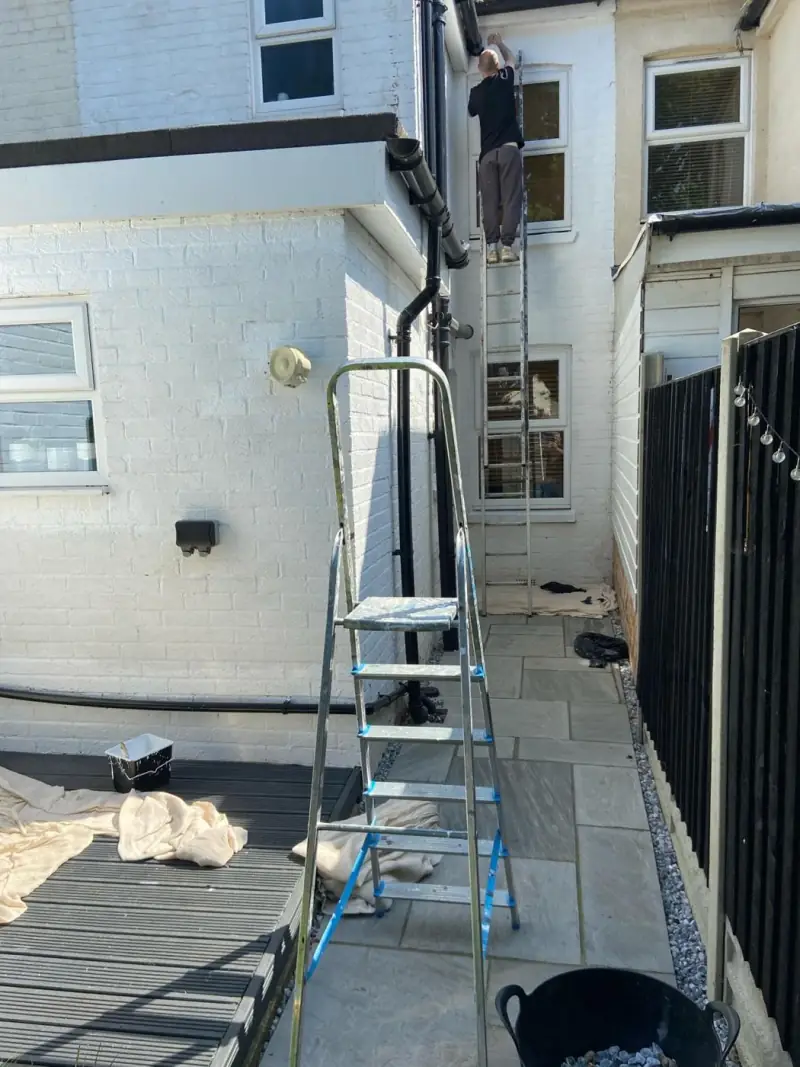
Render and masonry painting in Kingsthorpe covers a short list of named rendered buildings in the conservation areas, older stone fronts that were painted long ago, and rendered panels on the estates. Dean works across Kingsthorpe from our Northampton base, about 1.8 miles away, and checks how a wall needs to breathe before choosing a paint.
Kingsthorpe’s rendered buildings, by name
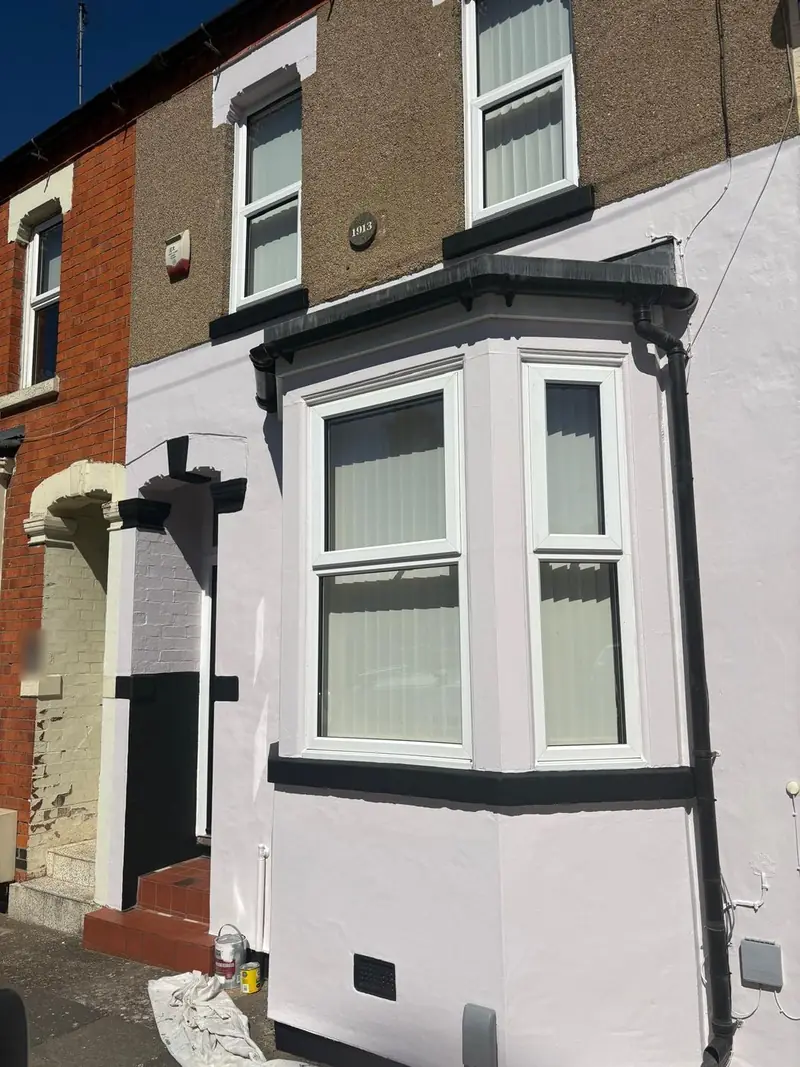
Kingsthorpe is a stone and brick village, so render is the exception, and the council’s two 2017 appraisals name where it is. In the Kingsthorpe Conservation Area, the appraisal captions “stone and rendered properties on Church View”, in the Hopes Place cluster of brick, stone and render, and describes Fremeaux Terrace as brick and render. The High Street and Manor Road appraisal records more:
| Building | Wall | What it means for paint |
|---|---|---|
| Church View and Hopes Place | Stone and render side by side, one building half-timbered | Paint the render only, cut cleanly against stone and timber |
| Fremeaux Terrace | Brick and render, leaded-light casements | Breathable masonry paint on render, brick left bare |
| No 24 High Street | Stone that has been rendered | Breathable paint so the stone behind can dry |
| No 21 Manor Road | Render with voussoir-style lintels over large sashes | Lintel detail picked out by hand |
| Former St Saviours Home, Manor Road | Render with exposed stone quoins | Render painted, quoins kept clean |
On those buildings the render was meant to be painted or limewashed, and keeping it coated protects it. What it needs is a coating that lets moisture out, because the wall behind is old.
| Fact | Detail | Source |
|---|---|---|
| Named rendered buildings | Church View, Fremeaux Terrace (Kingsthorpe CA appraisal, 2017) | West Northamptonshire Council |
| High Street and Manor Road render | No 24 High Street, No 21 Manor Road, former St Saviours Home | West Northamptonshire Council |
| Painted walls | “Not a traditional finish”; limewash may have been used on poor stone | West Northamptonshire Council |
| Springs | Rise where Northampton Sand meets Upper Lias Clay, including the Kings Well | West Northamptonshire Council |
| The Cock, Harborough Road | Grade II, squared rubble with ashlar dressings | British Listed Buildings |
Bare sandstone stays bare
The rest of the village’s walls are light brown Northampton sandstone, mostly coursed rubble, and red brick. The 2017 Kingsthorpe appraisal says painted brick and stone is not a traditional finish and lists painting walls among the changes that erode the area, though it accepts that limewash may have been used where stone was particularly poor. The High Street and Manor Road appraisal records painting of walls as part of the “considerable loss of original features” there. There is no heritage Article 4 direction, so painting an unlisted stone house is not illegal, but once paint is on soft sandstone it is very hard to remove without damaging the face of the stone. Our advice is simple: if it has never been painted, do not start.
The listed buildings on Harborough Road make the same point more firmly. The Cock (1893) and St David’s (1882) are in squared rubble with ashlar dressings, and cleaning or painting their stone needs listed building consent.
Springs, soft stone and breathable paint
The geology under Kingsthorpe matters here. The village stands on Northampton Sand over Upper Lias Clay, and where the two meet, springs rise; the Kings Well on The Green is one. Lower walls in the old village are often damp from below as well as from rain. A wall in that position has to be able to dry out through its face.
A standard acrylic masonry paint forms a tough skin that sheds rain but also slows moisture leaving the wall. On modern cement render over cavity walls that is fine. On old render over sandstone it can trap water behind the paint, and in winter that water freezes, blowing the paint and the face of the stone. For the village buildings we use a mineral silicate paint or a limewash-compatible system, both of which let vapour pass, and we never pressure-wash soft stone or old render. Already-painted stone fronts, of which several survive in the village, are treated the same way: loose paint brushed off, a breathable system on top. Our guide to painting render and roughcast explains the products.
Render on the estates
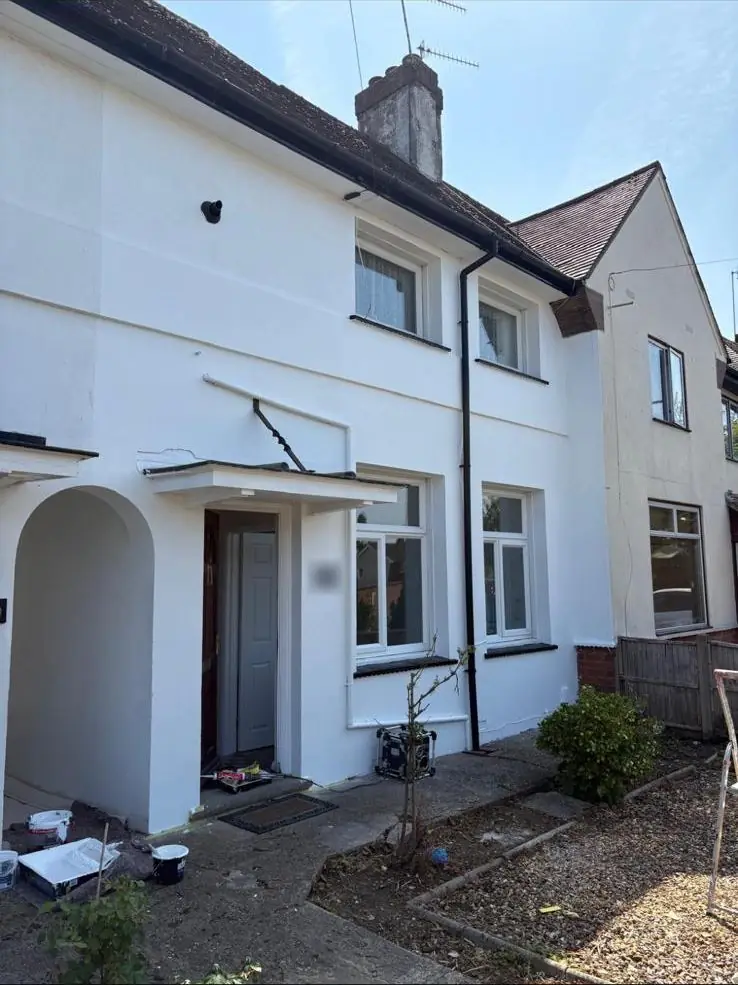
Energy certificates record cavity-wall construction across the 1960s to 1980s estates, at Pheasant Way in Spring Park, Chalcombe Road, Hinton Road and Obelisk Rise. Where a house there has rendered panels or a rendered gable, it is a conventional masonry paint job: wash, fungicide where there is growth, fill cracks, stabilise chalky old paint, then two coats. The higher estates, up towards Obelisk Rise at about 119 metres, take more wind-driven rain on their exposed faces, so those sides get the closest look at the quote.
For colour on limewashed or painted stone, see our Kingsthorpe decorative finishes page. The general method is on our main render and masonry painting page, and the rest of the area is on the Kingsthorpe page.
Render and stone in Kingsthorpe: questions answered
Anything else you want to ask? Ring 07539 779 036.
Can the render on Church View or Fremeaux Terrace be painted with ordinary masonry paint?
We would not use it. These are old buildings in the Kingsthorpe Conservation Area, with render over stone or brick that needs to dry outwards. A standard acrylic masonry paint can trap moisture behind it. A mineral silicate paint or a limewash-compatible system lets the wall breathe and lasts well. If the building is listed, check whether consent is needed before changing the colour.
Should I paint the bare stone front of my Kingsthorpe cottage to stop damp?
No. Paint on bare Northampton sandstone usually makes damp worse, because it slows the stone drying out, and it is very hard to remove later. The council's appraisal also lists painting stone walls as harmful to the area. Damp in the lower village often comes from the ground, where springs rise. Find the cause first, such as gutters, pointing or ground levels.
My stone house was painted decades ago and is peeling. What can be done?
Loose paint is brushed and scraped off by hand, never pressure-washed, because soft sandstone erodes easily. The wall is then left to dry and recoated in a breathable mineral or lime-based paint. Fully stripping old paint off stone is a specialist job with chemical poultices, and on a listed building it needs consent. Recoating breathably is usually the practical answer.
Is painting render on a Spring Park or Obelisk house any different?
Not much. Those 1960s and 70s houses are cavity-wall construction, and render there is usually modern cement, which takes a good acrylic or silicone masonry paint. We wash and treat any growth, fill cracks, stabilise powdery old paint and apply two coats. Exposed sides higher up the hill weather faster and get extra attention.
Sources
- Kingsthorpe Conservation Area Appraisal and Management Plan (adopted February 2017), West Northamptonshire Council (accessed 2026-11-16)
- Kingsthorpe High Street and Manor Road Conservation Area Appraisal and Management Plan (2017), West Northamptonshire Council (accessed 2026-11-16)
- Heritage and non-heritage Article 4s and Local Development Orders, West Northamptonshire Council (accessed 2026-11-16)
- The Cock Hotel, Kingsthorpe, British Listed Buildings (accessed 2026-11-16)
- St David's, Kingsthorpe, British Listed Buildings (accessed 2026-11-16)
- Find an energy certificate: search by postcode, EPC register (accessed 2026-11-16)
- Ground heights, Kingsthorpe sample points (SRTM), Open-Elevation (accessed 2026-11-16)
Last updated .


