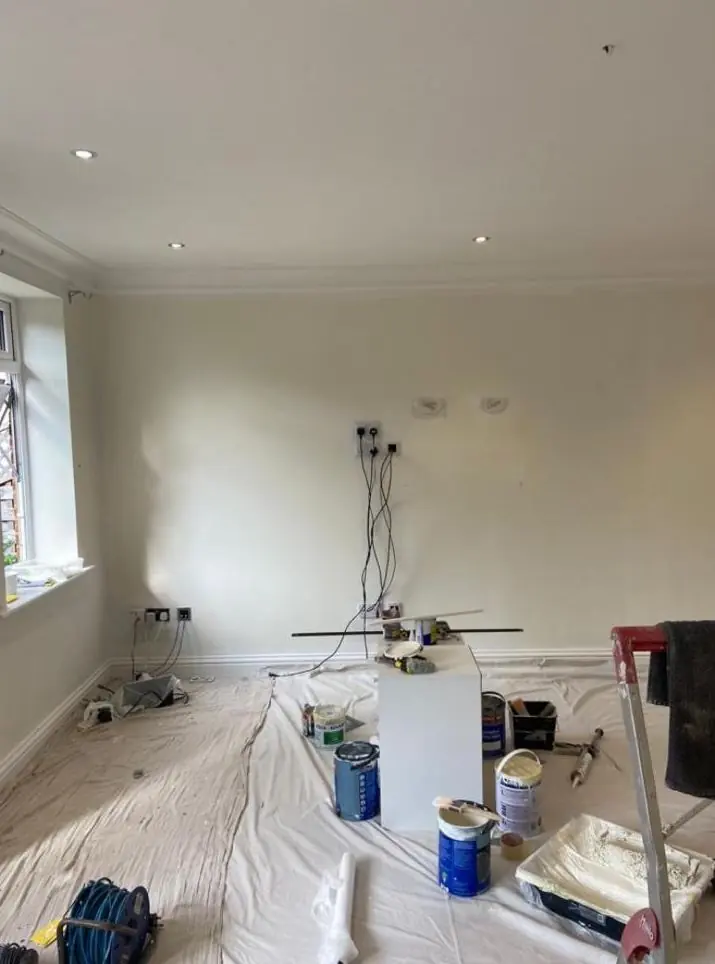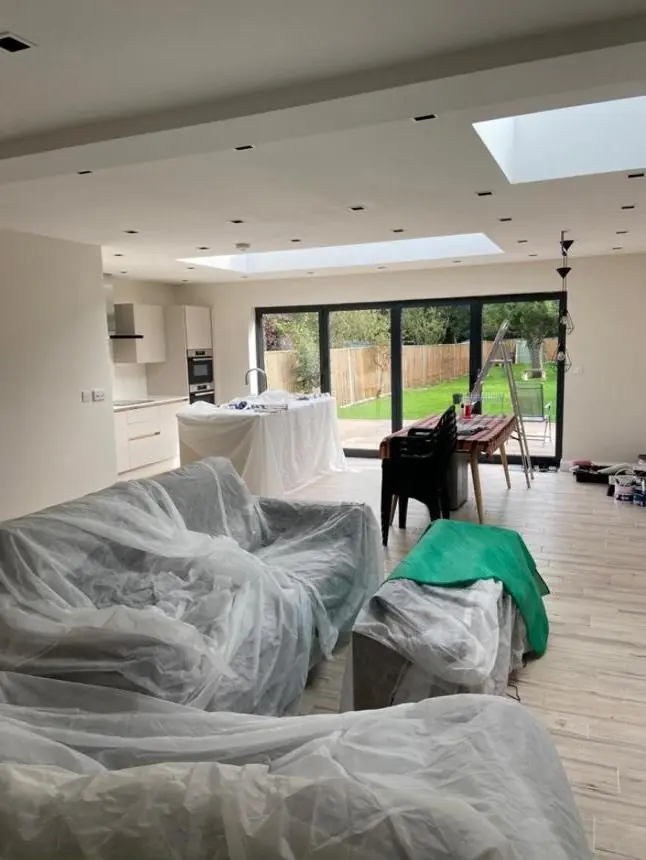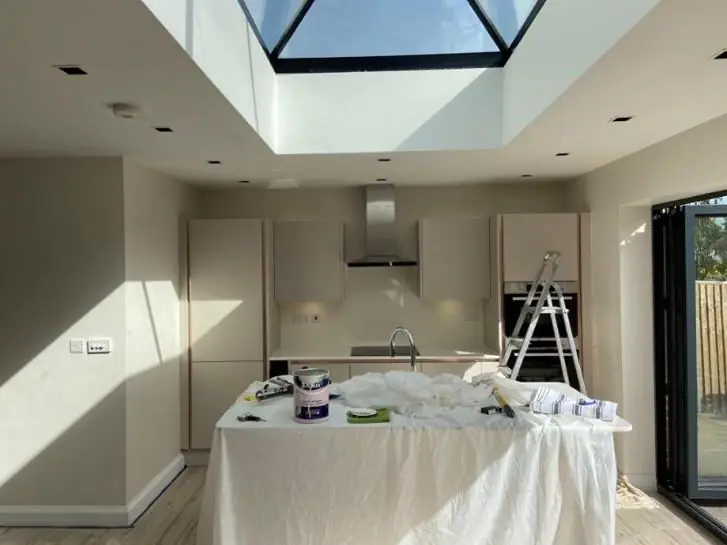
DH Painter & Decorator paints new plaster, extensions and freshly skimmed rooms in Kingsthorpe, NN2, which sits about 1.8 miles north of the town centre. Dean applies the mist coat and finish coats once the plaster is dry, whether it is a new build, an estate-house extension or a replastered old cottage.
New homes on old sites
A lot of Kingsthorpe’s newest plaster is in houses built on land that used to be something else. Bective Close, Lime Tree Gardens and Scholars Court are 21st-century infill on brownfield land. The biggest change was the University of Northampton campus, which opened as a College of Education in 1972 and was cleared for housing after the university moved to the town centre in 2018.
Owners of these homes often move in with plain contract emulsion over walls that are only a few months old. As the building dries out over its first year, fine cracks appear at ceiling joins, around door frames and where boards meet. The usual approach is to wait for that settling, then fill and caulk the cracks properly and redecorate with a mist coat where bare plaster shows and two full coats on top. A new build’s first redecoration is often more filling than painting.
Extensions on the post-war estates
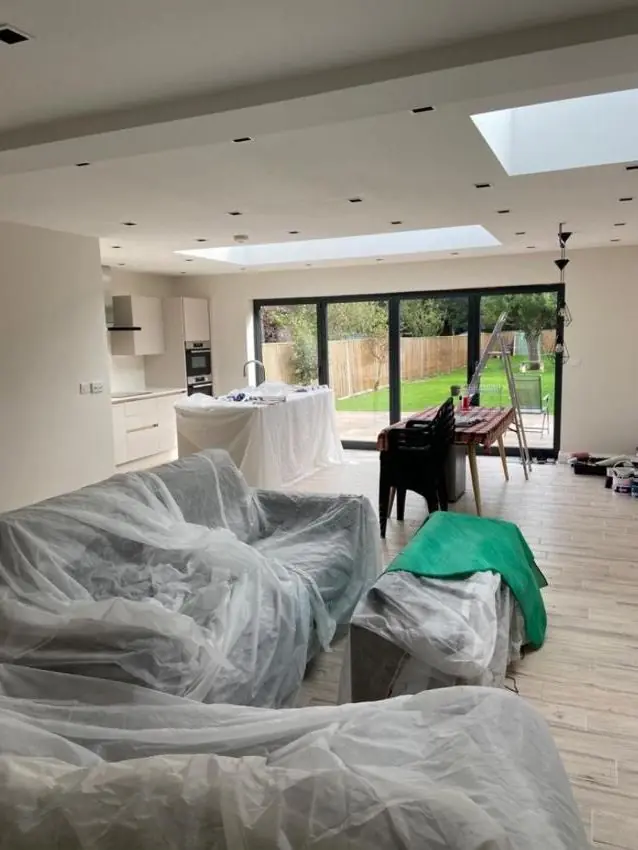
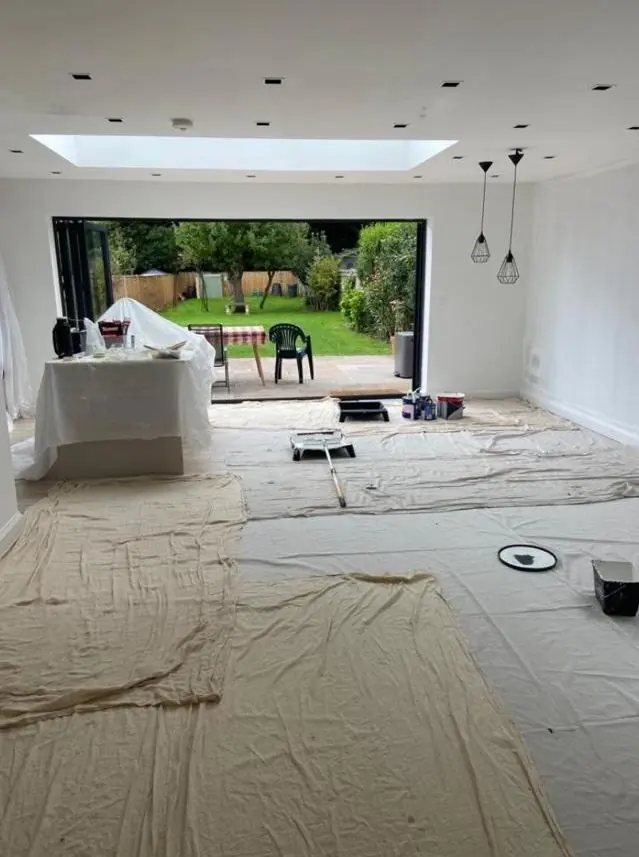
The 1960s Chalcombe Avenue and Hinton Road estates, and the Spring Park and Obelisk estates of the late 1960s and 1970s, have plenty of houses that have since been extended, whether with a kitchen-diner on the back, a garage conversion or a loft room. Each one ends with a room of bare pink plaster, and a few things decide how well the paint holds:
- Drying. New skim needs to turn an even pale colour with no dark patches before anything goes on it. Rushing this traps moisture and the paint peels later.
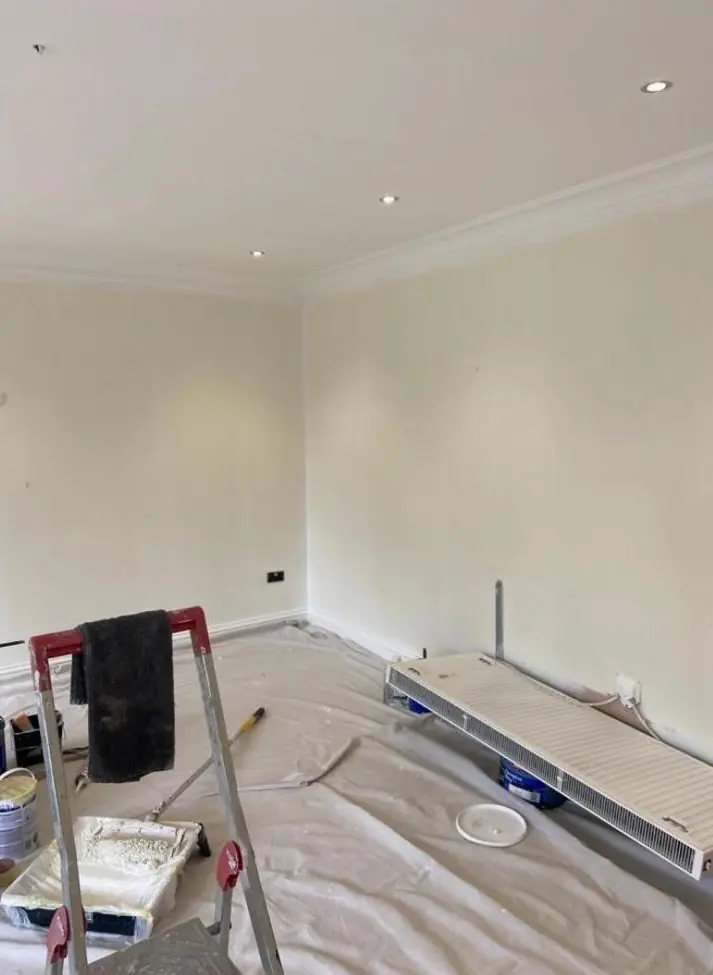
- The mist coat. A thinned coat of plain, breathable matt emulsion soaks into the plaster and gives the next coats something to grip. Vinyl or wipeable paint at this stage tends to sit on the surface and flake.
- Joining old to new. Where the extension opens into the existing house, the colour has to run through both rooms, so the old walls often need painting too.
Our guide to painting new plaster and the mist coat covers mixing ratios and drying times, and the main new plaster and extension painting page explains how we fit in around builders and kitchen fitters.
Replastering in the old village
New plaster is not only for new houses. In the old rubble-stone cottages of Well Yard, Green End and Vicarage Lane, damaged walls are sometimes patched or replastered. What matters is what the plasterer used. A repair in lime plaster has to be finished with a breathable paint, such as a clay or mineral paint or limewash-compatible emulsion, so the wall can still dry out. Coating lime in a plastic-based emulsion can hold moisture in the stone.
That is a real concern in Kingsthorpe. The village core sits on ground sloping down to the Brampton arm of the Nene, and the Kings Well is one of several springs that seep out where the sand gives way to clay. Walls on the low side can stay damp for longer, and fresh lime plaster there may need more drying time than the plasterer’s estimate. For listed cottages, any change to wall finishes inside may also need listed building consent.
Timing a job in Kingsthorpe
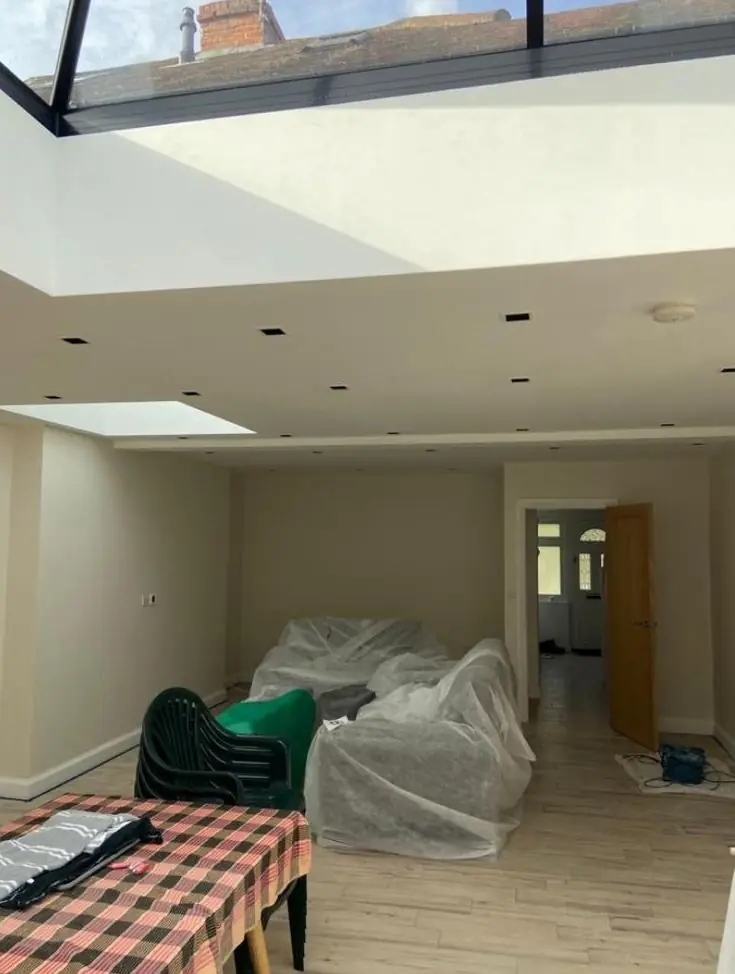
Plaster dries faster in a warm, ventilated room, so a winter extension with the heating not yet connected can take noticeably longer than a summer one. We can view the room while the plaster is drying, agree a start date and leave the finishing until it is ready. If you want to know more about the different parts of NN2, see our Kingsthorpe area page.
Last updated by Dean, DH Painter & Decorator.