DH Painter & Decorator covers Kingsthorpe, the former village about 1.8 miles north of Northampton town centre in the NN2 postcode district. Dean has over 30 years in the trade and decorates its listed stone cottages, Victorian terraces, 1930s bungalows, post-war estates, new builds and Harborough Road businesses, with free written quotes.
An old village wrapped in 20th-century suburbs
Kingsthorpe sits where the A508 Harborough Road and the A5199 Welford Road meet, roughly two miles north of the town centre. It was recorded in the Domesday survey as Crown land, and its name means the king’s hamlet or farmstead. Most of the parish joined Northampton borough in 1900 and the rest in 1931, but the old core around The Green and the Grade I church of St John the Baptist still feels like a village, on sloping ground above the Brampton arm of the River Nene. Around it, the 20th century added suburban roads, bungalows, large estates and the Harborough Road shopping strip, and the 21st century has added brownfield housing and homes on the old university campus. Since 2020 it has had its own parish council.
For a painter and decorator, that range is what makes Kingsthorpe interesting. A cottage on Well Yard and a house on Spring Park need almost nothing in common in terms of products, preparation or paperwork. This page sets out what we look for in each part of the area. We cover Kingsthorpe from our Northampton base, about 1.8 miles away.
Two conservation areas and what they ask of paint
The Kingsthorpe Conservation Area was designated in 1970 and extended in 1976, when Vicarage Lane and Kingswell Road were added. It covers The Green, Green End, Vicarage Lane, Kingswell Road, Mill Lane, Well Yard, Hopes Place, Fremeaux Terrace and The Leys. A separate High Street/Manor Road Conservation Area, designated in 1987, takes in Manor Road and High Street with their return frontages onto Welford Road and Knights Lane.
The council’s 2017 appraisal of the main area matters for anyone planning exterior work. It describes painting brick or stone walls as untraditional and as one of the gradual changes that wear the area’s character down. It asks for railings and lamp posts to be painted black, and for original timber sashes, casements and doors to be repaired or replaced like for like. An Article 4 direction was considered but not pursued, so unlisted houses keep normal permitted development rights. In practice that means you can repaint your joinery in a new colour, but we will tell you honestly when a choice would sit badly against the stone.
Listed buildings round The Green
The listed buildings in the old village include Kingswell Cottage beside the Kings Well spring, Well Yard House with its kneelers and drip moulds, 39 and 43 Vicarage Lane, Thornton Cottage at 47 Vicarage Lane, 15 and 17 Green End, Greenbanks and Wayside, the Manor House on Manor Road, and the farmhouse, barn and dovecote at Home Farm on Kingswell Road. Kingsthorpe Hall, built around 1775 and listed Grade II*, has been converted into flats.
Changes to external finishes or colours on these buildings need listed building consent, and some interior changes can too. Dean will not start work that needs consent until it is in place, and on listed joinery the approach is repair and careful repainting rather than stripping everything back.
Stone, brick and the question of painting walls
The older houses are built of light brown Northampton sandstone, mostly coursed rubble, quarried locally; a softer white and grey stone from the village was used at Kingsthorpe Hall. The Victorian houses are red brick, some with yellow headers, under Welsh slate or red clay tile. Bare sandstone and brick in the conservation area should stay unpainted.
Some fronts were painted long ago, such as the white facade of the Queen Adelaide Inn. Those need repainting with a breathable mineral or limewash-compatible system so the soft stone can still dry out, not a plastic masonry paint that traps moisture. Rendered houses, for example on Fremeaux Terrace and across the estates, can take a good masonry paint; our render and masonry painting page covers that work.
Windows, doors and ironwork in the old village
Exterior work in the conservation areas is mostly joinery and metal rather than walls. Early timber casements sit under timber lintels, cottage doors are ledged and braced, Victorian houses have panelled doors with glazed fanlights, and the terraces, the Old Rectory and 17 Green End have timber sliding sashes that need easing and careful cutting in around old glass. Fremeaux Terrace has leaded-light casements that are prepared by hand around the lead cames. Paint older than the 1960s may contain lead, so we test and prepare it wet.
Many older houses also have cast iron gutters and downpipes on brackets, and the railings the council wants painted black. These need rust treating before metal primer and finish; see our metal gate and railing painting page. Because traditional cottages have few fascia boards, fascia and soffit work in Kingsthorpe concentrates on the bungalows and estates.
Bungalows, post-war estates and new builds
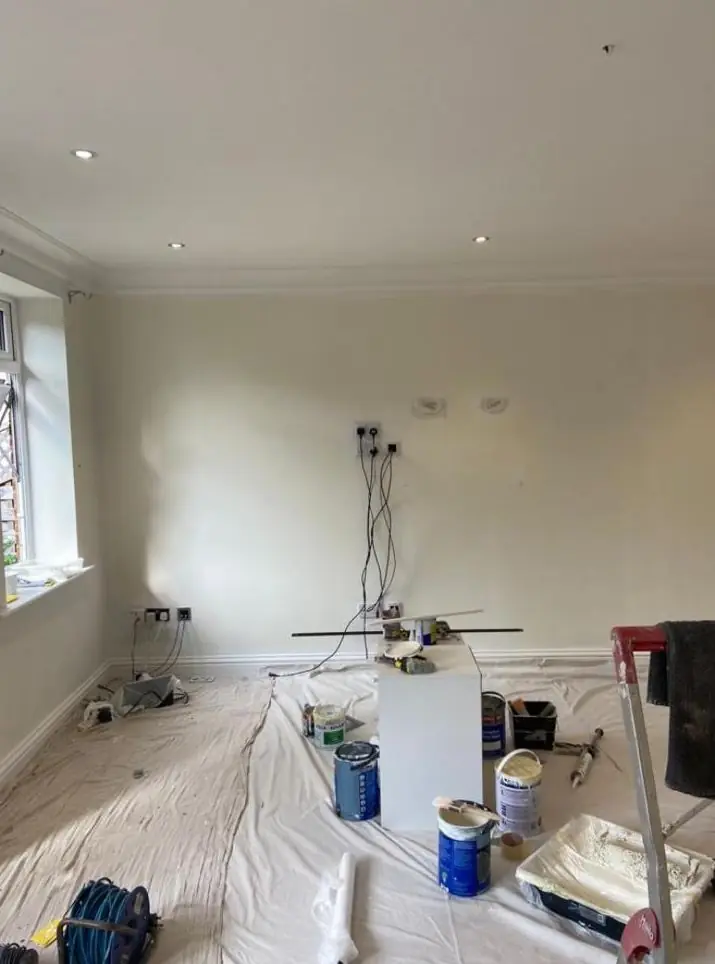
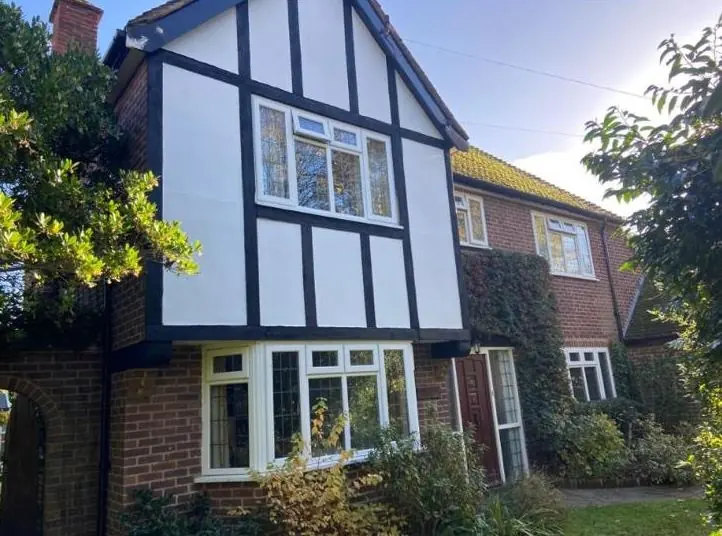
The uniform row of 1930s bungalows from The Green into Knights Lane has heavy hipped roofs, bay windows with several casements and low stone front walls. Matching joinery colours keep the row reading as one design, so we suggest following what is already there.
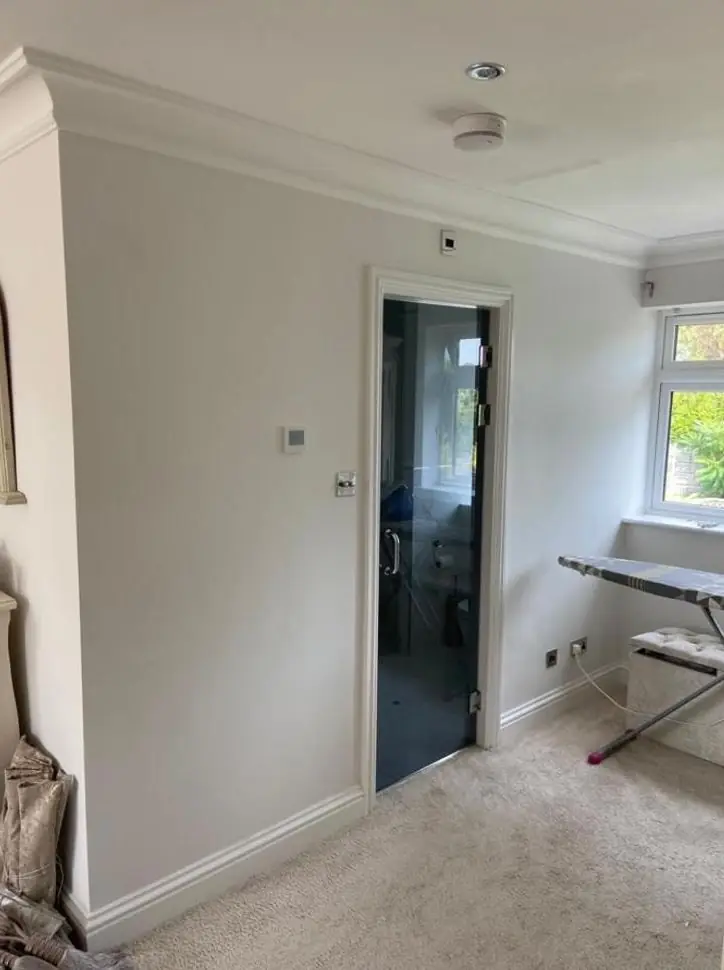
The 1960s brought the Chalcombe Avenue and Hinton Road estates, followed by Spring Park and Obelisk, including Holly Lodge Drive, in the late 1960s and 1970s, then Tollgate Close, Brampton Park and Cedrus Court in the 1980s. These make up most of the exterior repainting in the area: fascias, soffits, doors and fences rather than heritage work. Inside, the work is usually about correcting earlier coats room by room; our interior painting page explains our approach.
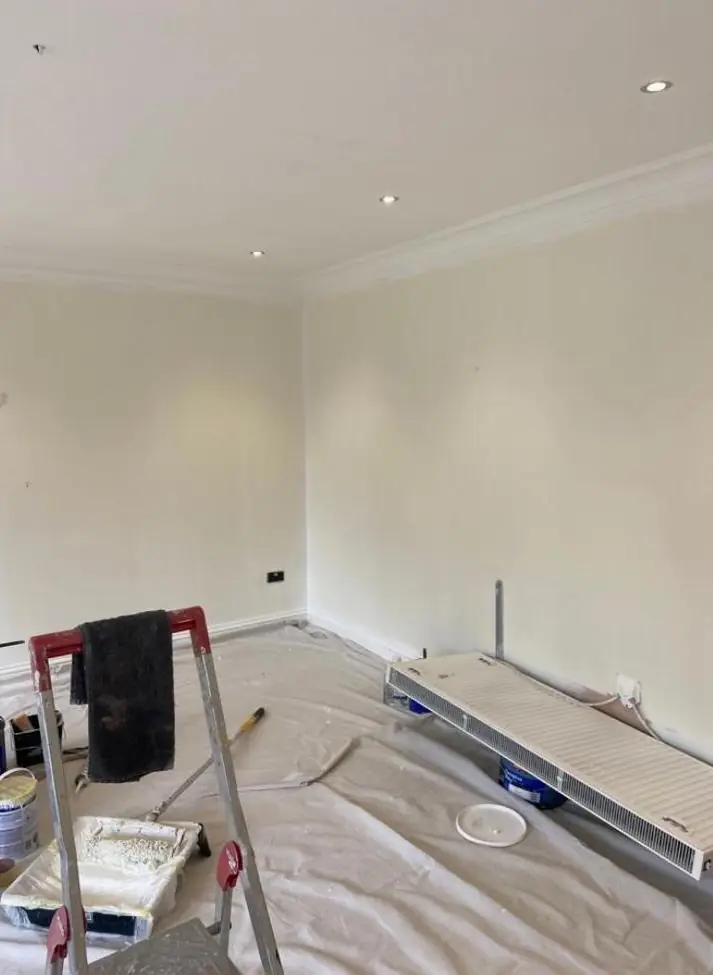
Newer homes at Bective Close, Lime Tree Gardens and Scholars Court, and the housing built on the former University of Northampton campus after it closed in 2018, often come with bare or builder-finished plaster. Fresh plaster needs a mist coat before colour goes on, as our new plaster and extension painting page describes.
Slope, springs and narrow lanes
The old village falls fairly steeply west towards the river, and the meadows along the Brampton arm of the Nene, including Kingsthorpe Meadow nature reserve, are prone to winter flooding. Springs rise where the Northampton Sand meets the clay below. Low walls and fences on that slope stay damp and dry slowly, so exterior work there is booked for settled weather. Mature trees around The Green, the churchyard and Thornton Park add shade, and several carry tree preservation orders, which affects where ladders can stand.
Access is the other local factor. Vicarage Lane is a tight, enclosed lane with no through traffic, its houses built right up to the footway. Green End is a quiet cul-de-sac with a sharp bend. Church Passage, The Leys and Lower Leys are stone-walled footpaths rather than roads. With buildings and walls tight to the road edge, there is little front space for ladders or scaffold, so Dean plans ladder positions and parking on the quote visit.
Shops and pubs on Harborough Road
Harborough Road is the commercial spine, with Kingsthorpe Shopping Centre (opened in 1974), supermarkets, takeaways and the Cock Hotel of 1893. The historic High Street adds smaller premises, while the Queen Adelaide and the King William IV pubs sit inside the conservation areas, where colours need more thought. Commercial work is planned around trading hours on a busy A-road; see our commercial painting page.
Last updated by Dean, DH Painter & Decorator.