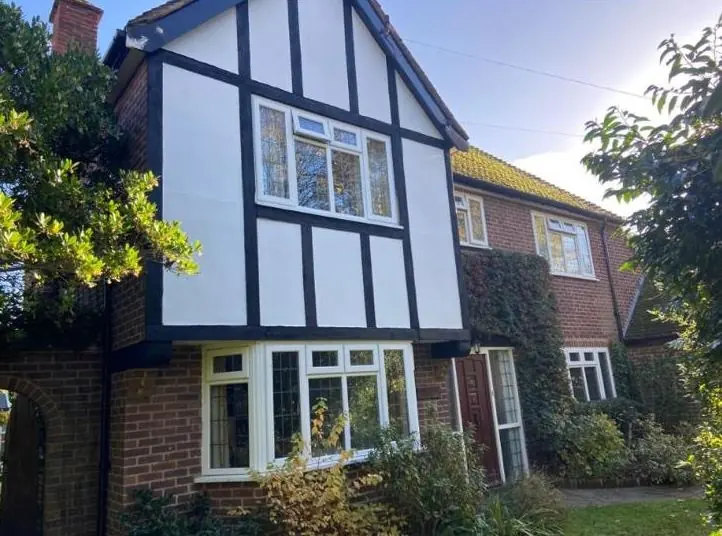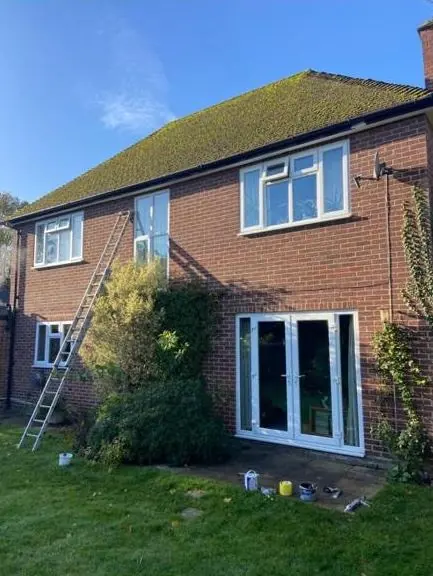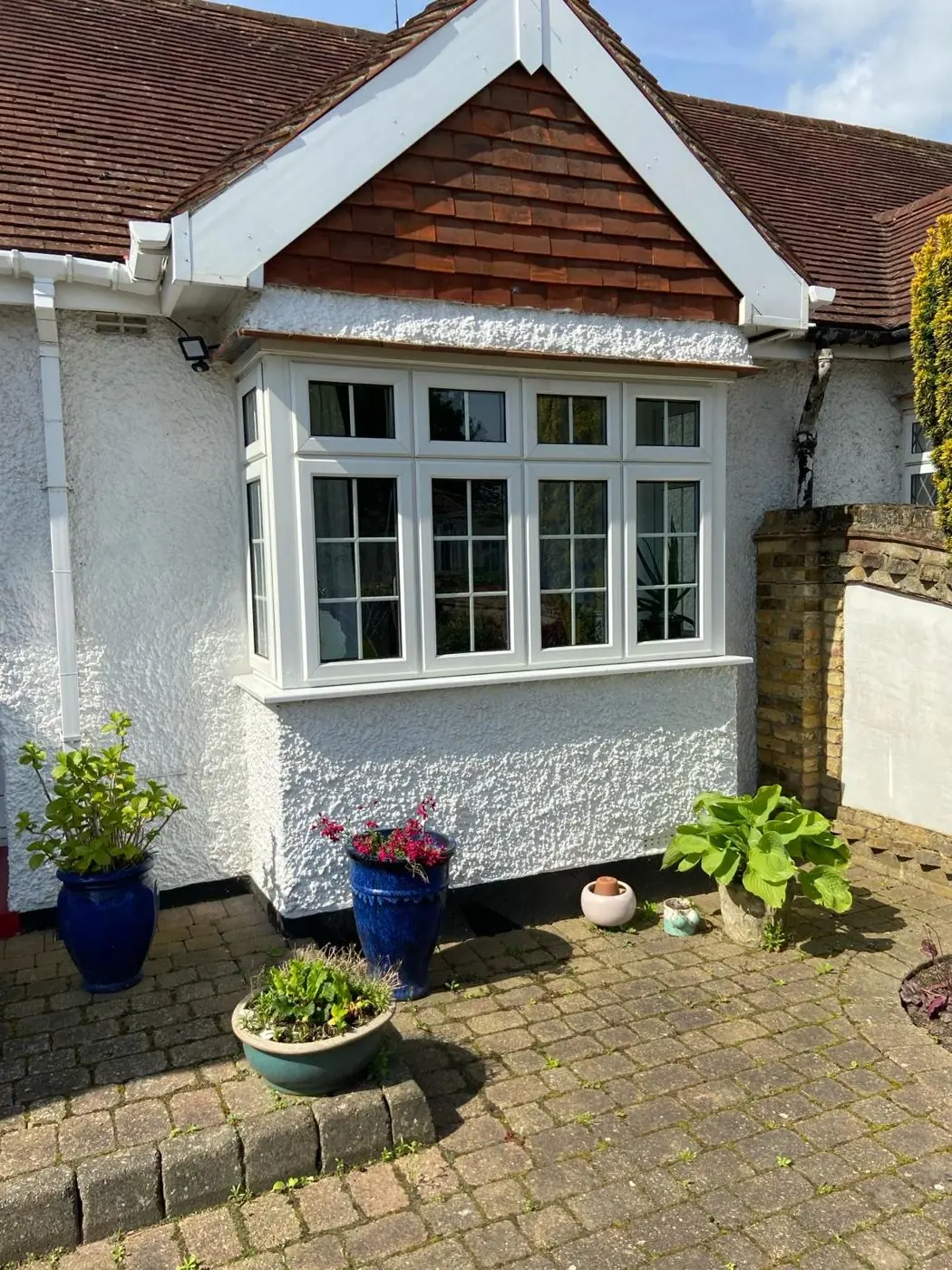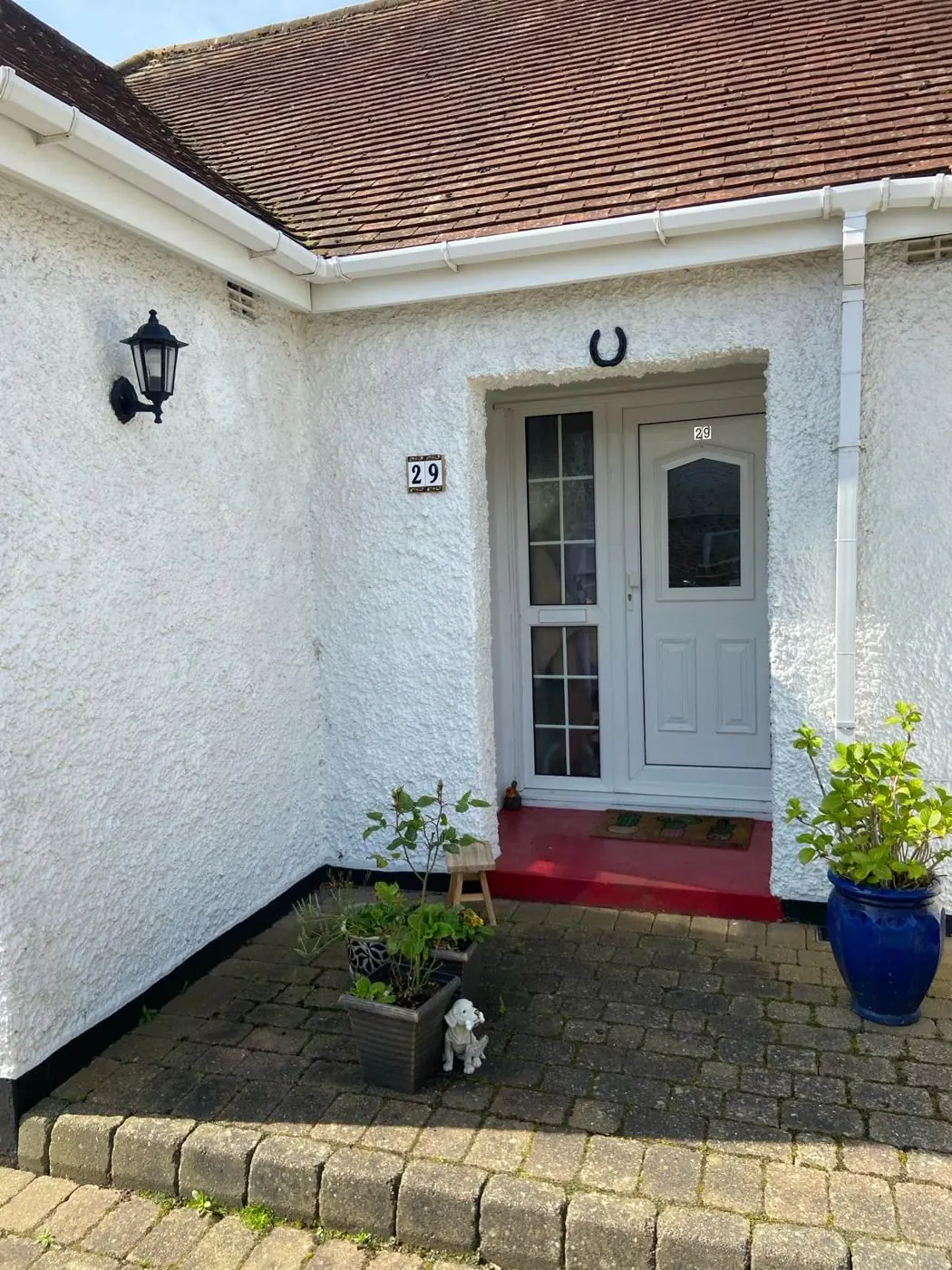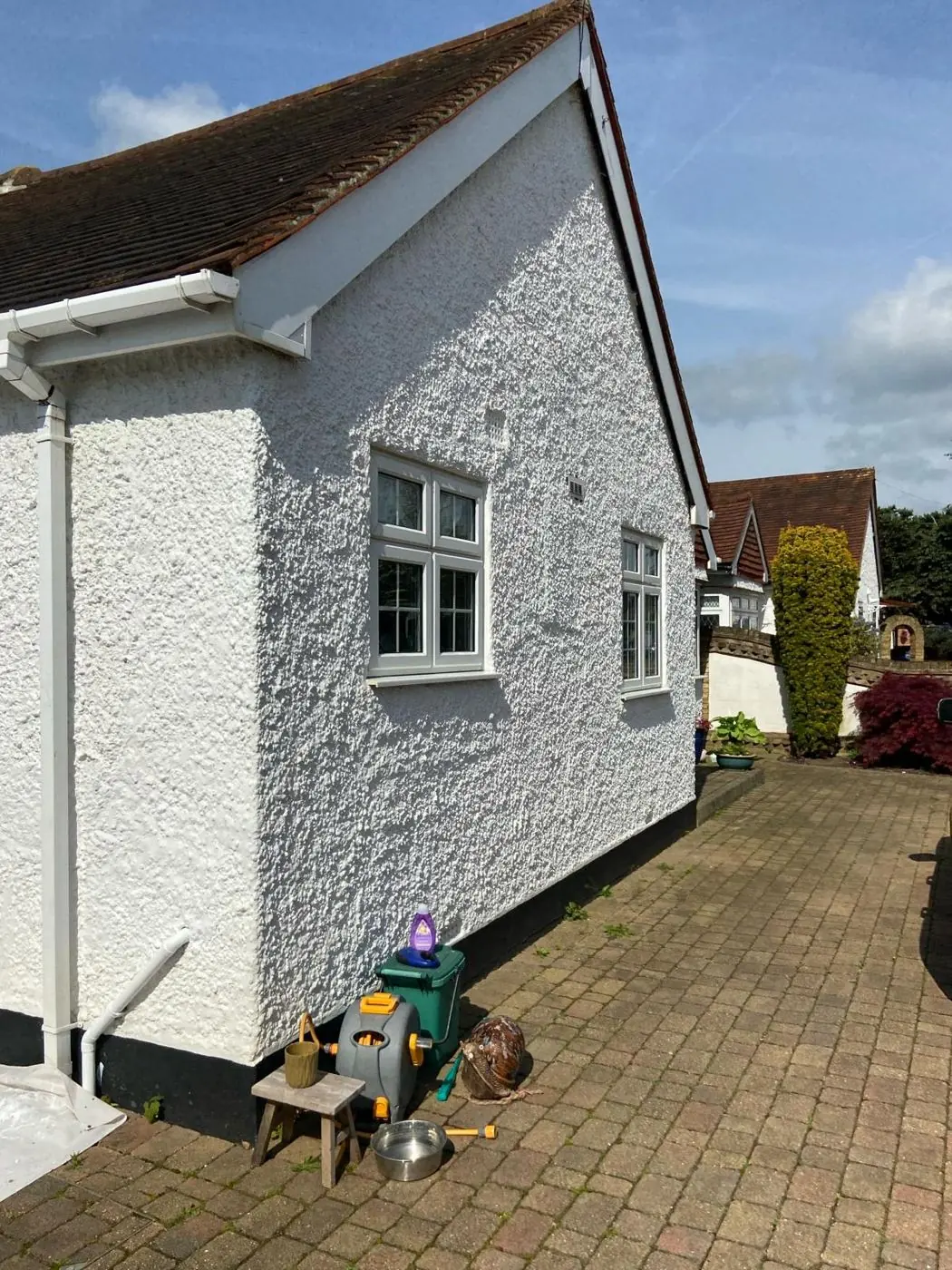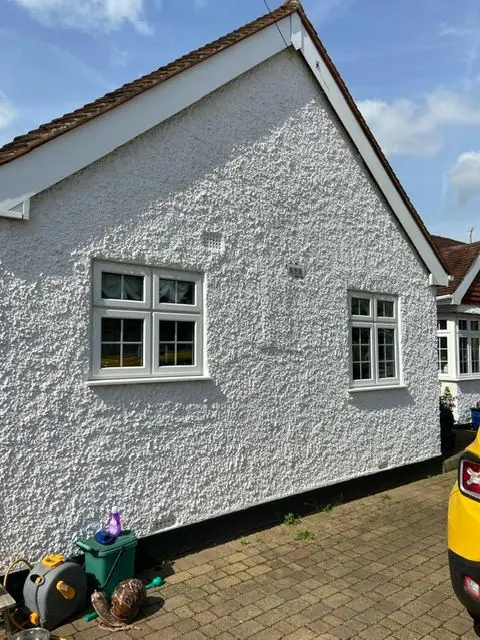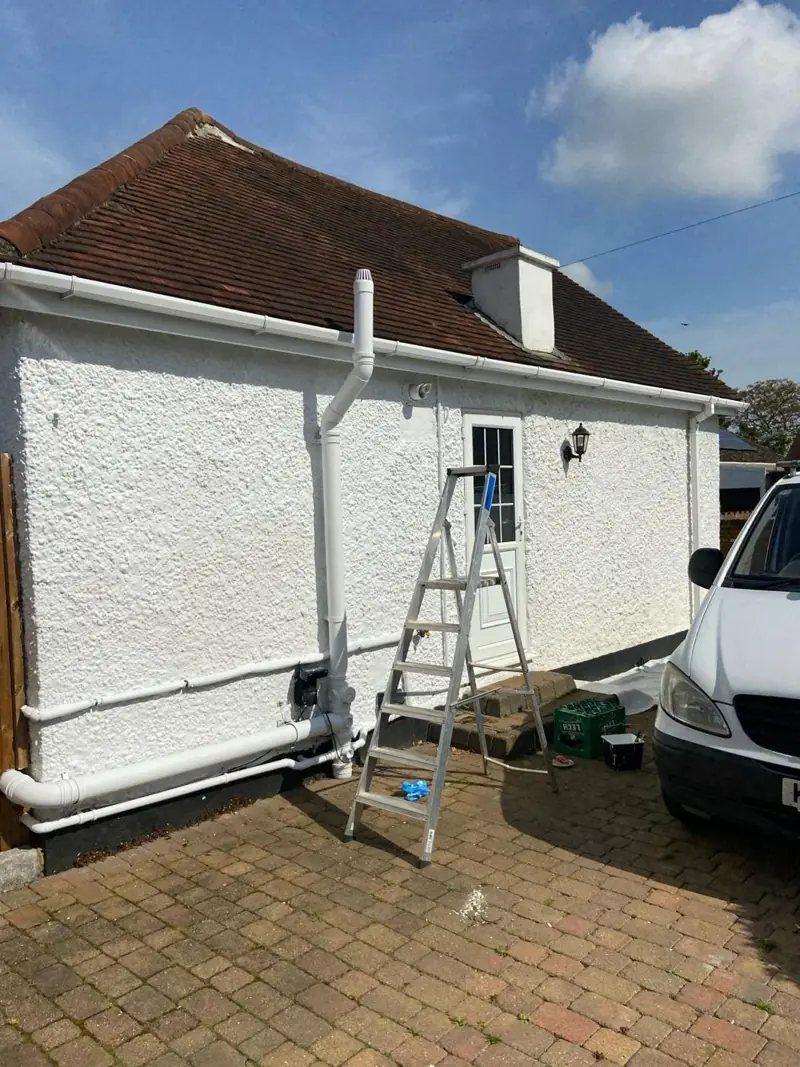
DH Painter & Decorator paints fascias, soffits, gutters and downpipes in Kingsthorpe (NN2), on the northern edge of Northampton about 1.8 miles out. Most of the village's fascia boards are on the 1930s bungalows and the Spring Park, Obelisk, Chalcombe Avenue and Hinton Road estates, since the old stone cottages mostly have none.
Where Kingsthorpe actually has fascia boards
It sounds odd to start a fascia page by saying many houses do not have them, but in Kingsthorpe it is true. The vernacular stone cottages on The Green and along Vicarage Lane were built with steep roofs for thatch, since replaced by Welsh slate or tile, and their gables finish without the deep boarded eaves of a modern house. The 19th-century brick houses mostly carry cast iron gutters on brackets fixed straight to the wall, with few fascia boards. On those homes the roofline job is metalwork, which our railing and ironwork service covers.
Fascia and soffit work in Kingsthorpe therefore falls mainly on two groups of houses: the 1930s bungalows and the post-war estates.
The 1930s bungalows on The Green and Knights Lane
The row of bungalows from 2 to 24 The Green into Knights Lane was built as a uniform group, with heavy hipped roofs, bay windows and several casements each, set behind low stone walls. Two things follow for painting:
- A hipped roof has eaves on all four sides. There is more fascia and soffit per house than on a gabled semi of a similar size, and the back and sides are often the parts that have been left longest. We quote for the whole run, not just the front.
- The row reads as one design. Built to one pattern, the row looks best kept consistent, so we match the existing roofline colour of the row unless you have a good reason to change it.
Paint on 1930s timber can include old lead-based layers. We scrape and wet-sand it rather than dry-sanding, and collect the debris instead of letting it fall into the garden.
Estate rooflines, 1960s to 1980s
Chalcombe Avenue and Hinton Road date from the 1960s, Spring Park and Obelisk (including Holly Lodge Drive) from the late 1960s and 1970s, and Tollgate Close, Brampton Park and Cedrus Court from the 1980s. On houses of that age the original timber boards have had decades of weather. Common faults are soft ends where a gutter has dripped, open joints between boards and paint that has failed along the bottom edge where water collects. We probe each board before painting, cut out and splice small areas of rot where that makes sense, and tell you if a board is beyond saving.
If your roofline has already been replaced with uPVC, it does not need painting; a clean is usually enough. Timber boards are the ones we prime, undercoat and top-coat.
On two-storey estate houses the eaves sit well above bungalow height, and access is planned by ladder or a small tower depending on the ground. Where a garage or porch sits below the roofline, we protect its roof before scraping starts. Rooflines take the brunt of the weather, so we only paint them in a settled spell; our exterior painting timing guide sets out why.
Leaves, gutters and the trees around the village
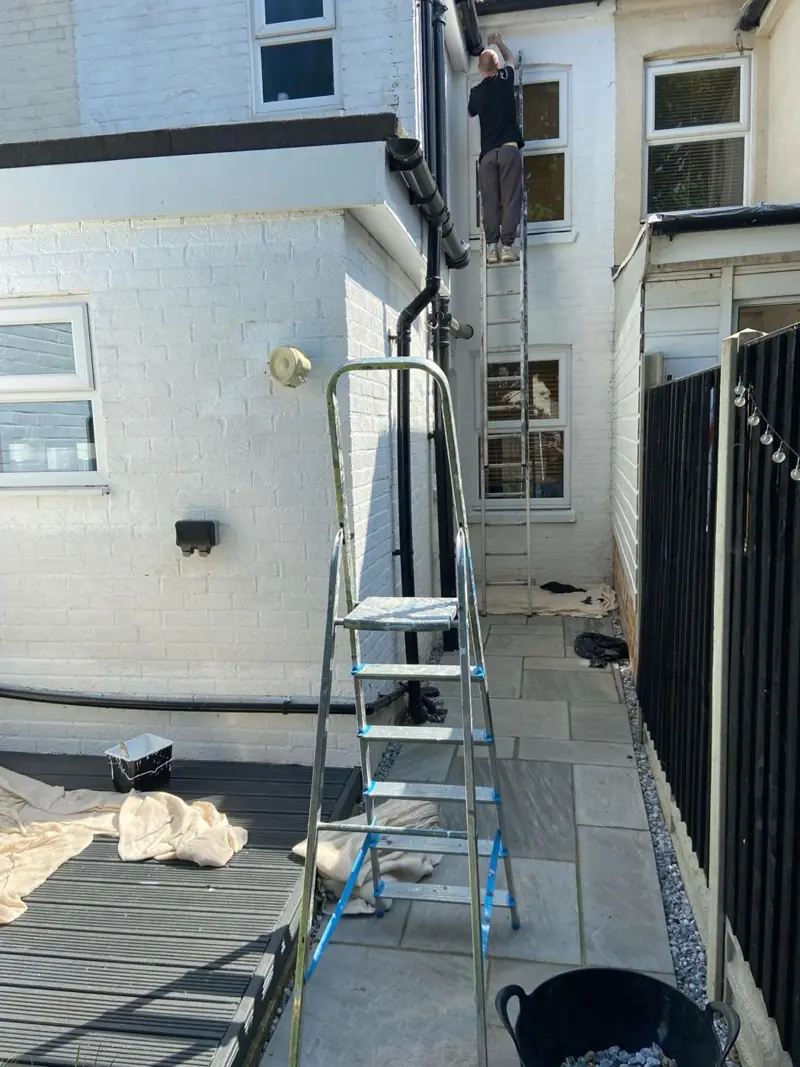
Kingsthorpe has a lot of mature trees: limes, silver birches and horse chestnuts on The Green, plus the churchyard, school grounds, cemetery and Thornton Park. Houses near them collect leaves in their gutters, and a blocked gutter is the usual reason a fascia board rots from behind. We clear the gutters on the run being painted and check the outlets, then paint gutters, downpipes and brackets with the boards so the roofline finishes in one colour. Trees in the conservation area are protected and some carry tree preservation orders, so we work around overhanging branches rather than cutting them back.
More detail on the process is on our fascia and soffit painting page, and the Kingsthorpe area page lists the other work we cover here.
Last updated by Dean, DH Painter & Decorator.