Dean gives colour and finish advice as part of decorating jobs in Kingsthorpe, the NN2 village that sits where the A508 and A5199 meet, under two miles north of the town centre. Around The Green that means working with the conservation appraisal and listed buildings; on the estates and new builds it is about light, room use and finish.
The colours already on the street
Any exterior colour in the old village has to sit next to what Kingsthorpe is built from. Cottage walls are coursed rubble in a light brown local sandstone. Victorian fronts show red brick, in places laid with yellow headers. Roofs are Welsh slate or plain red clay tile, and the King William IV on Green End mixes stone, brick corners and herringbone banding under a red tiled roof. Kingsthorpe Hall used a soft white and grey sandstone quarried in the village until the end of the 19th century.
Against that, stark brilliant white on casements and doors can look harsh, while off-whites with a warm undertone, stone shades and muted greens or blues tend to settle in. Dean brings sample cards to the house and looks at them against your actual wall and roof, because a shade that works beside red brick on High Street can look quite different beside the brown stone on Well Yard.
What the conservation appraisal steers you towards
Two conservation areas overlap the old village: one centred on The Green, enlarged in 1976 to take in Vicarage Lane and Kingswell Road, and a second covering High Street and Manor Road. The council’s 2017 appraisal of the main area is clear on a few points that affect colour:
- Bare stone or brick should not be painted; the appraisal counts it as an untraditional finish that chips away at character.
- Railings and lamp posts should be painted black.
- Old timber windows and doors are to be mended where possible, with any replacement matching the original.
Because the council decided against an Article 4 direction after its 2017 consultation, owners of unlisted homes can change a front door colour without applying for anything. Listed buildings are different. Kingswell Cottage, Well Yard House, the listed Green End cottages and the Kingsthorpe Hall flats need listed building consent before external finishes or colours change, and we would expect the owner to have that in place first.
Where a front is already painted, such as the Queen Adelaide’s white facade on Manor Road, the colour question comes with a product question: soft sandstone needs a breathable mineral or limewash-compatible coating, not a plastic masonry paint.
Keeping the bungalow row in step
The 1930s bungalows from The Green into Knights Lane were built as a uniform row with hipped roofs, bay windows and low stone front walls. Part of their appeal is that consistency, so we suggest matching the joinery colour already used along the row rather than introducing a new one. If no tin survives, Dean can match a colour from a sound flake of the existing paint.
Inside: dim cottage rooms, open choice on the estates
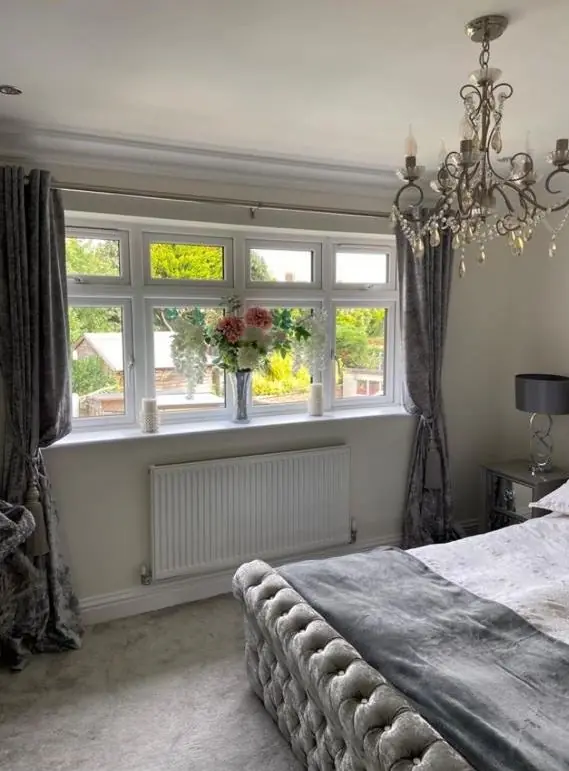
Small windows under timber lintels mean cottage rooms in the old core get limited daylight. Cool greys often turn flat and heavy there, so warmer neutrals and soft earth tones usually serve better, with a flat matt on uneven walls to avoid highlighting every bump. West-facing rooms on the slope that drops towards the Nene meadows catch the low evening sun, so test a sample there late in the day as well as in the morning.
On Spring Park, Obelisk, the other post-war estates and the new homes at Bective Close or Scholars Court, there are no heritage constraints, so the choice comes down to light direction, how the room is used and which finish will stand up to it: wipeable sheen in hallways and kitchens, flat matt where walls are less true. More detail is on our colour and finish advice page, and the Kingsthorpe area page covers the wider picture.
Last updated by Dean, DH Painter & Decorator.