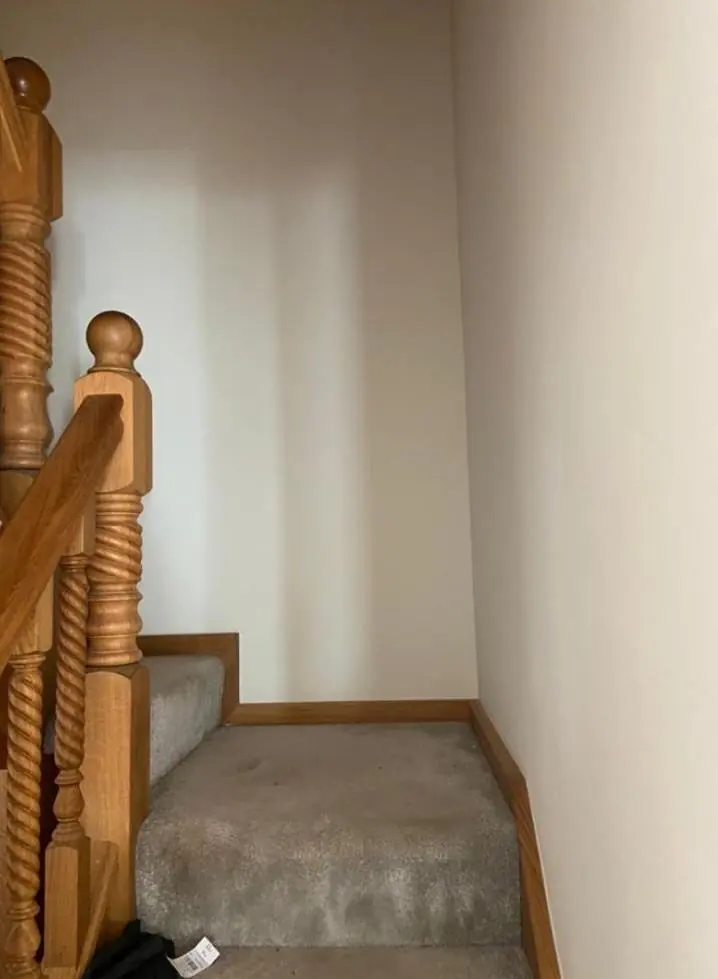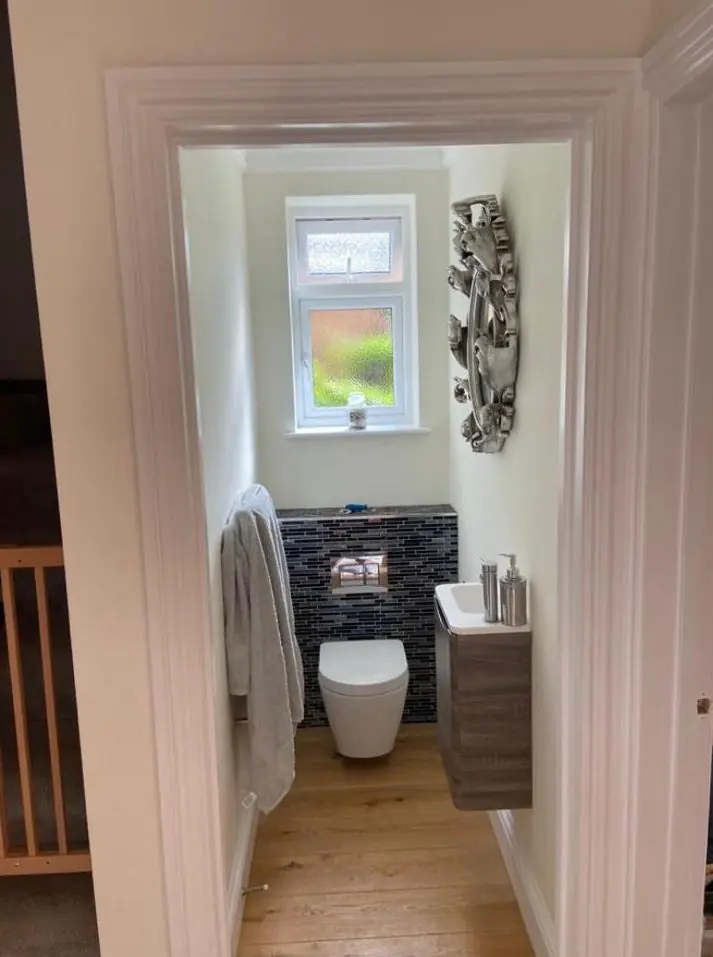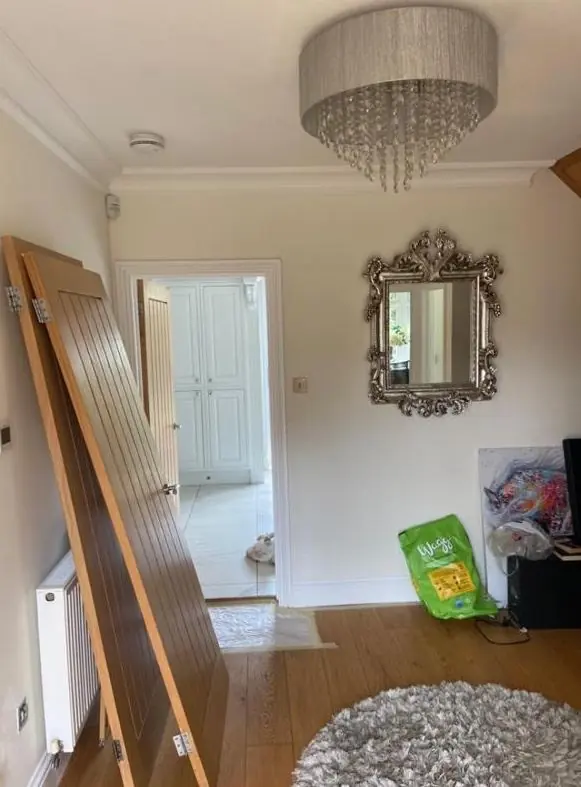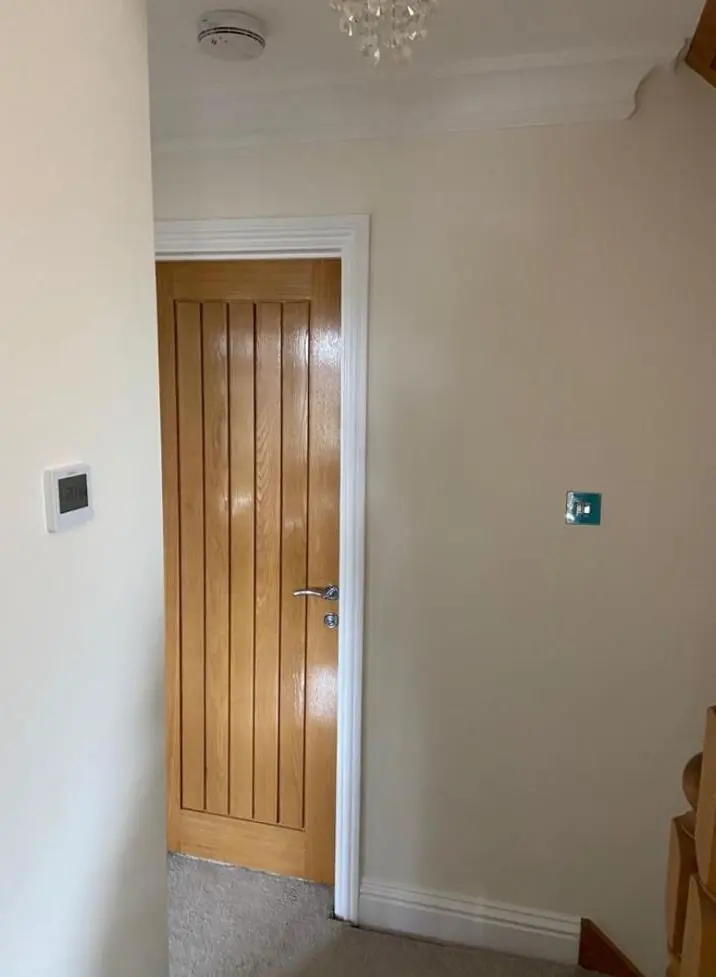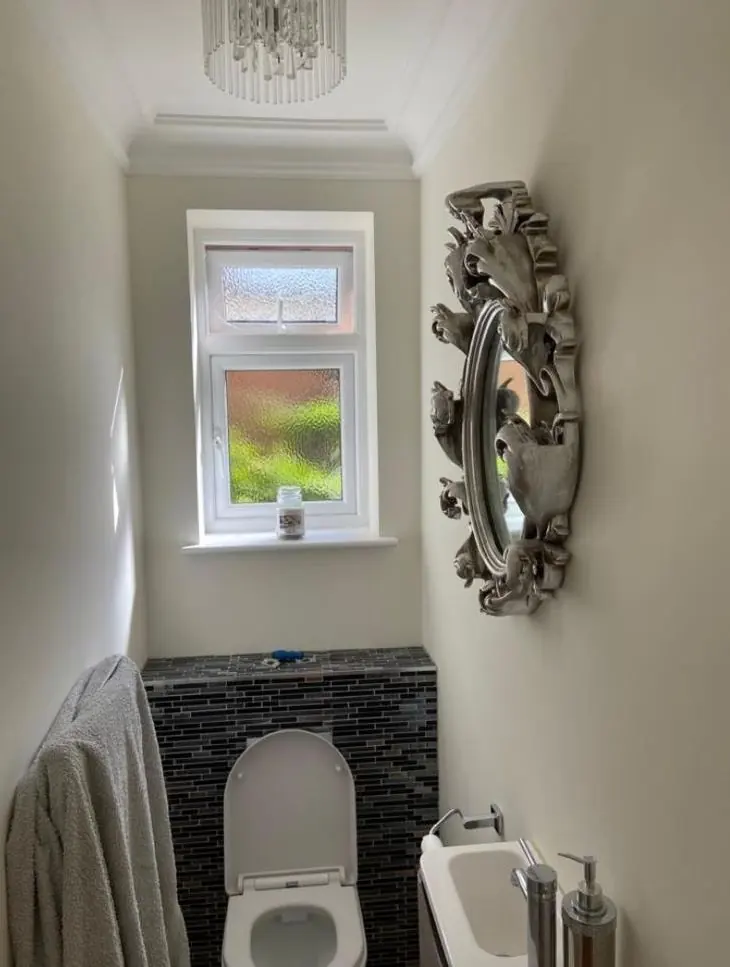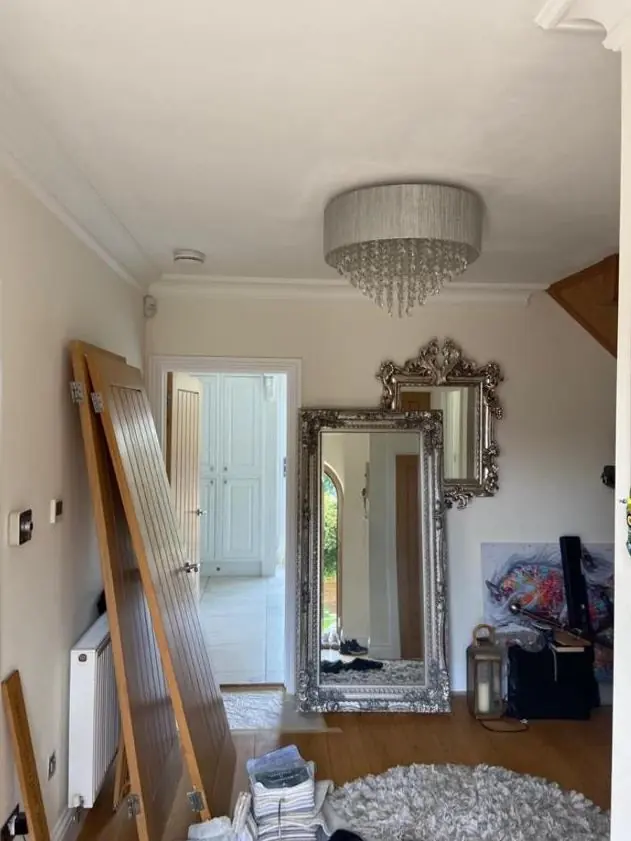
We decorate hallways, staircases and landings in St David's, NN2, on the east side of Kingsthorpe and about 1.9 miles north of Northampton town centre. Dean uses stairwell staging that fits the narrow straight flights of the interwar terraces and plans each job so you can still get up and down the stairs.
Three types of hall in one estate
The estate went up in three waves, interwar, 1950s and 1970s, and the hall you are living with depends on which wave produced your street. That shapes the access, the time and the wear the finish has to take.
| Housing | Streets | What the hall usually means for decorating |
|---|---|---|
| Interwar terraces, mostly built by 1939 | Hastings, Cranford, Rosedale, Langdale, Barnwell and Whiston Roads | A narrow straight flight with a tall wall over it, in a house where everything comes in through the front |
| 1950s semis and semi-detached bungalows | Eastern Avenue North and South, Bondfield Avenue, Holdenby Road | A stair with a landing in the houses; in the bungalows, a hall and corridor with no stairwell at all |
| 1970s flat blocks | Newnham Road, Drayton Walk | Small private halls inside flats, plus communal stairwells shared by residents |
Working above a narrow terrace staircase
Interwar mid-terraces such as those on Cranford Road and Barnwell Road have one stair layout in common. In those houses the stair is typically a single straight run between two walls, and the high wall at the top is the part you cannot reach from a stepladder. We set up a stair platform or adjustable ladder with staging boards that bridge the flight safely, and in a narrow stairwell that set-up has to be planned around the width of the treads and the turn onto the landing.
Older plaster is common on these streets, and the stairwell is where cracks tend to show: along the line of the stair, round the landing ceiling and where the wall meets the ceiling at the top. We rake out and fill cracks properly, hang lining paper over walls too crazed to take emulsion cleanly, and only then apply finish coats. On St Davids Road and Langdale Road, where some houses go back to 1900-1914, we choose breathable paints for any old lime plaster.
Finishes for halls that carry everything
With rear access on many terraced roads limited to shared passages, shopping, bikes, buggies and bins often come in and out through the front hall. That puts heavy wear on the lower walls and the stair stringer. We suggest a scrubbable matt or eggshell on the walls, a satin on spindles, handrail and skirtings, and where there is room, a darker shade below a dado line to hide knocks. We can also advise on whether a painted stair runner area or a carpet runner would suit your stairs before we paint them.
In the 1950s bungalows on Eastern Avenue and Holdenby Road there is no stairwell to scaffold, so the job is usually quicker: a long hall with several doors off it, where the woodwork often takes as long as the walls.
Communal stairwells in the Newnham Road and Drayton Walk blocks
The flat blocks on Newnham Road and Drayton Walk date from the 1970s and are largely social housing, so communal areas are normally looked after by the housing provider or a managing agent. Where we are asked to quote for a communal stair, we plan the work in sections so residents always have a clear route, use low-odour, quick-drying coatings, sign wet paint clearly and keep tools off the landings at the end of each day. The coating has to resist scuffs and be easy to wash down.
Stair staging is long and awkward to carry, so before the start date we agree where the van can stop: a shared parking area near Drayton Walk, or a kerbside space on the terraced roads.
For more on equipment and preparation see our main hallway, stairs and landing decorating service. Other services we cover in the neighbourhood are on our St David’s page, and our cost guide explains what affects the price of a stairwell.
Last updated by Dean, DH Painter & Decorator.