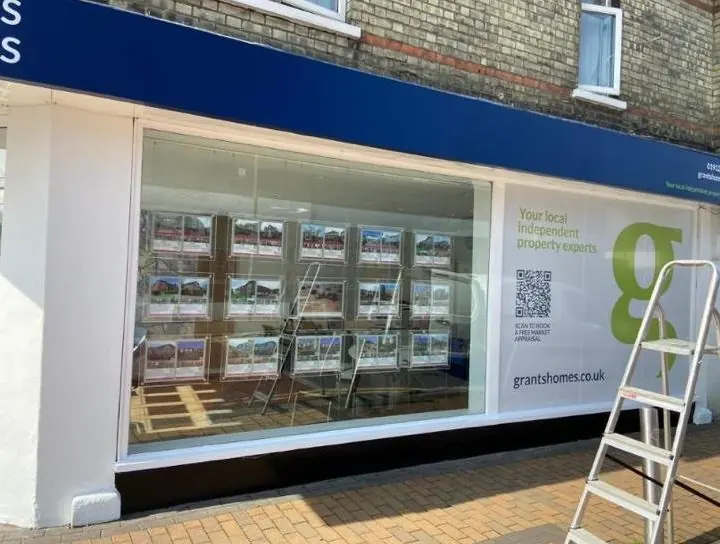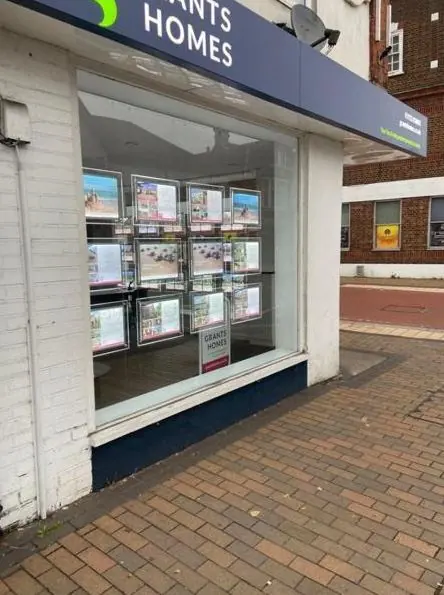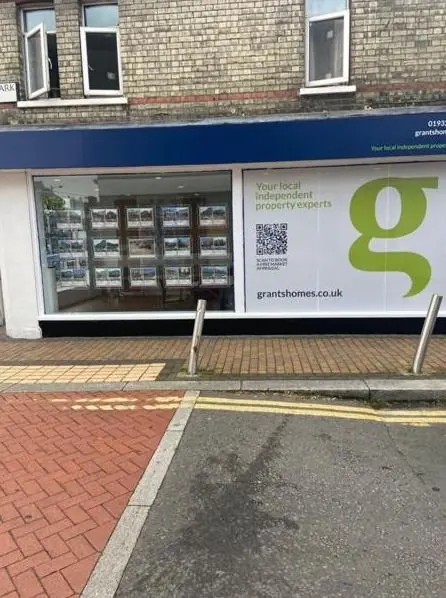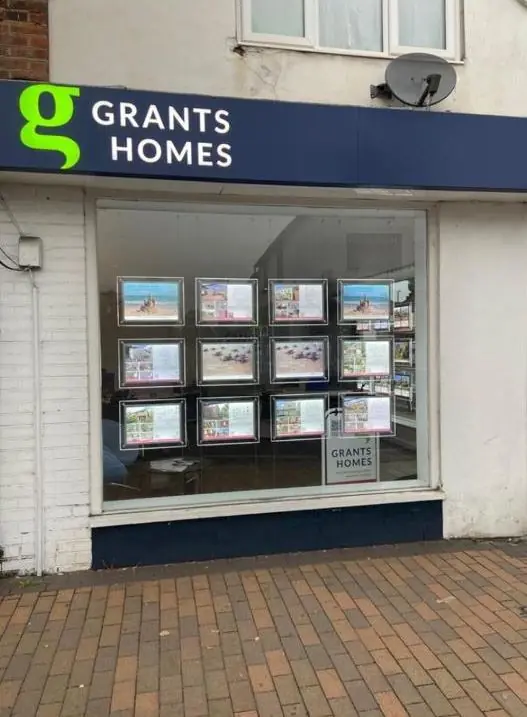
DH Painter & Decorator repaints shopfronts and commercial frontages in Upton NN5, about 2.1 miles west of Northampton town centre. Upton's shops are modern units built with the masterplan, around Latchet Lane, The Square and Upton Way, so Dean's work there is refreshing worn frontages around trading hours.
Shopfronts built with the masterplan
Upton has no Victorian parade with carved pilasters and console brackets. Its shops went up as part of the planned neighbourhood, in three small clusters: the Latchet Lane local centre with its food shop, takeaways, restaurant, café and salons; the units around High Street and The Square; and a strip of roadside premises on Upton Way beside the A45, plus a newsagent on Webb Drive. Every one of these frontages is young, and none needs period restoration. What they do need, after years of trading, is maintenance: faded fascias, chipped frames, stall risers marked by trolleys and bins, and grubby soffits over entrances.
What wears first on an Upton unit
A shop built with the neighbourhood has had years of doors swinging, deliveries and cleaning machines. Before quoting, Dean looks at the points that fail first on this age of frontage:
- the base of the door and frame, where mop water and kicks wear the coating through;
- sealant joints around frames, which shrink and let water behind the paint;
- the stall riser, often scuffed by trolleys, bins and delivery cages;
- the underside of any canopy or soffit, where grime and cobwebs build up out of sight.
Failed sealant is cut out and renewed before painting, so the new coat is not undermined by water within a season.
What a modern frontage is made of
A new-build unit can mix several materials in a few square metres, and each takes paint differently. Before quoting, Dean goes over each part of the front:
- Powder-coated aluminium frames and doors need degreasing, a scuff with a fine abrasive and a primer formulated for non-ferrous metal. Skipping that primer is the usual reason a shop frame peels.
- Timber fascias and boarding take a microporous or exterior gloss system once any bare wood is primed.
- Rendered or masonry panels around an entrance take a breathable masonry paint.
- Steel roller shutters, bollards and handrails need rust treated at every chip, then a metal primer.
Brand colours, signs and shutters
Several Upton units trade under a national or franchise name, and those businesses often have set corporate colours, or their own approved contractors, for the outside of the building. If yours does, check what the brand allows before booking. For independent shops, we can match an existing fascia colour from a sample or help you choose a new one. Fixed signs, lettering and illuminated boxes are masked rather than painted round freehand, and we agree in advance whether a sign needs taking down by the sign company. Shutters are painted with the shop closed or at the very start of the day, so the coating is touch dry before they are rolled.
Keeping the door open while we paint
A food shop or takeaway has customers in and out for most of the day, and a salon books clients by the hour. We set the order of work with you so the doorway stays usable: fascia first while the shop trades below, then the frame and door in a quiet spell, with wet areas screened. The pedestrianised Upton Square means equipment for units there is carried in, so we choose a compact tower and keep the walkway clear. On Upton Way, frontages beside the A45 collect road grime, so they are washed and left to dry before any preparation starts.
Our shopfront painting service page sets out the method in full. For interiors, schools and care homes, see commercial painting, and for everything else we cover locally, our Upton page.
Last updated by Dean, DH Painter & Decorator.