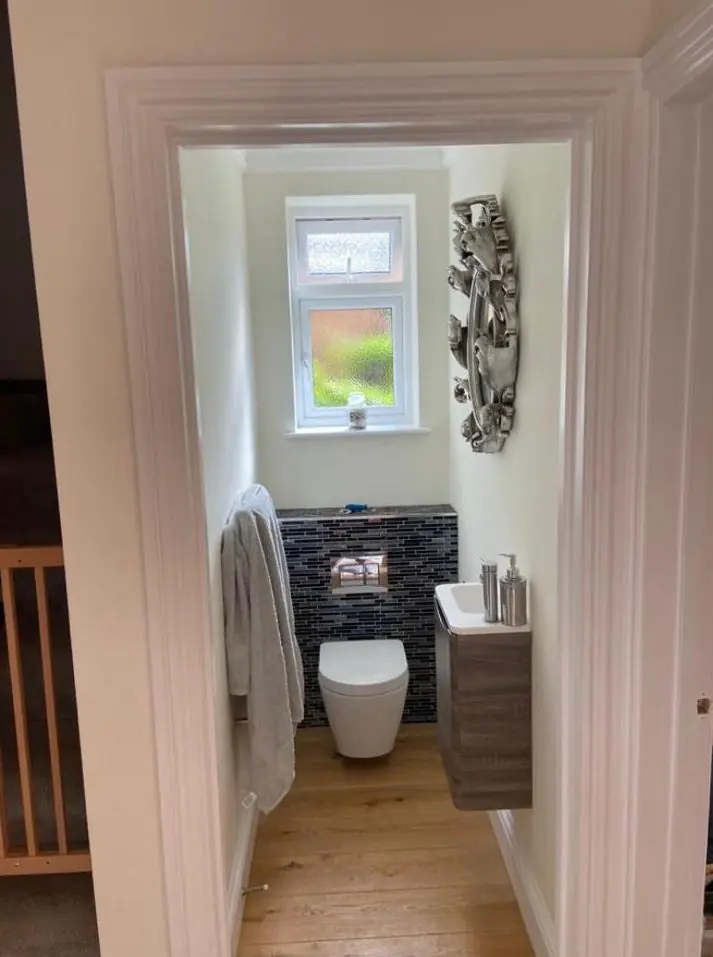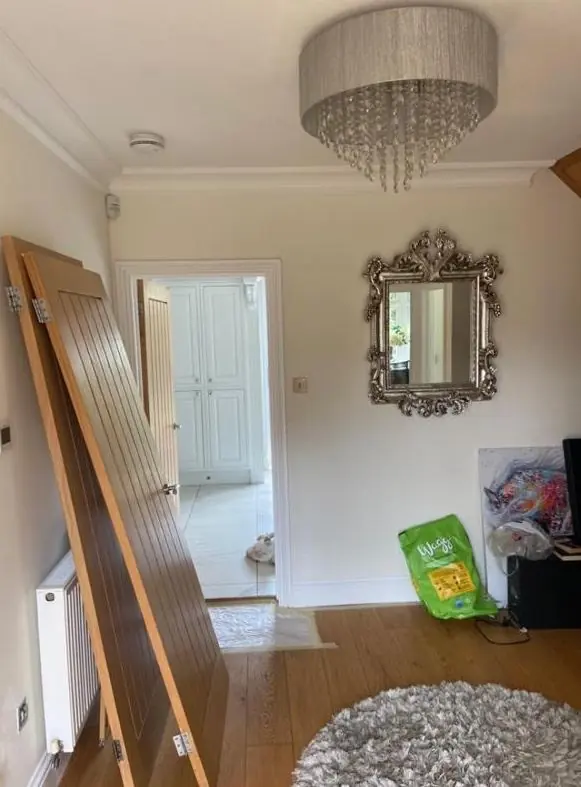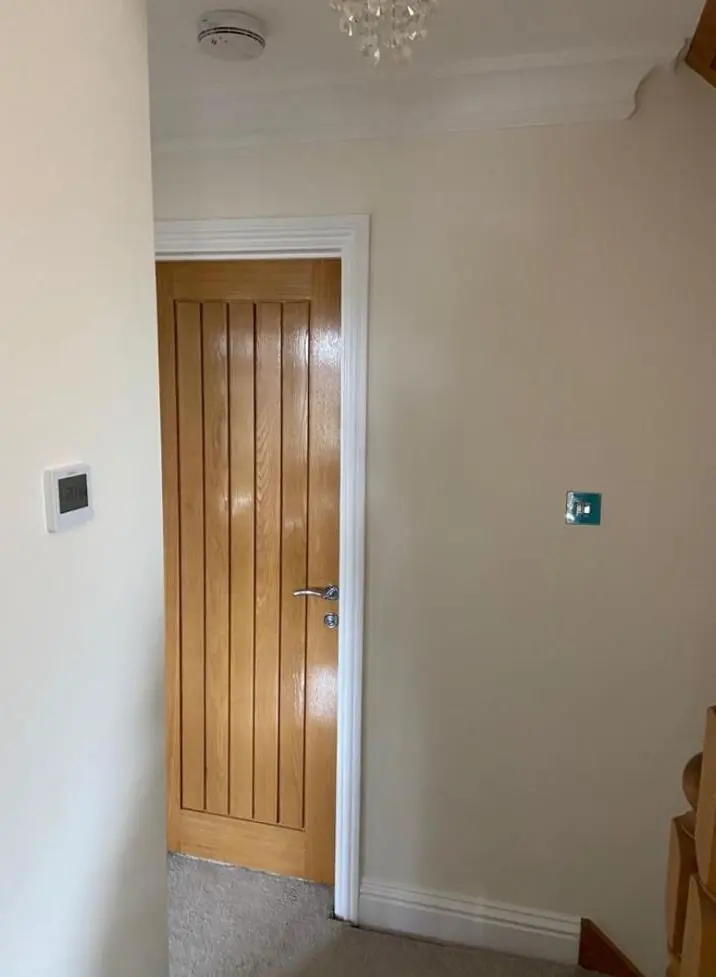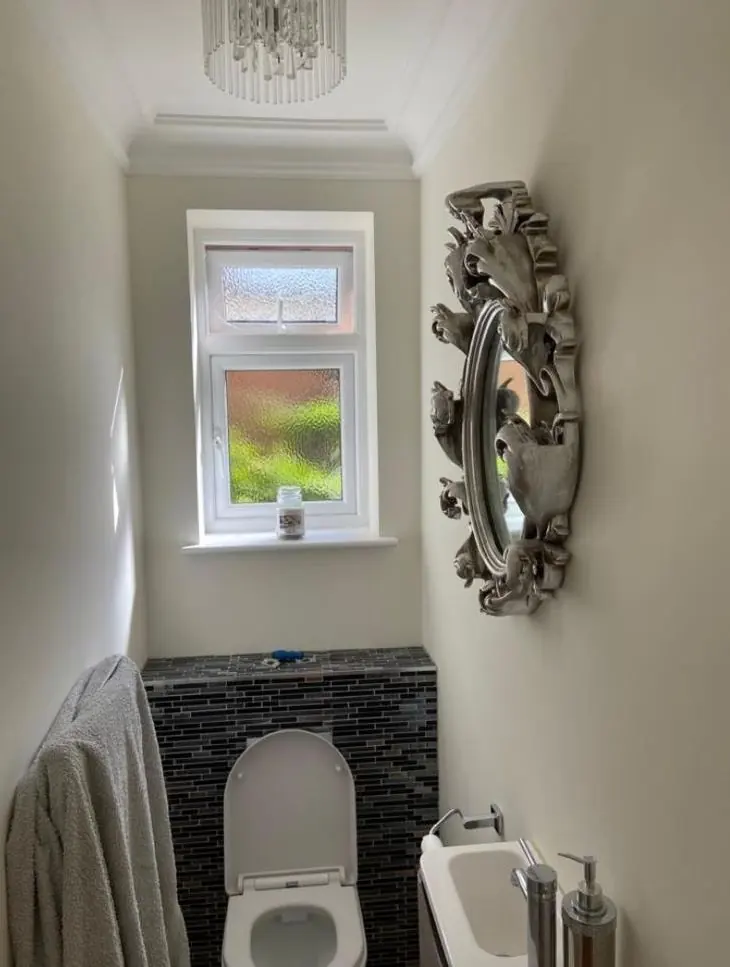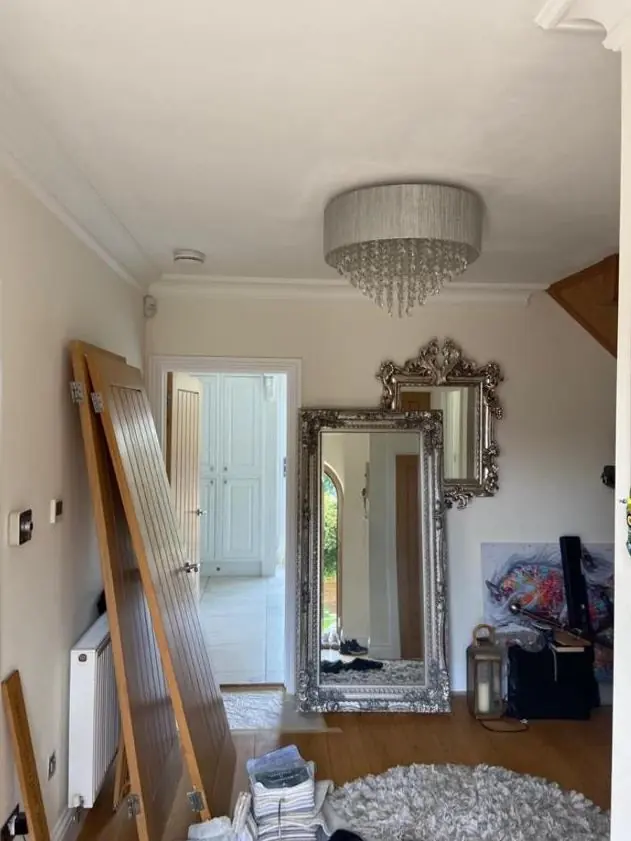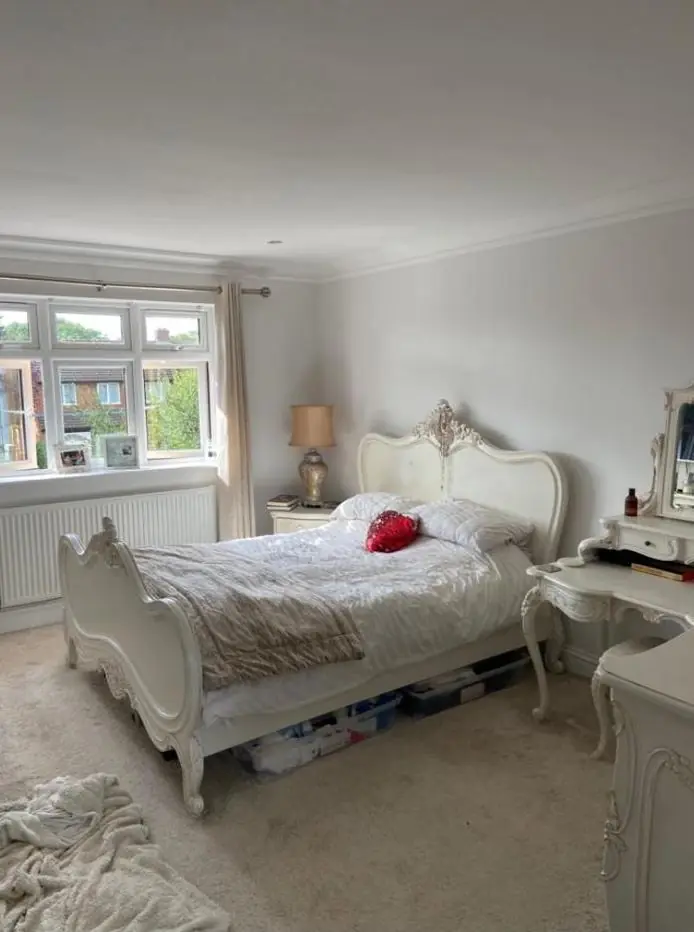
DH Painter & Decorator hangs wallpaper in Upton, about 2.1 miles west of Northampton town centre in NN5. Most jobs here are feature walls in open-plan living spaces and full stair walls in three-storey townhouses, hung over newish plaster that often needs filling and lining first.
Which walls get papered in an Upton house
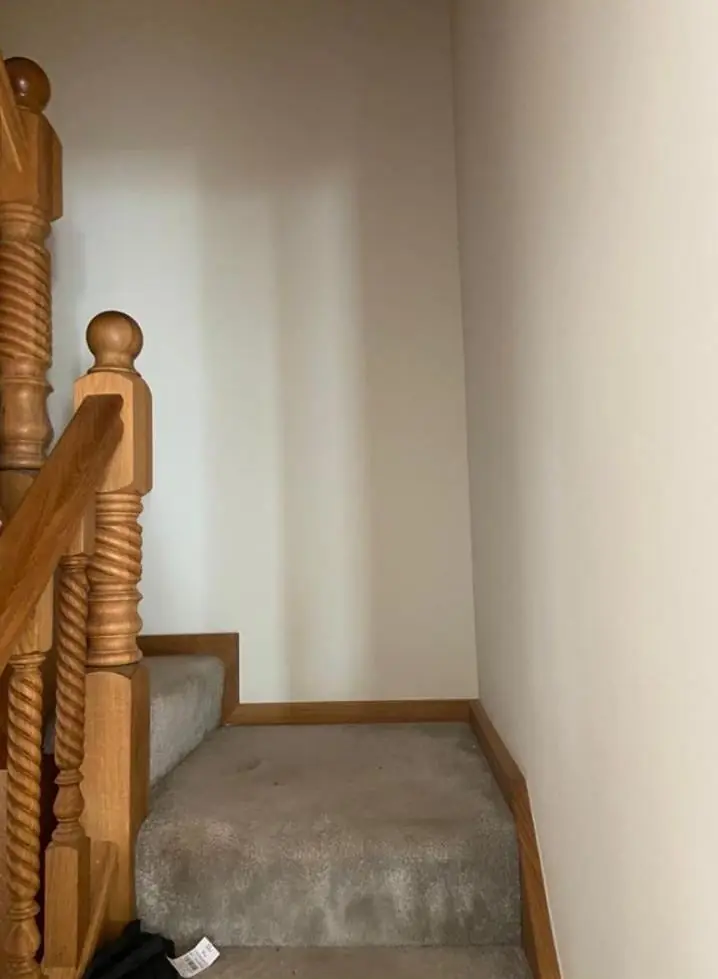
Homes built under the Upton Design Code tend to have open-plan ground floors where kitchen, dining and living run together. Papering the whole space rarely suits that layout. One wall, usually the one behind a sofa, a dining table or a bed, carries a pattern, and the rest stays painted. The other common request is the stair wall in a three-storey townhouse, where a single paper running from hall to top landing ties the floors together.
A few of the Site C villas on West Street have garages with a “bonus room” above, reached from the mews. Those rooms often end up as a study or guest room, and a papered wall gives a small space some character without a full redecoration.
Young plaster and what has to happen first
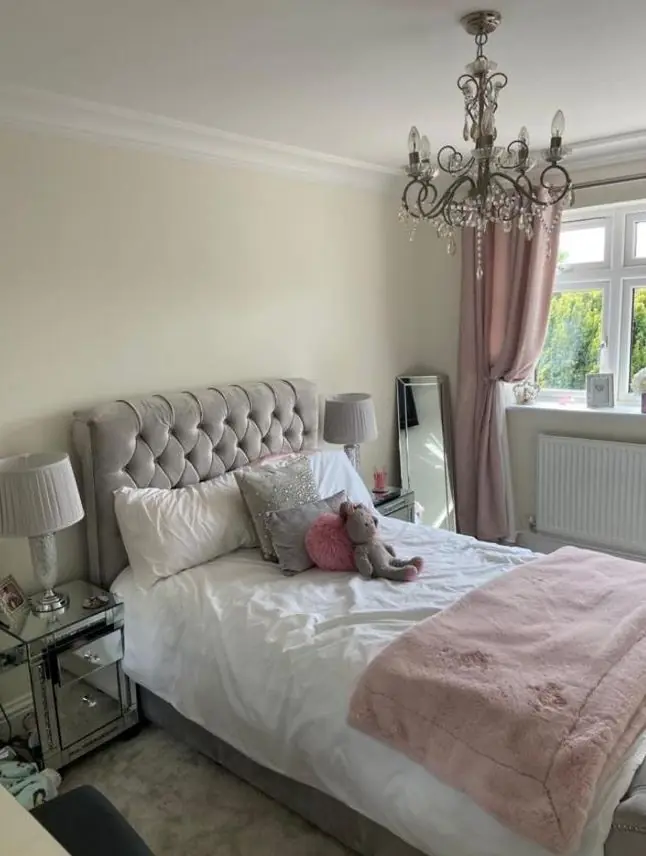
Most Upton walls are plasterboard or skimmed plaster about 10 to 20 years old. They have moved enough to crack at joints and corners but rarely have old paper on them. Before hanging we:
- fill and sand settlement cracks, which otherwise open again and split the seam above them;
- seal the contract emulsion, which can be too porous or too weak to hold paste well;
- hang lining paper cross-wise where the wall is uneven or has been patched, so the face paper sits flat.
Lining adds a day on a bigger wall, but on newer houses it is often what stops seams from lifting a year later. You can read about the full process on the wallpaper hanging service page.
Long drops in tall stairwells
About 105 of Upton’s tagged buildings are three storeys, and a few go to four or five. A papered stairwell there can mean single drops much longer than a normal room height, hung from staging over the stairs. With lengths that long, pattern matching and plumb lines matter more, because a small drift at the top of the first floor becomes obvious by the top landing. Some Site C stairwells are lit from roof-ridge lights, which throw light straight down the paper and show any gap at a joint. We set the first drop from a plumb line on each flight and protect new stair carpets with sheets and tape before staging goes up.
On these long walls the choice of paper makes a real difference. A random or free-match design is far easier to keep looking right over three floors than a large straight repeat, and it wastes fewer rolls. Heavy papers are also harder to handle at full height, so if you have a heavy designer paper in mind for the stairs, Dean will talk through whether a lighter non-woven version would hang better.
Choosing a paper for park-side light
| Room | What it faces | Paper that tends to suit |
|---|---|---|
| Living room on the southern edge | Full sun across the country park | A light-fast non-woven paper; strong sun fades some printed papers |
| Hall or stair wall | Scuffs from bags and bikes | A washable vinyl or heavy non-woven |
| North-facing bedroom | Cool, indirect light | Warmer grounds and patterns that do not rely on bright light |
Park-edge living rooms, and the Site C villas angled for solar gain, get the most direct sun. In those rooms we ask about the paper’s light-fastness before ordering.
Booking a papering job
Dean measures up, checks the batch numbers and roll count against your paper, and confirms how much lining is needed. If you are comparing decorators, the guide on how to choose a painter and decorator covers what to ask. Other work we cover in the neighbourhood is on the Upton page.
Last updated by Dean, DH Painter & Decorator.