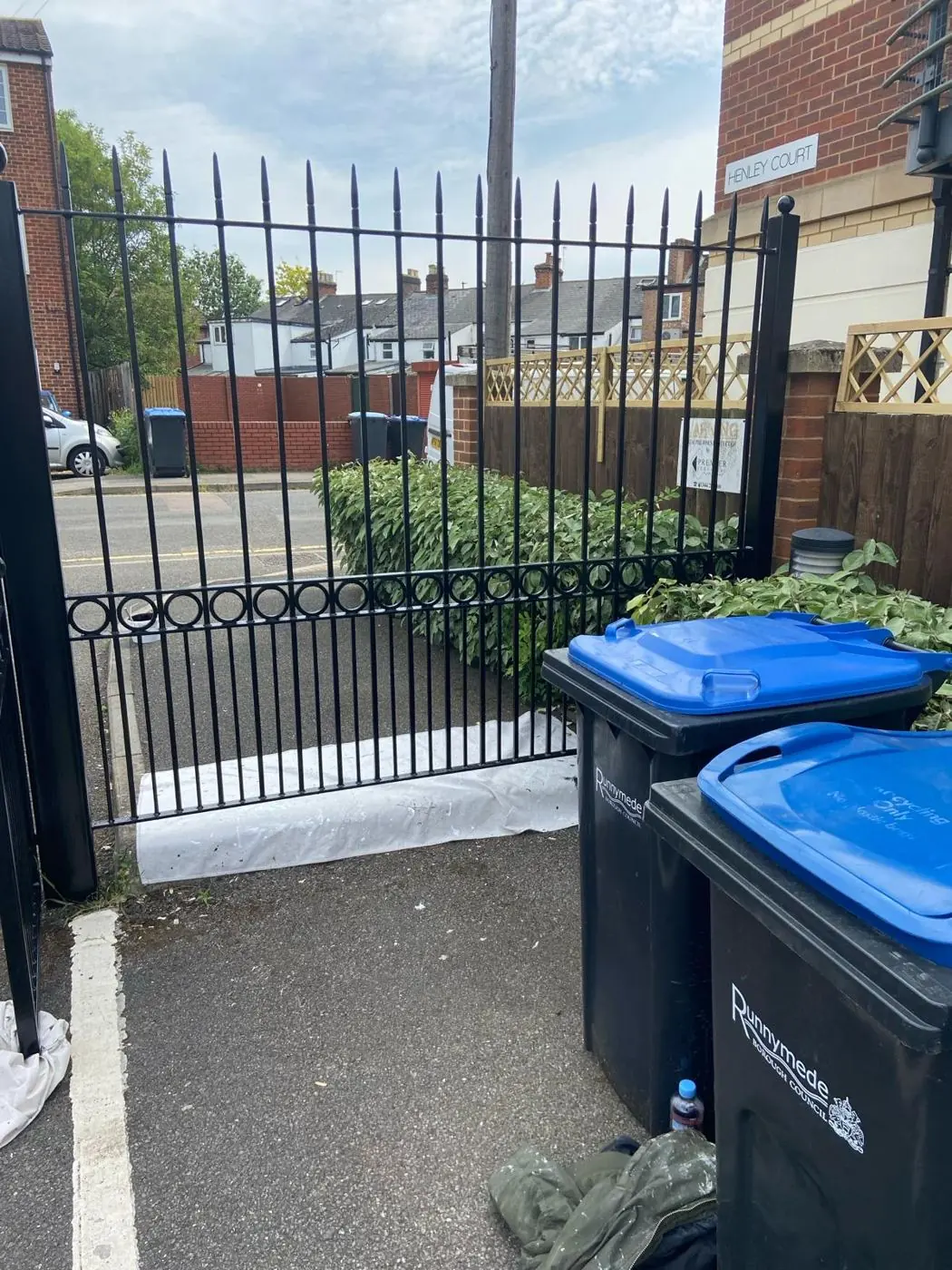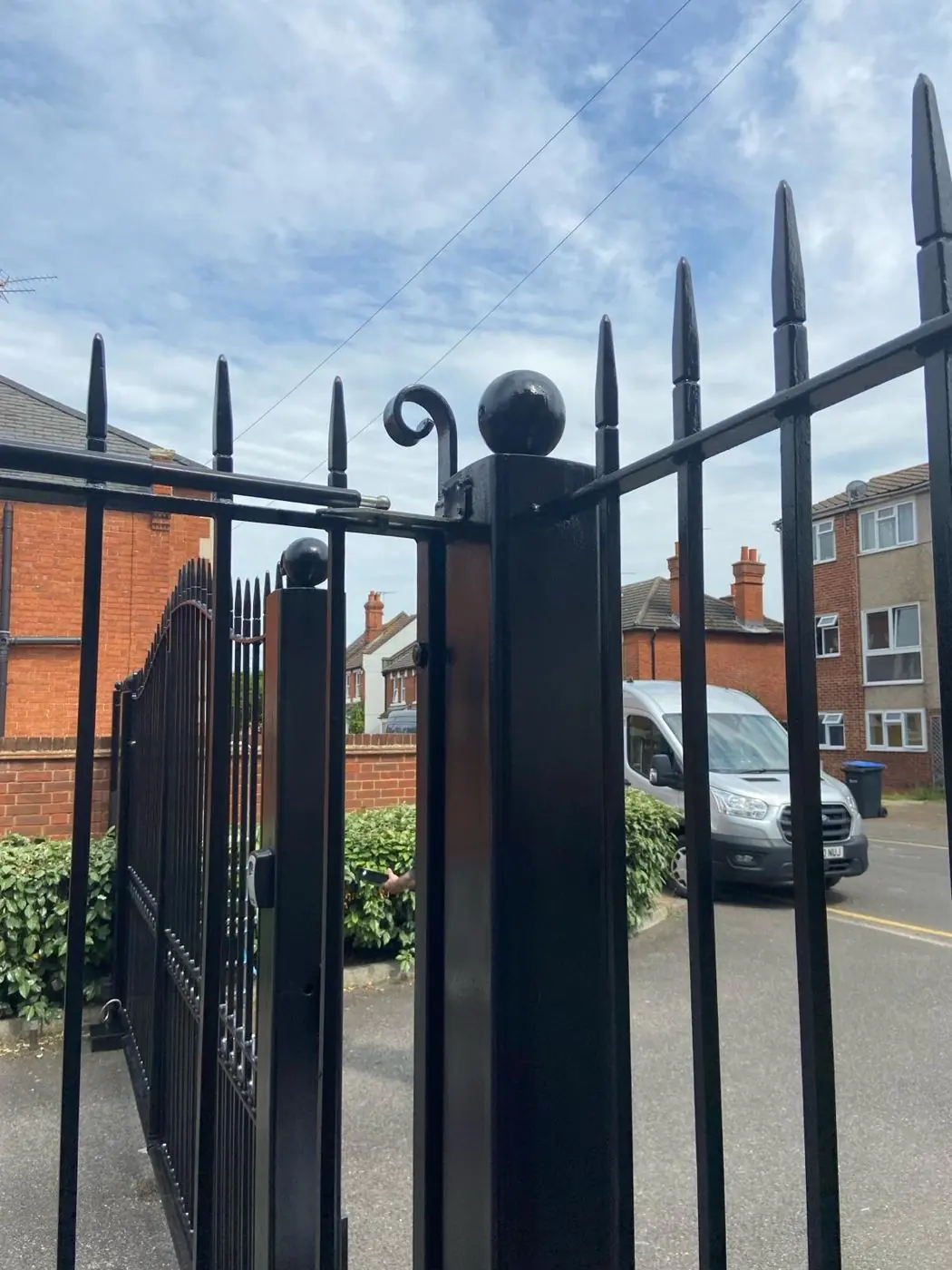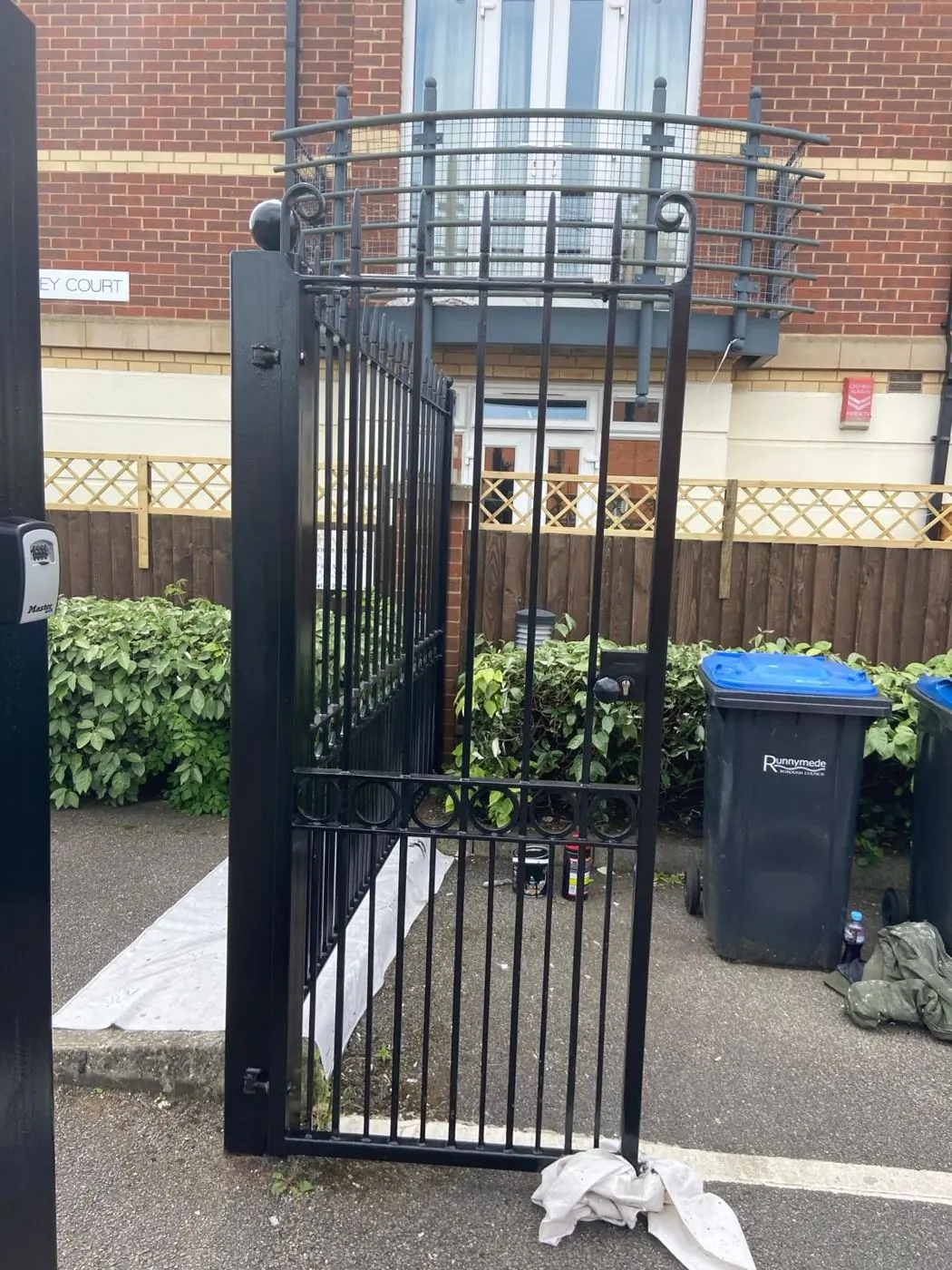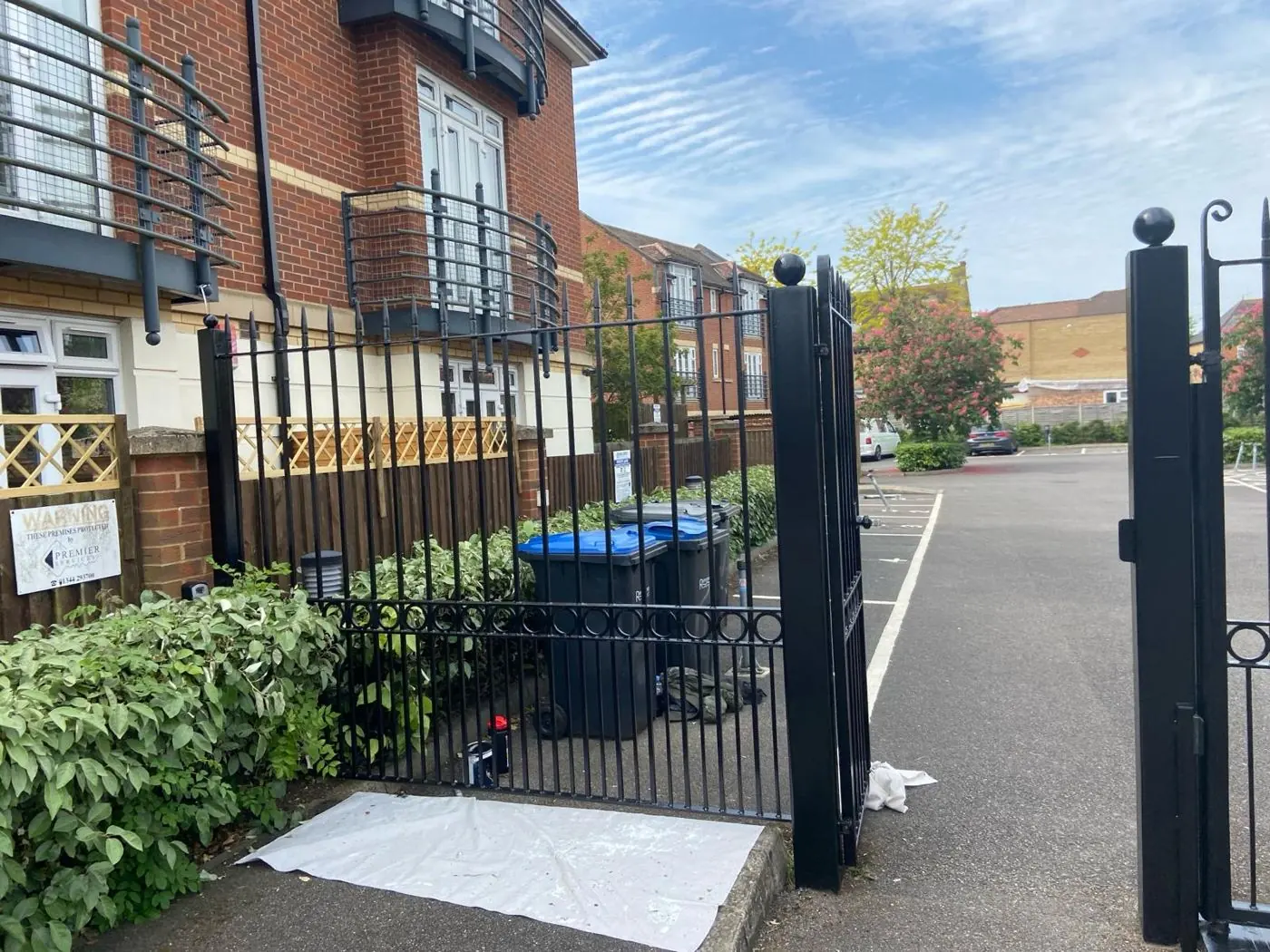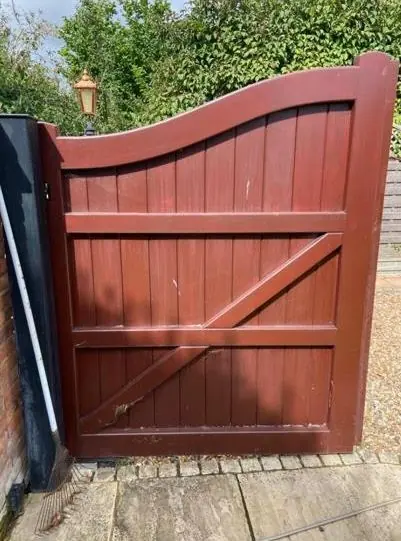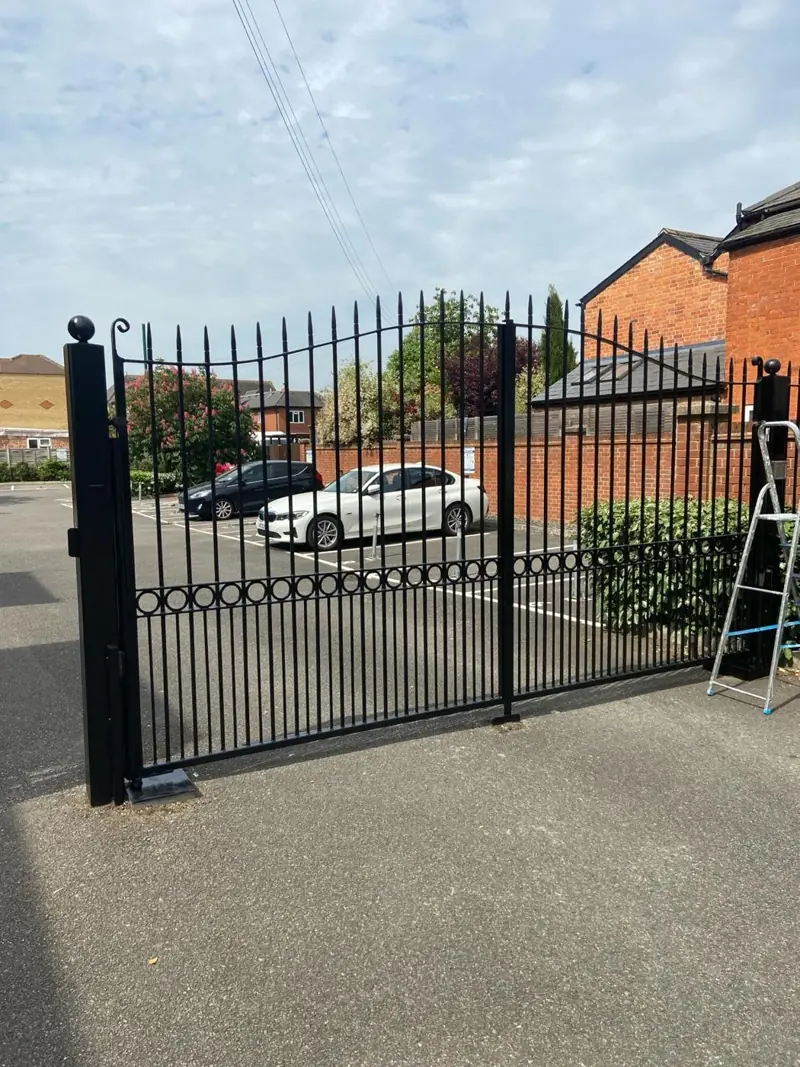
DH Painter & Decorator paints metal gates, railings, balustrades and trims in Upton NN5, about 2.1 miles west of Northampton town centre. Most Upton metalwork is under twenty years old, so the job is usually catching early rust and failing factory coatings before they spread, using the right primer for each metal.
Young metalwork, early warning signs
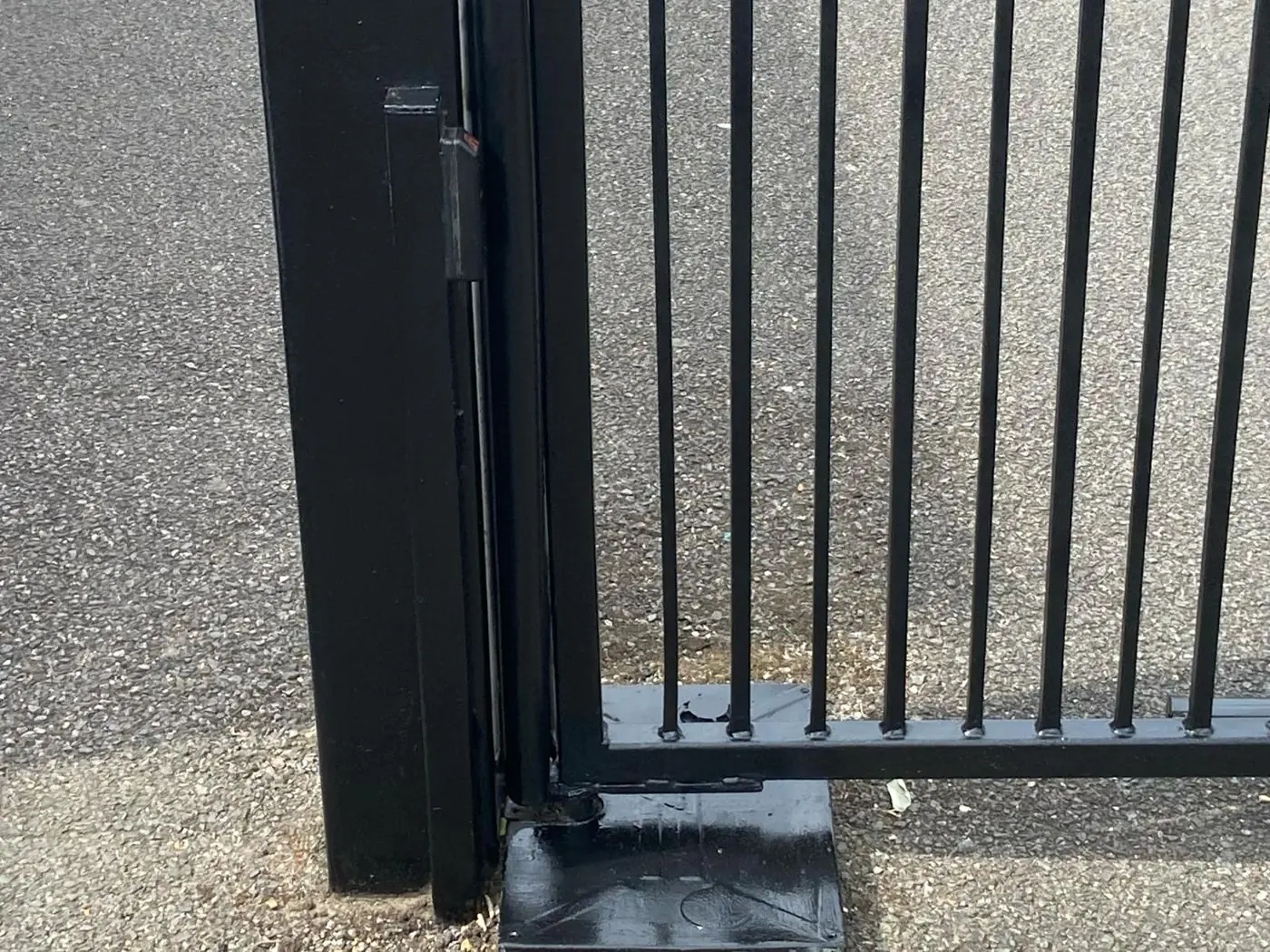
Unlike the wrought and cast iron railings on Victorian streets in town, metalwork in Upton dates from 2005 onwards, and that brings different faults. New steel railings and gates usually leave the factory galvanised, powder coated or both, and those coatings fail in predictable places: cut ends, welds, fixings, and anywhere a mower, bike or bin has chipped them. Rust starts at those points and creeps under the surrounding coating. Dealing with it now is far quicker than tackling it after another ten years of spreading. On a gate under twenty years old it is rarely a case of stripping back to bare metal everywhere; most of the work is local treatment of the failed spots, then an overall coat so the whole piece matches.
What the river valley does to steel
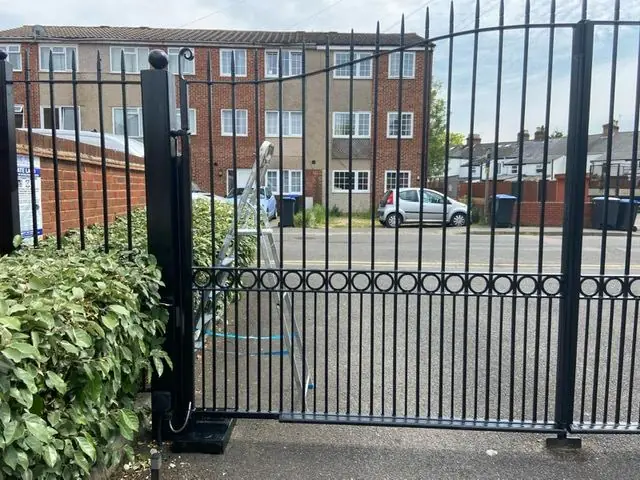
Upton’s lower streets fall towards the River Nene. With the river along the southern edge, the Mill Race and Wootton Brook nearby, swales running through the streets and woodland at Ashby Wood and Marina Wood, the air here holds a lot of moisture. Morning damp sits on rails and gates longer than on a dry upland street, and bare steel rusts fast. Railings close to the A45 Upton Way or the A4500 Weedon Road also collect road grime, which keeps moisture pressed against the metal.
Matching the primer to the metal
The wrong primer is the main reason paint falls off modern metalwork. Before quoting, Dean checks what each piece is made of.
| Metal or coating | What it needs before the topcoat |
|---|---|
| Bare or rusted mild steel | Wire brushing back to sound metal, then a rust-inhibiting primer |
| Galvanised steel | Degreasing and a primer made to bond to zinc coatings |
| Powder-coated steel or aluminium | Cleaning, a light key and an adhesion primer, with chips treated first |
| Zinc cladding | Normally left to weather; painting needs a specialist system |
The zinc cladding on the Site C villas off West Street is a material we would normally leave alone. It forms its own protective surface over time. Painting it is possible with a specialist etch system, but it then has to be kept up indefinitely. We paint the steel and timber around it and keep the zinc clean and unmarked.
Railings along shared paths and courts
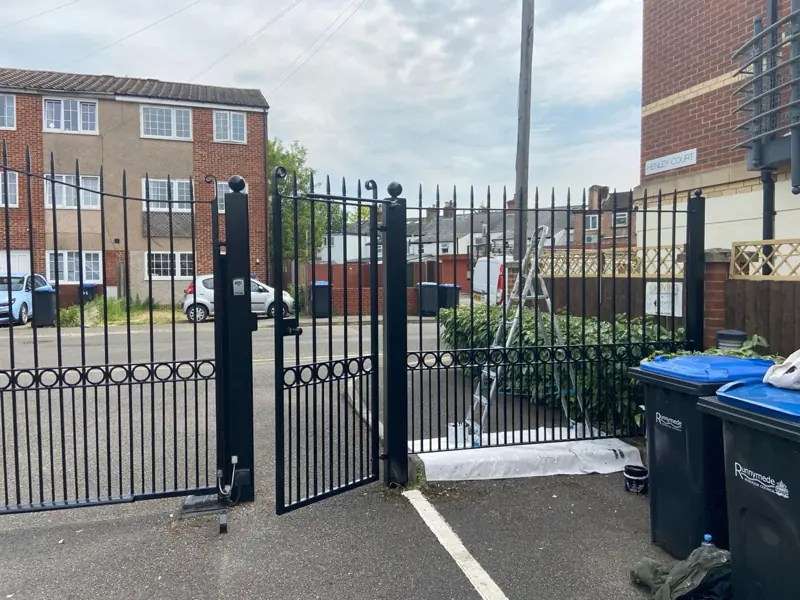
Railings in Upton often edge shared spaces: pedestrian living streets and mews, parking courts, and paths running down towards the park. Work there affects neighbours as well as you, so we:
- sheet the ground, because rust dust and paint flecks mark paving;
- collect scrapings instead of letting them wash into gullies that feed the estate’s swale drainage;
- put wet-paint notices on anything people may grab or lean on;
- work through gates in an order that lets them be closed at the end of each day.
Metal balustrades on balconies or roof terraces, where a house has them, are handled the same way, with access on three-storey elevations sorted first. Where railings are set into stone or brick, we check the base for rust swelling at the fixing point, because that is where water collects and where failure usually starts.
Gloss, satin and factory colours
Black gloss is the traditional railing finish, but factory-coated modern metalwork is not always black, so we check the existing colour first. On streets built to a shared code, matching the existing colour is normally the safe choice for anything visible from the road. More on how we prepare and paint metal is on our metal gate and railing painting service page, and other local work is listed on our Upton page.
Last updated by Dean, DH Painter & Decorator.