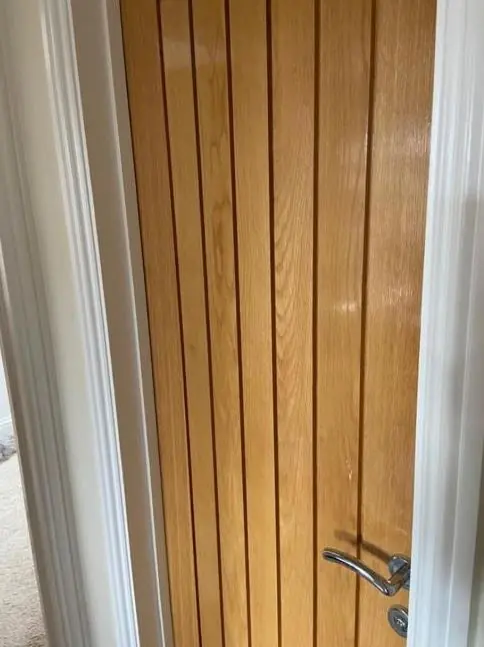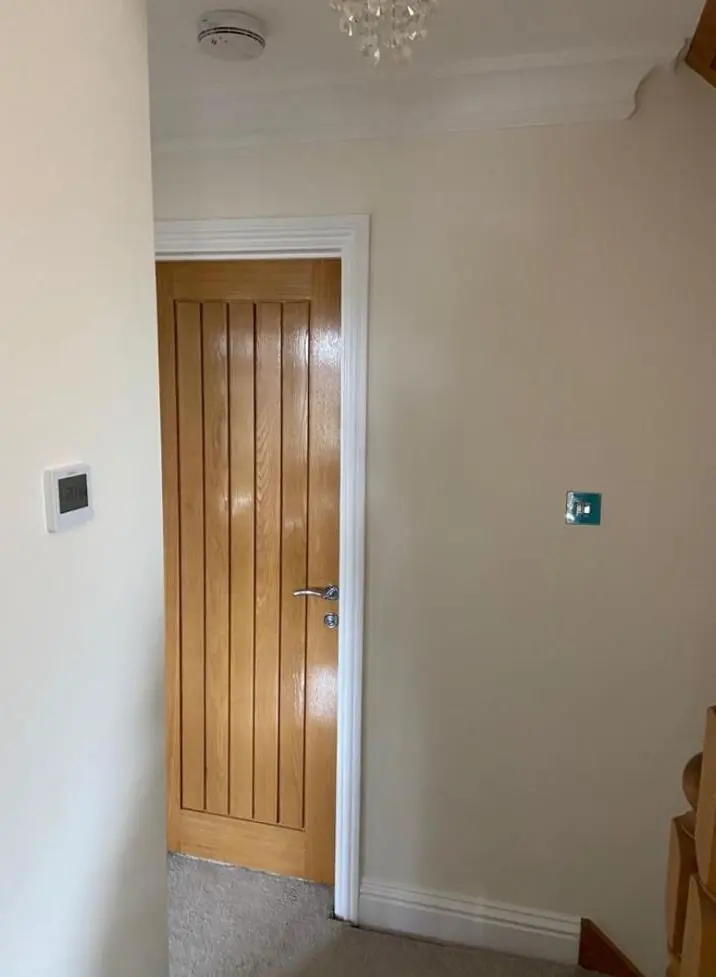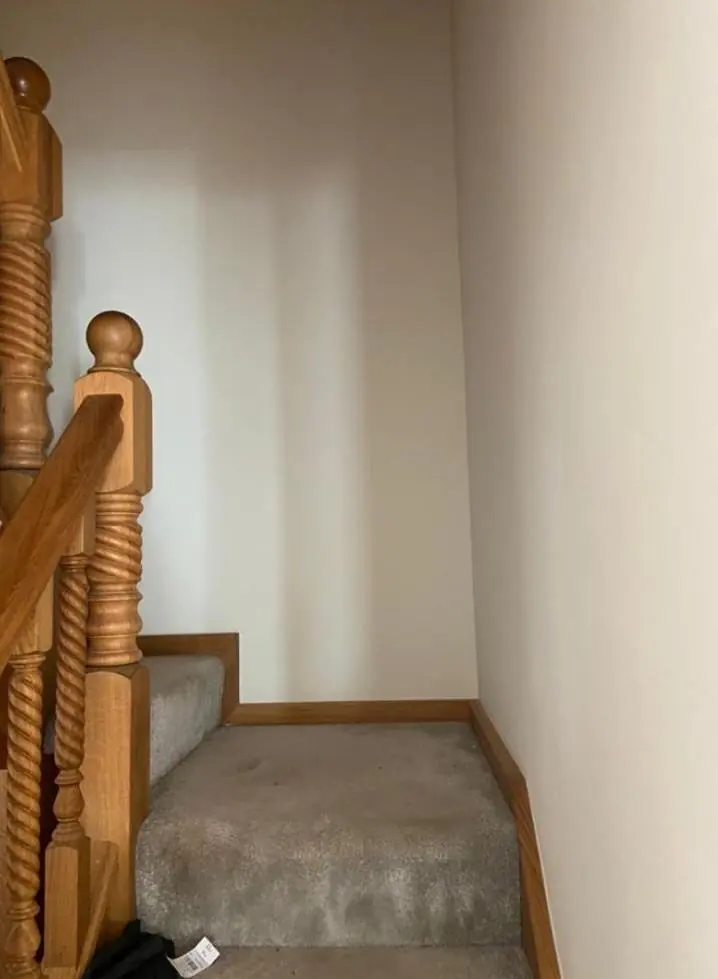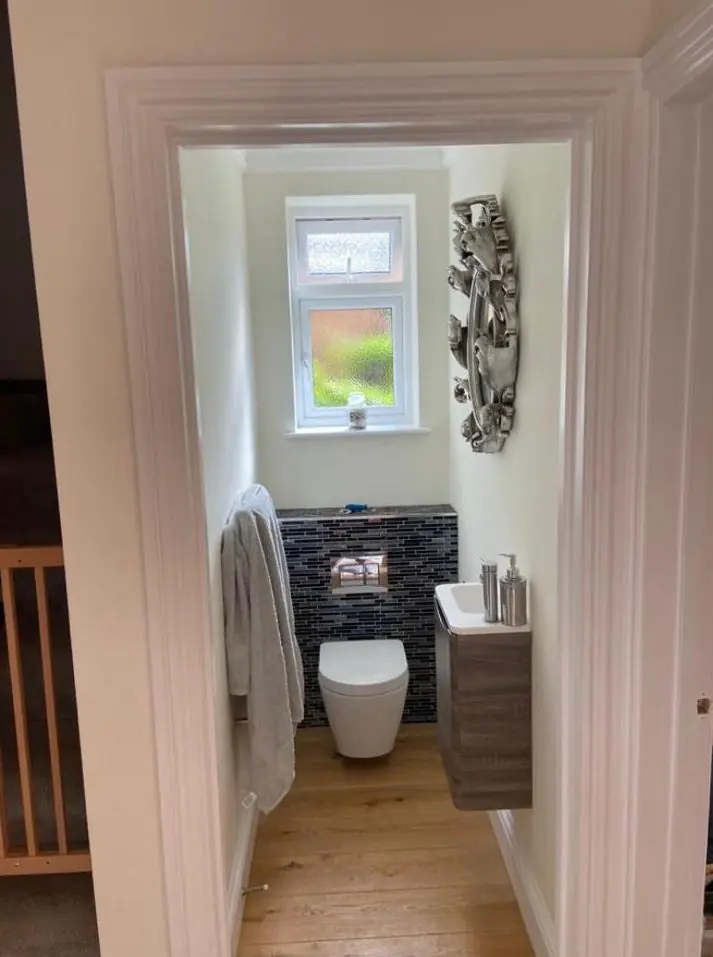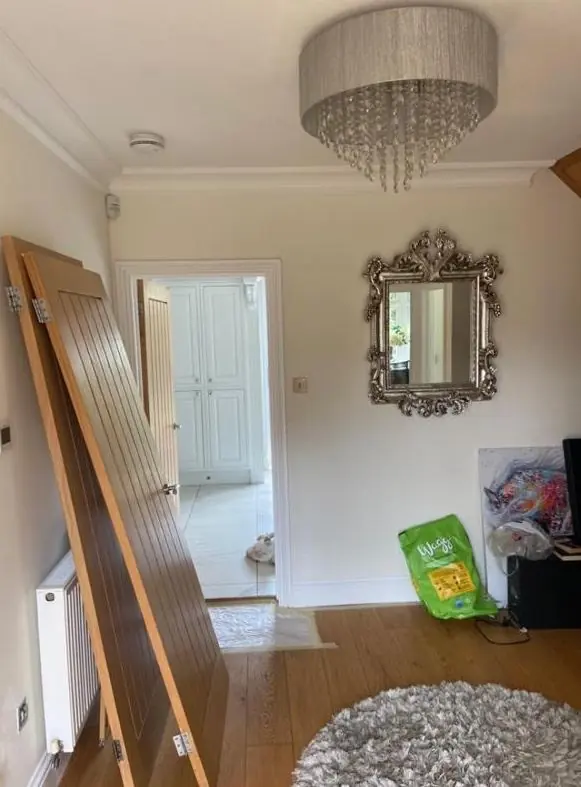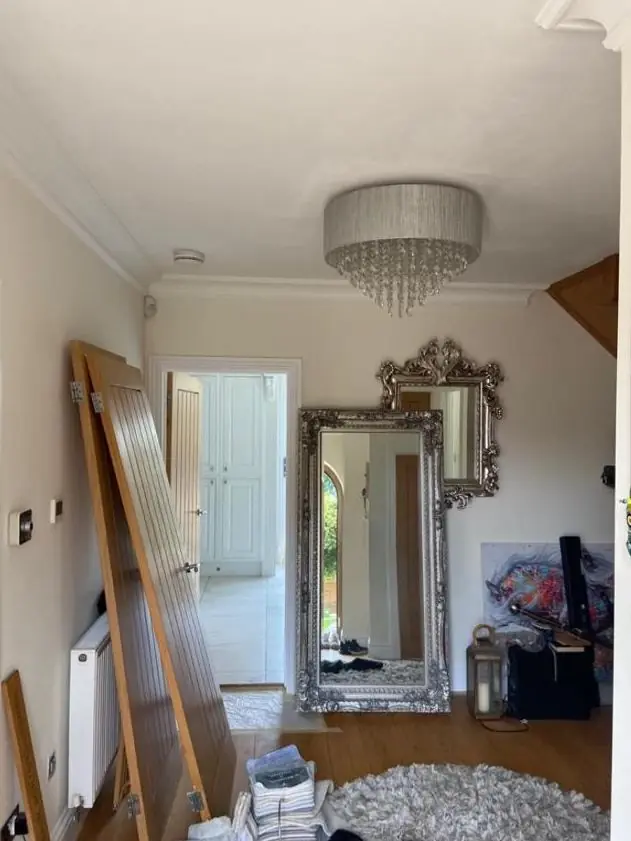
Dean paints internal doors, frames, skirtings, architraves and staircase spindles in Upton, the NN5 neighbourhood 2.1 miles west of Northampton town centre. Most Upton homes went up from 2005 onwards, so the woodwork is usually on its first or second repaint, and the work is about putting a proper finish over a thin builder's coat.
Builder’s finish, ten to twenty years on
Upton Park and Upton Meadows were built under the Upton Design Code from 2005 and through the 2010s, which puts most of the woodwork here at between ten and twenty years old. That changes the job compared with an older part of town. There are no decades of gloss to strip and no lead to worry about. What we usually find instead is the contract finish the developer applied at handover: one or two thin coats over primed MDF or softwood, often with brush marks, missed edges and little real build. After a decade of hoovers, school bags and pushchairs, the skirtings show it first.
Because the base is young and mostly sound, the preparation goes into different places. Typical points we look at in an Upton house:
- Shrinkage gaps: new homes dry out and settle, so the bead where skirting meets wall often opens up. It is cut out and re-caulked before painting, or the line cracks again.
- Swollen MDF edges: where a mop or wet boots have reached the bottom of a skirting, the board can fluff and swell. It is sealed and sanded back before any top coat.
- Thin first coat: builder satin is keyed and given a proper undercoat, so the new colour has an even base.
The full step-by-step, from degreasing to knotting, is on our main door and skirting painting page.
Three floors of doors, and the fire doors among them
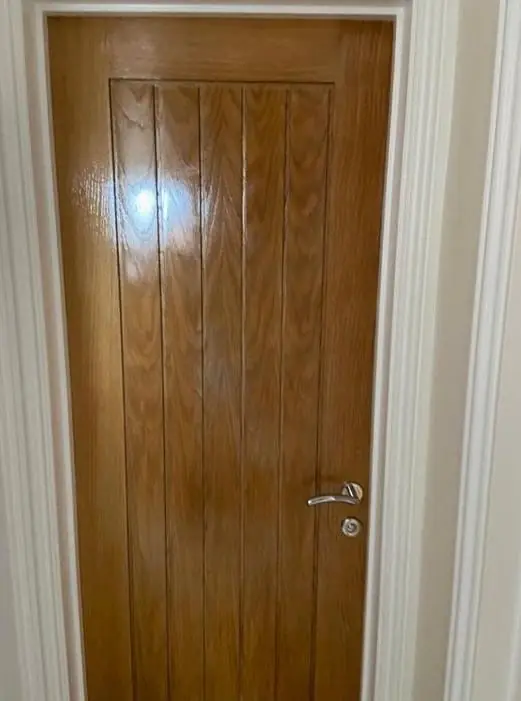
OpenStreetMap tags about 105 three-storey buildings in the core of the estate, and some of the villas go to four storeys. A three-storey townhouse simply has more joinery than a two-storey semi: more bedrooms, an extra landing, an en suite or two, and stair runs between every floor. Quoting by the door and by the metre of skirting, rather than by the room, tends to give a fairer picture in houses like these.
In many three-storey homes, the doors opening off the stair are fire doors, because the stair has to stay protected as an escape route. We check before painting. The intumescent strips and smoke seals in the frame are masked and never painted over, the certification label is left readable, and we keep paint build thin on the closing edges so the door still shuts fully into its rebate. If a self-closer has been fitted, it is left working.
Spindles, handrails and the room over the garage
Long stair runs mean long rows of spindles, and those take time. Each one is sanded, wiped and painted by hand, and the handrail is often done in a contrasting stain or a harder-wearing satin. Where the house has a stairwell rising through three floors, the spindles on the top landing get the same care as the ones by the front door.
On Site C off West Street, the garages carry a ‘bonus room’ above, reached from a central mews. If that room has been fitted out separately from the house, its doors and skirtings may not match the rest, and it is a sensible job to fold in at the same time.
Large glazed gables and double-height sun spaces on the villas throw a lot of light across door faces and skirtings. Raking light like that shows brush marks and uneven sheen, so in those rooms we lay off every panel in one direction and pick a water-based satin or eggshell that stays white rather than yellowing.
Planning a visit to Upton
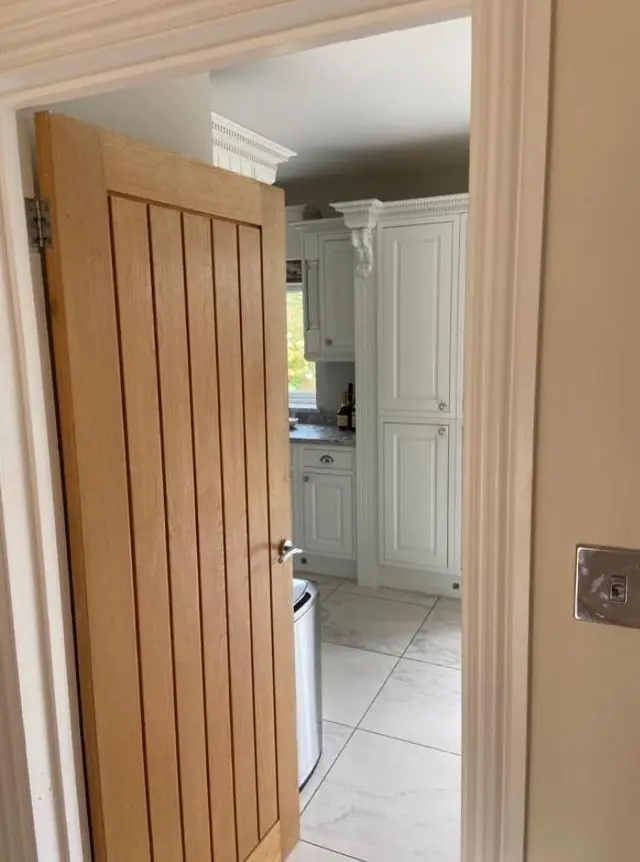
Many homes sit on mews and living streets such as Clickers Mews or Samwell Lane, where parking is tight, so the van’s spot is settled with you before the first morning. Woodwork can be done room by room, which lets you keep using the house while we work. For other work in the neighbourhood, see our Upton area page.
Last updated by Dean, DH Painter & Decorator.