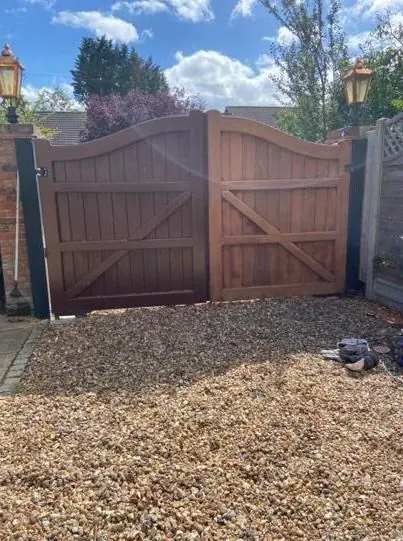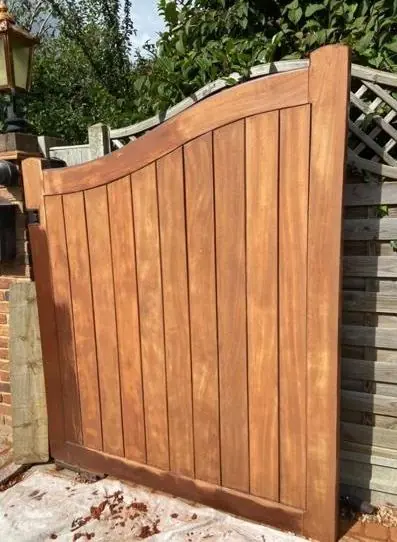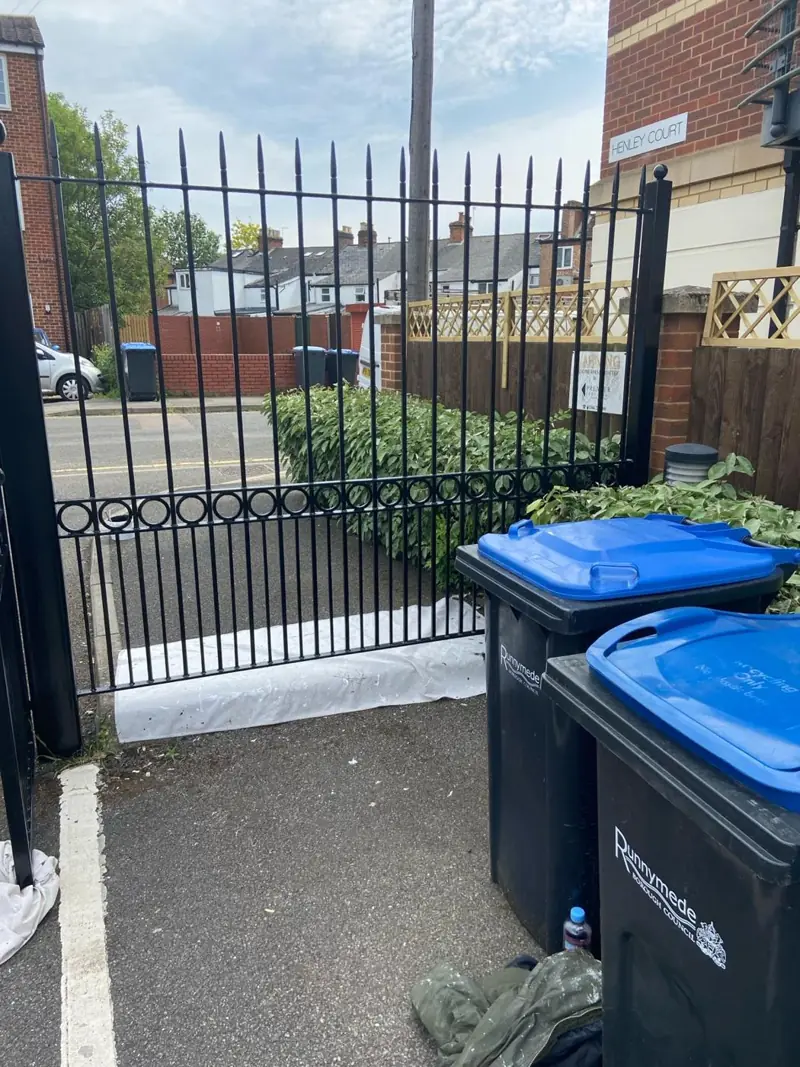
DH Painter & Decorator stains and treats garden fences, gates and timber boundaries in Upton NN5, around 2.1 miles west of Northampton town centre. Many Upton gardens back onto green corridors, woods or the open park, so Dean picks the stain and the cleaning method around damp, shade, sun and the swales next door.
Long boundaries beside green space
Upton was planned with green space woven through it. Swales planted with native species run along streets as drainage corridors, Ashby Wood and Marina Wood border the housing, and the southern edge opens onto Upton Country Park and the meadows down to the River Nene. As a result, a good number of gardens have long rear or side fences facing planting, trees or open grass rather than another garden. The design code also asked for boundaries in “traditional, earthy” materials on the award-winning phases, and where that means timber, long runs of it against green space need staining more often than a short fence between two lawns, and they are also more visible, since people walking the green corridors see the outer face every day.
Damp on one side, sun on the other
Fences near the woods and swales stay damp. Leaves settle at the base, shade stops the boards drying, and algae takes hold quickly on the shaded face. On the southern edge the opposite happens: fences facing the open park take strong sun, the pigment in a stain fades and the timber greys sooner than in a sheltered garden. Many Upton plots get both problems on different sides.
| Where the fence is | What we usually find | How we treat it |
|---|---|---|
| Backing onto Ashby Wood or Marina Wood | Leaf litter, shade, moss at the base | Clear the base, biocide wash, preservative-based stain |
| Beside a swale or green corridor | Damp boards and algae | Clean in dry weather, water-based products, controlled rinsing |
| Facing south over the country park | Faded colour, greying timber | Pigmented stain with UV resistance, earlier recoat |
| Side fences in mews gardens | Little light, tight working room | Brush application, no spraying |
Looking after the swales while we work
The swales are working drainage, not decorative ditches. They hold back storm water after heavy rain and help protect the newer homes from flooding, so whatever runs into them travels on through the system. When we stain a fence next to a swale, we use water-based products where they suit the timber, sheet the ground below, and never rinse brushes or containers anywhere near a channel or gully. Spraying is ruled out beside a green corridor, because drift lands on the planting and the water.
Gates, side passages and getting in
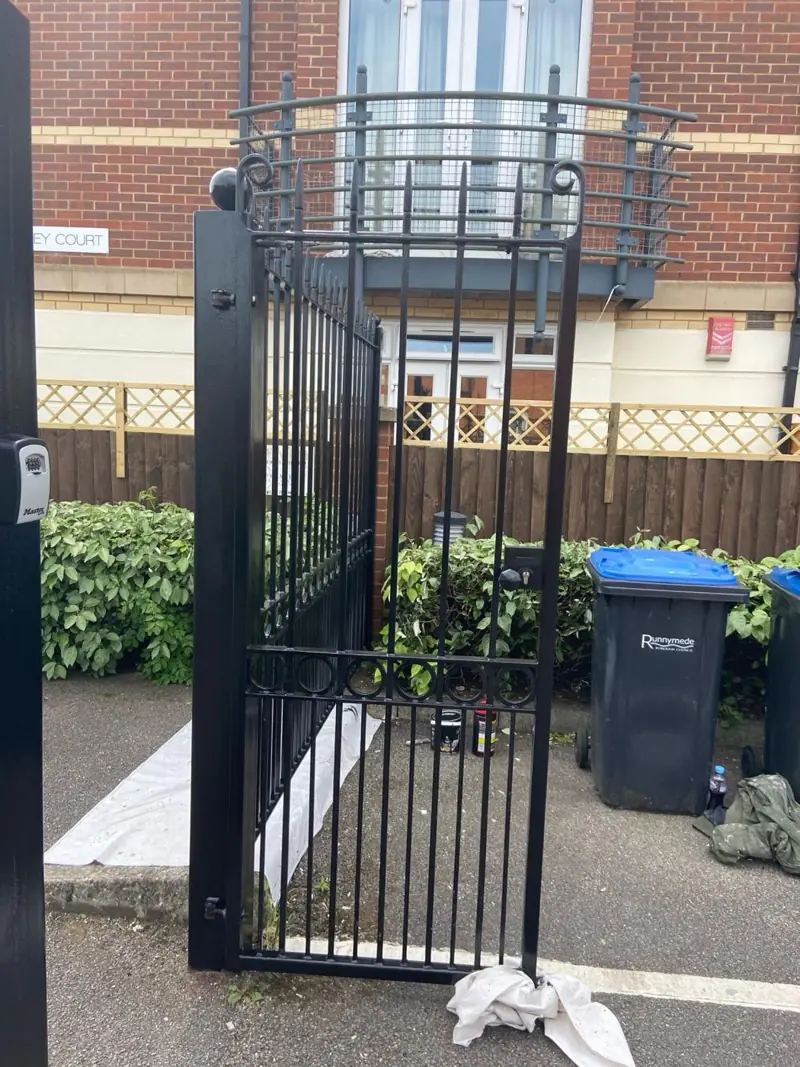
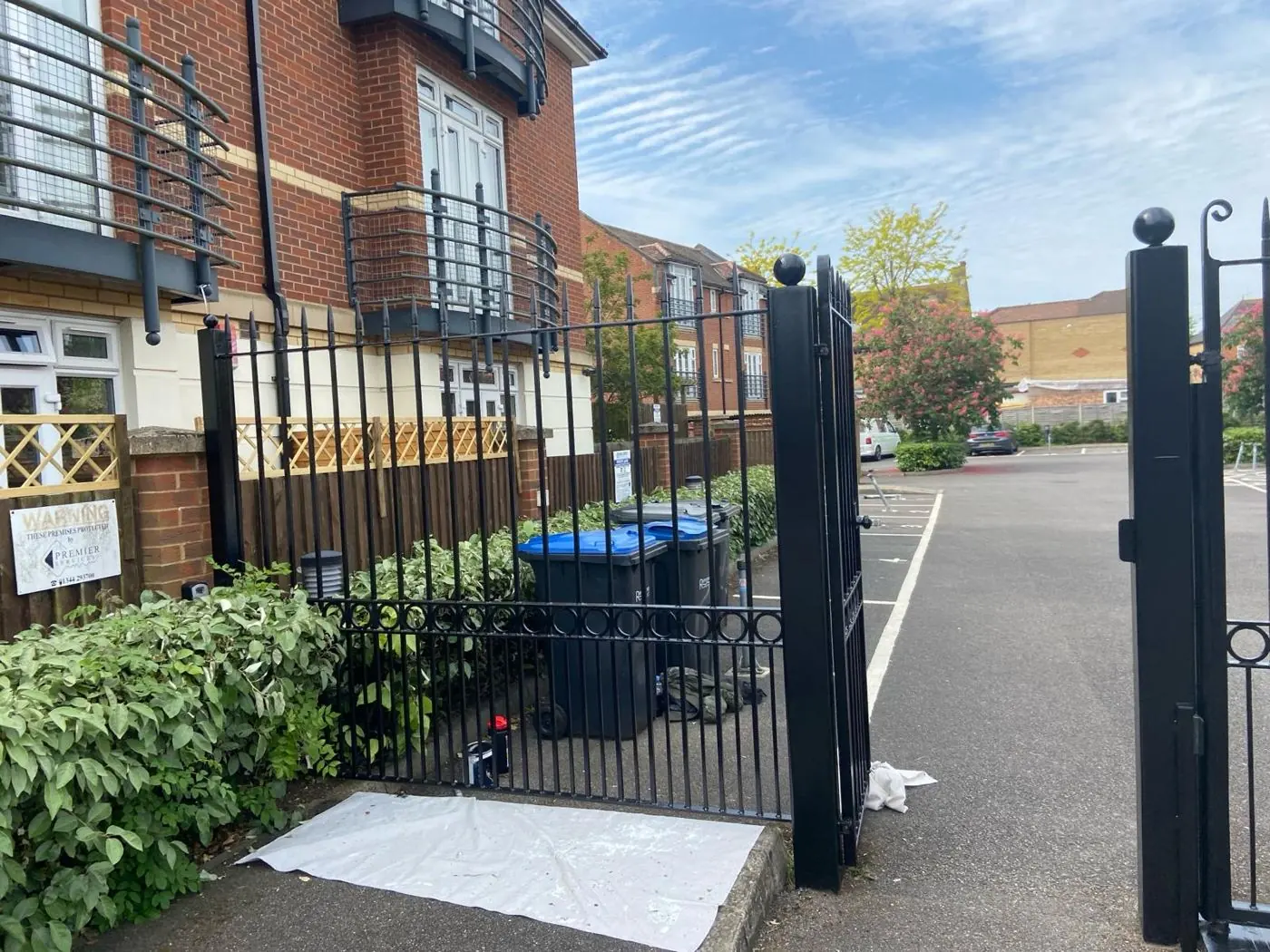
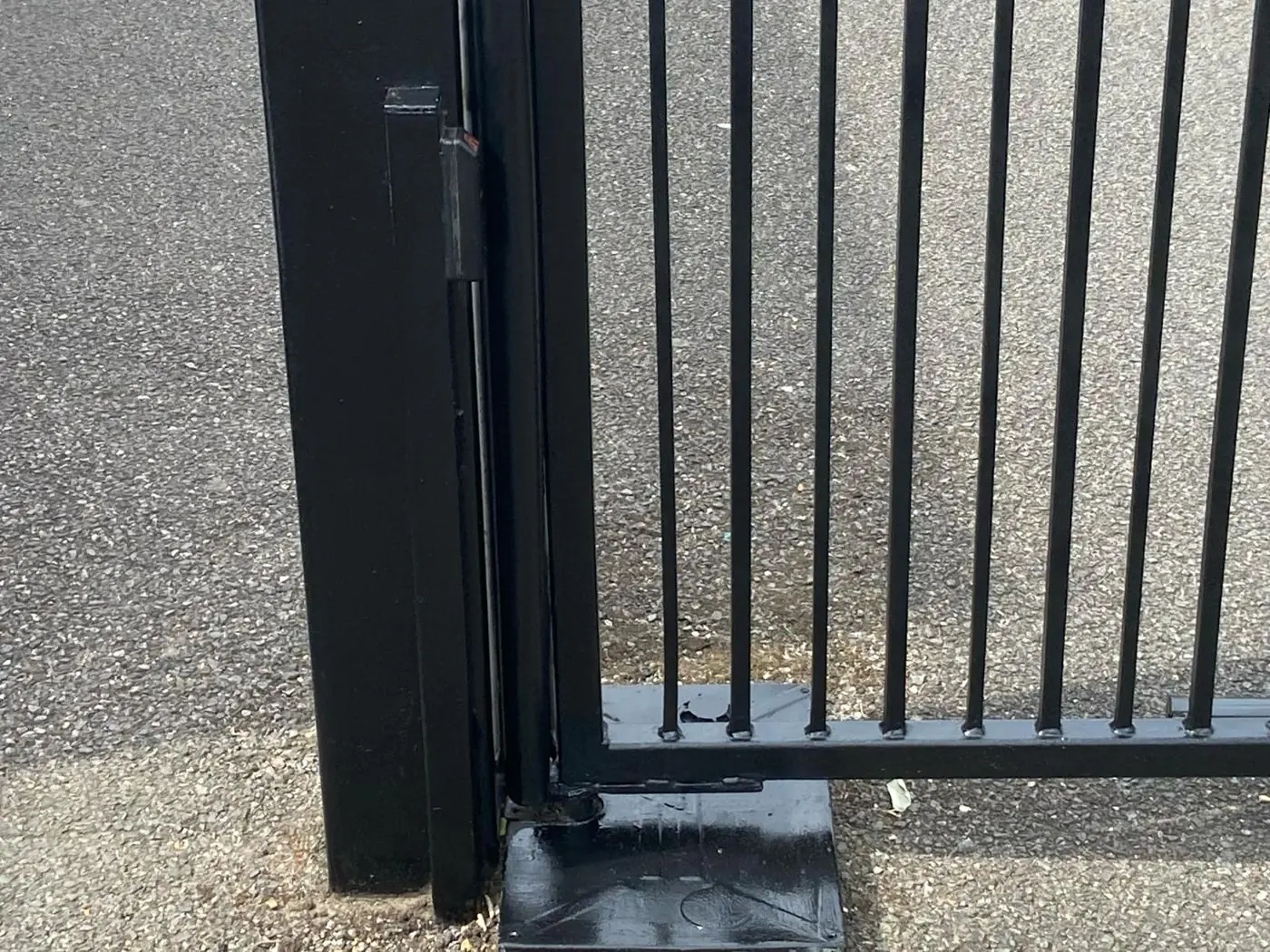
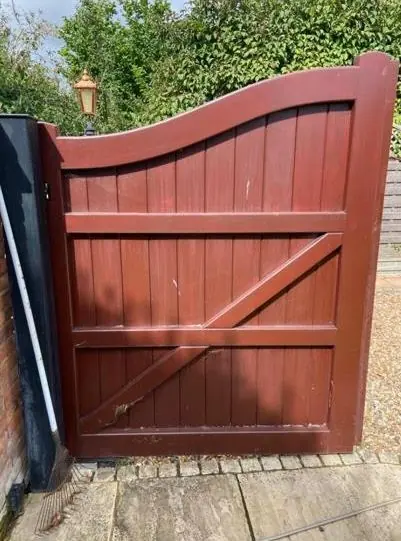
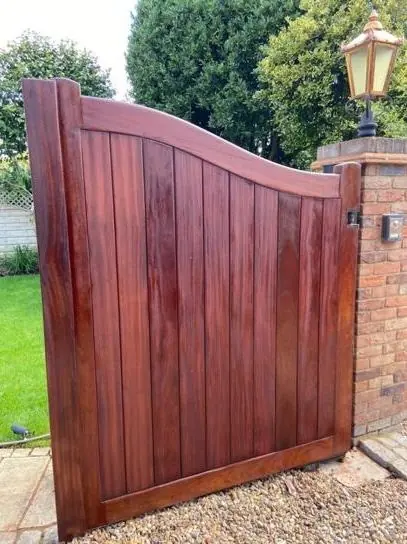
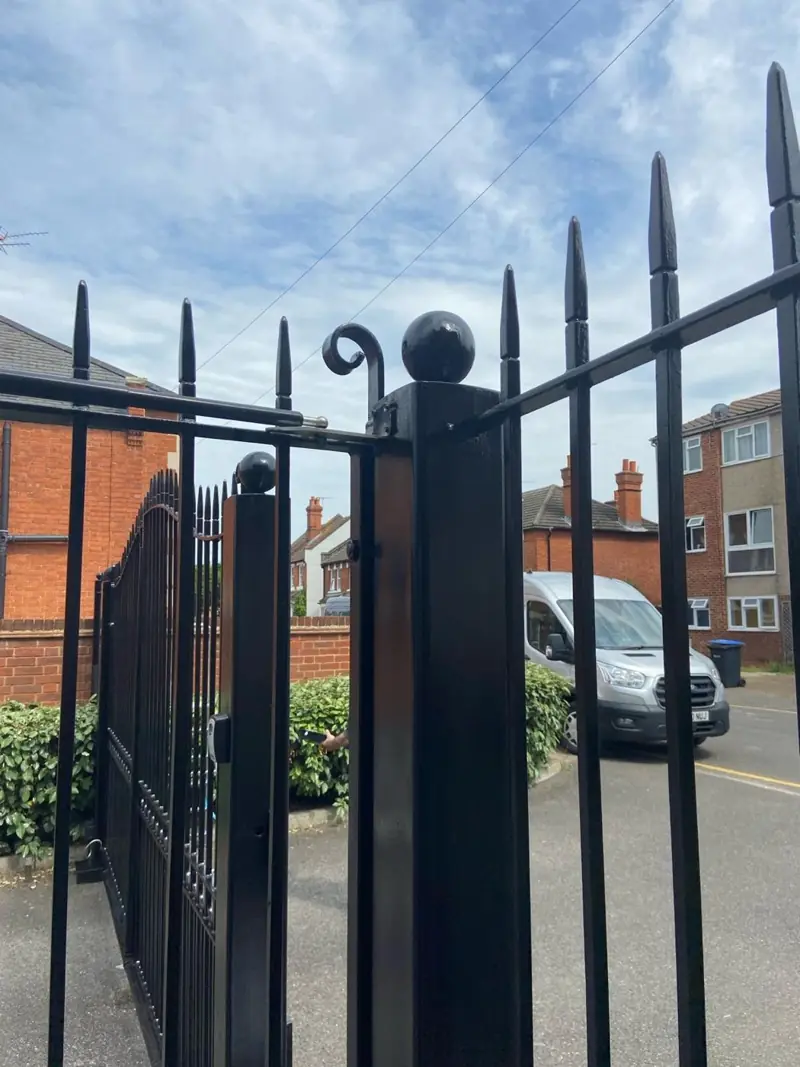
On Site C, bins and bikes are kept in covered stores to the side or rear, with access running from the back of the garden to the front. Elsewhere, gardens open onto mews and parking courts. Gates in these spots get far more handling than a fence panel, so we prepare hinge and latch areas carefully and use a harder-wearing finish on them. If your gate opens onto a shared mews, we plan the work so it can be shut and secure at the end of each day, and keep our materials out of the lane. Self-closing gates get their hinges checked and freed before staining, since a sticking gate soon wears through a fresh finish at the latch.
Choosing a shade that sits with the neighbourhood
With boundaries designed around earthy materials and a code that kept phases consistent, a natural brown, green or grey stain generally fits better than a bright one. Fences seen from the green corridors or the park form part of how the neighbourhood looks, and a shared fence is worth agreeing with the neighbour before it changes colour. For our general approach, see the fence and gate staining service, and for other local work, our Upton page.
Last updated by Dean, DH Painter & Decorator.