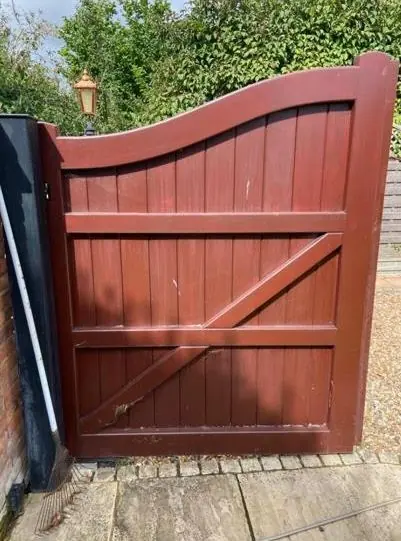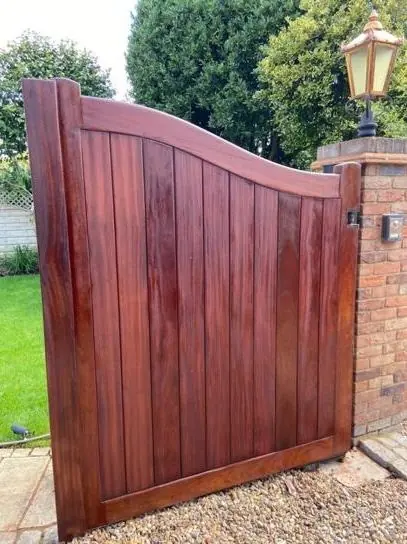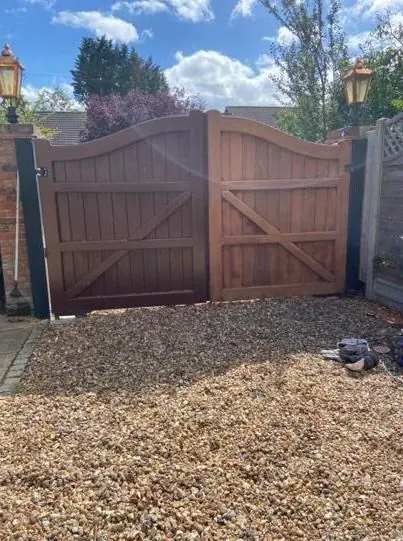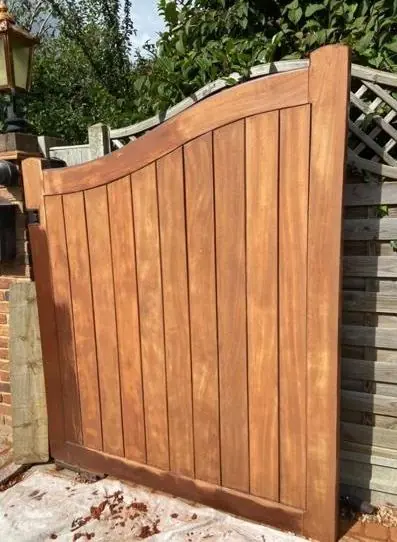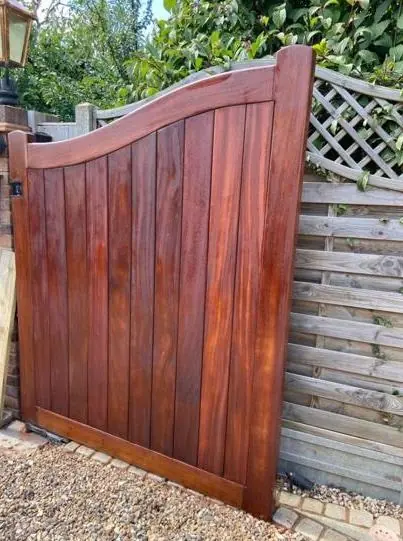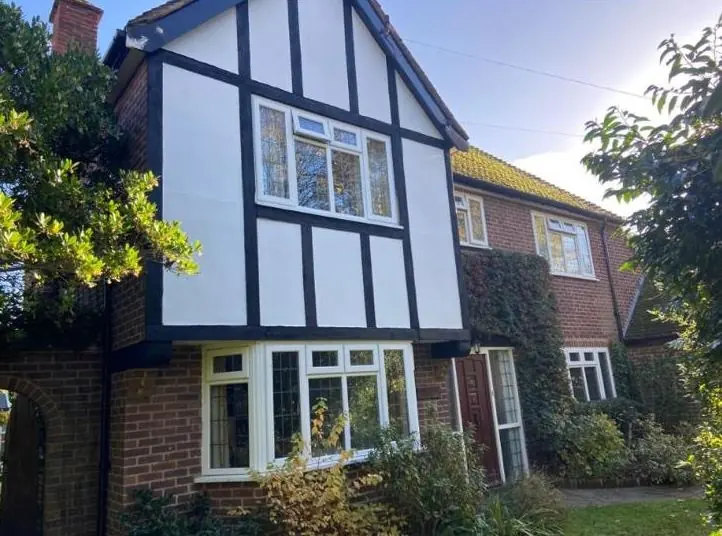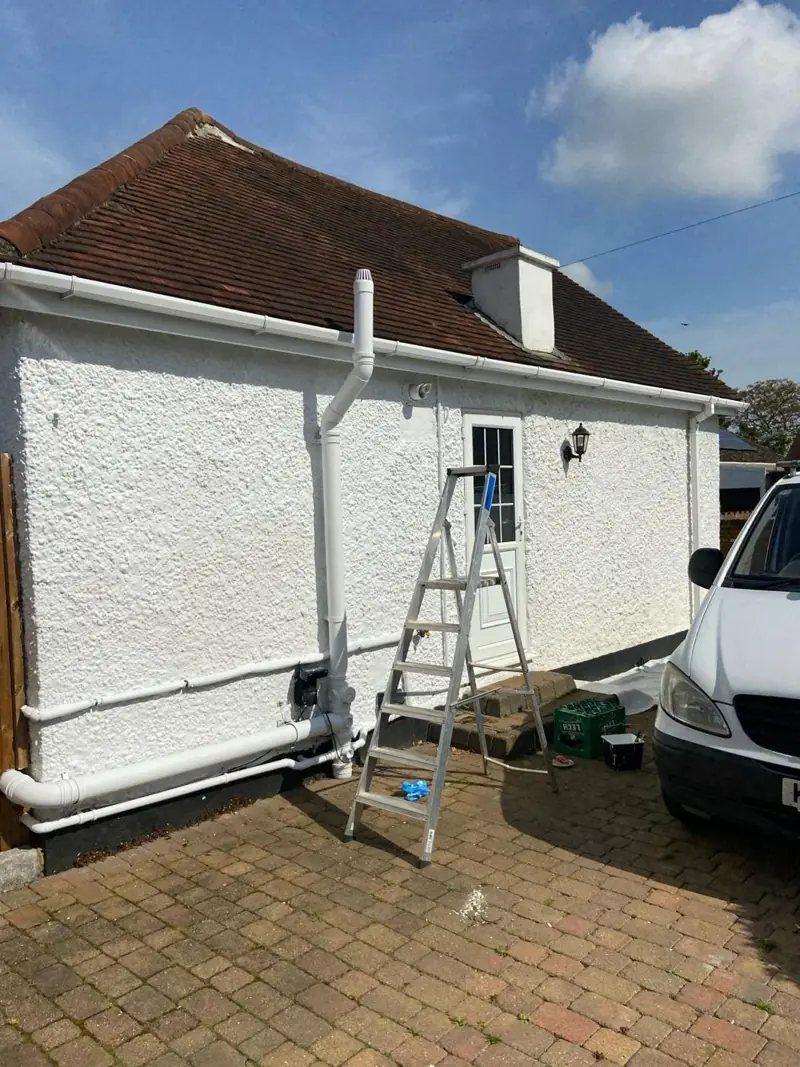
DH Painter & Decorator paints the outside of homes in Grange Park, NN4, a planned village about 3.4 miles south of Northampton town centre. Most houses date from the late 1990s onward, so the work is usually a first or second full exterior repaint rather than restoring old fabric, and Dean quotes after walking round the property.
A village that is only about 25 years old
Grange Park was approved in May 1998 as a planned scheme of 1,000 houses, laid out on what had been Courteenhall Grange Farm land. The census found 327 people living there in 2001 and 4,700 in 2021. That speed of growth shapes the outside of almost every home here. Because the estate went up over a short span, much of its housing is now ageing on a similar timetable.
On a house from the first phase, the original exterior coatings have usually been through one repaint at most. Window and door trims, porches and any rendered panels show the first proper failure about now: paint thinning on the sunny side, flaking along the bottom of door frames where rain sits, and dull, chalky colour on the most exposed elevations. The houses from later phases are a few years behind, and any homes from the Manor Oak Homes plans for 330 more dwellings, published in January 2019, will be on their first coat.
No conservation area, but read your deeds
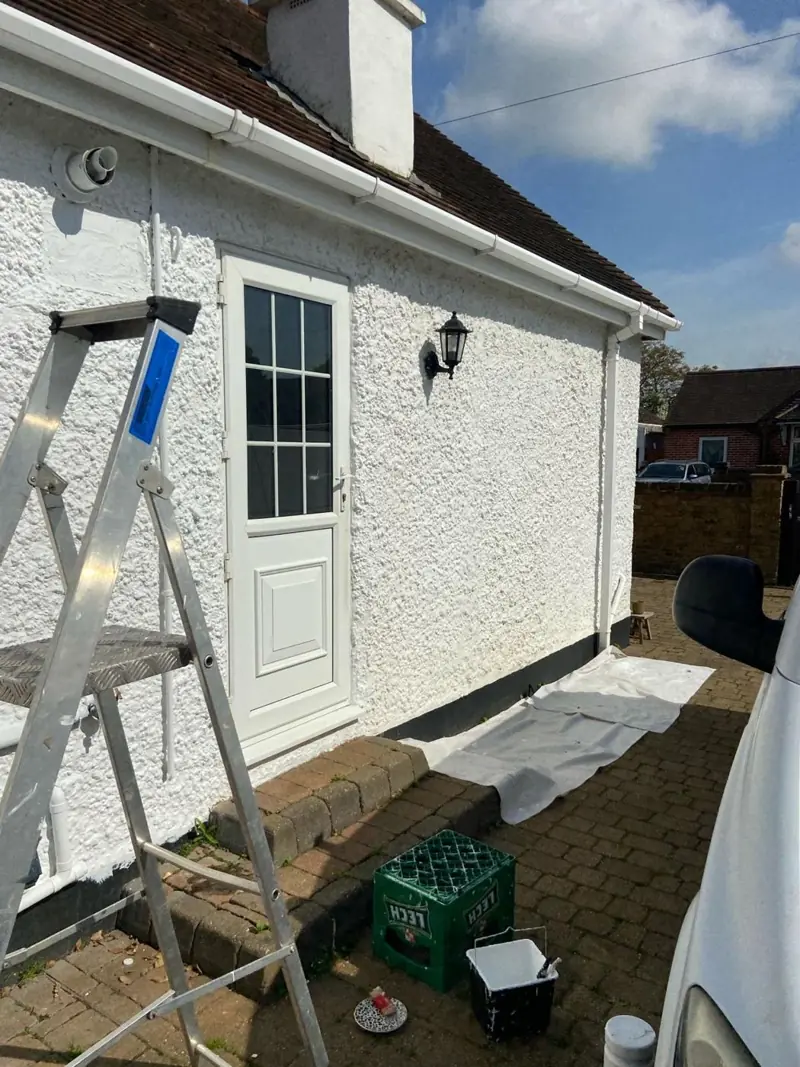
None of West Northamptonshire’s 117 conservation areas covers Grange Park. That sets it apart from its neighbours. Collingtree, Wootton, Hardingstone, Roade and Courteenhall each have a conservation area, where changing an outside colour can mean extra checks. Here there is no heritage review to worry about if you want a different front door or a darker trim.
The catch on a modern development is the paperwork. Some estate homes carry covenants in the title deeds that cover appearance, so it is worth a look before choosing a bold colour for the front elevation. If the deeds are silent, the choice is yours.
Living between the M1 and the A45
The village is hemmed in by motorway on one side (the M1, south-east) and trunk road on two (the A45, west and north), with large distribution warehouses on the old sand pit site off Saxon Avenue. Homes on those edges pick up a grey film of traffic grime faster than houses tucked into the middle of the estate. Paint holds poorly on a dirty surface, so the outside of a Grange Park house is washed down before any sanding or priming starts, and we lean towards washable exterior finishes that can be wiped clean between repaints.
Inside those boundaries there is open space too: Foxfield Country Park, a pocket park and greens such as Rickyard Walk Green. Elevations facing them get more wind and sun, and that is where paint tends to fade and break down first.
What usually needs doing on a Grange Park house
| Surface | Typical state after 20 to 25 years | Our approach |
|---|---|---|
| Front door and frame | Worn at the bottom rail and around the handle | Sand, fill, spot-prime, two coats of exterior gloss or satin |
| Porch canopy and trims | Flaking at joints, green on the shady side | Clean, scrape back, prime bare timber, repaint |
| Rendered panels | Faded, sometimes with hairline cracks | Fungicidal wash, fill, two coats of masonry paint |
| Roofline boards | Grimy, first or second repaint due | Wash, sand, prime, top coat in a washable finish |
Because the stock is modern, breathable lime systems are rarely needed. The ironstone and limestone you find in the older villages around Grange Park is not the material of these homes, so modern masonry paint and exterior trim paint do the job. The full process for each surface is on our main exterior painting page, and our guide on when to paint outside in the UK explains why we watch the forecast before booking outside work.
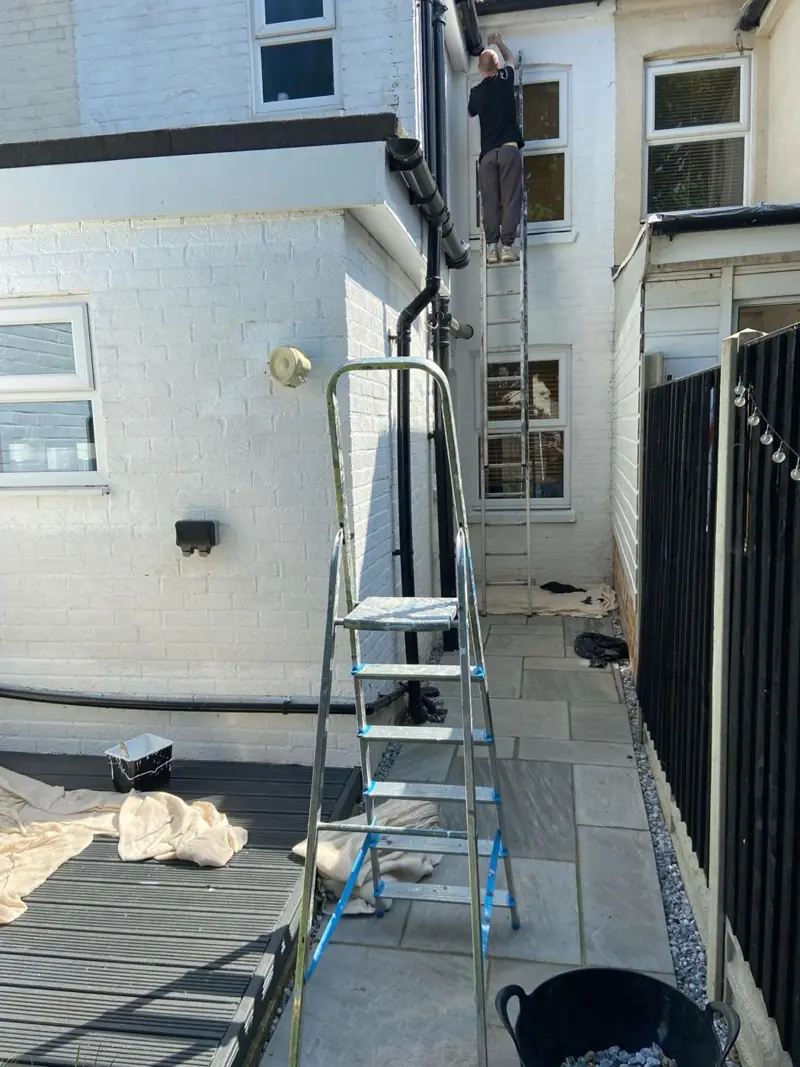
Access on a modern layout is usually simpler than on inner-town terraces with no rear access, though we still agree where the ladders, dust sheets and van go before the first day. Dean covers Grange Park from Northampton and gives a written quote after seeing the house.
Last updated by Dean, DH Painter & Decorator.