DH Painter & Decorator stains and paints garden fences and timber gates in Grange Park, NN4, about 3.4 miles south of Northampton town centre. Many fences on this late-1990s estate are now old enough to need regular restaining, and Dean can match the colour your neighbours already use.
Fences that went up with the first houses
When Grange Park was laid out after the 1998 approval, the gardens were fenced as each phase was finished. That means whole runs of fencing across the village are about the same age, and many of the original panels, posts and side gates have now had twenty or more years of weather. Untreated, that timber goes silver-grey, dries out and starts to split at the edges of the boards.
Some of those fences have been restained once or twice. Others have had panels swapped out one at a time after storms, so a single boundary might now be a patchwork of old weathered boards and bright new ones. Getting those to look like one fence again is often the main reason people in Grange Park ask about staining. Posts and gravel boards are part of the same picture: a rotten post or a cracked concrete gravel board is a job for a fencer first, and the staining follows once the run is sound.
Blending new panels with old ones
New pressure-treated timber is usually pale green or brown and holds a lot of moisture, while a twenty-year-old panel next to it is dry and grey. One coat of stain will not make them match. The newer timber normally needs time to dry out before it takes stain well, and the older boards often need a second coat to even up how much colour they absorb. Dean will look at both and advise whether staining or an opaque fence paint will give a more even result on that particular run.
Matching the colour next door
On a planned estate, boundary fences are shared, and an estate built in a short span tends to have long runs of neighbouring gardens fenced at the same time. A fence stained a very different shade from the one beside it stands out more here than it would on a street of mixed older houses. Colour-matching between neighbours matters here, and a few points help:
- Find out what your neighbour used, if they know. A product name and colour saves a lot of guesswork.
- We only stain your side of a shared fence. The other face belongs to your neighbour, so we work on it only with their agreement.
- If both households want the same colour, doing the whole boundary in one booking gives the most even finish.
- No conservation area covers the village, so fence colours face no heritage rules, but read your deeds for any covenant on boundary treatments before choosing something bold.
Side gates and the timber beside them
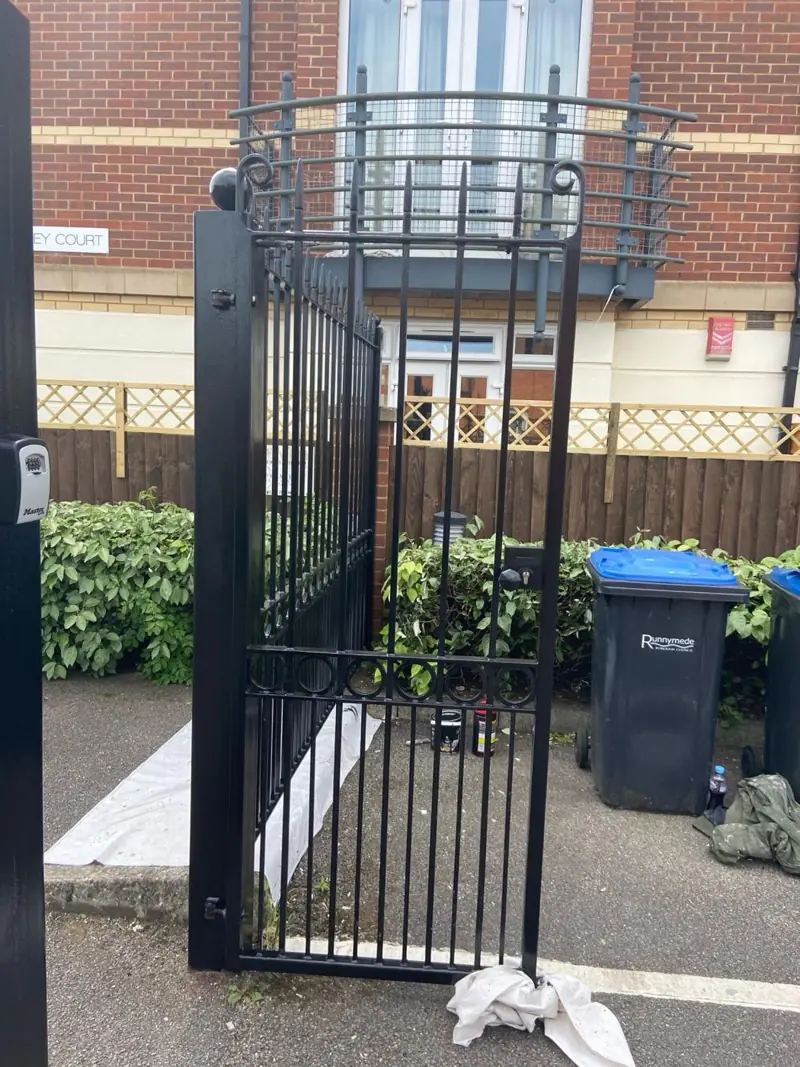
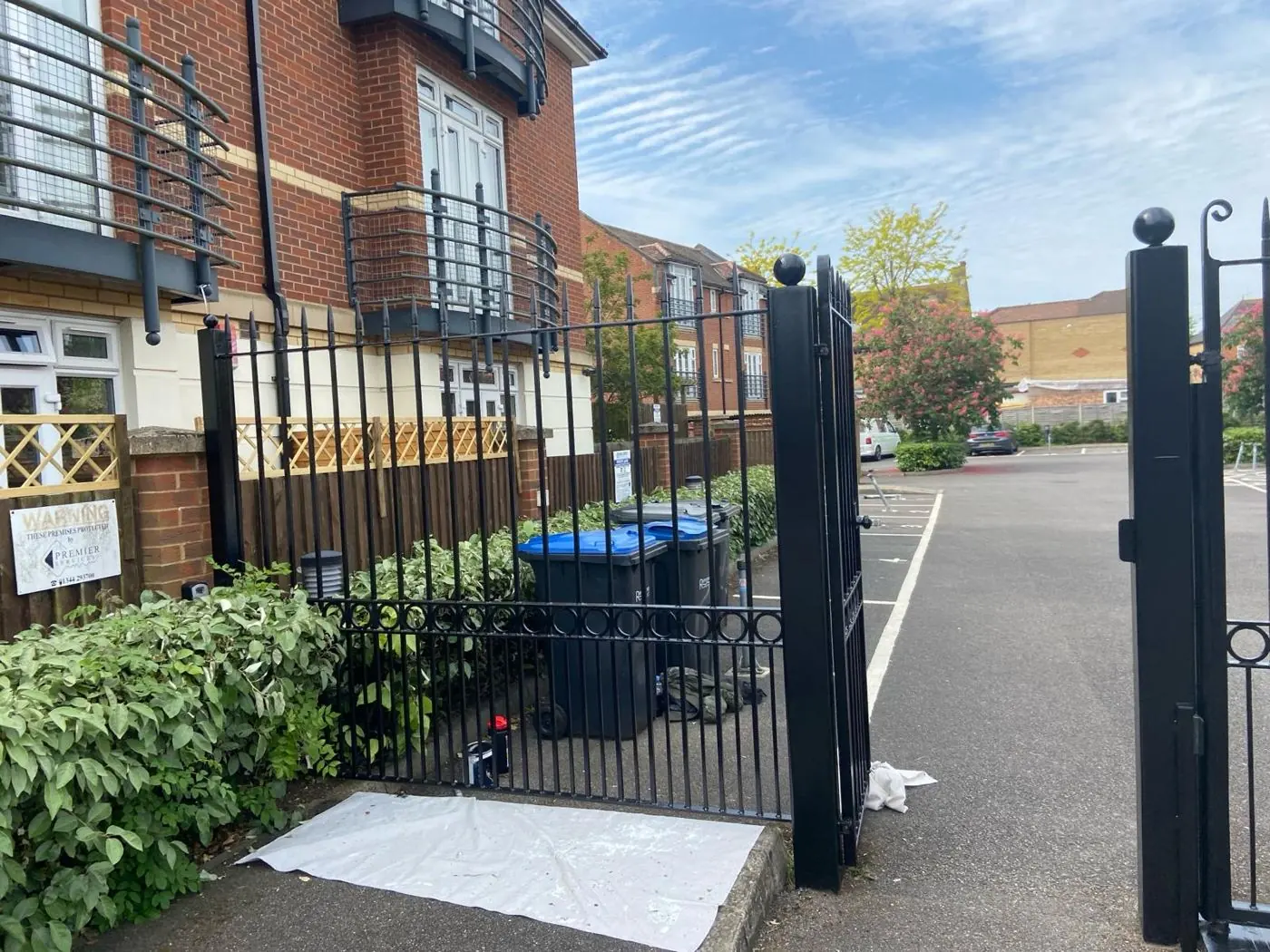
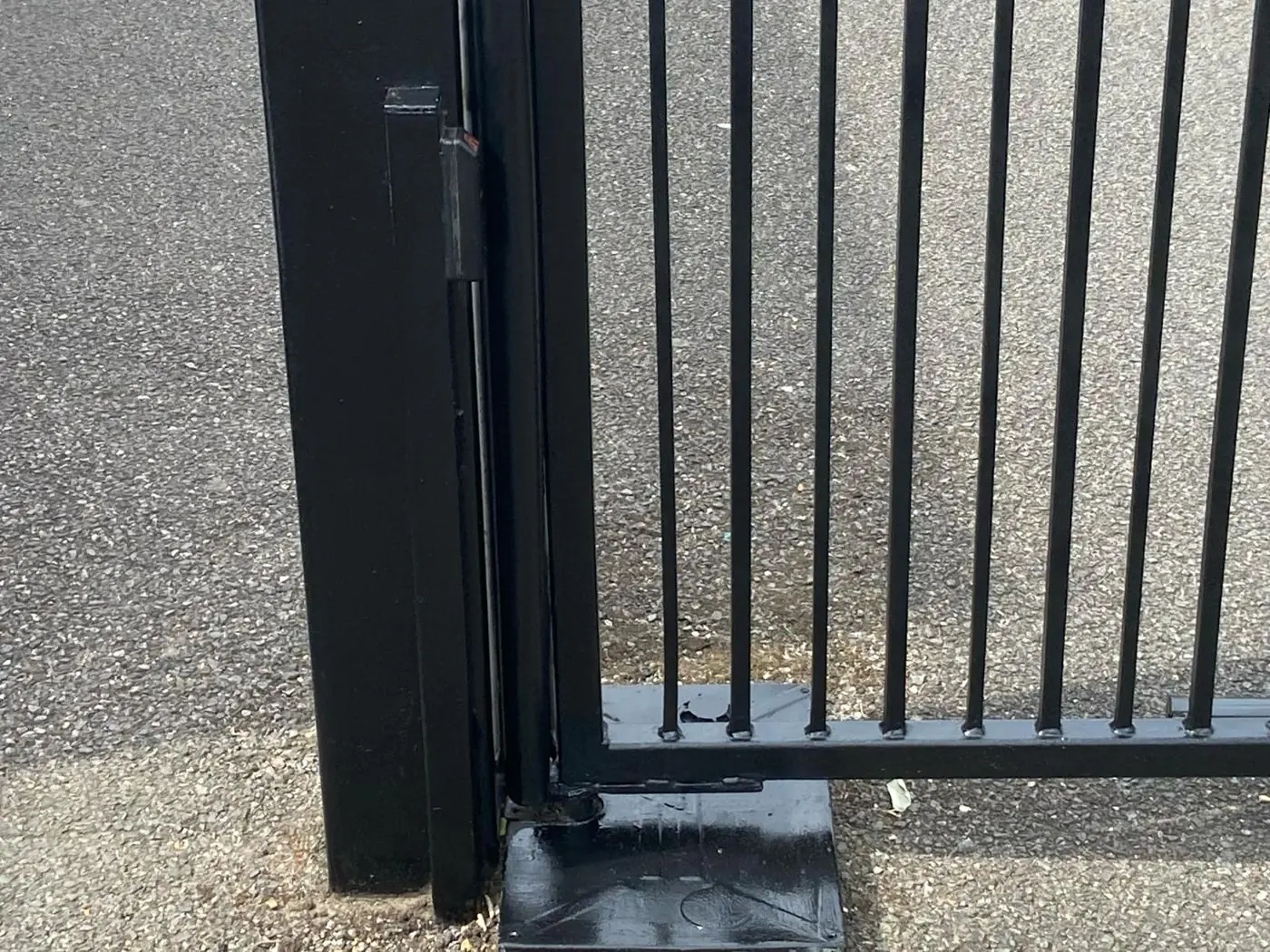
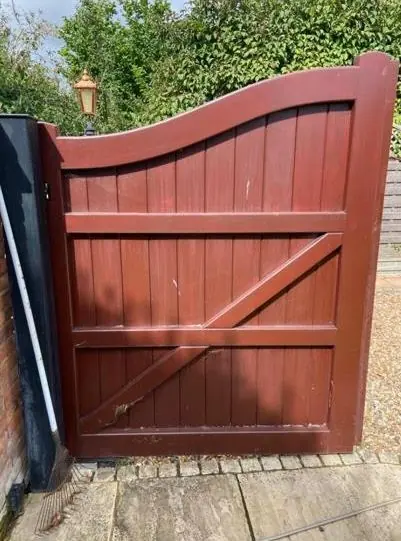
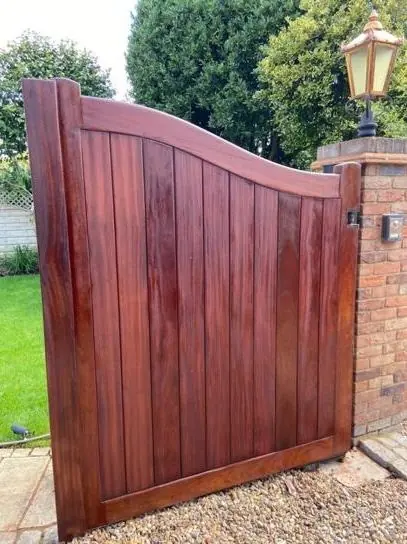
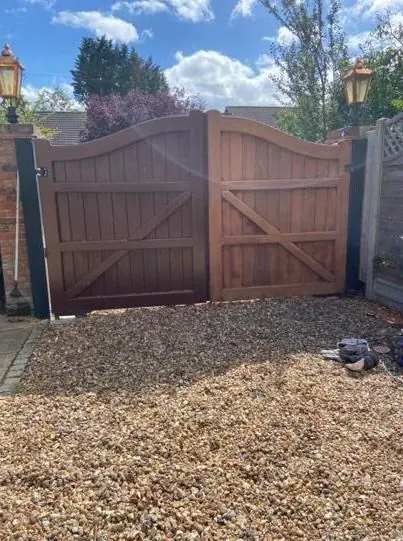
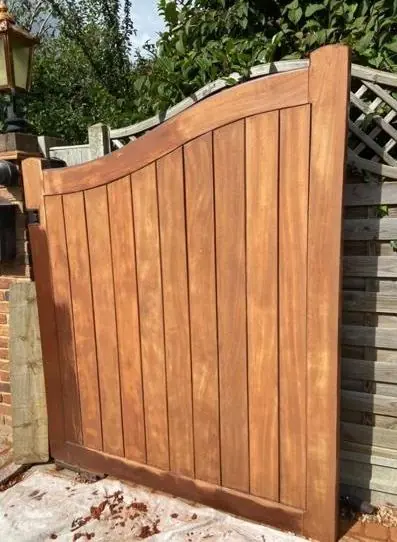
Timber side gates on estate houses tend to take more wear than the fence panels: they are opened every day for bins and bikes, and the bottom rail sits close to wet ground. They often need a little more preparation, such as cleaning off green growth and checking the hinges, before they are stained to match the fence. If your gate is metal rather than timber, see our page on metal gate painting instead.
Gardens backing onto open space, such as Foxfield Country Park or the greens, take more wind and rain on their fences, and they usually need restaining more often than sheltered gardens in the middle of the estate. Staining is booked in dry spells, with plants along the fence line covered while we work.
Our main fence and gate staining page explains the difference between stains, oils and fence paints in detail. Dean covers Grange Park from Northampton and is happy to quote for a single fence as well as a full garden.
Last updated by Dean, DH Painter & Decorator.