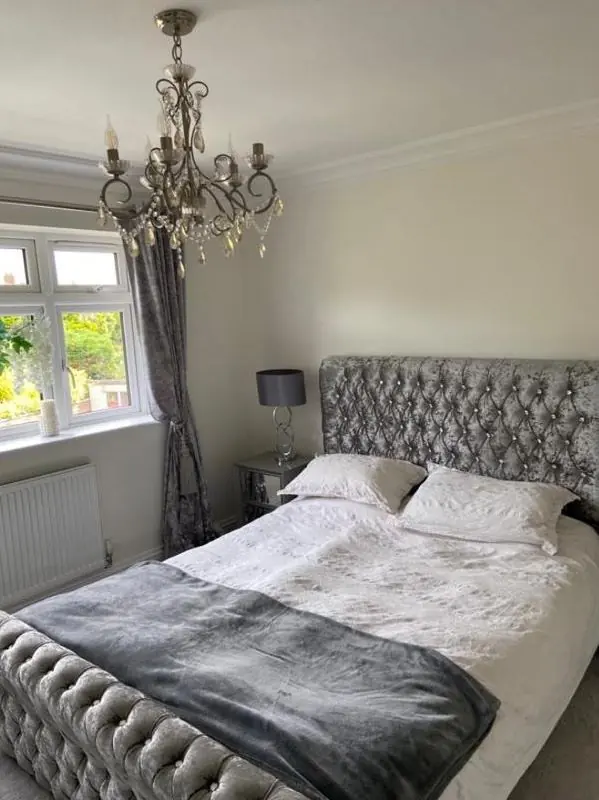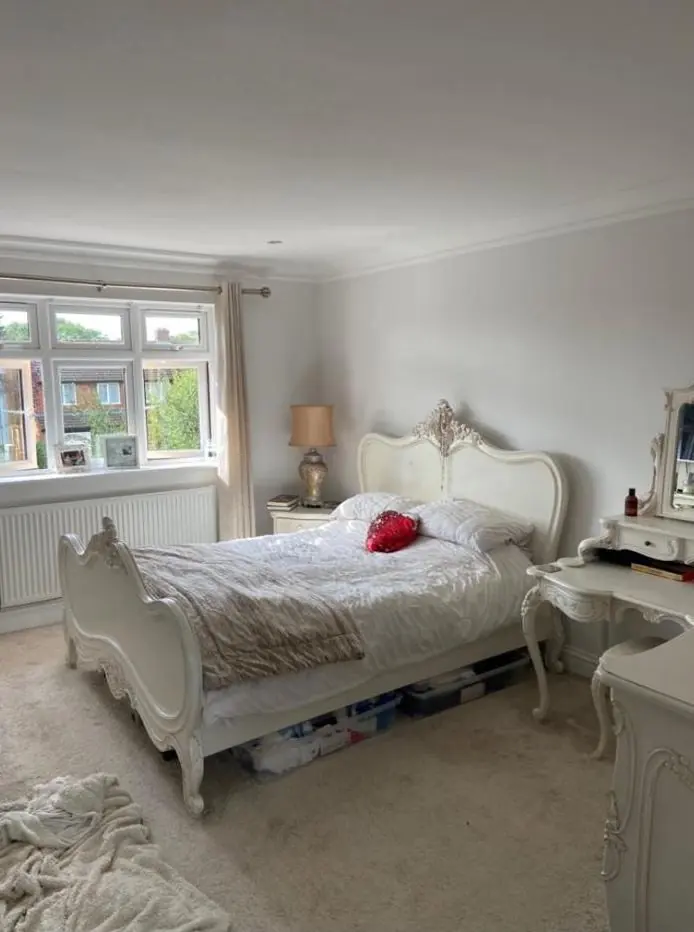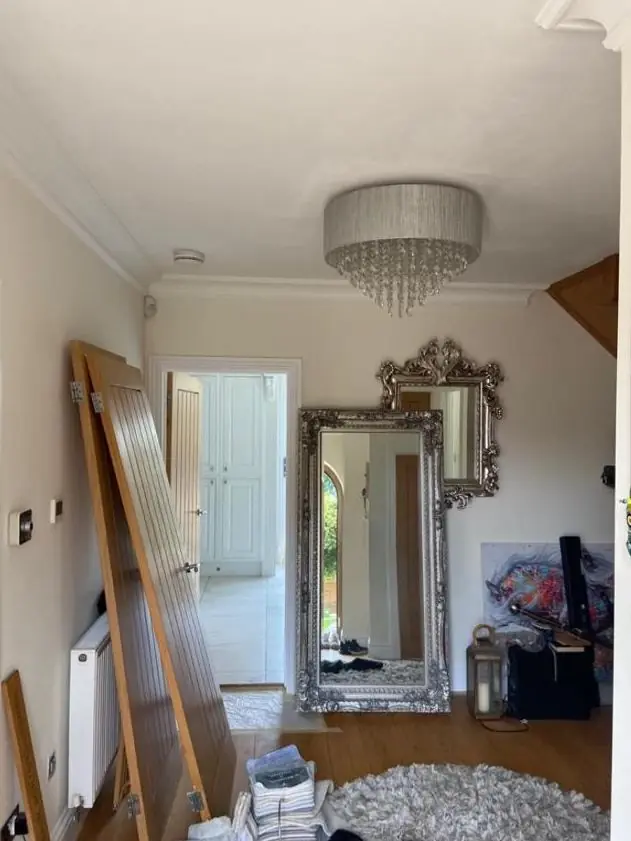
DH Painter & Decorator hangs wallpaper in Grange Park (NN4), the modern village 3.4 miles south of Northampton town centre. Dean strips old paper carefully from plasterboard walls, lines where the surface needs it and hangs feature walls, full rooms and stairwells in homes built from the late 1990s onward.
Taking down what the first owners put up
Grange Park’s first homes went up from the late 1990s, and where owners papered rooms in those early years, typically a vinyl in the kitchen or a pattern in a bedroom, that paper is now twenty-odd years old. Early-build homes often need old builder-era paper or vinyl stripped before anything new can go up.
Stripping in a modern house needs a lighter hand than in a solid-walled Victorian terrace. Many internal walls in houses of this age are plasterboard, and its face is itself a layer of paper. Soak it too long or steam it too hard and that face can blister or tear away along with the wallpaper. Our approach:
- Peel the top layer of vinyl dry first. It often comes away in full lengths and leaves only the backing behind.
- Score and soak the backing sparingly, working a small area at a time rather than drenching a whole wall.
- Seal any torn or fluffy plasterboard face with a stabilising primer before filling, so the new paper has a firm surface to grip.
When smooth walls still need lining
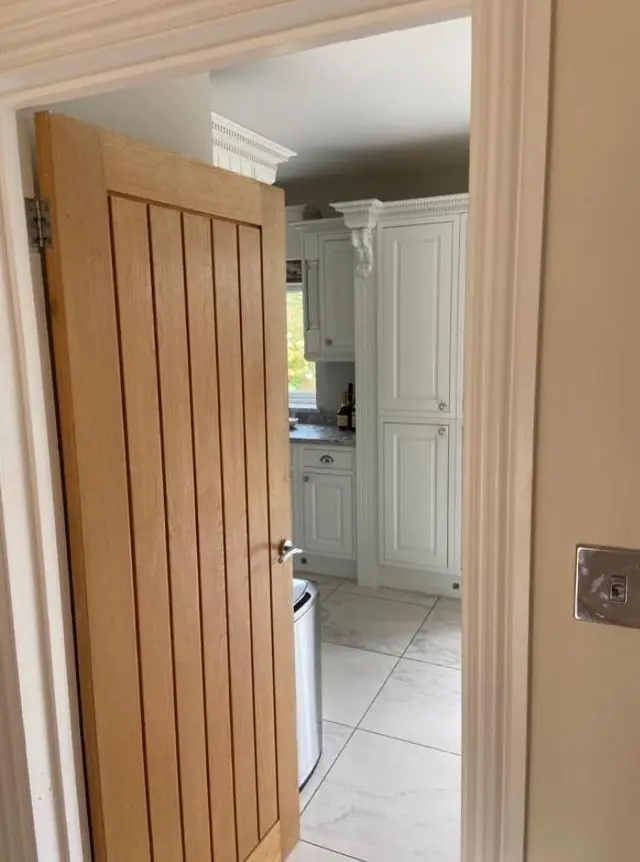
On walls that have never been papered, the plaster in a home from this period is usually smooth enough to take a standard vinyl or non-woven paper directly, after sizing or priming. Lining paper earns its place in three situations: after stripping has left the surface uneven, under a heavy or expensive designer paper that shows every flaw, and on walls where years of filled fixings and patched cracks have left a lumpy finish. Where it goes up, we hang it horizontally so its joints never line up with the joints of the paper on top.
Choosing a feature wall in an open-plan room
Open-plan layouts, with kitchen, dining and living spaces flowing together, are common in modern estate houses like these. A bold paper can look odd if it simply stops partway across a long run of wall. The walls that suit a single feature are those with a clear frame on both sides:
- The wall behind a bed, between two corners
- A dining wall set apart by a doorway or a return in the wall
- A recess or alcove, such as the space under or beside the stairs
- A downstairs cloakroom, where a strong pattern on all four walls stays contained
If your house has no chimney breast to frame a pattern, these give the paper a natural edge.
Papering the stairwell
Hallways in many Grange Park houses run straight up into the stairs and landing, and the stair wall can be the tallest drop in the house. That is where a wallpaper job is won or lost. The longest lengths are cut from the top of the stair wall to the bottom of the slope, so every one is a different length, and the pattern has to match across the angle of the staircase. We set up a stair platform or a tower so we can hang each drop in one movement, and we plumb a fresh line on each wall rather than trusting the corners to be square.
Before you order your rolls
Grange Park is 3.4 miles south of Northampton town centre and inside our coverage. Dean will measure up and tell you how many rolls the walls need, allowing for the pattern repeat, before you order. Buy all your rolls from the same batch number and keep a spare for any future repair. Our wallpaper hanging service page explains the papers we hang and how we prepare walls, and our Grange Park area page lists the other decorating we do in the village. The quote is free and in writing.
Last updated by Dean, DH Painter & Decorator.