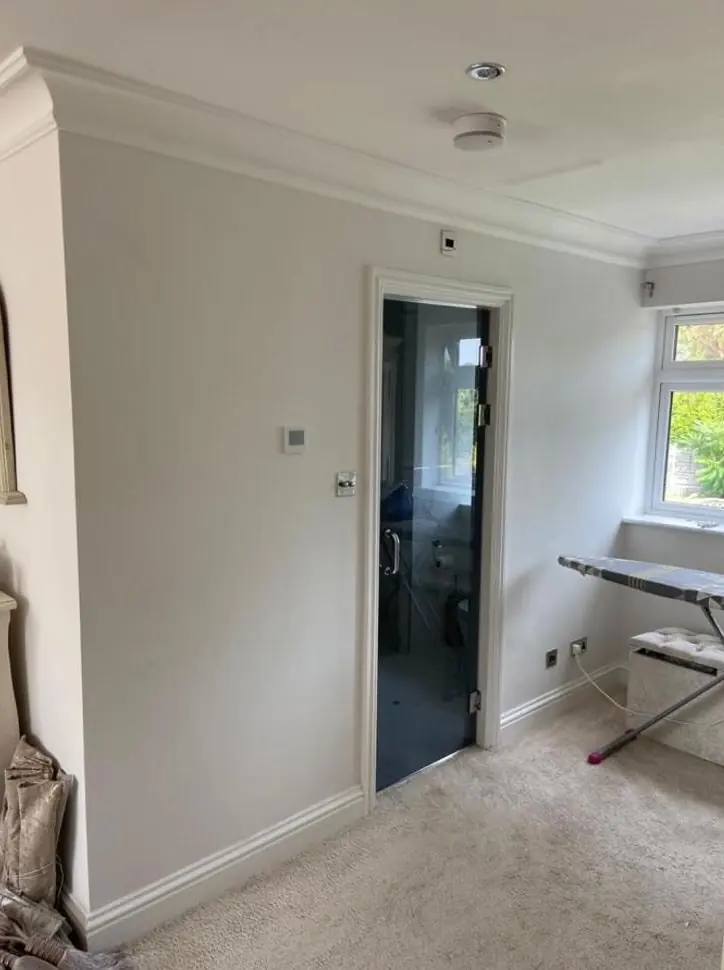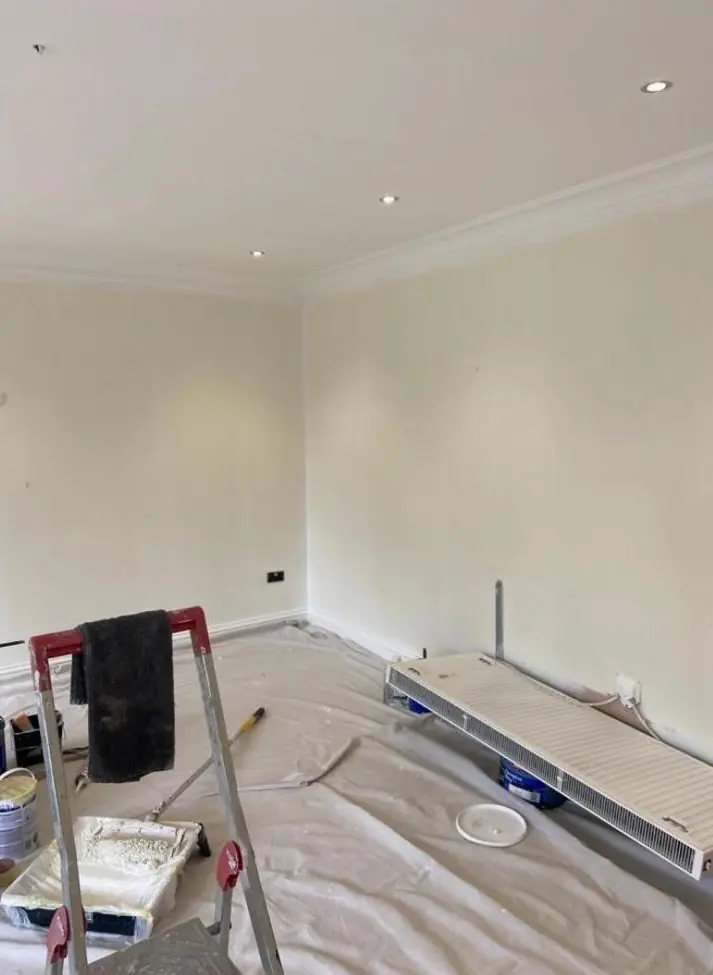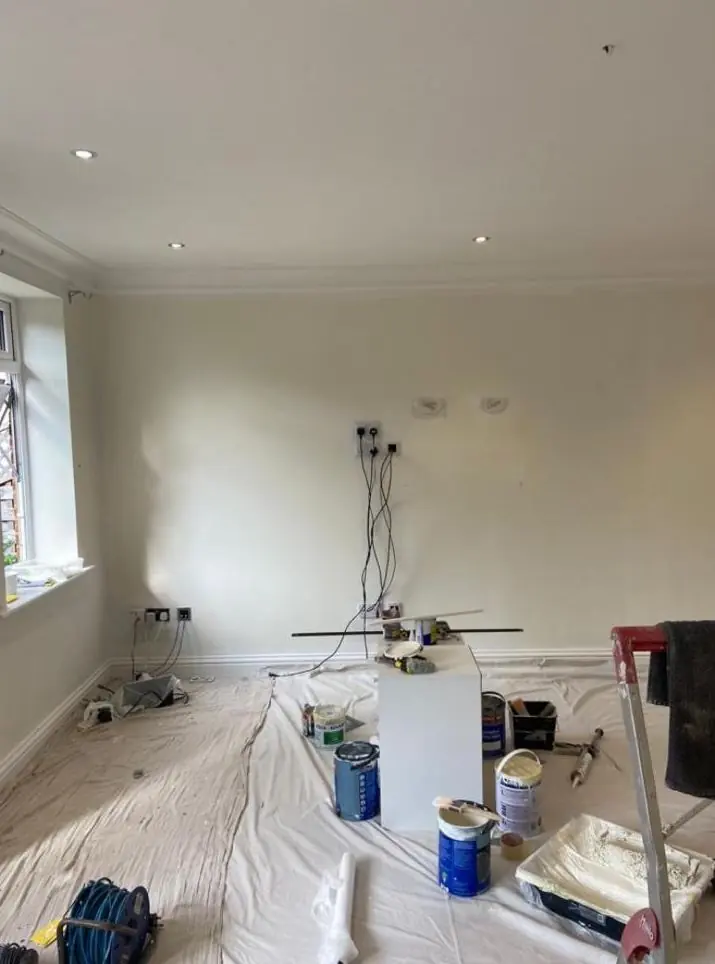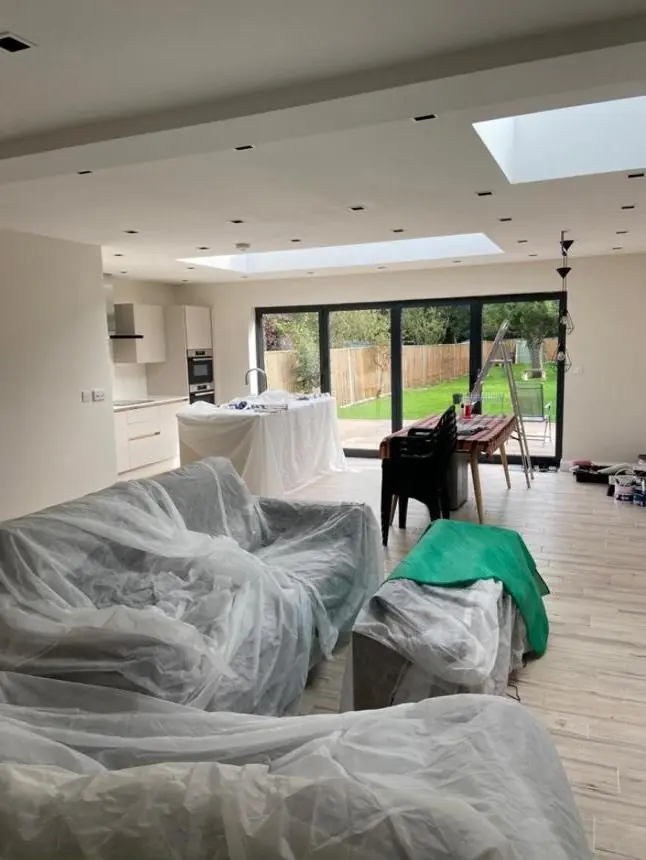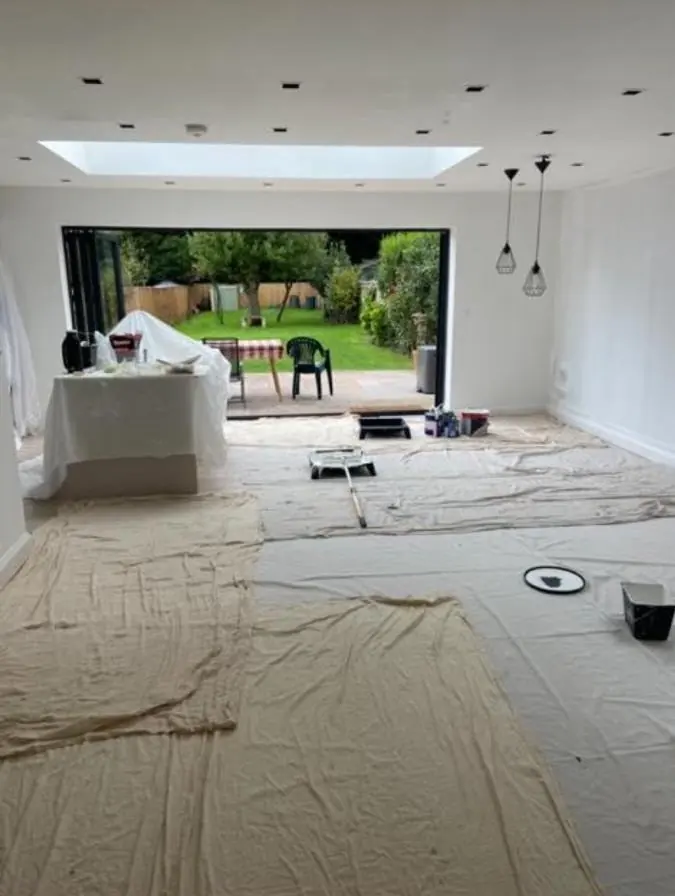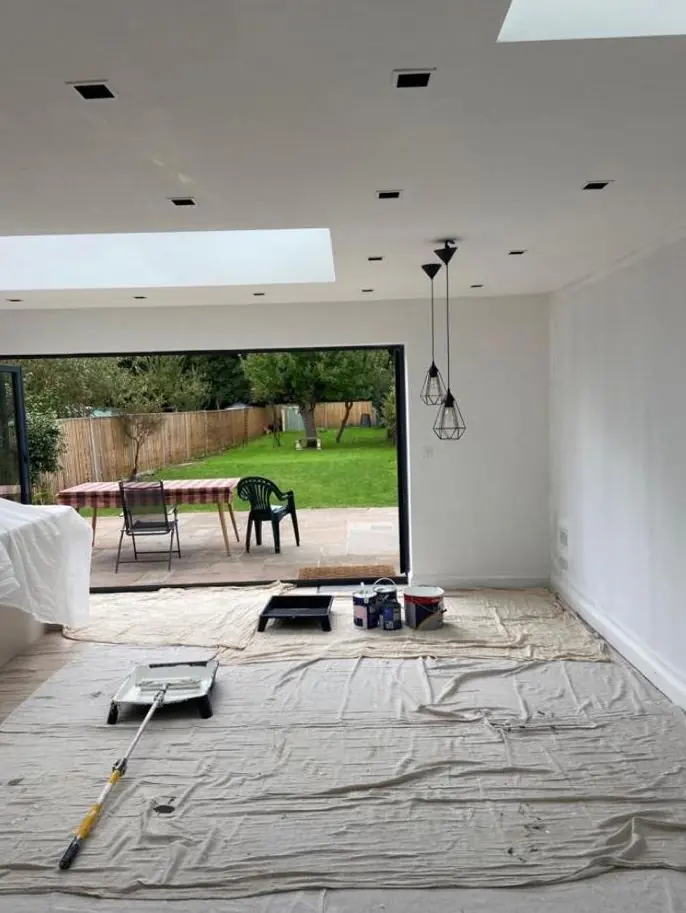
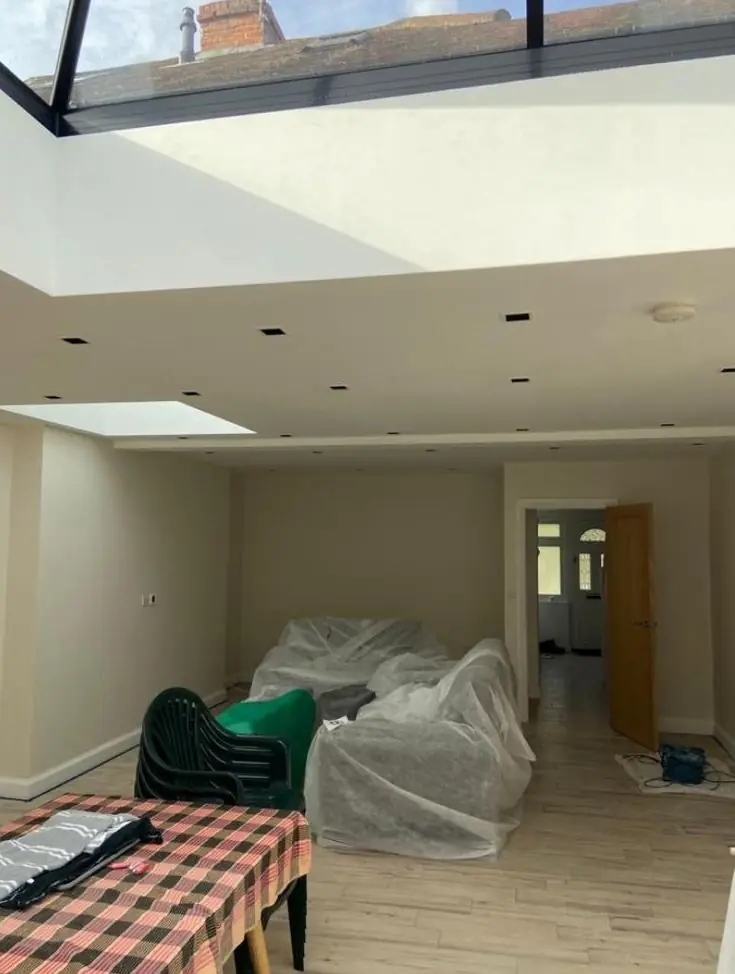
DH Painter & Decorator seals and decorates new plaster in Grange Park, NN4, including extensions, re-skimmed rooms and recently built homes. Dean covers the village from Northampton, about 3.4 miles to the north, and quotes free once your plasterer or builder has finished.
Two sources of fresh plaster on one estate
New plaster turns up in Grange Park for two quite different reasons. The first is new building. In January 2019 Manor Oak Homes published plans for 330 more homes on top of the original estate, and any homes from newer phases may still have plaster that has not been through its first proper decoration. The second is change to the older houses. The first phase of the village was approved in 1998, and those homes are now old enough for owners to add kitchen extensions, convert garages or have tired walls re-skimmed.
The job looks the same on paper, but the starting point differs. A newer house usually has a developer’s thin coat over plaster that is still drying out. An extension on a 25-year-old house has bare plaster that has never seen paint, butted up against walls with two decades of emulsion on them.
Settlement cracks in a house that is still settling
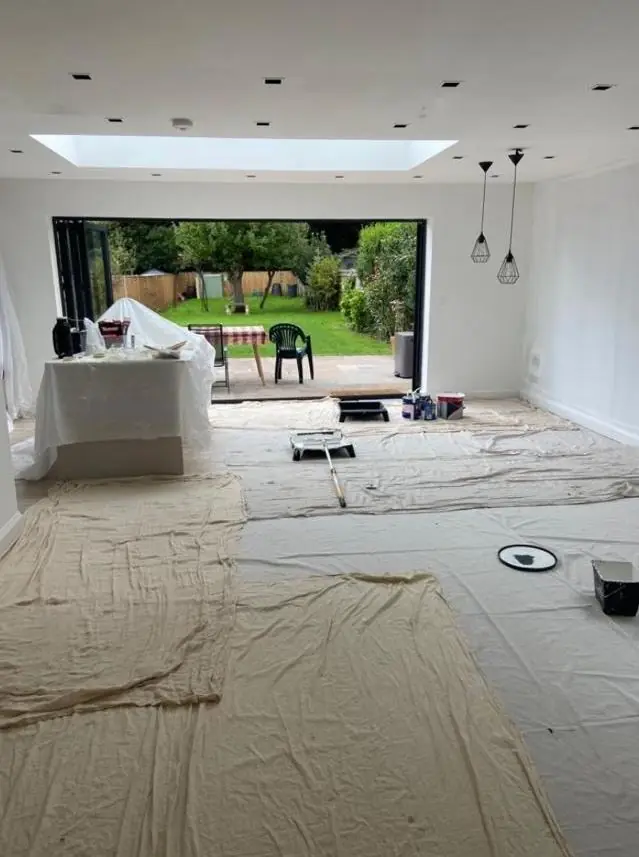
New-build homes move in their first few years as timber dries and the structure takes its load. Hairline cracks appear at ceiling corners, over door heads and along plasterboard joints. If you decorate too soon, those cracks come back through the new colour. Where a house is still in that early period, we will usually suggest a breathable first decoration now and a full repaint once the cracking has settled, rather than spending on an expensive finish too early.
When we do decorate, the order is:
- check the plaster is evenly pale and dry, including reveals, corners and behind radiators
- apply a breathable mist coat that soaks into the plaster and gives the finish something to grip
- fill, sand and caulk the cracks, trowel marks and dings the mist coat shows up
- apply two finish coats in your chosen colour, with new skirtings and doors primed and painted
The mist coat guide explains why vinyl emulsion or PVA on bare plaster leads to peeling later on.
Joining an extension to an early Grange Park house
Where an extension opens into the existing kitchen or lounge, the old and new walls sit side by side in one space. Fresh plaster takes paint differently from walls that have had years of coats, so the new section can look a shade off even in the same tin. We mist coat the new plaster, then take the finish coats across both old and new walls up to a sensible corner, so the room reads as one. The same goes for woodwork: new MDF skirting next to original softwood needs sealing and the same top coat so the two are hard to tell apart.
Open-plan layouts are common in modern homes here, and an extension usually makes the space more open still. That makes colour continuity matter. If your kitchen-diner flows into a hall and stairs, we can plan the colours across all of it, not just the new room.
Planning around your builder
Plaster needs time to dry before any coating, and that time depends on thickness, the weather and how well the room is ventilated. We fit in after your plasterer, and we will tell you honestly if the walls need longer. The main new plaster and extension painting page covers what a full extension quote includes. Other work in the village is on our Grange Park page.
Last updated by Dean, DH Painter & Decorator.