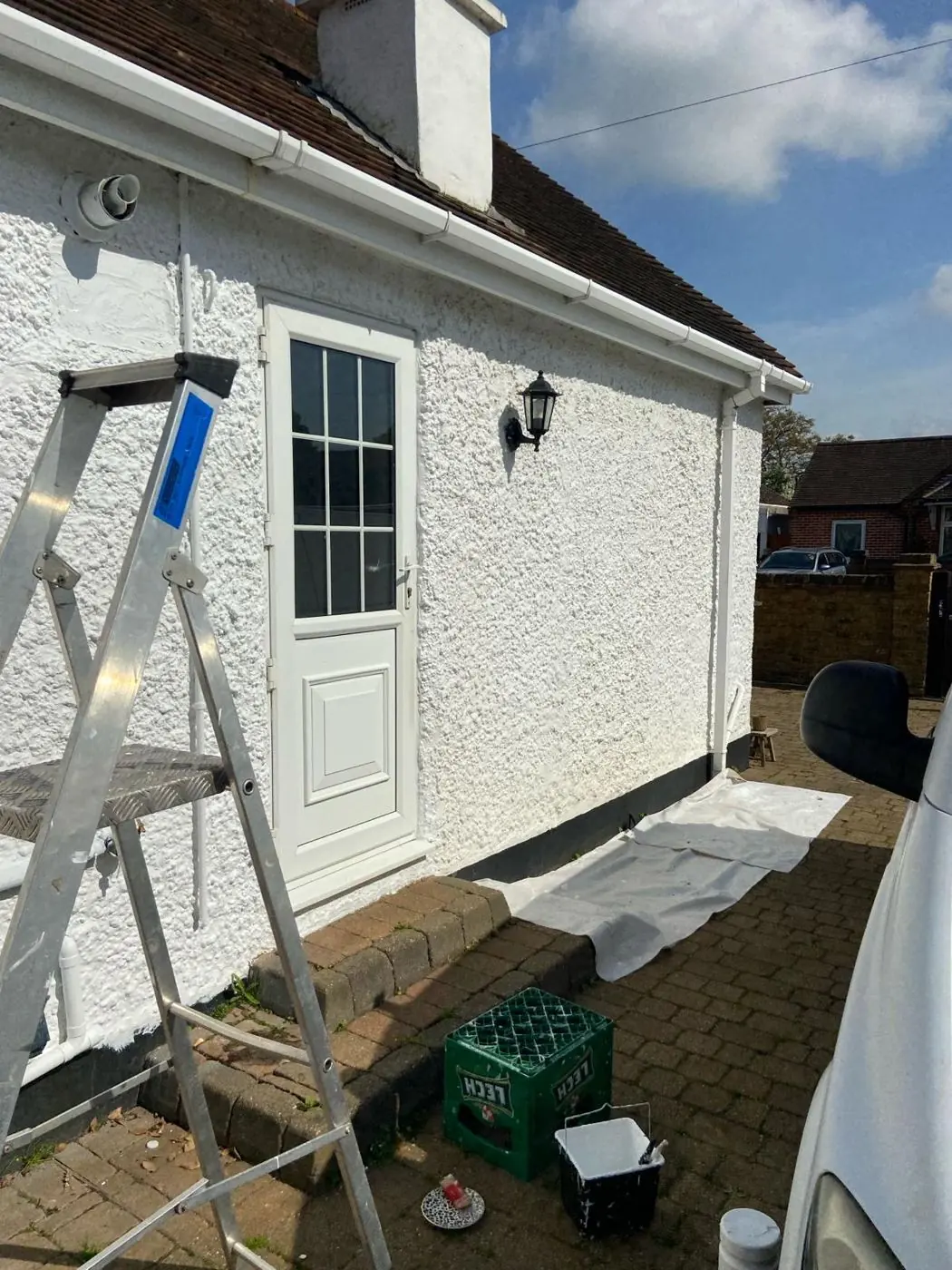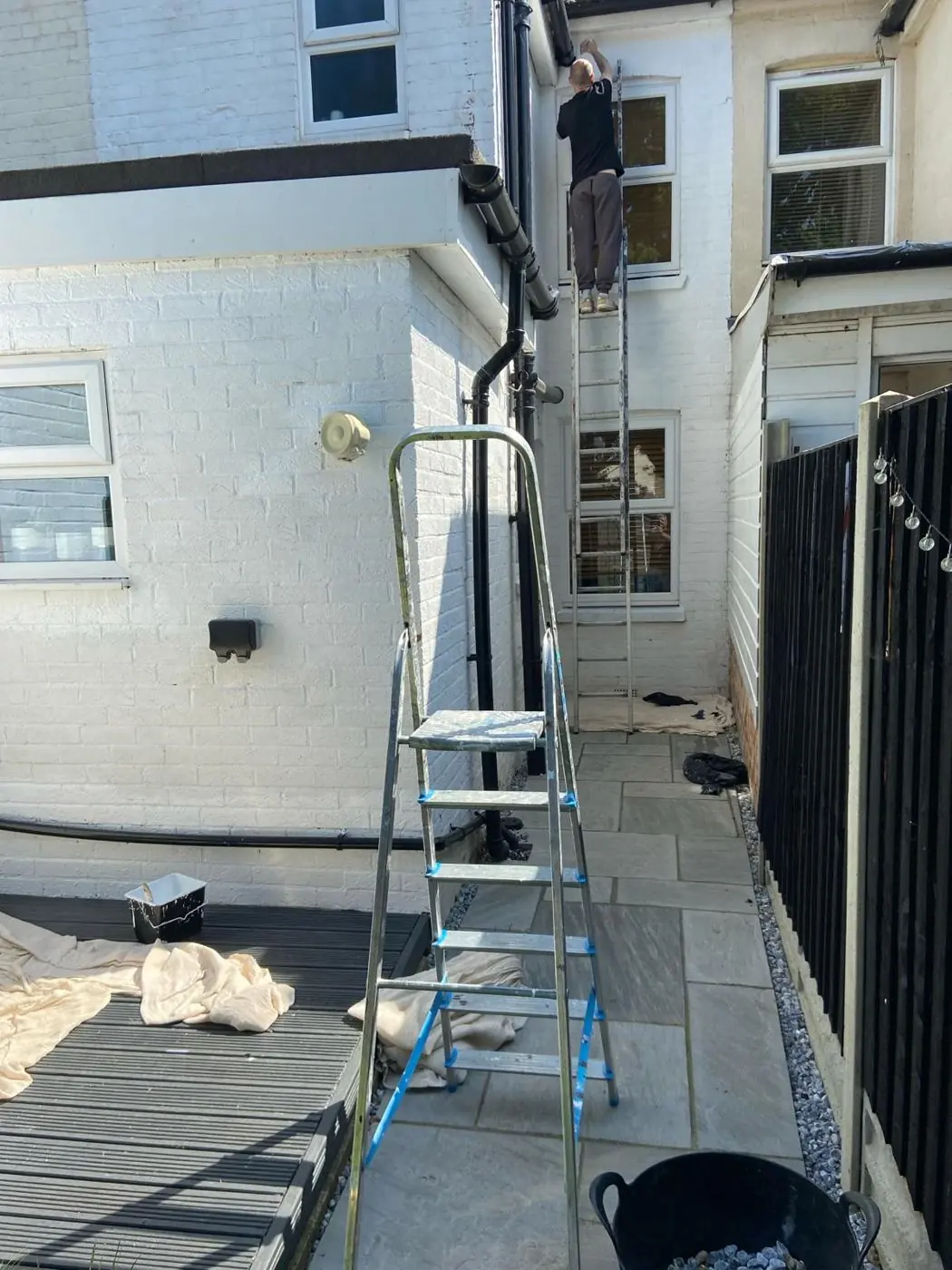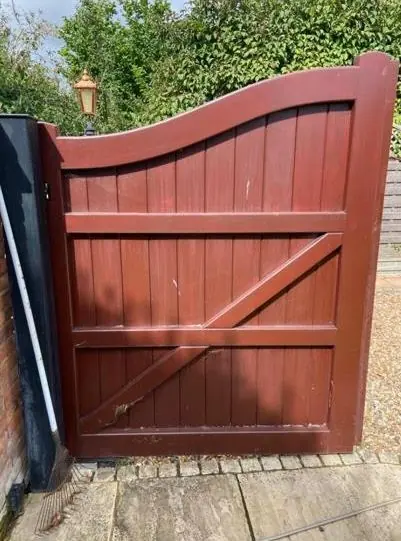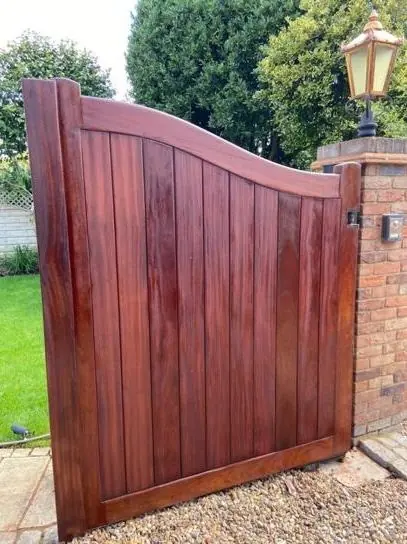
Dean paints the outsides of homes in Milton Malsor, a conservation village about 3.2 miles south-west of Northampton town centre. In the old core that means sashes, casements, doors and painted surrounds on listed ironstone houses; on the infill homes it means a fuller exterior repaint.
A village where most of the stone stays bare
Walk down High Street, Green Street or Collingtree Road and the walls are almost all coursed ironstone rubble, sometimes mixed with limestone. That stone is normally best left unpainted, and covering it with a modern masonry coat would trap moisture in a wall built to breathe. So an exterior job in the Milton Malsor Conservation Area is mainly about timber and the few surfaces that were painted from the start: the render and stone surrounds at Milton Malsor Manor House, and the painted rubble of The Compass on Green Street. Those painted walls are covered on our render page; this page is about everything else outside. For the wider village picture, see our Milton Malsor area page.
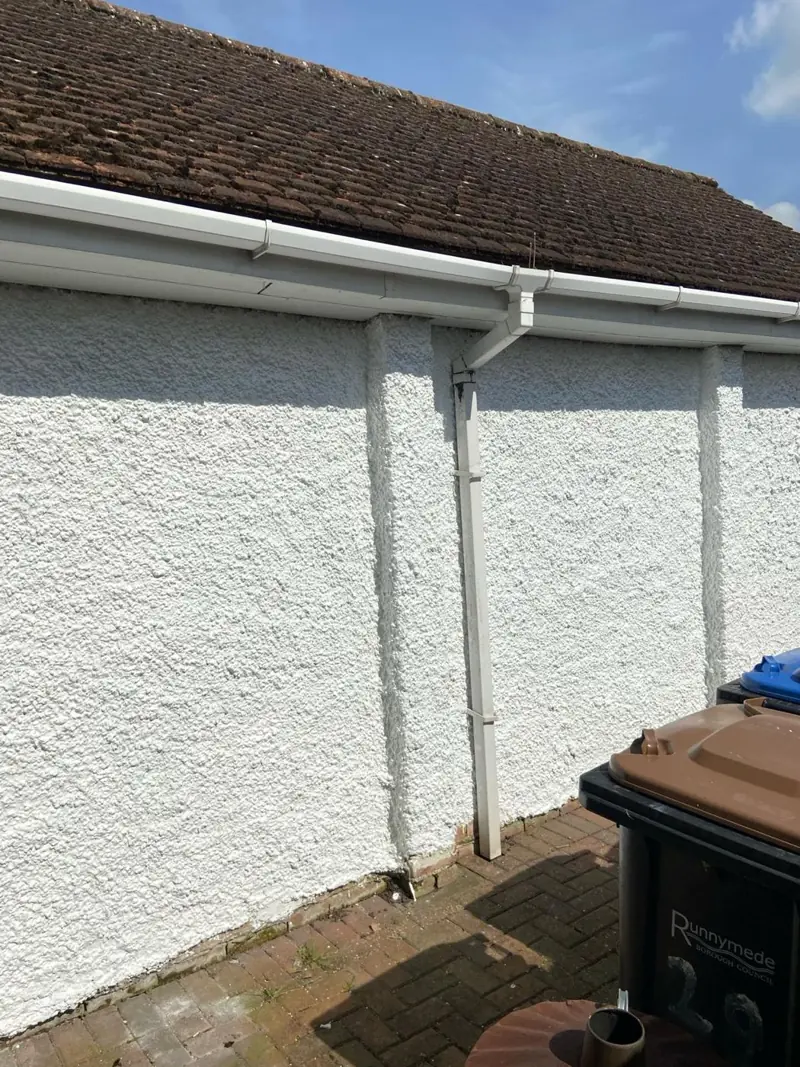
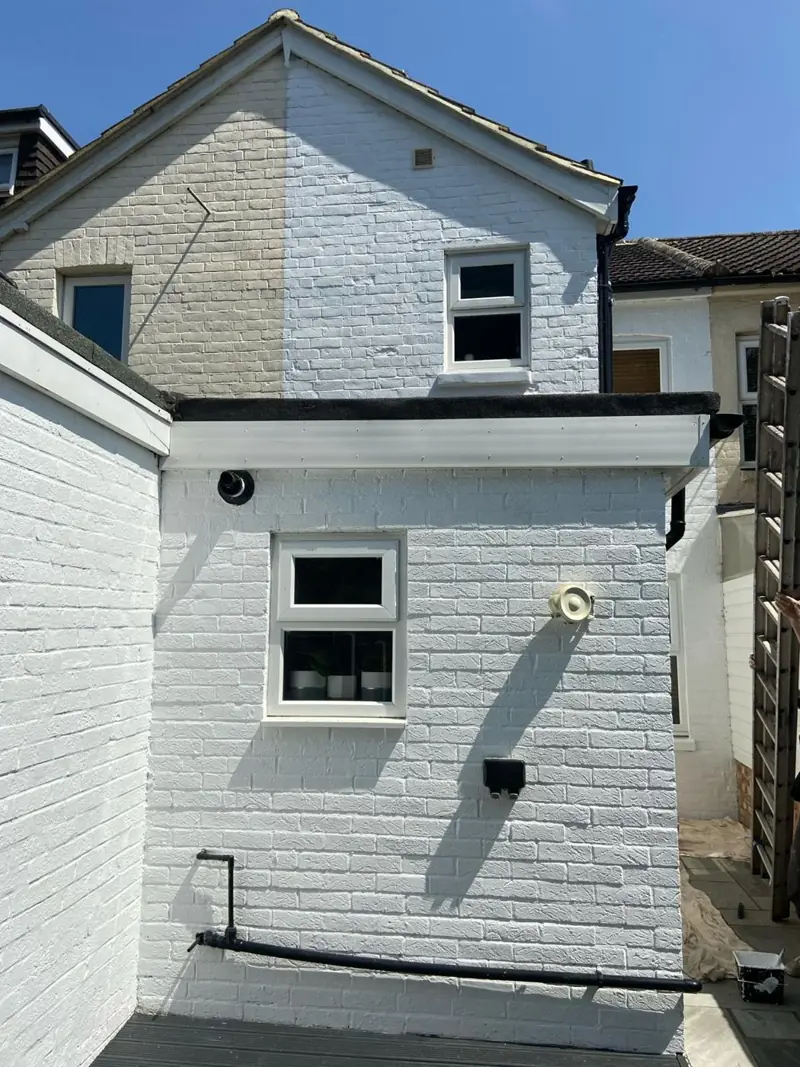
The later infill houses and the 26 sheltered flats and bungalows are a different job. There, walls, roofline, doors and windows can all be in scope, and the work looks much more like a standard repaint covered on our main exterior painting page.
Joinery on the listed houses
The village has 34 to 35 listed buildings, against 311 dwellings at the 2011 census, and most of them sit along the same few conservation-area streets. The listing descriptions record a wide spread of timber:
- Horizontal sliding sashes at 49 and 51 High Street, which run on their bottom rail and stick quickly if paint builds up in the runners.
- 12-pane sashes at Milton House and The Old Rectory, and 16-pane sashes at The Grange, where most of the hours go into cutting in glazing bars.
- Three-light casements under wood lintels at Corner Cottage, and a part-glazed plank door with a gabled hood.
- Six-panel doors at The Forge, The Grange and The Old Rectory, the last set in a pilastered surround with a pediment, and the Doric doorcase at Milton House.
Old timber like this is scraped back to sound wood, filled with care and primed before any top coat. Classical doorcases are finished by brush, with the mouldings kept crisp rather than clogged. If you are planning a new colour on a listed house rather than repainting in the existing one, check with West Northamptonshire Council first, because a change of external finish may need listed building consent.
Thatch, low eaves and cottages on the pavement
Thatch End, 49 and 51 High Street, Corner Cottage and 2 Collingtree Road are all thatched, and the thatch decides how the job is run. Ladders cannot rest on it, so they are footed on the ground and stood against stone or a stand-off. Eyebrow dormers and low eaves are reached carefully from below. Hot-air guns are not used anywhere near the roof; stripping is done by hand scraping or with a chemical stripper instead.
Old cottages on High Street, Green Street and Collingtree Road front straight onto the road, with no front garden for staging. Dust sheets, ladders and wet paint all sit at the street edge, so we keep the working area tidy and signed, and plan the front elevation for a dry, settled spell so it is finished in as few visits as possible.
Traffic film and when to book
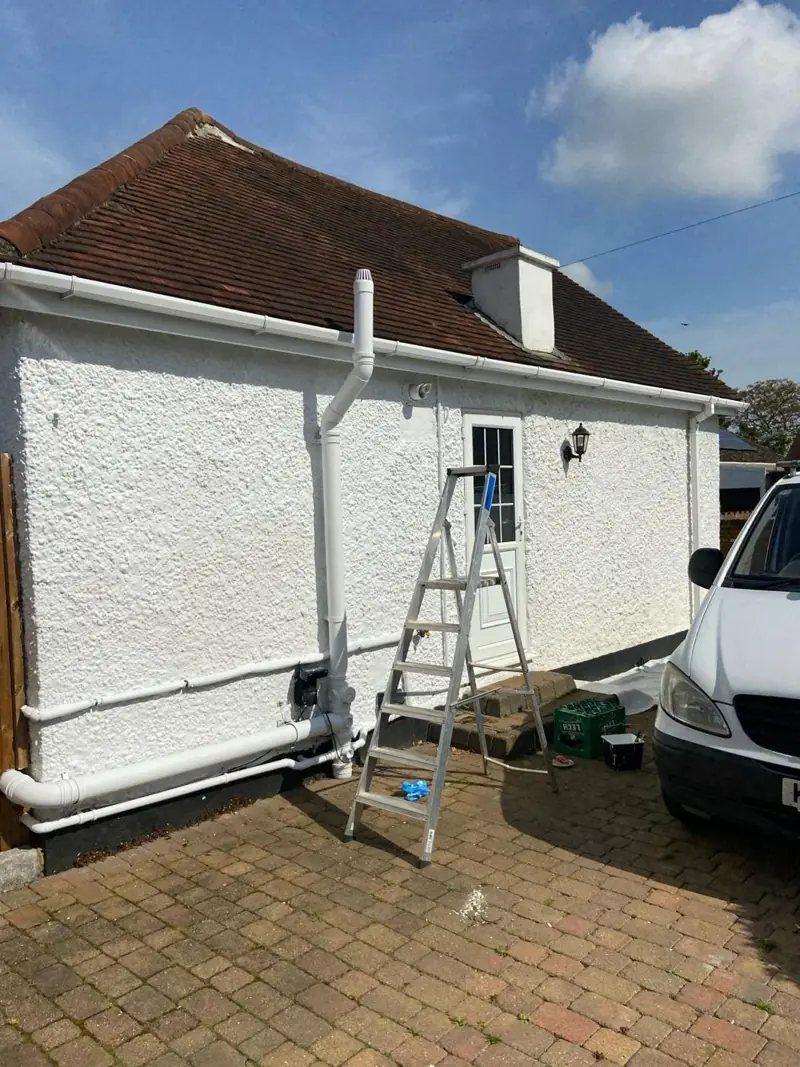
The parish is boxed in by the M1, the A43, the A508 and the West Coast Main Line. Painted timber on exposed plots picks up a fine grey film from traffic and rail, and paint will not bond to it properly. Every exterior job here starts with a wash-down, then sanding, before any primer goes on.
Timing matters too. Ironstone holds water after a wet spell, and paint on joinery set into damp stone can blister. Our guide to the timing exterior painting explains why late spring to early autumn is the usual window, and Dean will tell you on the visit if your house needs a drier week than the forecast promises.
Last updated by Dean, DH Painter & Decorator.