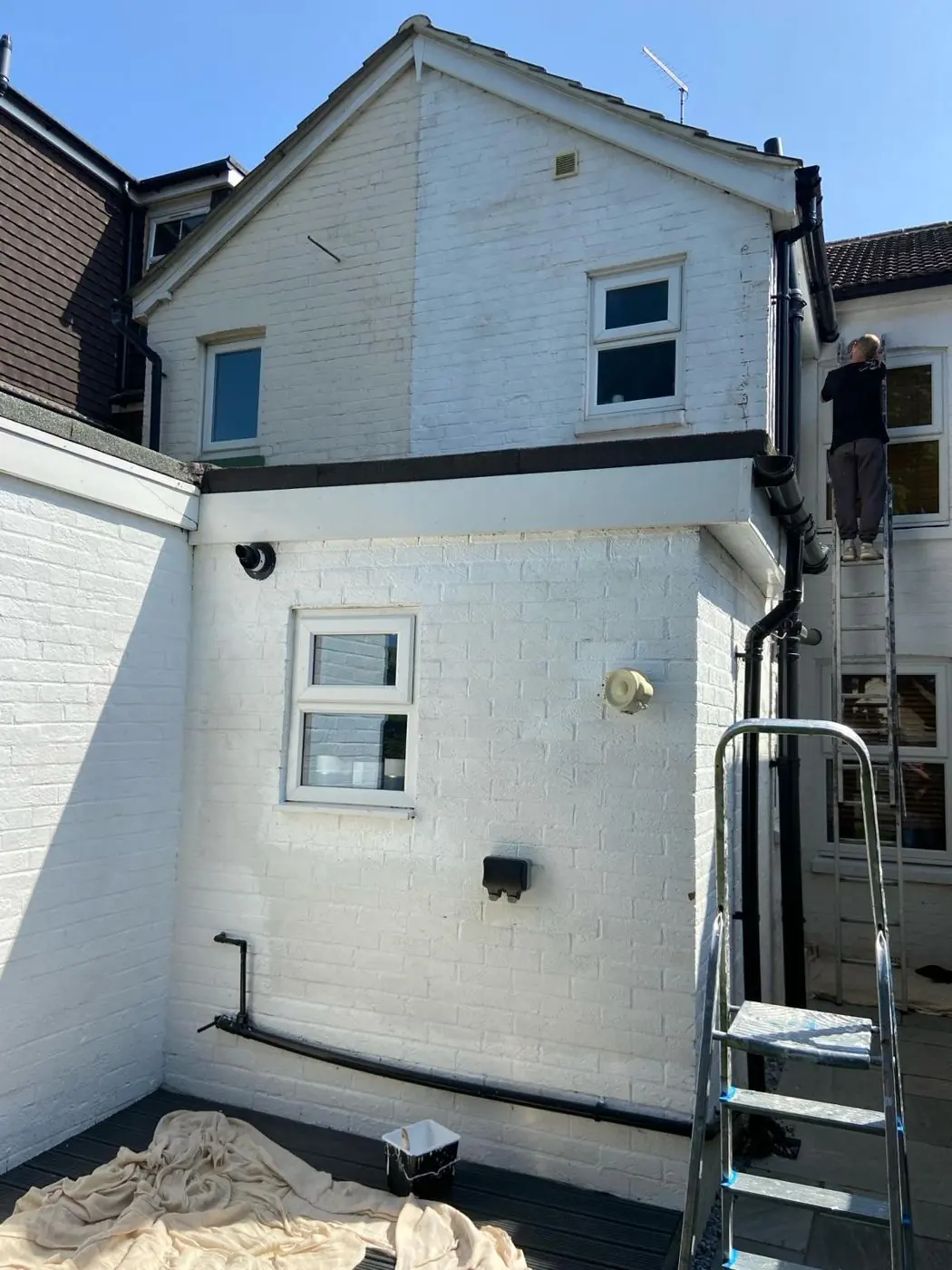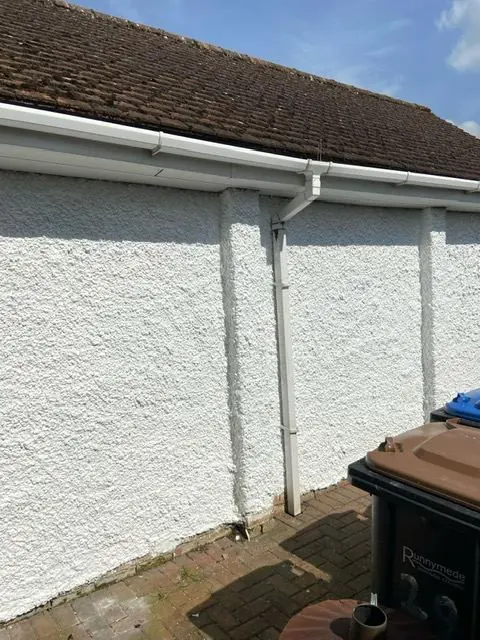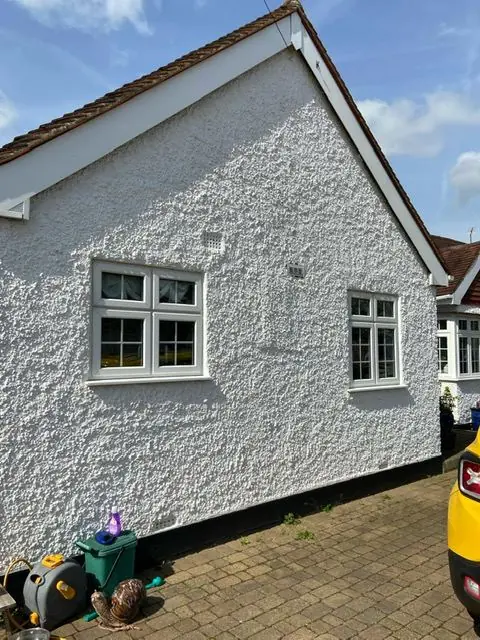
DH Painter & Decorator repaints timber fascias, soffits, gutters and downpipes in Grange Park, NN4, about 3.4 miles south of Northampton town centre. Most rooflines here were built from the late 1990s onward and are on their first or second repaint cycle, and Dean checks each board before quoting.
A roofline on its first or second repaint
Grange Park’s first homes went up after planning approval in May 1998, and building carried on through the 2000s as the village grew from a few hundred residents to around 4,700. Where those houses have timber fascias and soffits, the boards are now roughly fifteen to twenty-five years old. That puts most of them at a particular stage: still sound underneath, but with the original factory or builder coat worn thin and starting to lift.
That is a good time to act. Paint failure at roof level is gradual, and on boards of this age it is usually caught before water has got far into the timber. A repaint now, with proper preparation, costs far less effort than splicing in new sections later. Wait another few winters and the joints and board ends, where rain collects, are where soft wood tends to appear.
Traffic film from the motorway side
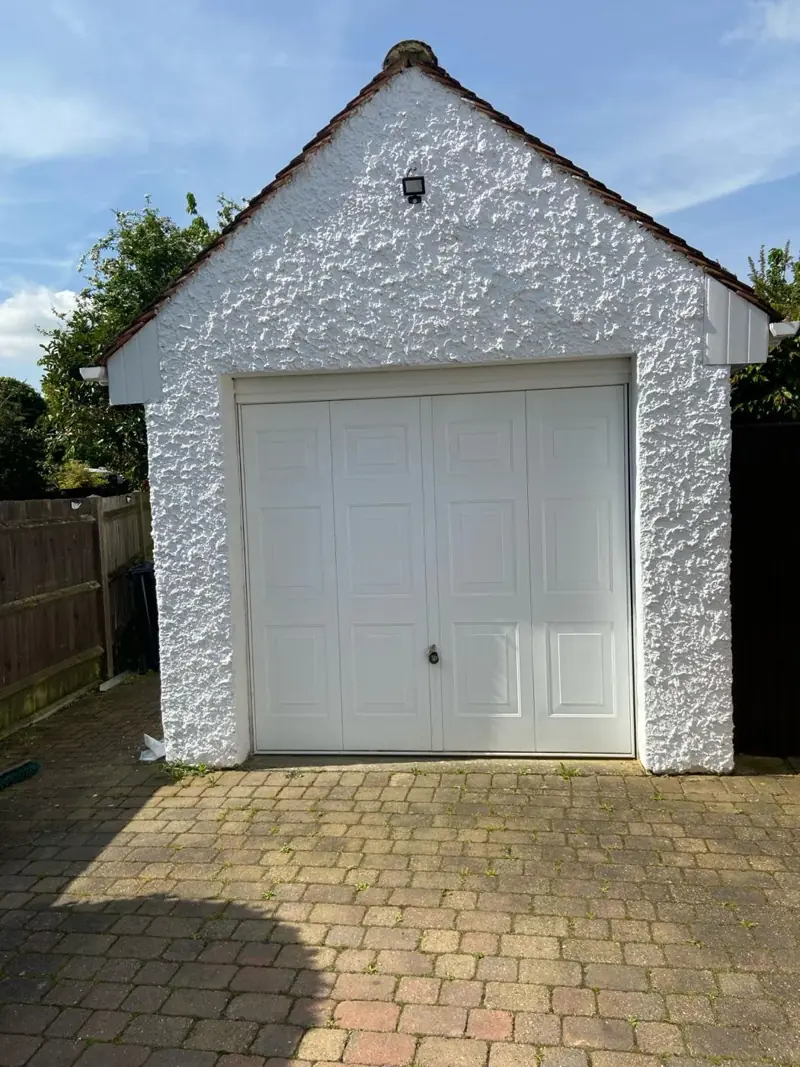
The village sits in a pocket of land with motorway along one edge and the A45 trunk road curving round two more, plus distribution warehouses on Saxon Avenue and the lorry traffic that comes with them. Fine grime from those roads settles on everything at roof height, and fascias and soffits face it directly. A board can look grey and tired long before its paint has actually failed.
That changes the order of work. Before any scraping or sanding, the whole run is washed down to take off the traffic film, because primer and gloss will not key properly to a dirty surface. Only then does the board-by-board check start: a probe at the ends and joints, scraping off anything loose, sanding back the edges and spot-priming bare timber.
Choosing a finish you can clean
On a house close to the main roads, the finish matters as much as the preparation. We recommend exterior paints that tolerate washing, so the roofline can be wiped or hosed down between repaints rather than looking dingy within a couple of years. A gentle clean every so often keeps the grime from building into a crust that holds moisture against the paint.
- Gloss sheds dirt well and is the traditional choice for fascias and bargeboards.
- Satin suits owners who want a softer look and still gives a wipeable surface.
- Colour is your call: No heritage check applies to roofline colours here, so moving away from the original white is your call, though covenants in your deeds may say something about appearance.
Gutters, downpipes and soffit vents in the same visit
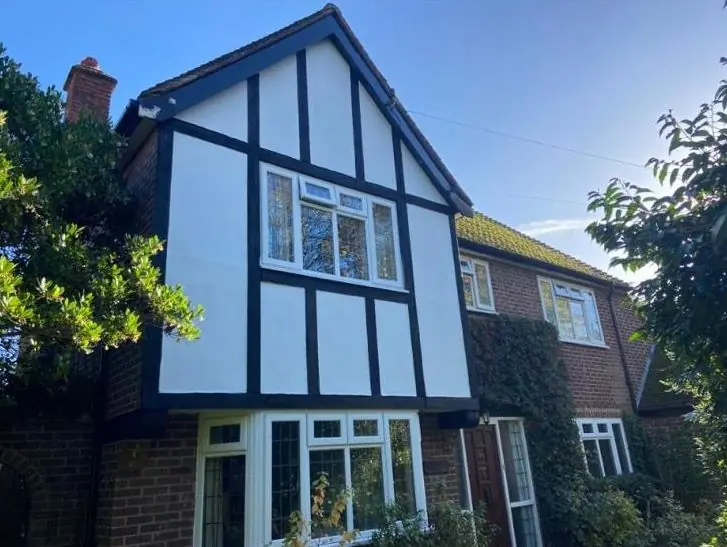
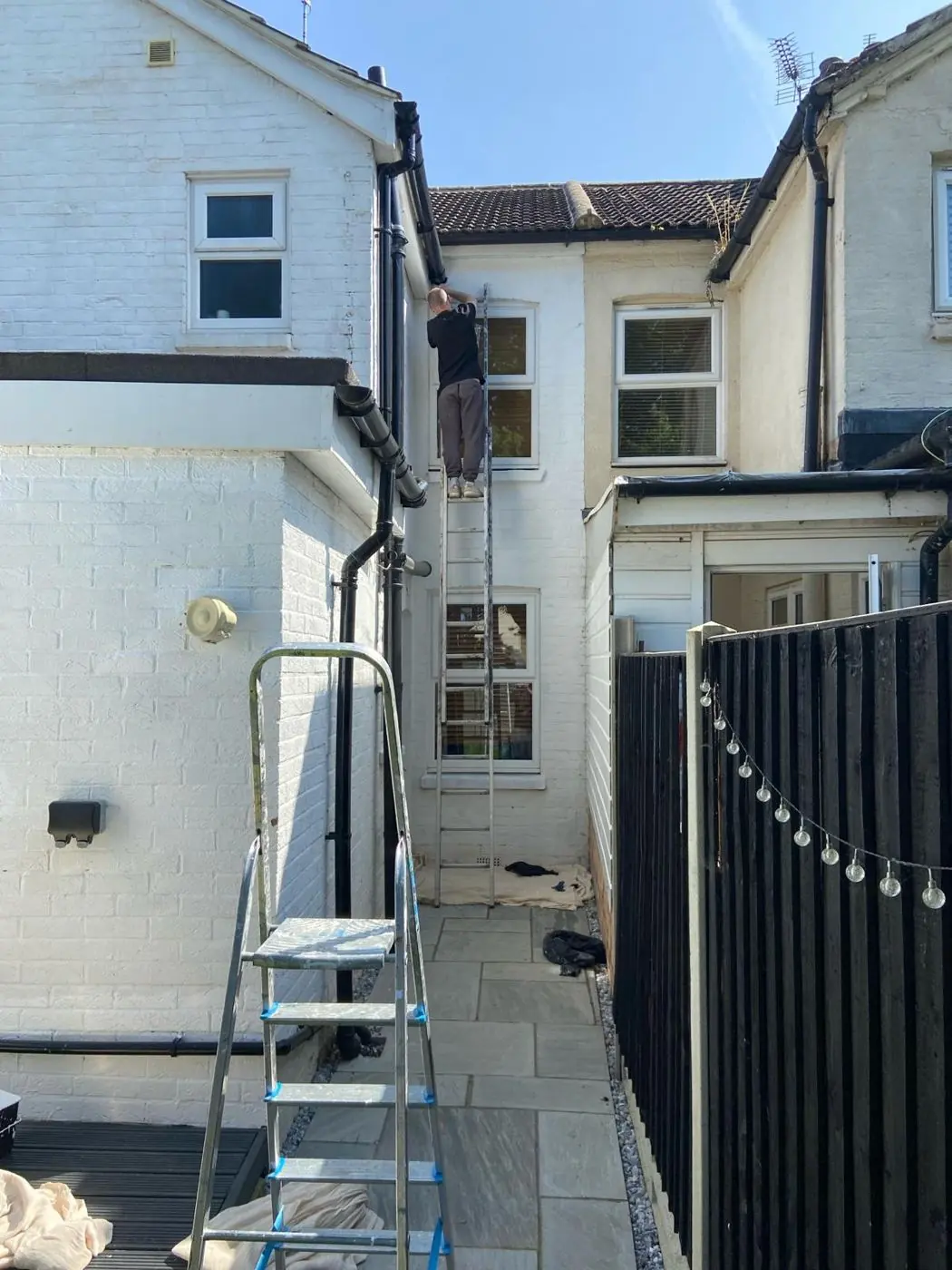
Gutters and downpipes on modern estate houses are usually plastic, and they pick up the same traffic grime as the boards behind them. They can be cleaned at the same visit, and painted where the material is suitable. Soffit vents and fixings are masked rather than painted shut. Doing the whole roofline at once also means the access equipment only goes up once, which matters on detached homes with long eaves runs. Bargeboards on gable ends get the same treatment as the fascias, since their exposed ends are where water tends to get in first on houses of this age.
If any boards have already been replaced with uPVC on your house or the one next door, Dean will say which timber sections remain and quote for those alone. The full sequence of preparation and products is on our main fascia and soffit painting page. Grange Park is within our coverage from Northampton, and roofline work is often paired with the rest of the outside of the house.
Last updated by Dean, DH Painter & Decorator.