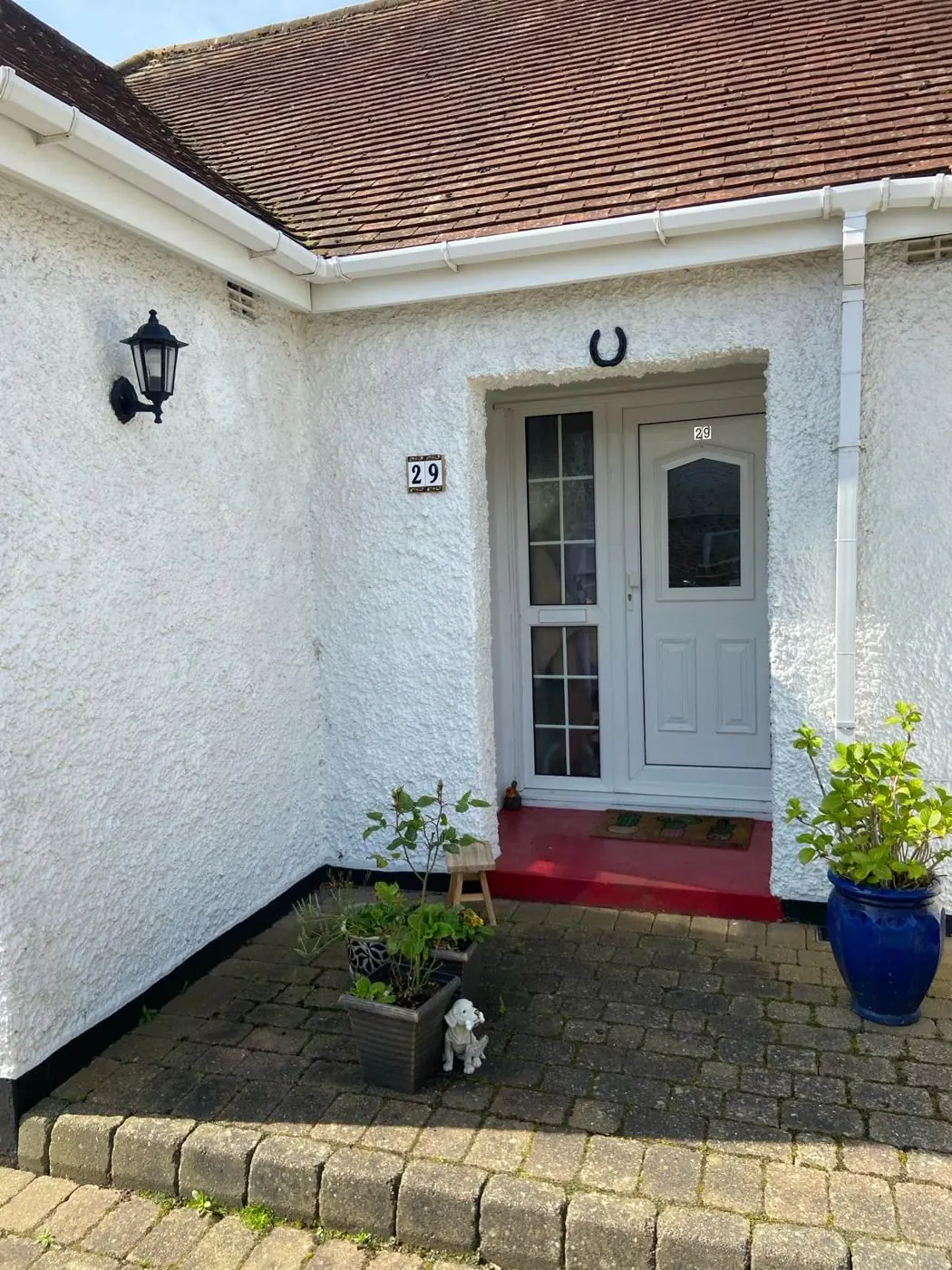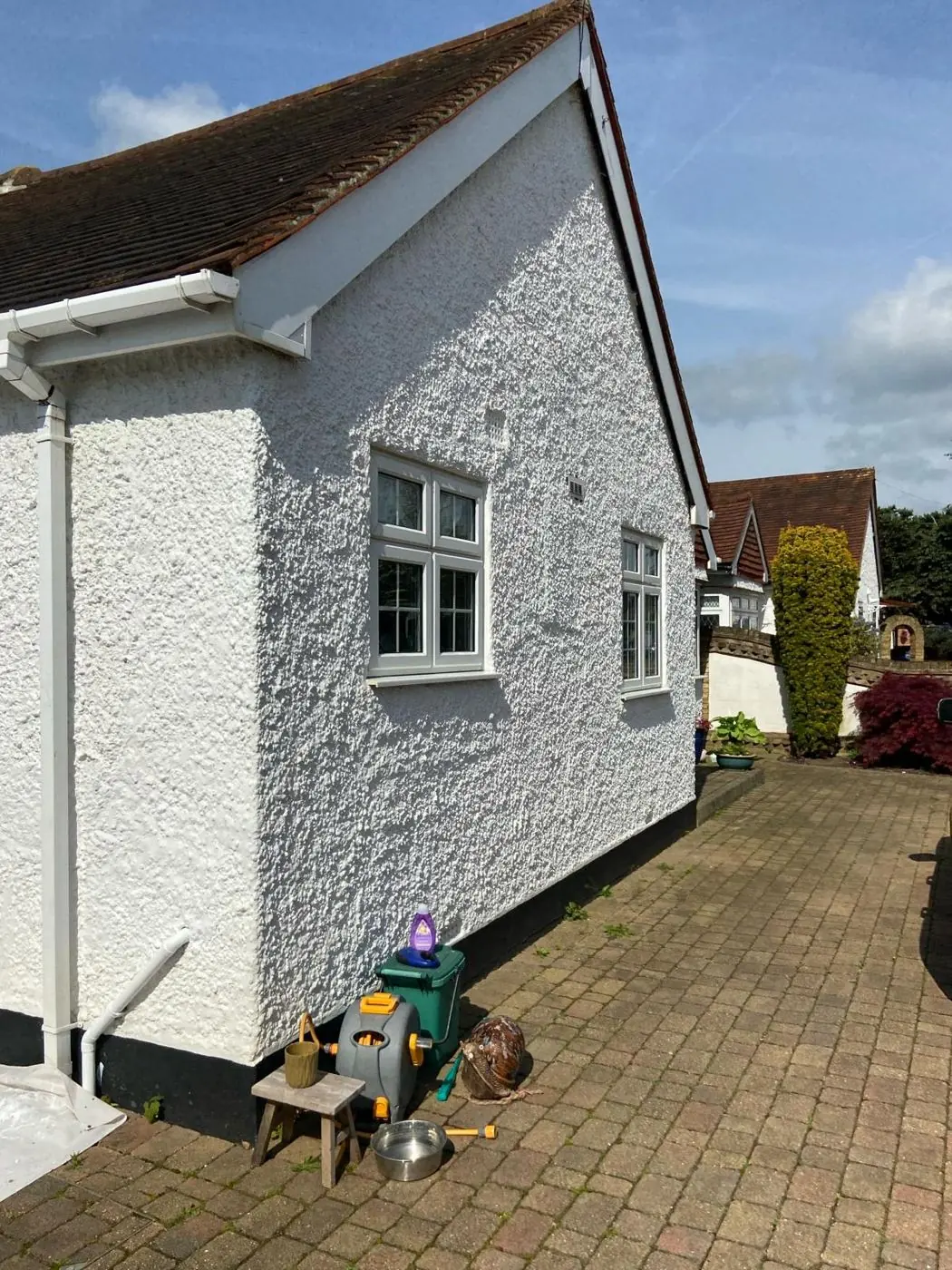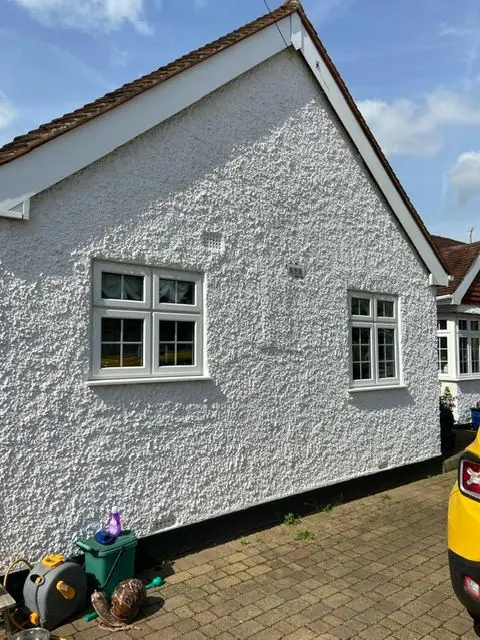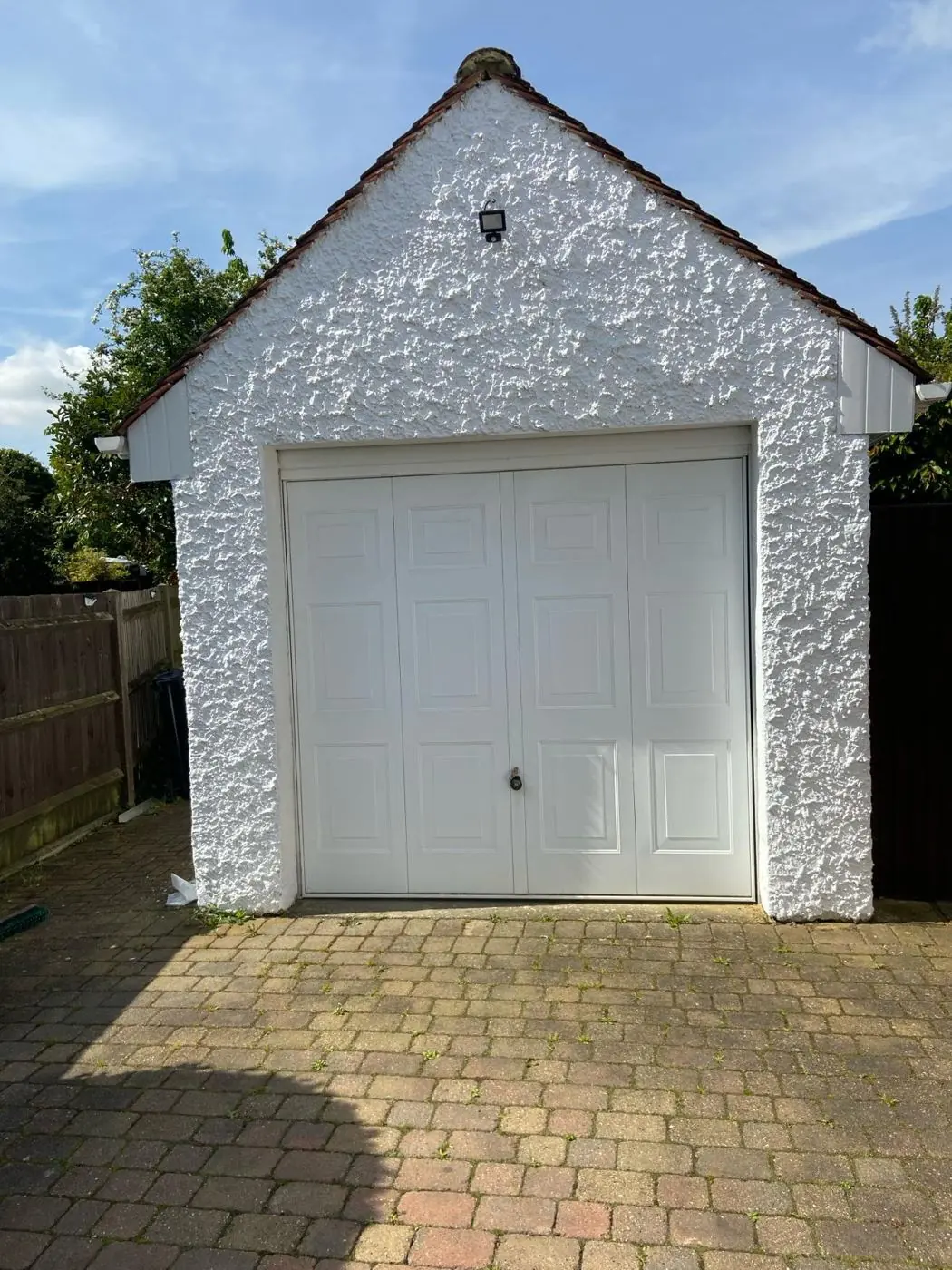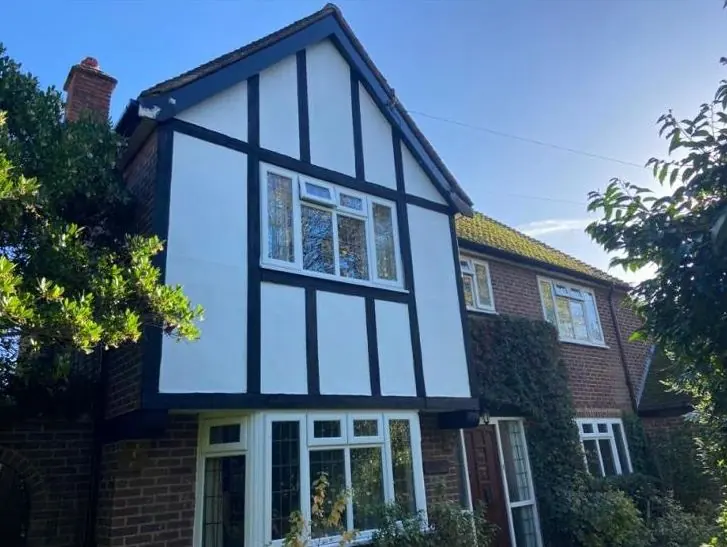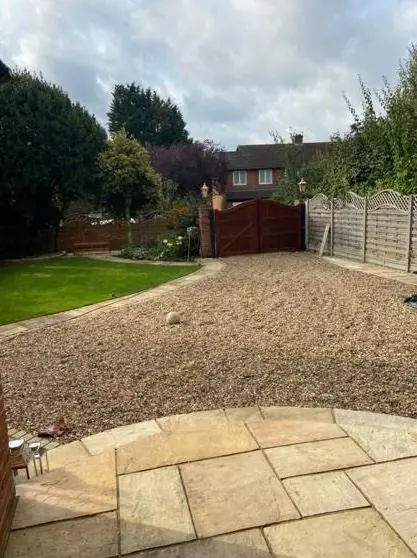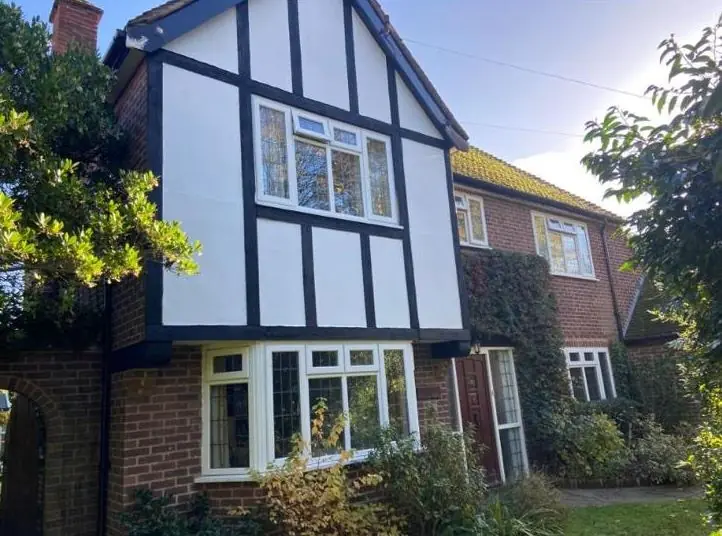
DH Painter & Decorator paints the outside of homes in Hardingstone, the NN4 conservation village just beyond the A45, 1.8 miles from Northampton town centre. Dean covers it from our Northampton base and prices joinery, render, rooflines and boundaries after seeing the house, because a 17th-century cottage and a modern estate home need very different work.
One parish, three kinds of exterior
For outside work, Hardingstone parish holds three quite separate kinds of house. The conservation area’s stone and brick houses, many dating from the 16th to the 19th century, line The Green, Back Lane, Coldstream Lane and the older part of High Street. On the western approach and Glebe Avenue are 1930s and 1950s semis and bungalows set back behind front gardens. South of the core are newer streets such as Tate Grove, Bay Willow Crescent and Sparrowhawk Crescent.
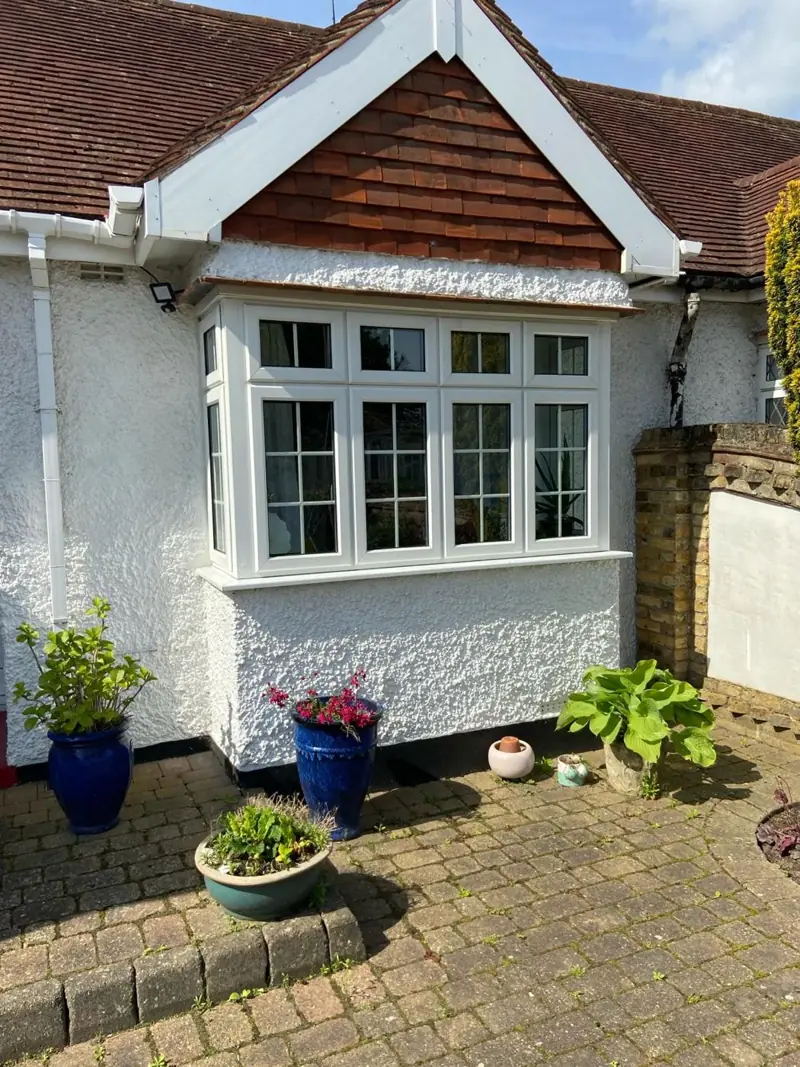
In the old core most fronts are bare coursed ironstone, limestone or red brick, and those stay unpainted. The outside paintwork there is joinery, stucco and render: sashes, casements, doors, door cases and the occasional rendered front. On the 1930s and 1950s homes it is a conventional repaint of brick, render and timber. On the newer streets it tends to be front doors, garage doors and timber details, with uPVC simply cleaned. We price each on its own terms rather than applying one specification across the village.
Ladders on a High Street with no front gardens
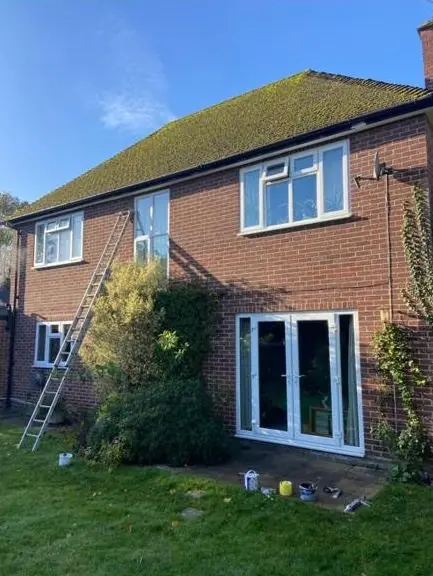
Many early Hardingstone houses were built right up to the footway. Between the church and Coldstream Lane the High Street has narrow footways or none, the eastern end is crowded with parked cars, and there are double yellow lines through the core. Power cables are strung overhead along High Street, The Green and Back Lane too. Together that shapes how a front elevation gets painted:
- Ladder and tower positions are agreed at the quote, keeping well clear of the cables and leaving room for people on foot.
- Barriers go out whenever someone is working above the footway, and nothing is left standing at the kerb when we step away.
- The van may be parked some distance off, so materials come in by hand in small loads.
- Where a tall stone or brick boundary wall fronts the house, sheets and masking protect its copings, since those walls are meant to stay bare.
Shade, sap and damp ground
Hardingstone’s springs and its trees both work against drying paint. Many frontages sit under mature trees protected by Tree Preservation Orders, such as the pines and holm oaks at 39 Back Lane, the holm oaks at Hardingstone House and the churchyard limes and yews. Walls and joinery under those canopies stay shaded and slow to dry, and they gather sap and green growth. Before painting we wash affected surfaces with a fungicidal treatment, give it time to work, and only start once the timber and render are properly dry.
In practice that means booking shaded elevations for the warmer, drier months and leaving longer gaps between coats than on an open garden plot further south. Our guide on when to schedule exterior painting explains the timing in more detail.
Listed houses, thatch and colour changes
The conservation area contains 41 listed buildings. Any of those needs listed building consent for material alterations, so a new exterior colour, or stripping historic joinery back to bare wood, should be checked with West Northamptonshire Council before work begins. We can tell you what to ask, and we keep to like-for-like until you have an answer.
Thatch survives on four roofs, Cobbler’s Cottage at 80 High Street among them. Near thatch we never use heat guns or open flame to strip paint; old coatings come off by hand or chemically instead. Where original timber sashes or casements remain, the appraisal favours repair over replacement, so we allow for splice repairs and oil or linseed-based paints on those windows. For the method we follow on every house, see our main exterior painting service, and our Hardingstone area page compares the village’s house types.
Last updated by Dean, DH Painter & Decorator.