DH Painter & Decorator hangs lining paper and wallpaper in Semilong (NN2), 0.8 miles north of the town centre. Dean strips old paper, lines walls that have moved over more than a century, and hangs patterned paper on chimney breasts and feature walls with matched joins.
Walls that have had over a hundred years to settle
Most Semilong houses went up between the 1880s and the 1910s, so their plaster is well over a century old and rarely flat. Lime plaster has been patched after rewiring and new radiators, chimney breasts have been opened and blocked again, and walls between rooms bow or lean slightly where the house has moved. Under several layers of old paper you often find blown patches that only show once the paper is off.
Paper shows all of that more honestly than paint does. A patterned paper hung straight onto a wavy wall picks up every shadow, and a join that crosses a hollow opens up within a few weeks. So on most Semilong walls the work starts with stripping back, cutting out and refilling anything loose, then hanging a lining paper. Once the lining has dried, it gives the finishing paper an even surface to grip and hides the minor ripples that filler alone won’t fix. If you only want a smooth wall to paint, lining paper on its own is a sound finish too.
Chimney breasts, alcoves and the back room
A terrace of this age typically has a front room and a back room, each with a chimney breast flanked by alcoves. That breast is the obvious place for a feature paper, and it is also the hardest wall in the room to paper well. Old breasts are seldom plumb, the corners are often rounded or chipped, and the soot staining that sometimes bleeds through emulsion can come through paper too unless the wall is sealed first.
We set the pattern from the centre of the breast so it sits symmetrically above the fireplace, wrap the returns into the alcoves cleanly and work out where a pattern will drop across an uneven ceiling line before the first length goes up. With a large repeat, that planning decides how much paper you need to buy, so we measure before you order.
Paper in owned homes, paint in let rooms
Semilong is heavily rented, with a large number of HMOs and private lets. Our honest view is that wallpaper rarely suits a let bedroom. Tenants change often, walls take knocks, and a damaged length of paper is harder to patch invisibly than a scuffed patch of emulsion. For landlords we usually suggest lining paper painted with a durable emulsion: it hides poor plaster and is quick to touch up between tenancies.
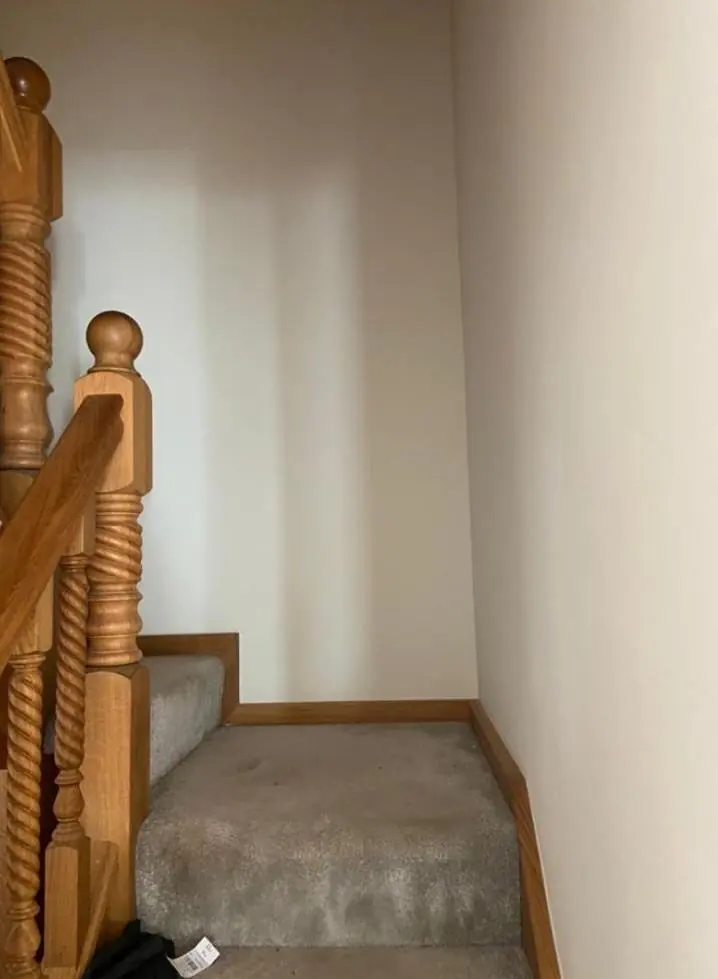
Where paper earns its place is in owner-occupied houses, where someone plans to stay and wants a hall, a front room or a bedroom to look finished. The three-storey terraces bring their own challenge: long drops on stairwells, where each length is heavier and the pattern has to stay true over a greater height. We set up stable platforms over the stairs before starting, so the paper goes up in one clean run rather than being pieced together.
Not over damp
Paper and damp do not mix. Houses with cellars, such as those agents describe on Stanley Street, can have moisture in the lower part of the hall and kitchen walls, and the lower streets towards the Nene valley can show it in ground-floor rooms. Paste on a damp wall will not dry properly, and mould can develop behind the paper. We check lower walls with a meter before agreeing to paper them, and if a wall is not ready we’ll say so and suggest a breathable paint finish there instead. Non-woven papers, which can be peeled off dry later, are a sensible choice on ground floors that have dried out.
The wallpaper hanging service page lists the paper types we hang and how stripping and preparation work. Painting and other work in the area is listed on the Semilong page.
Last updated by Dean, DH Painter & Decorator.