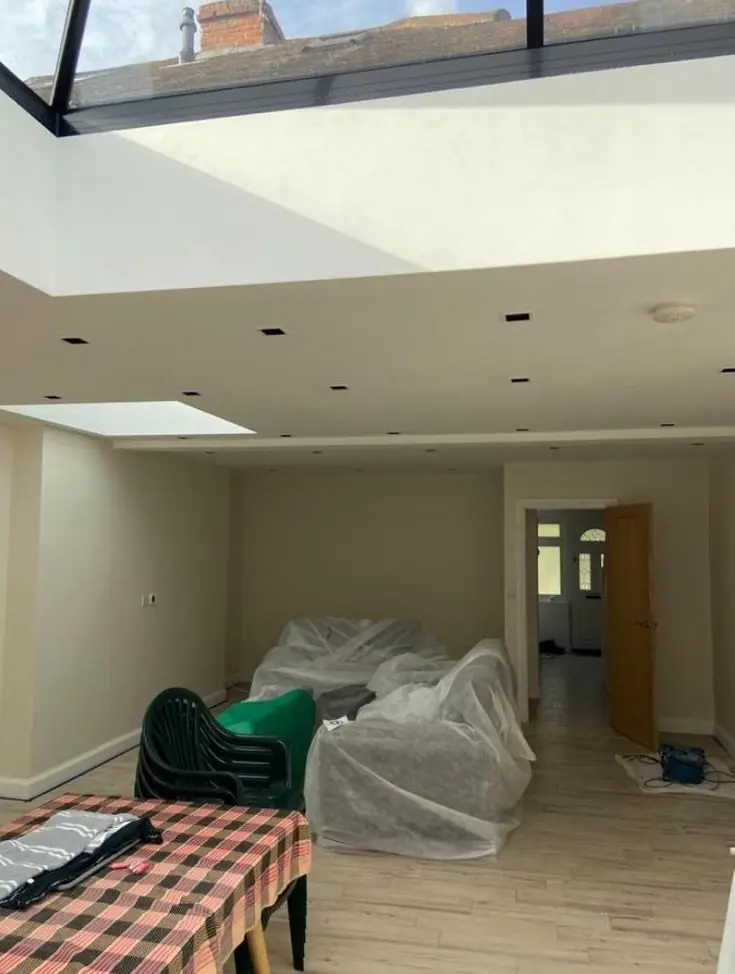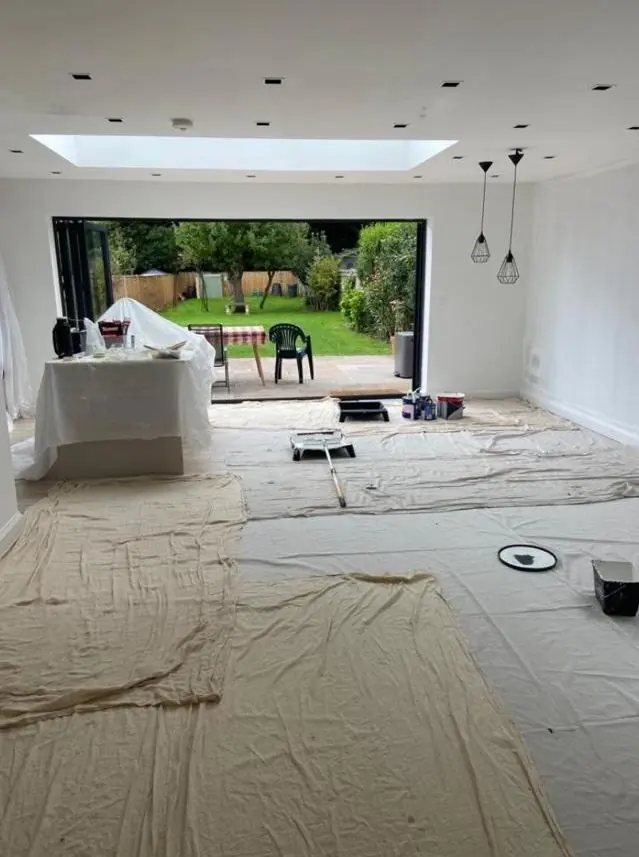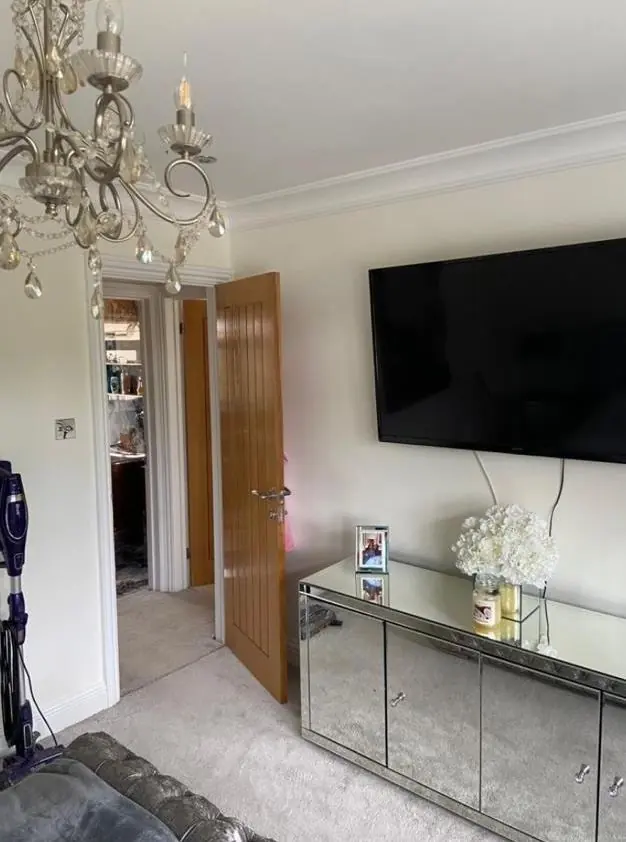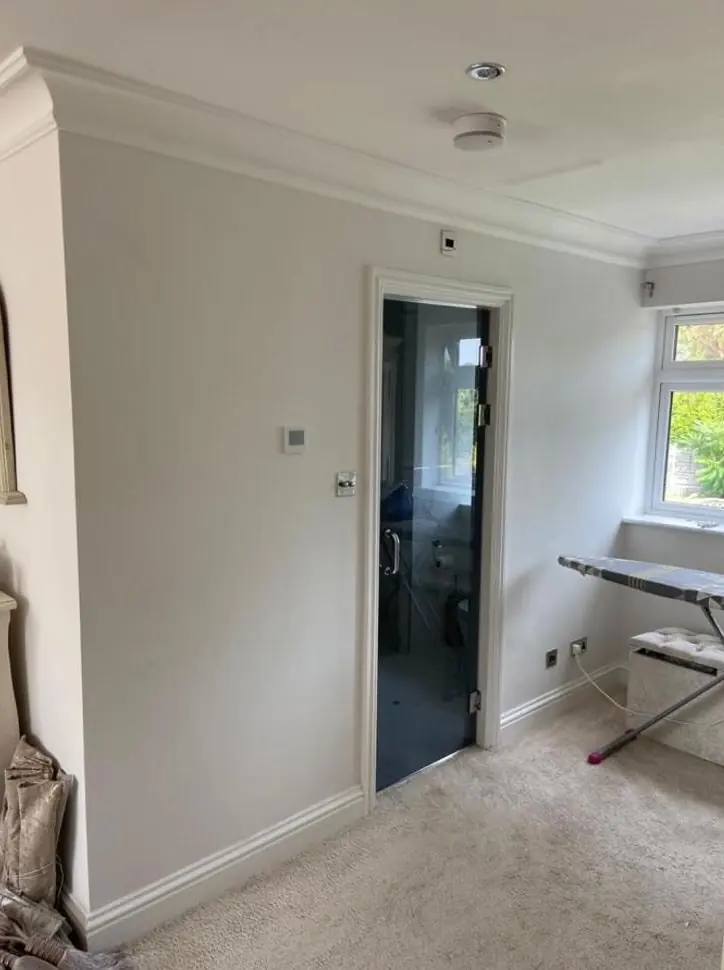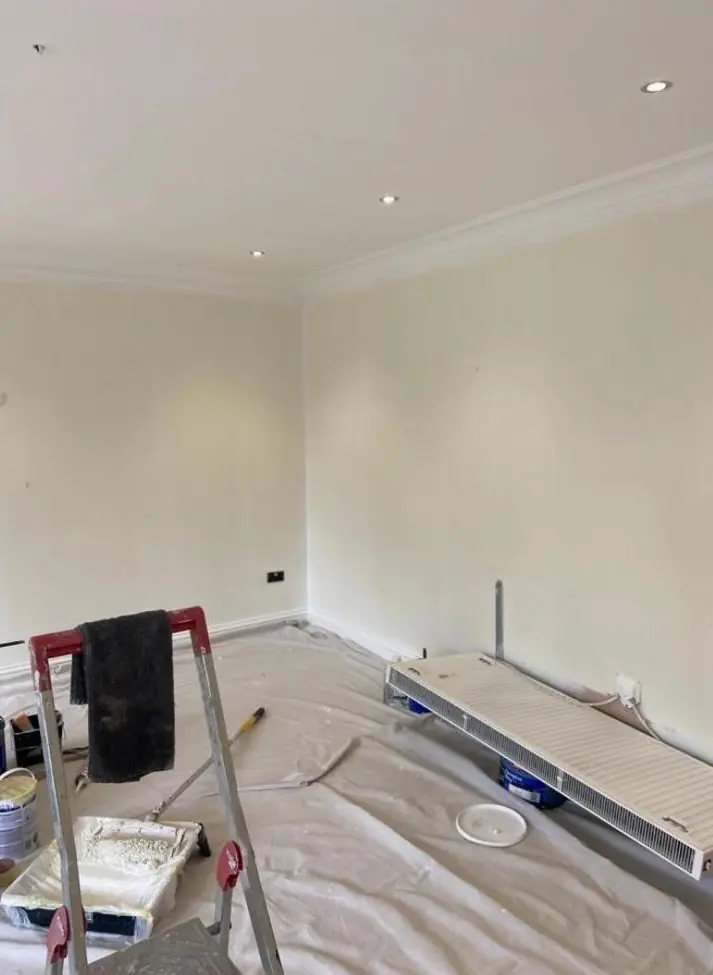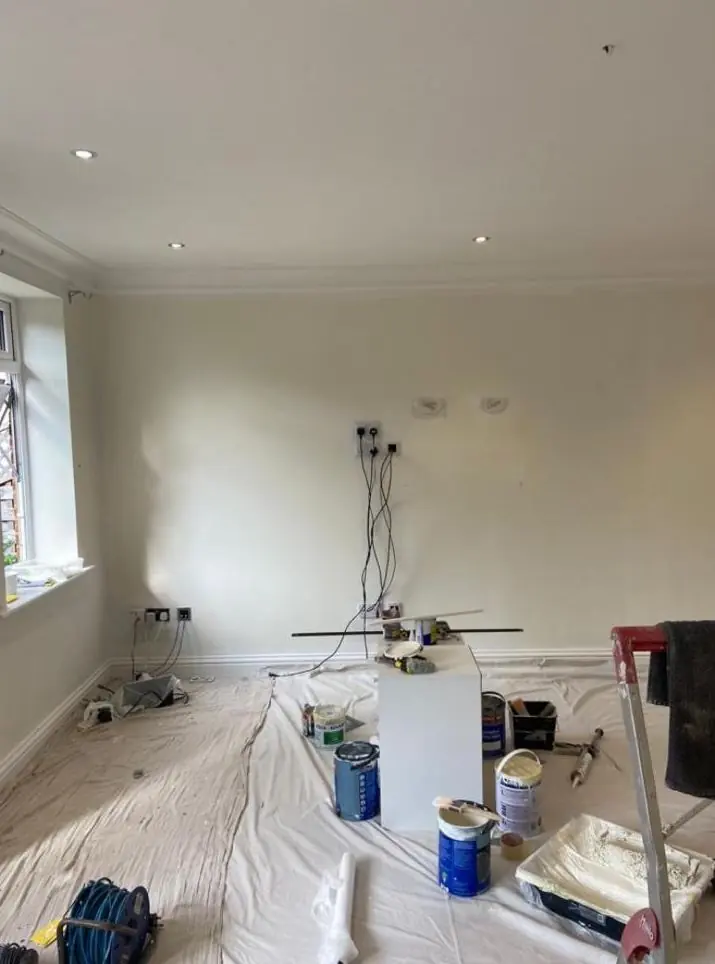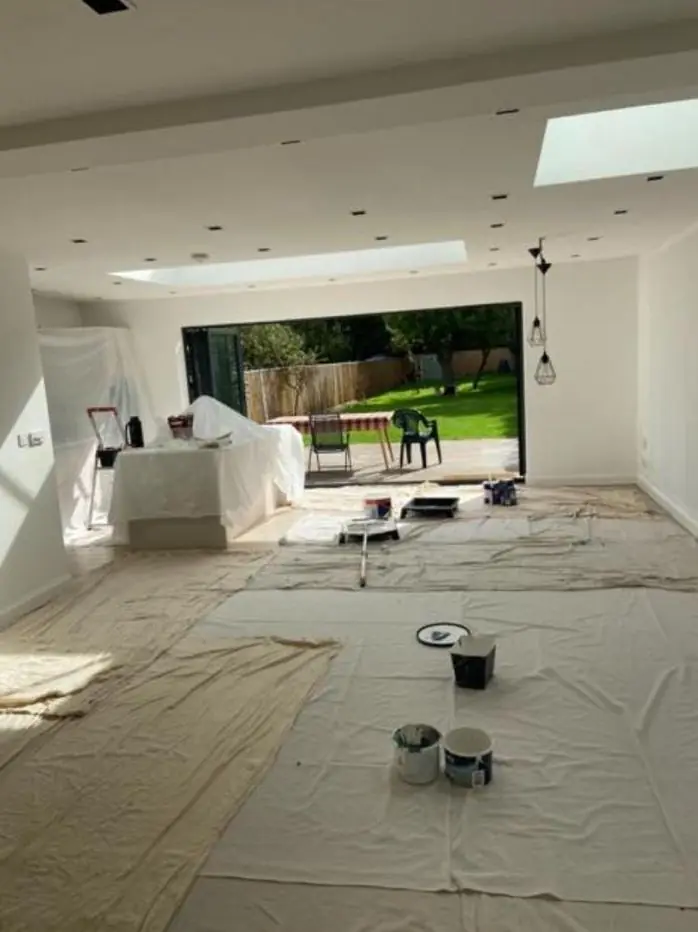
We paint new plaster in Semilong, NN2, after re-skims, refurbishments and conversions of terraced houses into flats or shared homes. Semilong lies 0.8 miles north of the town centre, and quotes are free.
Where the new plaster comes from
Semilong’s housing is mostly late Victorian and Edwardian terraces, with some earlier three-storey houses on the Barrack Road edge. In a neighbourhood like this, new plaster usually comes from one of three kinds of work:
- A tired terrace being refurbished, with blown lime plaster hacked off and walls and ceilings re-skimmed.
- A family house being converted into flats or HMO rooms, with new partitions and boarded ceilings.
- A single room patched after rewiring, a chimney breast change or damp work.
The local neighbourhood plan flags the loss of family homes to HMOs as a particular Semilong issue, and an Article 4 Direction from 2012 means new HMO conversions in the ward need planning permission. That decision sits with the owner and the council. Our part comes after the plasterer, once the walls are ready to decorate.
New skim on old walls
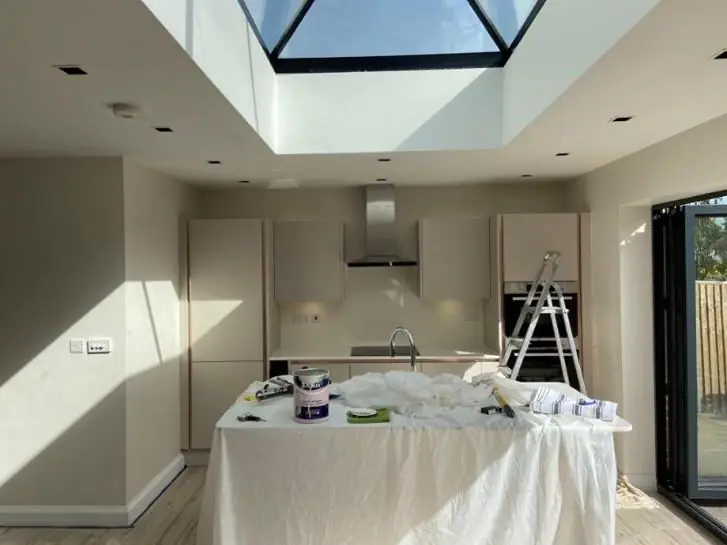
When a Victorian wall is re-skimmed, the new gypsum sits over older backgrounds: brick, earlier lime or older patches. It does not always dry at an even rate. You can see this as dark patches that stay after the rest of the wall has gone pale pink. We do not mist coat until the whole wall is evenly pale, including reveals, corners and behind where radiators will go.
The mist coat is a thinned, breathable emulsion that soaks into the plaster and gives the next coats something to grip. Vinyl or silk paints go on only after that, and in many rooms they are not needed at all. Our guide to the mist coat explains the method in more detail.
Drying in houses with cellars
Plenty of these terraces have cellars, and lower walls next to them can pick up damp, as can ground floors on the streets falling towards the river along St Andrews Road. If new plaster has gone onto a wall that is still damp behind, a sealed finish traps the moisture and blisters. In these cases we test with a meter, allow longer for drying, and keep the lower wall in a breathable paint even after it has dried out.
Conversions: lots of new surfaces at once
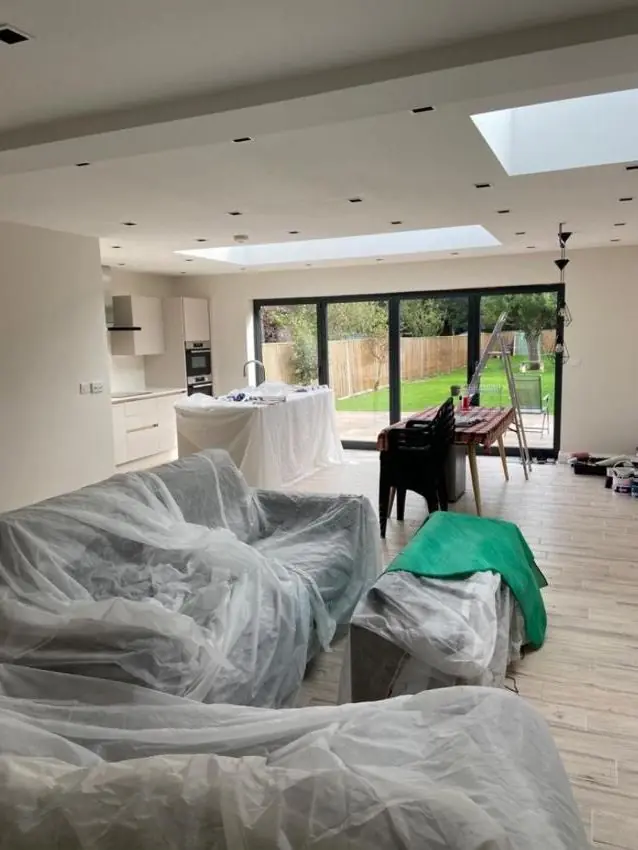
A conversion to flats or rooms often leaves a whole house of fresh plaster, new studwork, boarded ceilings, new doors, frames and skirtings, all at once. We work through it in a set order:
| Stage | What we do |
|---|---|
| Check | Moisture readings on every room, especially cellar-side and ground-floor walls |
| Seal | Mist coat on all new plaster and board, knotting and primer on new timber |
| Snag | Fill and caulk the cracks, nail pops and trowel marks the mist coat reveals |
| Finish | Two coats on walls and ceilings; hard-wearing finishes on doors and skirtings in shared areas |
In a property that will be let, we suggest a durable, wipeable finish for halls and stairs, and a light neutral in the rooms, which is easy to touch up at each relet. The general approach is on our new plaster and extension painting page.
Access during building work
Semilong’s terraces open onto the street, parking is tight along Semilong Road and Marriott Street, and with building work under way there may be a skip or a builder’s van already taking the space outside. We arrange timings with the builder so the dust work is finished before we start, and we bring materials through the house once the floors are protected. For the other services we cover locally, see our Semilong area page.
Last updated by Dean, DH Painter & Decorator.