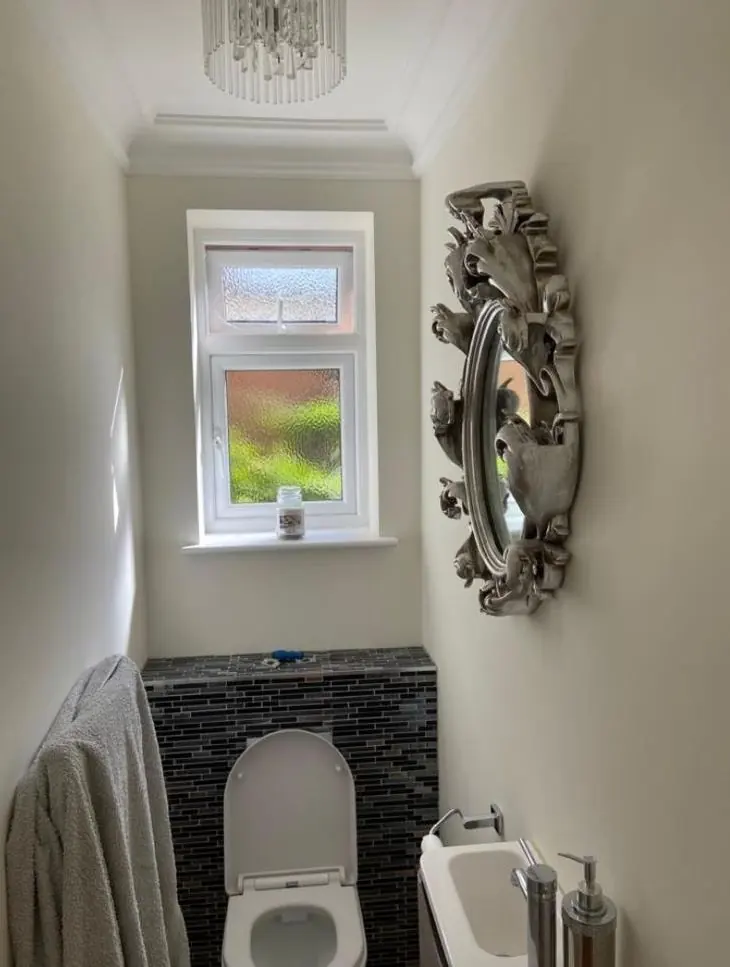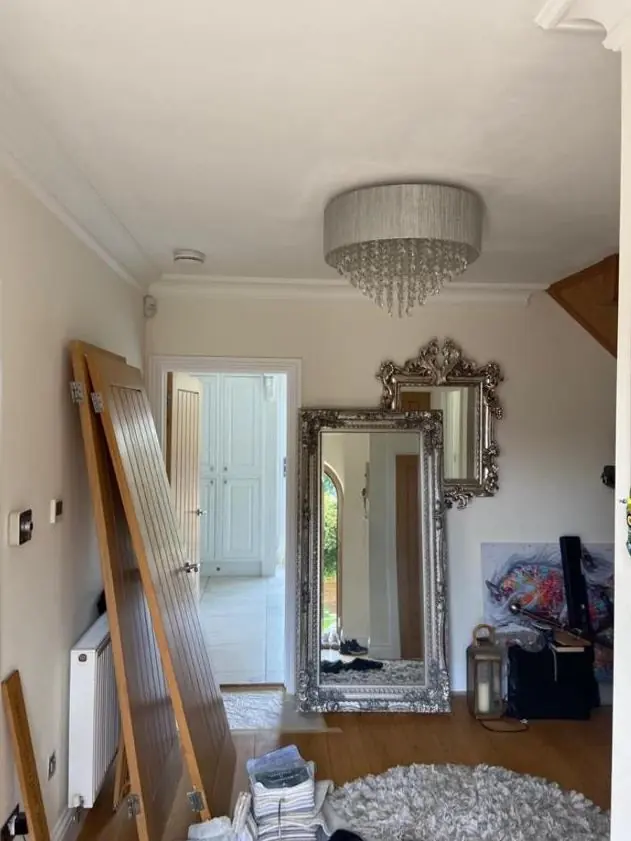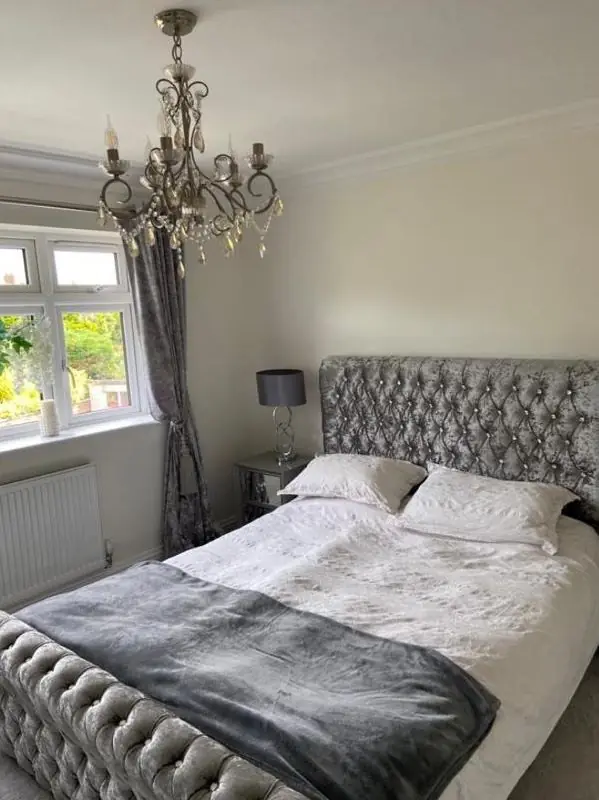
Dean hangs wallpaper in Queen's Park, NN2, a 1.3-mile hop north of the town centre. Most of the houses are Victorian terraces with bay lounges and separate dining rooms, where uneven original walls usually need stripping, repair and lining paper before the chosen paper goes up.
Picture rails, chimney breasts and the separate dining room
A lot of the houses on Edinburgh Road, Stanhope Road and Balmoral Road still have the plan they were built with: a front lounge with a bay window, a dining room of its own behind it and a hall with the stairs. Rooms like that were designed for paper. A picture rail gives a natural line to stop a pattern below and paint the frieze above, and a chimney breast with two alcoves is an obvious place for a bolder design without papering the whole room.
The dining room, often the darker middle room of a terrace, suits a warmer or more textured paper than a front lounge would. In the bay lounge, people often keep the walls plain and paper just the chimney wall, so the window bay doesn’t fight the pattern.
Walls that were never meant to be flat
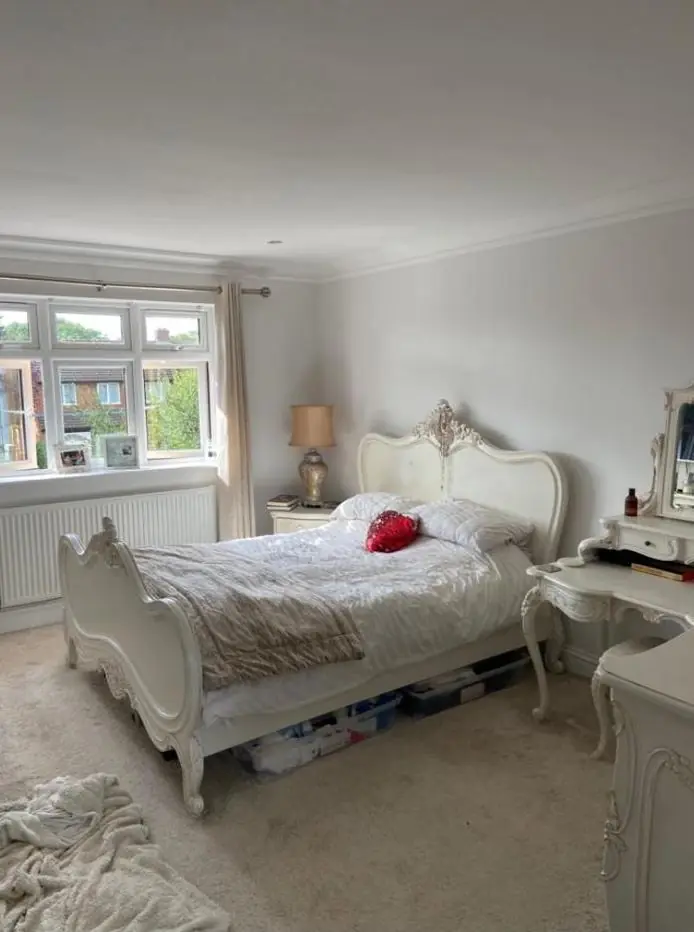
Over a century, plaster in these terraces has been patched, chased for cables and skimmed in sections, so walls bow, corners lean and the ceiling line drifts. Paint hides a little of this; wallpaper shows all of it, especially a geometric or striped design where a wandering corner turns into a visible slant.
So the routine in Queen’s Park is usually:
- Strip whatever is already there, which in houses this age can be several layers, including paper that’s been painted over.
- Repair the plaster underneath, because steaming old paper off lime plaster sometimes brings loose patches with it.
- Hang lining paper, cross-lined (at right angles to the finish paper) on the poorer walls, so the joints never sit on top of each other.
- Set out the finish paper from a plumb line, usually centred on the chimney breast, and let any pattern mismatch fall in the least visible corner.
Lining adds a day to most rooms, and Dean will tell you at the quote whether a wall can do without it. The full process from stripping to trimming is on our wallpaper hanging service page.
Turning the corners of a bay
The bay window is where a papering job in these houses is won or lost. Each angle of the bay is a short length with an internal or external corner on both sides, and the reveals around each window need the paper wrapped and cut cleanly against the frame. With a patterned paper, the match has to carry round three or four small facets without drifting, so we plan the order of drops before cutting the first length.
If the bay ceiling is lower than the main room, or the picture rail steps at the bay, we agree with you where the paper stops. Sometimes the neatest answer is to paper the main walls and paint the bay in a matching colour.
Long drops in the townhouses and stairwells
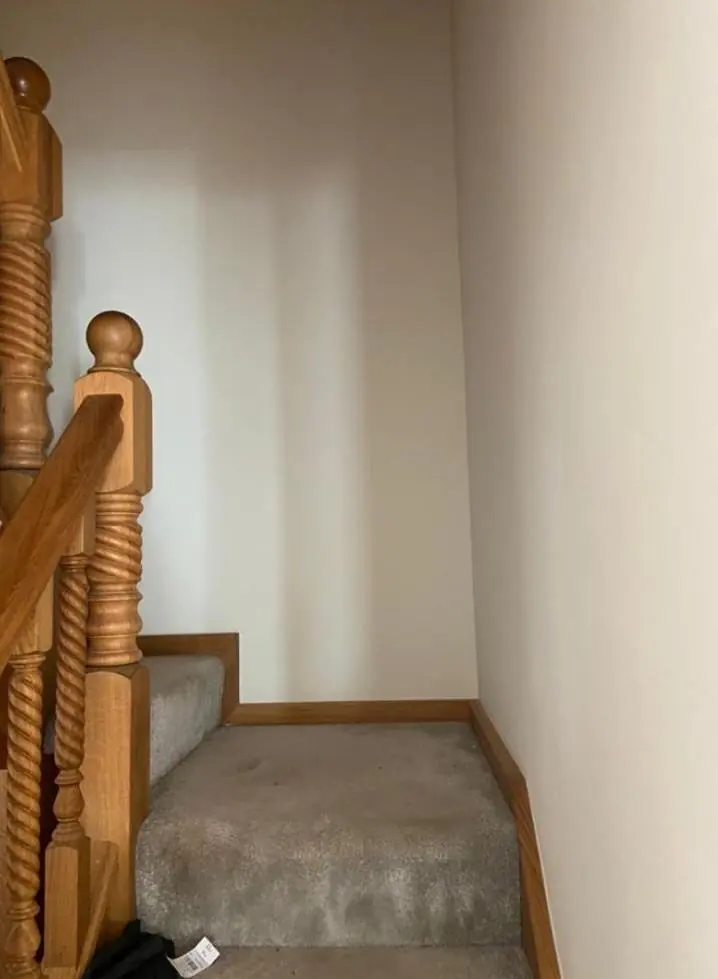
South of Queen’s Park, the three-storey townhouses lining the road towards the Barrack Road junction have tall stairwells. A full-height drop in a stairwell can use most of a roll per length, with the bottom cut on a slope following the stairs, so the waste is higher and the hanging needs a stair platform rather than a stepladder balanced on a tread. We measure these on site and work out rolls with a margin for pattern repeat, so you aren’t left a roll short from a discontinued batch.
If you’ve not hired a decorator for papering before, our guide on choosing a painter and decorator covers what to ask. For the rest of the work we do in the area, see the Queen’s Park page.
Last updated by Dean, DH Painter & Decorator.