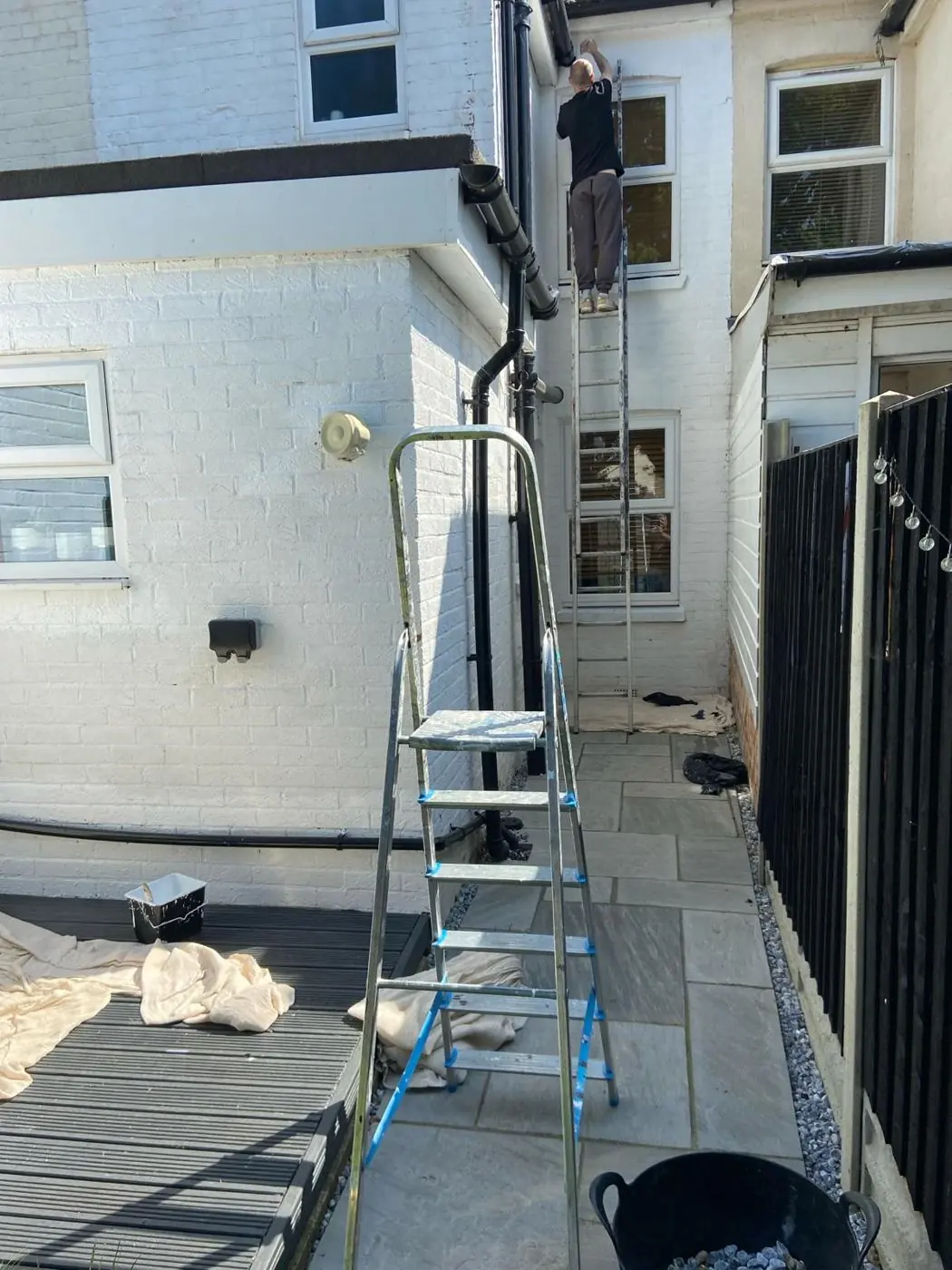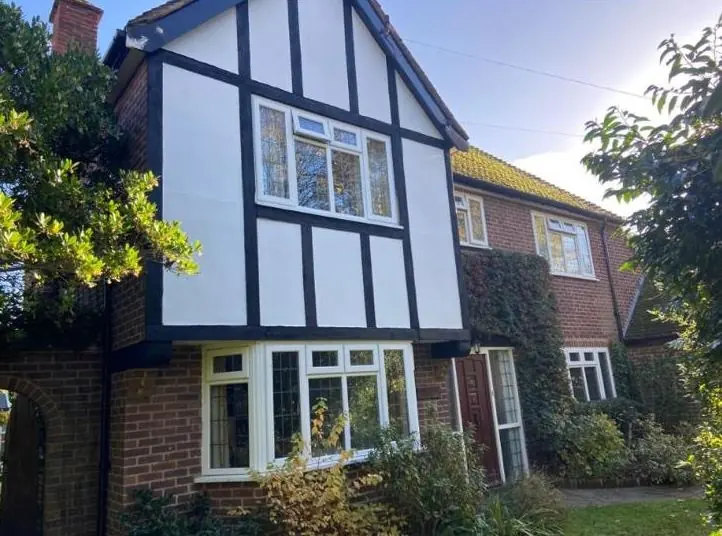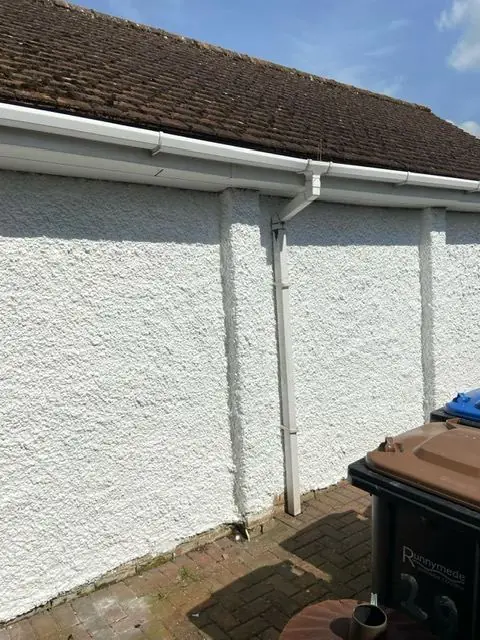
Dean paints fascias, soffits, bargeboards and gutters on homes across Semilong, NN2, under a mile north of Northampton town centre. Terrace eaves here are low runs shared along each row, so planning access and neighbouring boundaries matters as much as the paint.
A roofline shared by the whole row
Semilong’s late Victorian and Edwardian streets are long east-west terraces, and the eaves run continuously from one house to the next. Your fascia board might end halfway along a gutter that carries on over a neighbour’s front. That has two practical effects. First, the line between freshly painted and weathered timber is very visible from the street, so we finish at a clean break such as a downpipe or party wall rather than mid-board. Second, it often makes sense for neighbours to have their stretch done at the same visit, which saves setting up twice on a busy street.
Shared eaves also mean shared problems. A gutter joint leaking over the boundary will rot both fascias, and flaking paint on one board tends to sit right next to sound paint on the other. When we survey, we look along the whole visible run, not just your section, and tell you if a fault next door is affecting your timber. That gives you something concrete to raise with a neighbour or a landlord, which matters in a street where many houses are rented and the owner may not live nearby.
Most terrace eaves are fairly low, which keeps the work within ladder reach on two-storey houses. Three-storey houses, which an agent listing places on St Pauls Road, are a different matter and may need a tower.
The bargeboards on St Paul’s Terrace
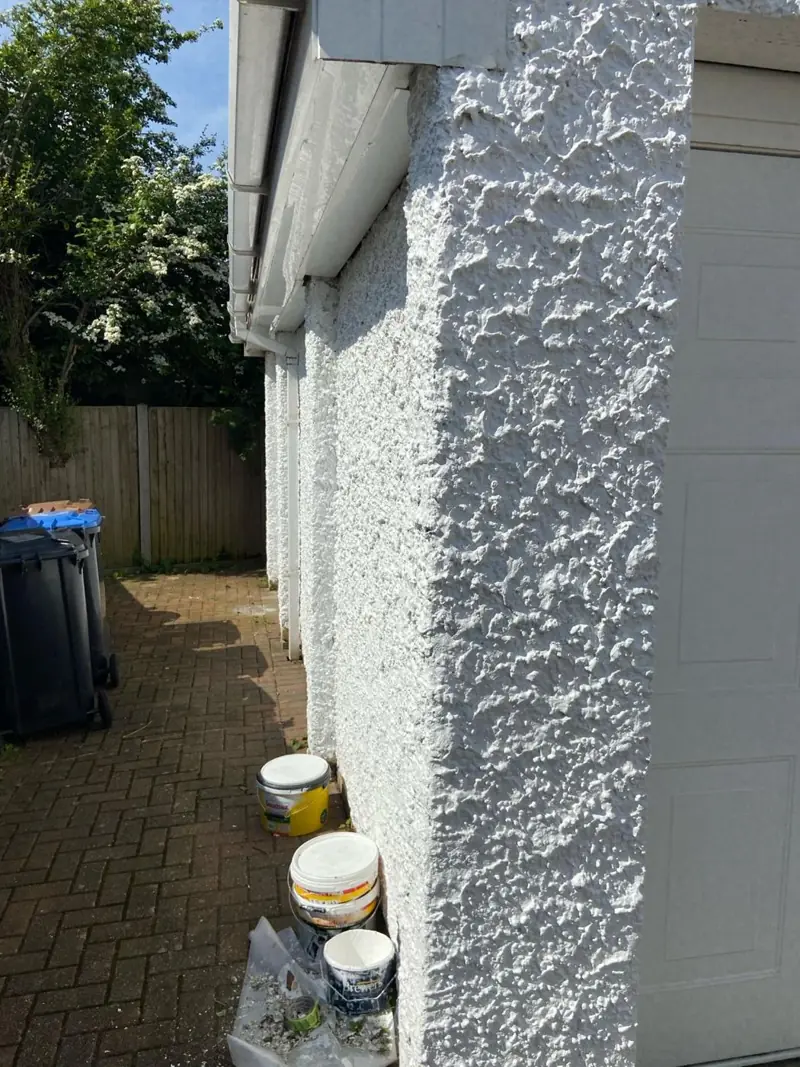
On Kingsthorpe Road, within the Barrack Road Conservation Area, the c.1884 range called St Paul’s Terrace has ornamental bargeboards and an eaves frieze over rubble-stone walls. This is far more intricate than a plain terrace fascia, and it needs a different approach from a plain fascia:
- Hand-scraping rather than aggressive sanding, so carved edges are not rounded off.
- Checking joints and the underside for soft timber, since water sits in cut-outs.
- Brushing primer and gloss into every recess, which takes far longer than a flat board.
- Keeping paint off the stone below, which is bare and should stay that way.
With the terrace sitting in protected Barrack Road territory, we keep to the existing colours unless the council has approved new ones.
Ladders and gutters on a car-filled street
Semilong Road has narrow, uneven footpaths and is lined with parked cars, and Marriott Street is similar. Footing a ladder at the front of a terrace can mean working with the base close to parked vehicles and pedestrians. We check the street ahead, ask neighbours about moving cars where needed, and keep a clear route along the pavement.
At the back, a mid-terrace house usually has no side access, so the ladder comes through the house. We protect the floors first. While we are up there, gutters, brackets and downpipes are painted at the same time, and we will point out any joints that are dripping onto the brickwork below, because on houses with cellars and damp-prone lower walls, a leaking gutter can do more harm than the flaking paint.
Timber, uPVC or both
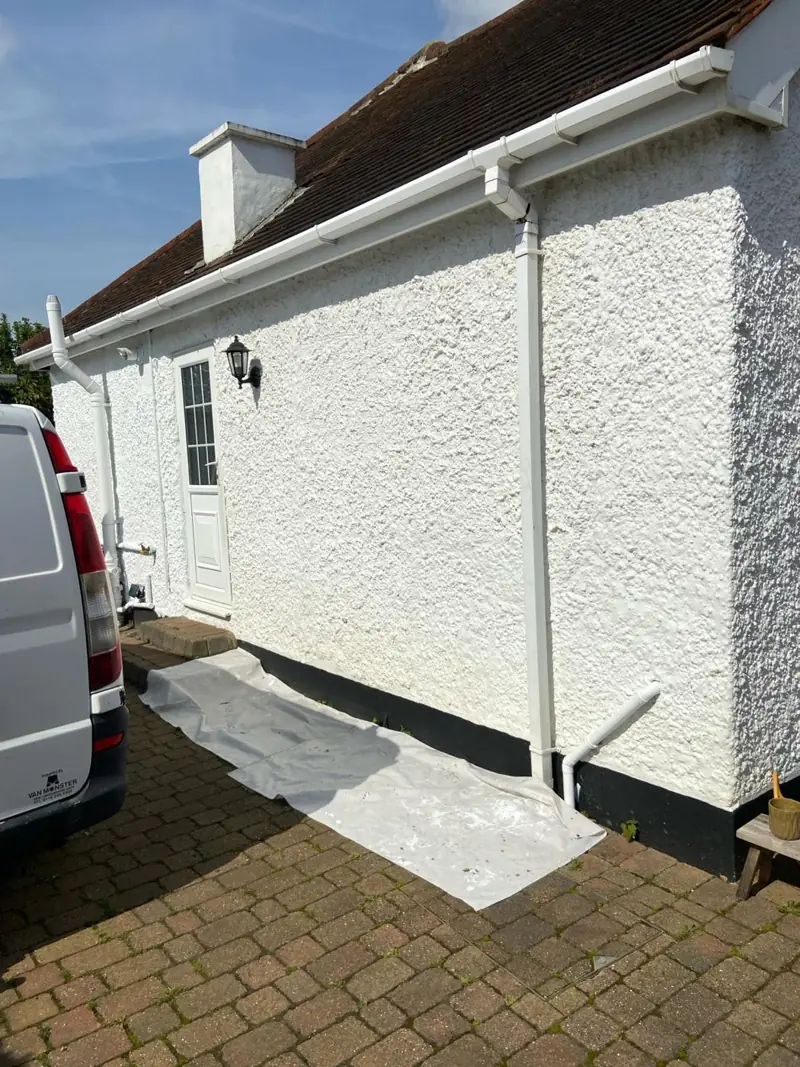
Along a single Semilong row you may find painted timber fascias next to uPVC boards fitted over or in place of the originals. Timber needs scraping, priming and two coats; uPVC is cleaned and, only if you want a colour change, coated with a primer made for plastic. The full process is on our fascia and soffit painting page.
For a sense of what affects the price, from access to the number of boards, see the painter and decorator cost guide, and the Semilong page covers the neighbourhood as a whole.
Last updated by Dean, DH Painter & Decorator.