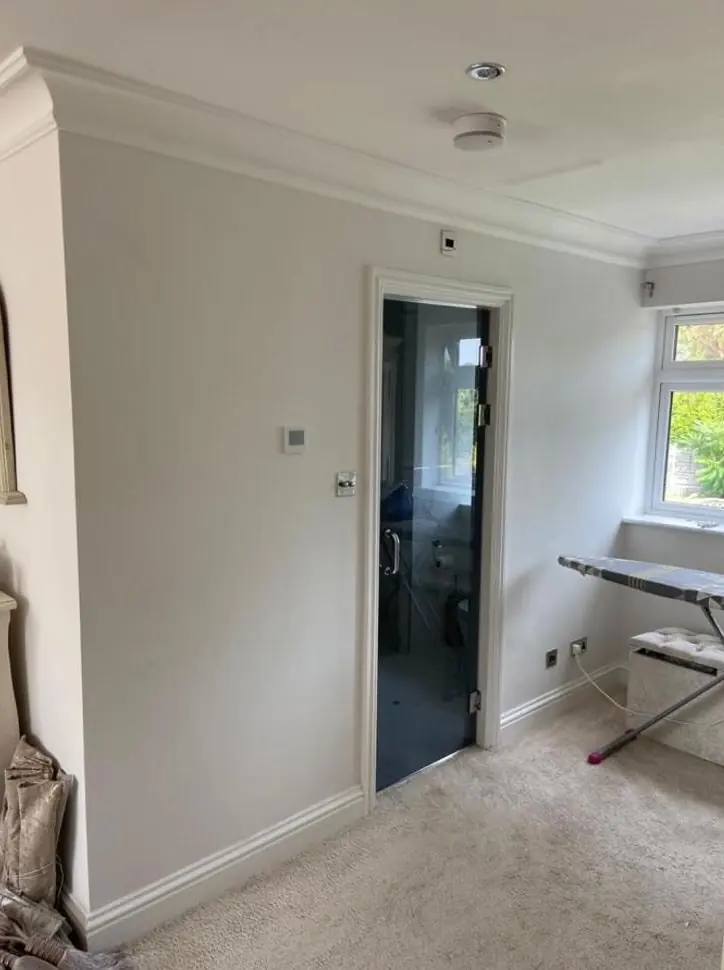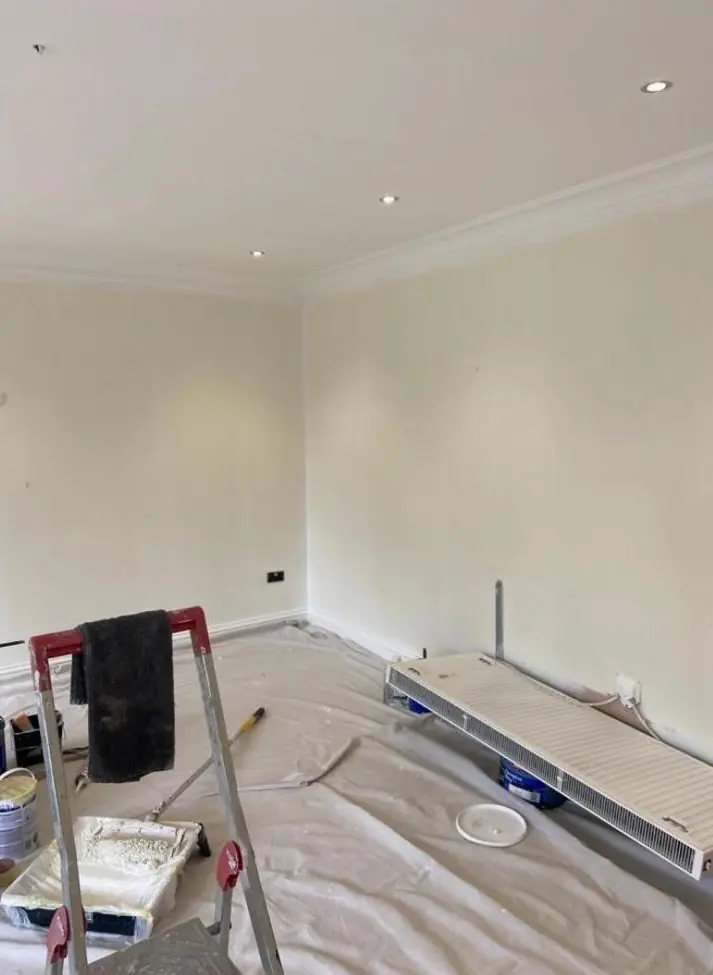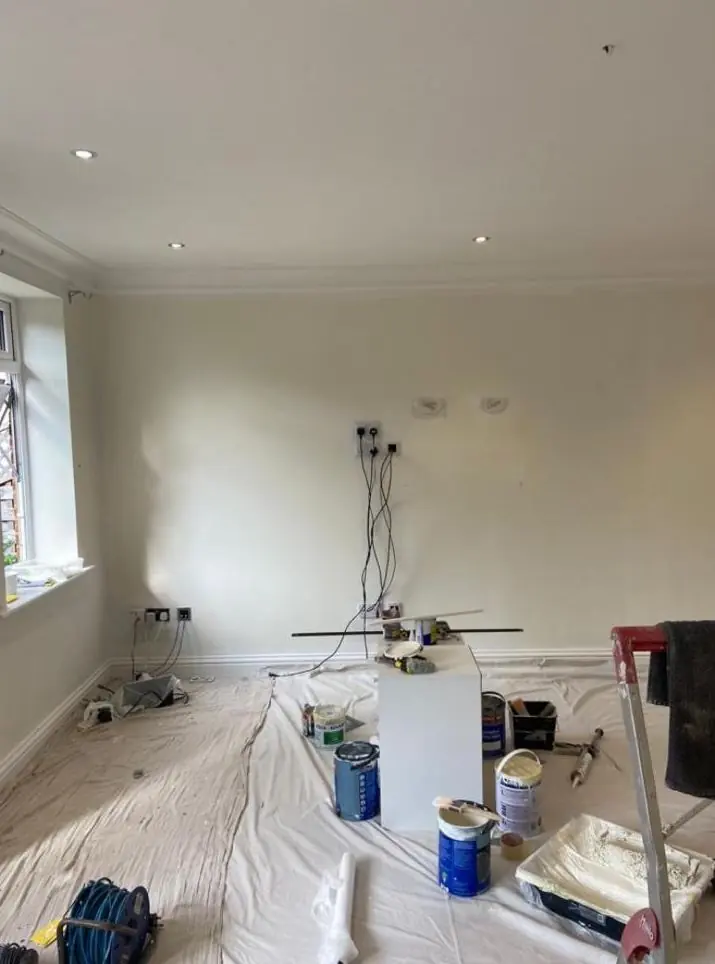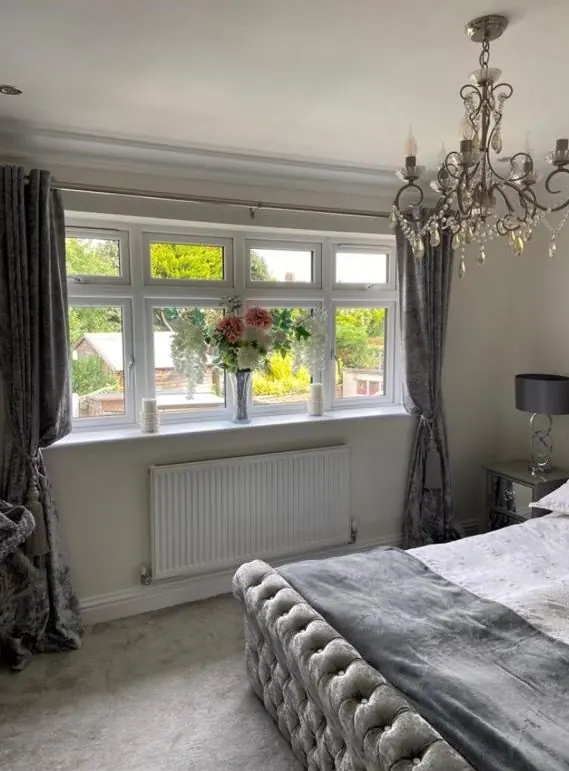
Dean at DH Painter & Decorator strips, lines and hangs wallpaper in St James, NN5, around 0.6 miles west of Northampton town centre. Most papering here is in Victorian terraces with out-of-true walls and chimney breasts, plus newer homes off Weedon Road where walls are flatter but joints still need care.
Why paper behaves differently in a Jimmy’s End terrace
The terraced streets of St James End, known locally as Jimmy’s End, went up from the mid-19th century for workers at the district’s shoe factories and engineering works. The houses were built quickly and plainly, and over a century of alterations has left walls that wander. Chimney breasts lean slightly, corners drift out of square, and ceilings dip towards the middle of the room. Wallpaper exposes all of that more readily than paint does, because a printed pattern gives the eye a straight line to measure the wall against.
That is why we treat the first length as the most important one. Rather than starting in a corner and trusting it, Dean drops a fresh plumb line at the focal point, usually the chimney breast in a front room, and works out from there so any unavoidable mismatch ends up somewhere you won’t look, such as behind a door or in the corner above it.
Lining paper on old plaster
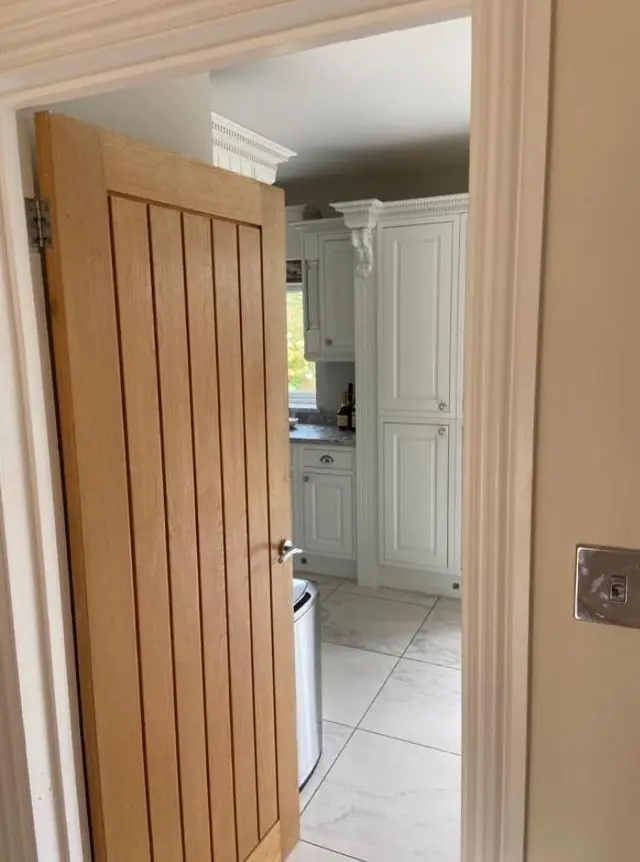
Removing old paper in these houses often reveals what it was hiding: blown patches, filled cracks from earlier rewiring, and layers of paint over paper over paint. Some of the earliest local cottages, excavated on the St James’ Road frontage, had ironstone and limestone walls, and wherever older solid walls survive the plaster can be soft and uneven.
On walls like this we fill, sand and then hang lining paper, normally cross-lined horizontally so its joins never sit under the joins of the finish paper. It gives a consistent surface for the decorative paper to bond to and stops minor cracks telegraphing through. If plaster is crumbling or coming away in sheets once the paper is off, you’ll hear about it before anything goes up, because that is a plasterer’s job first.
Damp ground floors and the paper you choose
Parts of St James Road, Harlestone Road and Weedon Road lie in the River Nene floodplain, and some ground-floor walls on those streets still show salts or residual moisture. Vinyl-faced papers trap that moisture against the wall, which can lead to lifting seams and mould behind the paper. On those walls we’d steer you towards a breathable paper, or suggest keeping the lower walls painted and papering upstairs instead, and we check readings before agreeing to hang anything.
Newer houses, flats and lettings
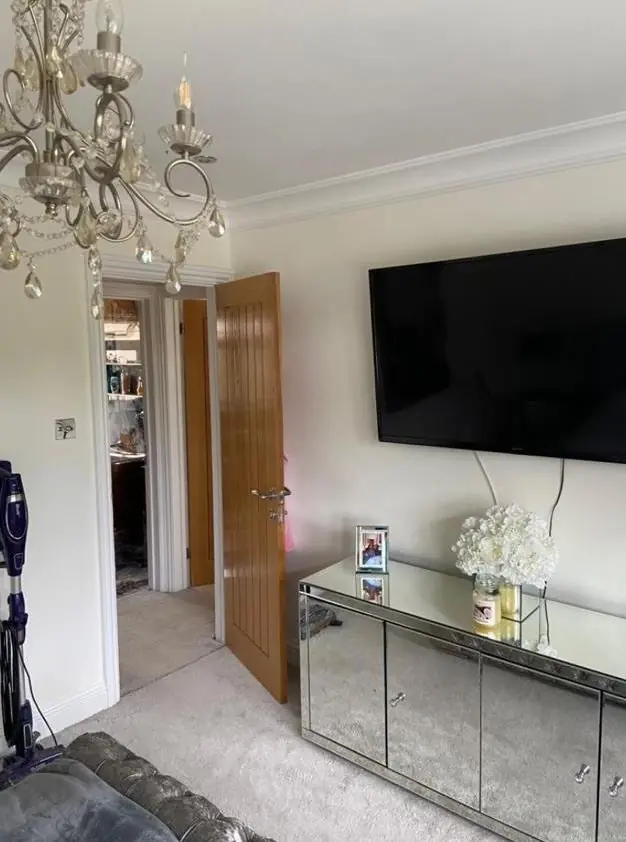
The homes built in 1999-2000 on the old Express Lift Abbey Works site, and modern townhouses around Bruce Street, Ross Road and Countess Road, have plasterboard walls that are flatter and squarer. Papering is quicker there, though board joints and screw heads need spotting and sanding first or they show as faint lines under thin papers.
| Property in St James | Typical wall | What we usually recommend |
|---|---|---|
| Victorian terrace, upstairs | Old plaster, uneven | Fill, cross-line, then patterned or plain paper |
| Victorian terrace, floodplain ground floor | Possible salts and moisture | Moisture check, breathable paper or paint |
| 1999-2000 or modern townhouse | Plasterboard | Spot joints, size, hang direct |
| Rented flat or terrace | Mixed, often scuffed | Feature wall only, paint elsewhere for easy turnover |
For let properties, which agents advertise in St James on the strength of its closeness to the station and town centre, a single papered feature wall with the rest painted is usually the practical answer, since painted walls are quicker to refresh between tenants.
Our full process for stripping, sizing and pattern matching is on the main wallpaper hanging in Northampton page, and the St James area page covers the district’s housing in more detail.
Last updated by Dean, DH Painter & Decorator.