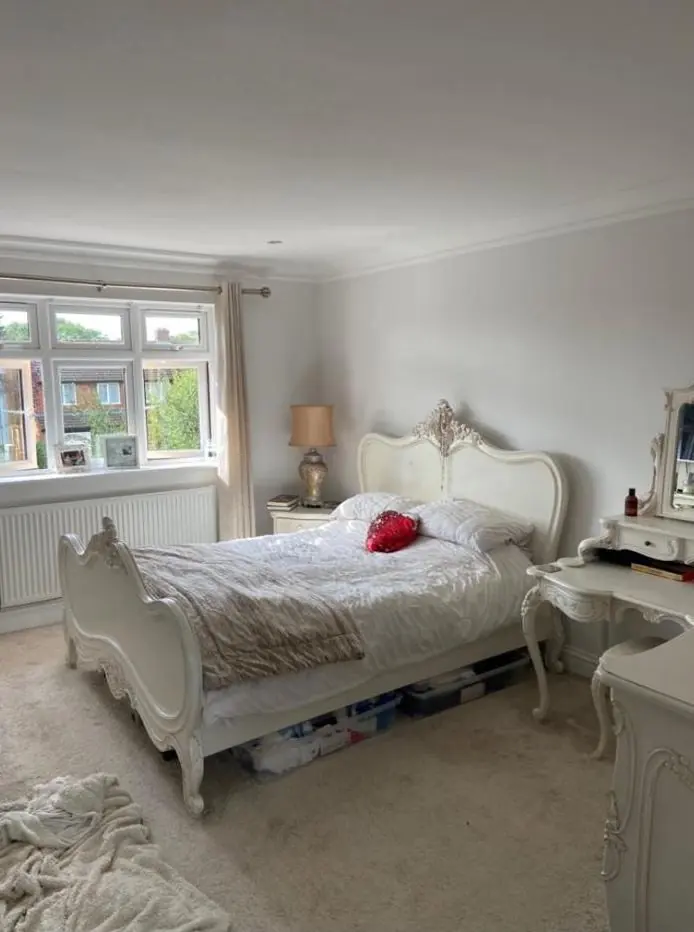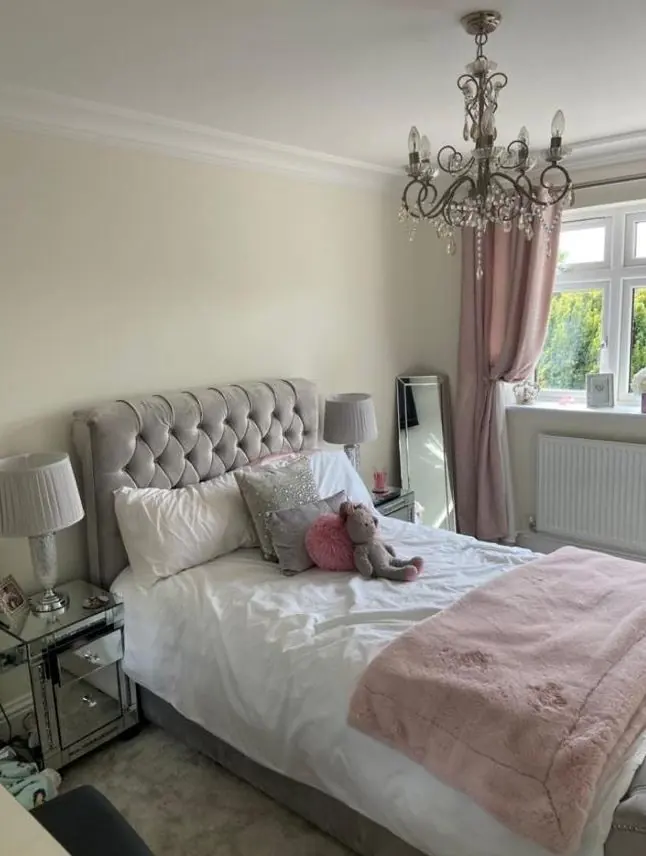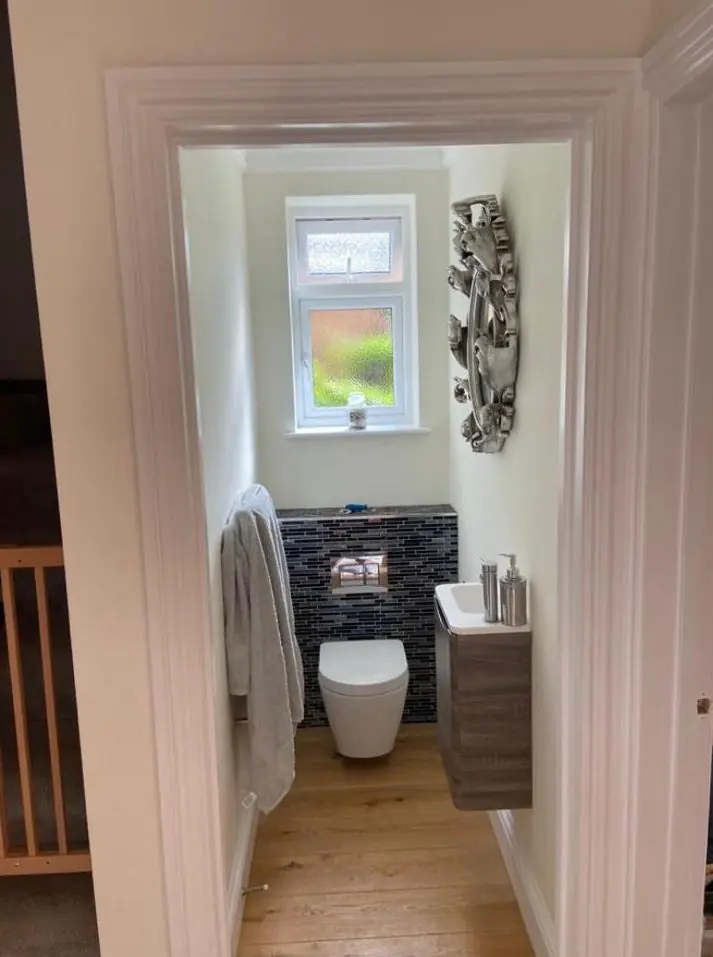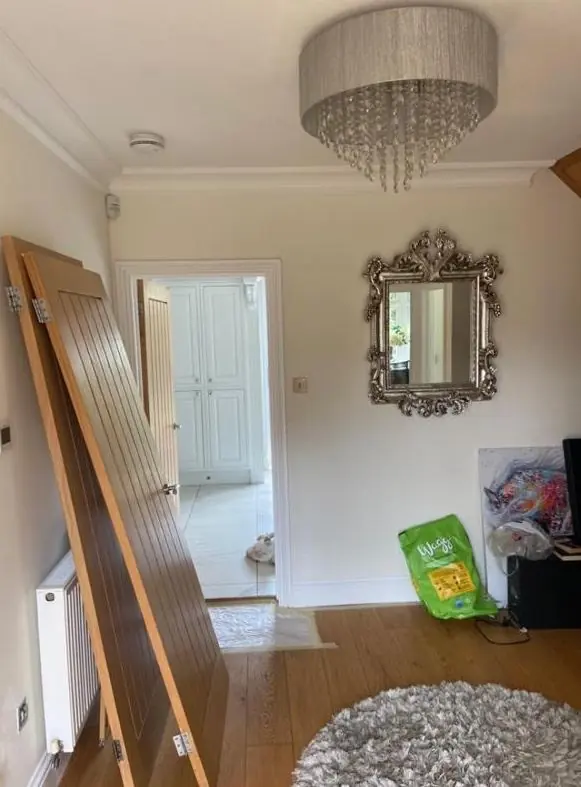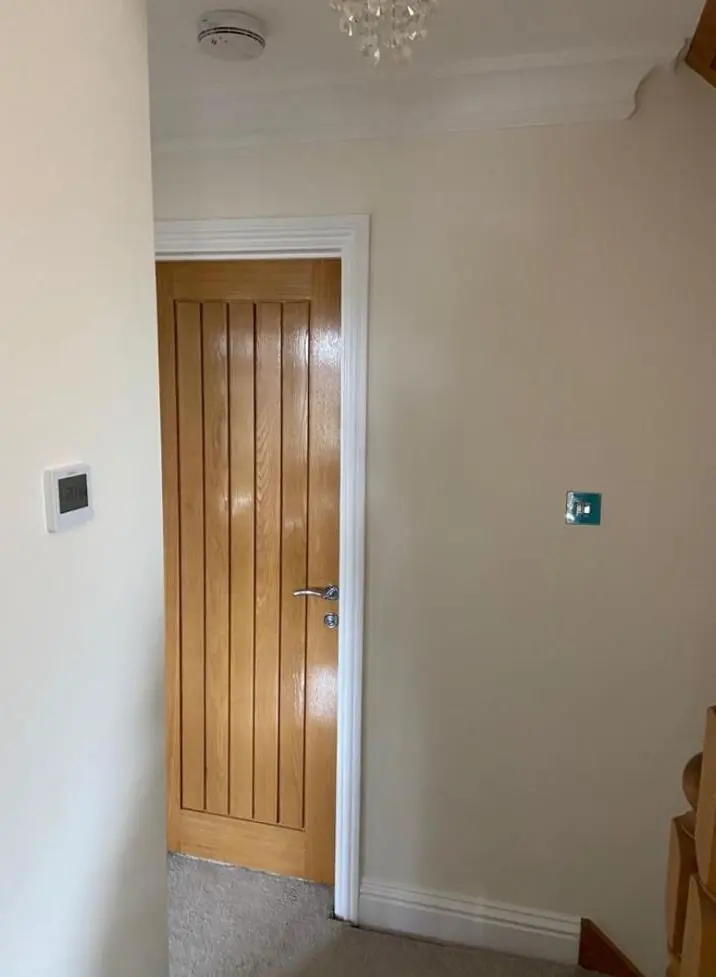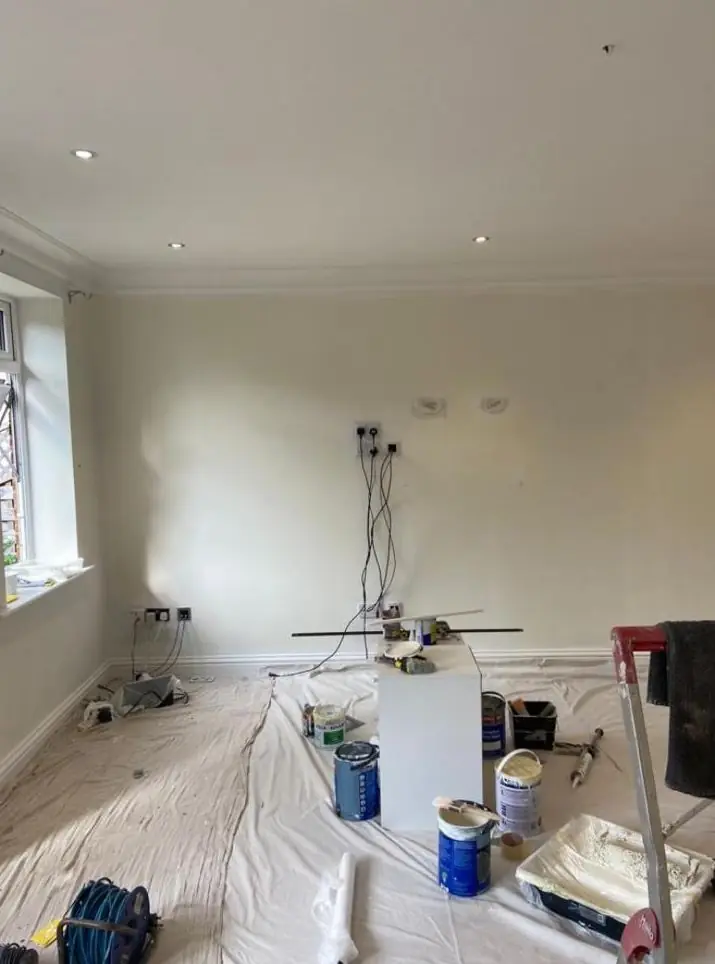
Dean hangs wallpaper in Kingsley homes, a mile and a half from the town centre in NN2. Because most walls here are late-Victorian lime plaster, the job usually begins with stripping and lining before the chosen paper goes up.
Why Kingsley walls nearly always get lined
Kingsley’s park-side houses mostly date from 1873 to 1891, and their walls were finished in lime plaster, often on timber laths. Over that many years the surface has picked up bumps, patched gypsum repairs, old nail holes and a gentle wave that a flat matt emulsion can hide but a printed paper cannot. A sheet of lining paper hung first, usually horizontally, evens out the surface, gives the paste something consistent to grip, and stops a heavy paper from pulling at weak plaster as it dries.
Stripping comes first. In older Kingsley rooms it is common to find several layers, sometimes painted over, and steaming those off can lift loose skim with them. We stop and fill as we go rather than paper over a hollow patch. The main wallpaper hanging page explains our hanging method in full.
Height, drops and pattern repeats in the villa rooms
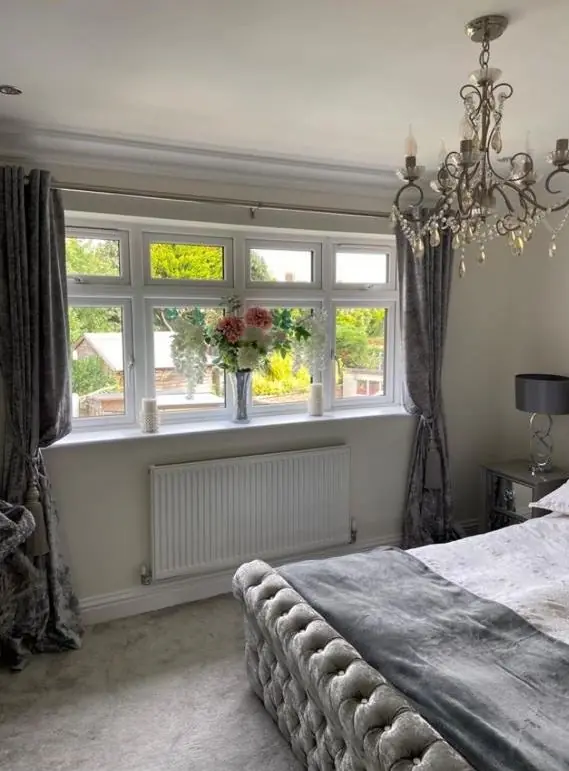
In the park-side villas the principal rooms were built for show, facing the open park. High ceilings mean longer drops, and a large pattern repeat can waste a surprising amount of paper on each length. Before you order, Dean will measure the wall heights and the repeat and give you a roll count, which matters with designer papers that are hard to reorder from the same batch.
Points we check in these rooms:
- where the pattern should be centred, usually on the chimney breast or the bay window
- whether the cornice line is level, because a strong horizontal stripe will expose any slope
- how the paper meets a picture rail or dado, if the room still has one
- whether the bay window reveals need extra cuts around old shutter boxes or timber linings
Papers that suit a late-Victorian Kingsley house
These houses went up at a time when patterned papers were normal in front rooms, halls and stairwells, so period-style designs such as damasks, trailing florals and stylised Arts and Crafts prints sit naturally in them. That said, nothing in the conservation area rules touches interior decoration, so a bold modern geometric or a plain textured paper is just as possible. For a large room facing the Racecourse, a mid-scale pattern often works well, because a very small print can look busy across a tall wall and a very large one can feel heavy above a fireplace.
Breathable papers are worth considering on the solid external walls of these houses. A vinyl paper on a cold outside wall can hold condensation behind it, while a paper-backed or non-woven paper lets the old plaster dry.
Feature walls in the smaller terraces
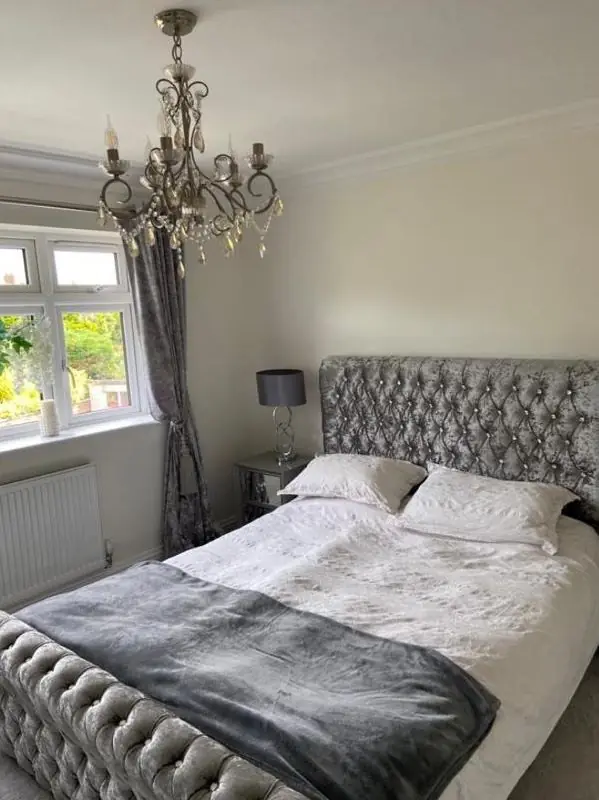
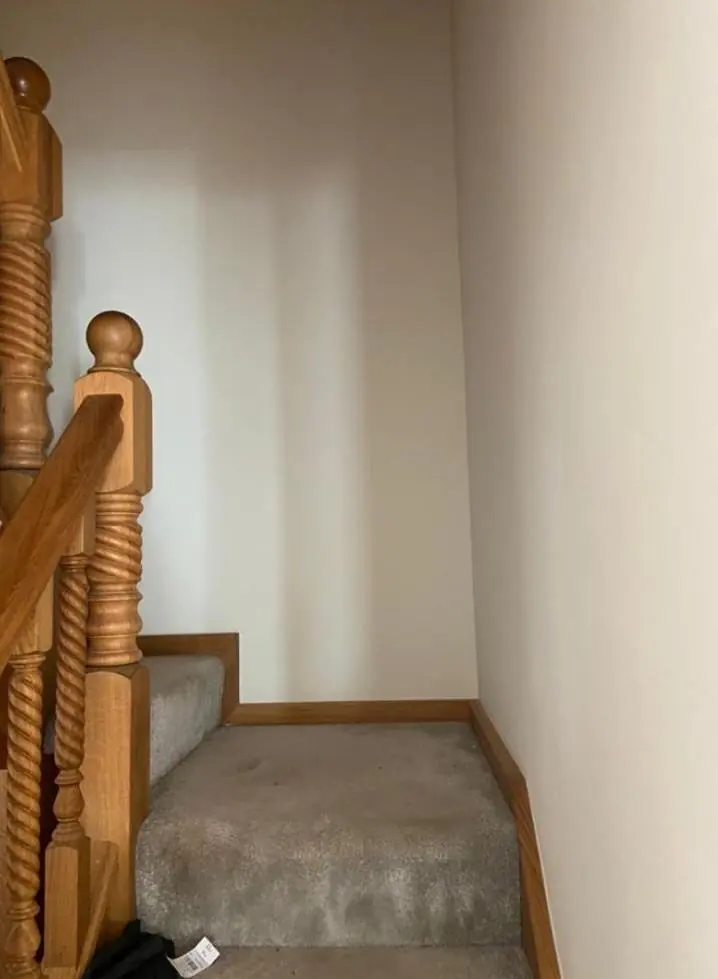
In two-bedroom terraces such as Junction Road, the downstairs front room often runs through as one space. A single papered wall, usually the chimney breast or the wall opposite the window, can mark out the sitting end without closing the room in. The narrow hall and stair are a harder place to paper because of the long drop at the stairwell, and we set up proper staging there rather than reach from a ladder on the treads. Where the old sashes have given way to uPVC double glazing, as in many of these terraces, the paper is trimmed straight to the plastic reveals.
We cover Kingsley from our Northampton base; see the Kingsley area page for more on the district, and our guide on how to choose a painter and decorator if you are comparing quotes.
Last updated by Dean, DH Painter & Decorator.