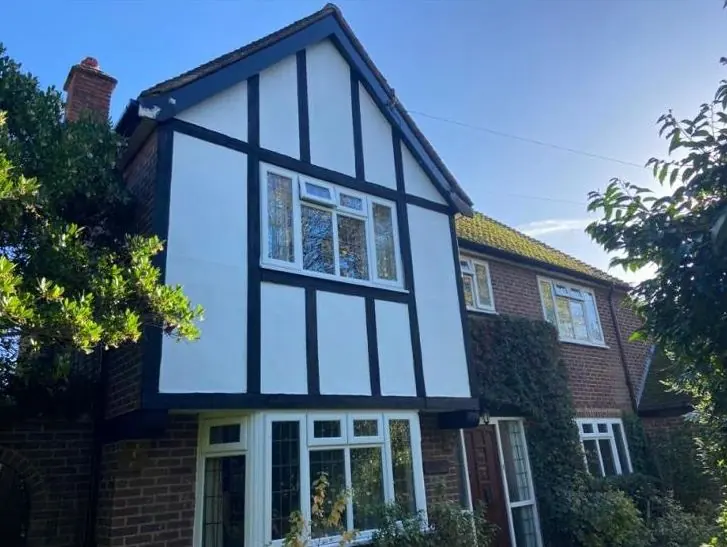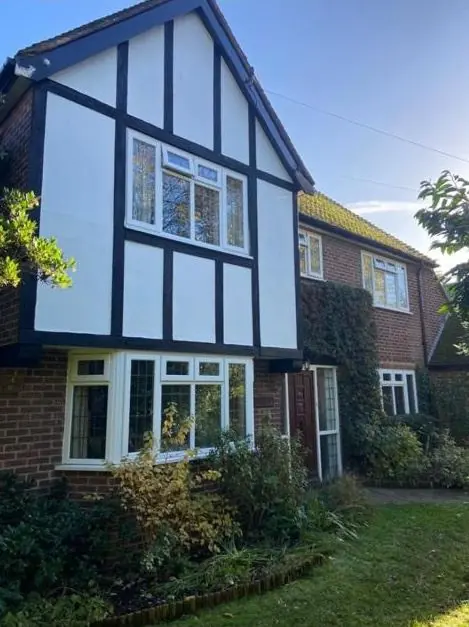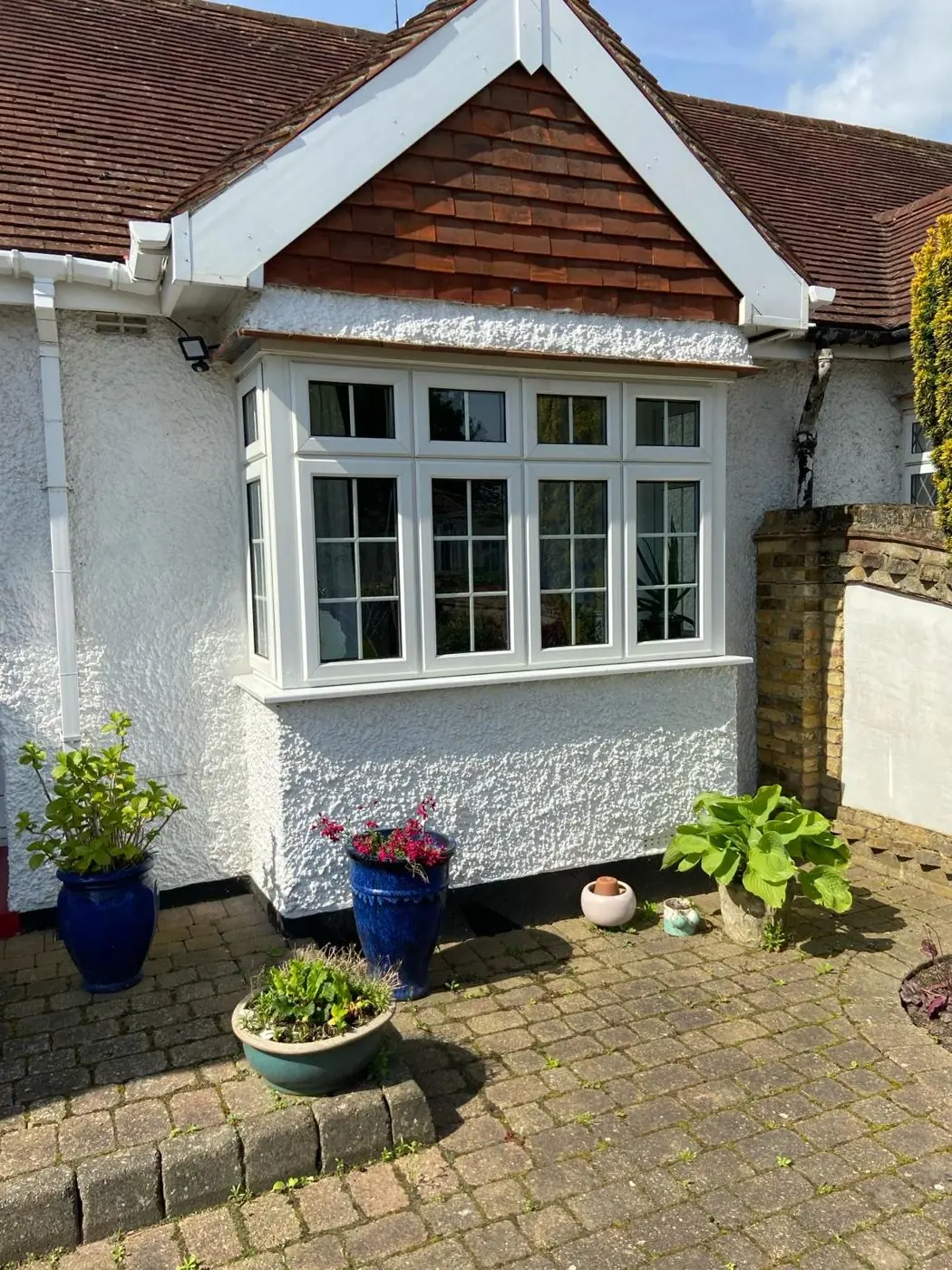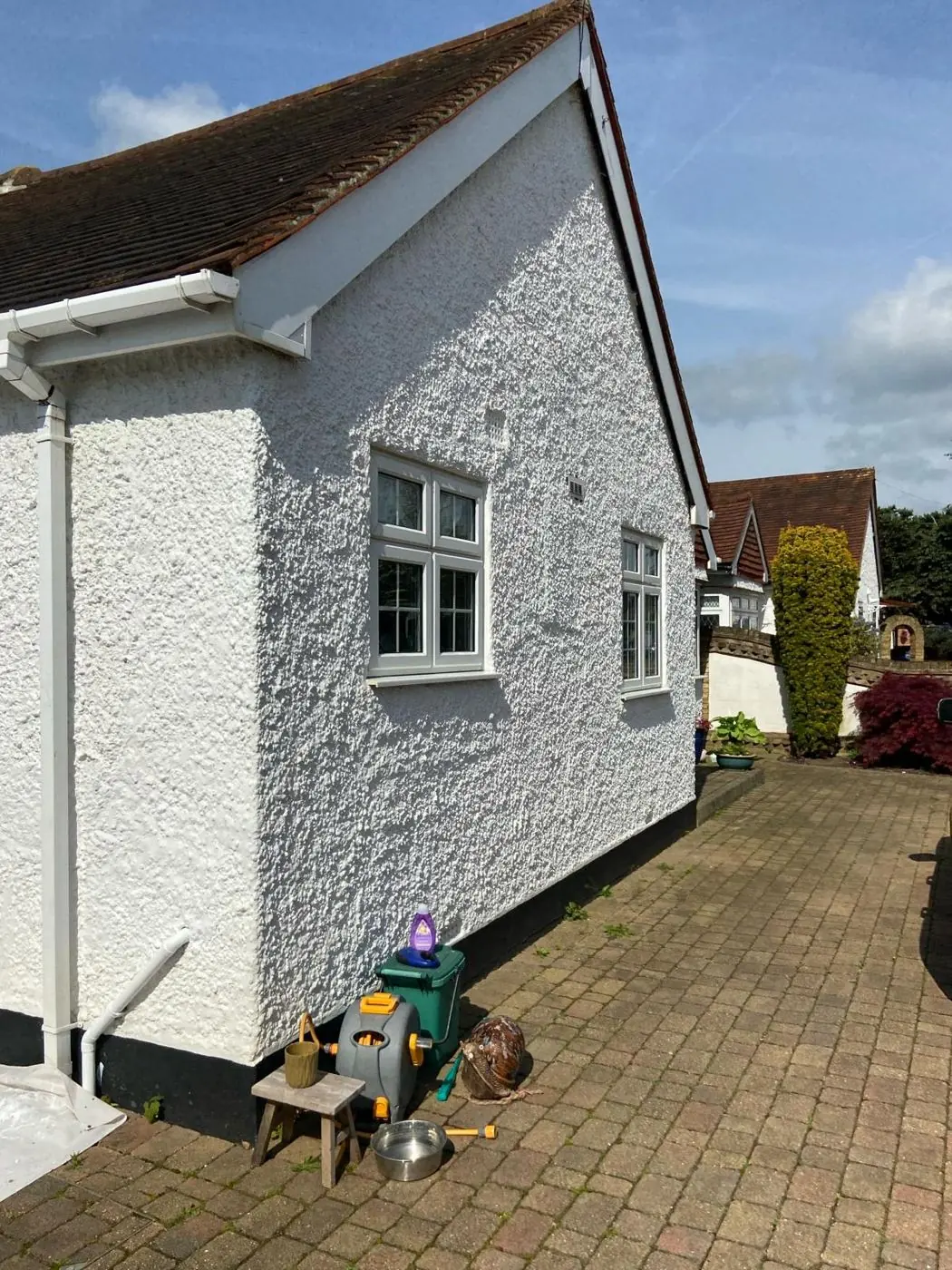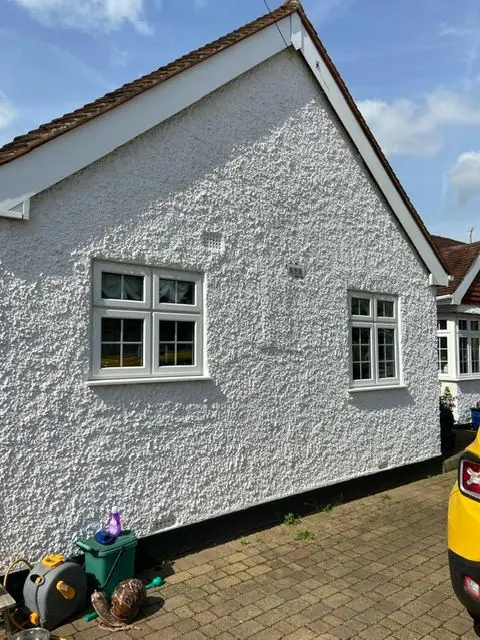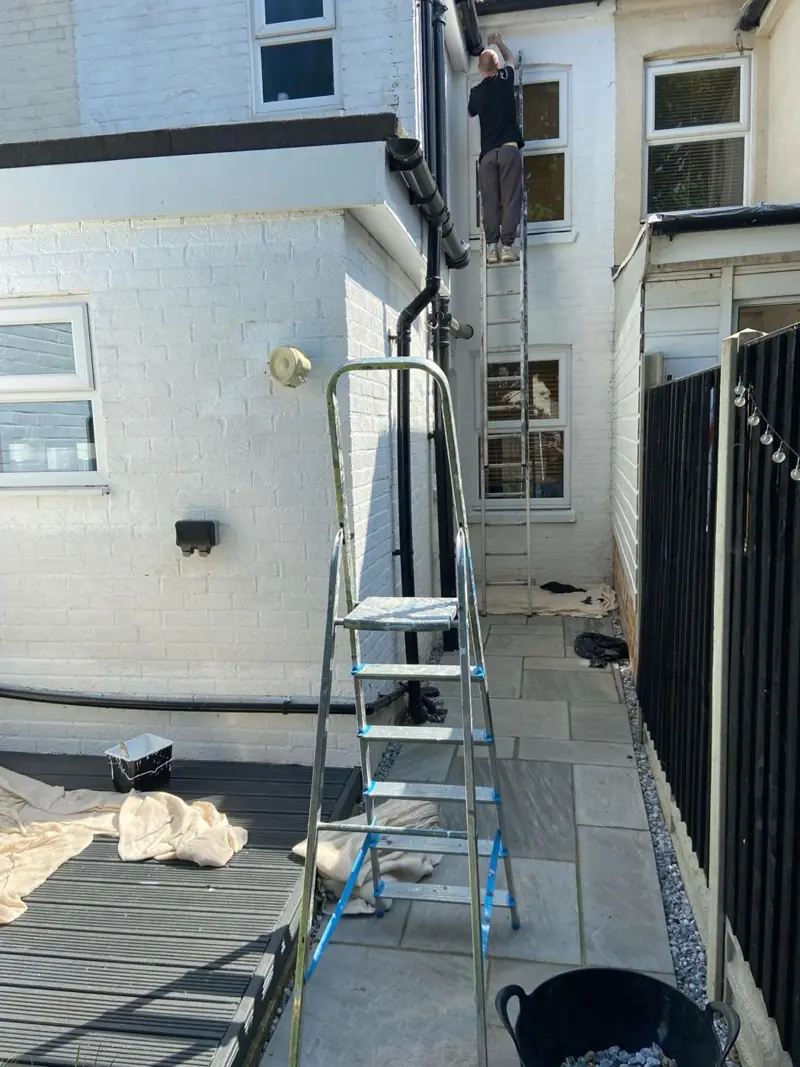
Dean paints render and painted brick on homes across Semilong, the NN2 neighbourhood 0.8 miles north of the town centre. On these late Victorian terraces the work centres on rendered bays and rear elevations of late Victorian terraces, using breathable masonry paint on walls that are often damp low down.
Start by asking whether a wall should be painted at all
In Semilong that question comes first. Several buildings on the neighbourhood’s eastern edge are bare stone and were built to stay that way. Two ranges on the Barrack Road conservation-area edge, Leicester Parade on Barrack Road from 1882 and St Paul’s Terrace on Kingsthorpe Road from about 1884, are built in squared rubble dressed with ashlar, and coating that kind of face with masonry paint traps moisture in the stone and spoils its appearance for good. On those buildings we paint the timber bargeboards, windows and doors, and leave the walls alone.
Marriott Street’s brick terraces are a similar case. Their stone sills, lintels and architraves are painted and should stay that way in the existing scheme, while the brick around them should be left unpainted: locally made red brick of that period is hard to match if damaged. Marriott Street and the Barrack Road frontages are both in the conservation area, where an Article 4 Direction controls painting any front facing the road.
The rendered walls that do need masonry paint
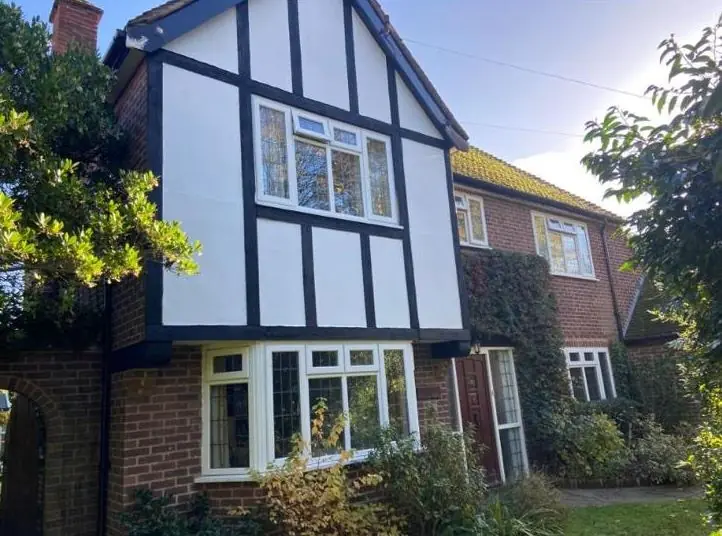
Across the main terraced grid, render and painted masonry turn up in a few places:
- Some bay fronts, rendered or painted rather than left as brick.
- Some rear elevations, rendered or painted over the years.
- Patched sections where a repair has been rendered or painted to hide brick that would not match.
Rear walls are the harder job because a mid-terrace house rarely has side access. Ladders, tins and sheets go through the hall and kitchen, so we protect floors and stairs first. The coating process itself, from fungicidal wash to stabiliser and two coats, is explained on the main render and masonry painting page.
Damp lower walls near the river and over cellars
Semilong slopes down westward to the Nene, and the riverside pocket parks proposed in its neighbourhood plan are partly about flood management. External walls on the lowest streets, near St Andrews Road, can hold moisture at their base, and walls over a cellar can do the same.
Paint fails from the bottom up on walls like these. A non-breathable coating holds damp behind it and blisters within a season or two. Our approach is to let the wall dry out properly, find and fix the obvious water sources such as a leaking downpipe or a blocked gully, and use a breathable masonry paint that lets vapour escape. If a wall is persistently wet, we will tell you that painting is not yet the answer.
Patching painted brick without leaving a patchwork
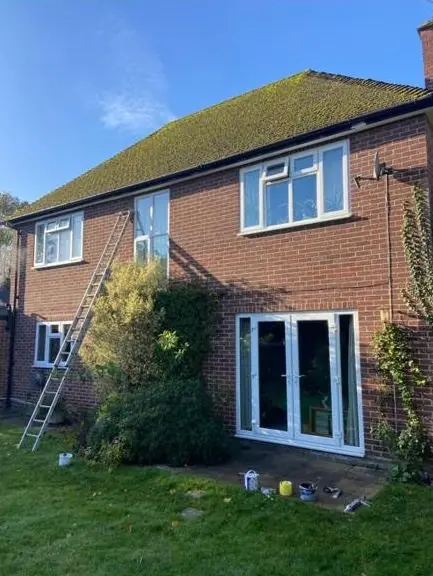
Where brick has already been painted, small repairs are common: a filled crack, a replaced brick, a new airbrick. On a short terrace front, touching up just those spots leaves obvious squares of fresh colour. Because the original brick is difficult to match anyway, we blend repairs by repainting the whole elevation rather than spot-patching. It takes a little more time and looks far better from across the street.
Colour choice follows the same logic. Painted brick and render on a short row of terraces is read as one frontage, so a shade far out of step with the houses either side stands out. Outside the conservation area there is no rule against it, but softer, mid-tone masonry colours hide traffic dust and splash-back from the pavement better than brilliant white, which shows every mark at low level on a street where the front wall meets the footway.
Our guide to painting render and roughcast covers product choice in more detail, and the Semilong area page sets out how we work across the neighbourhood.
Last updated by Dean, DH Painter & Decorator.