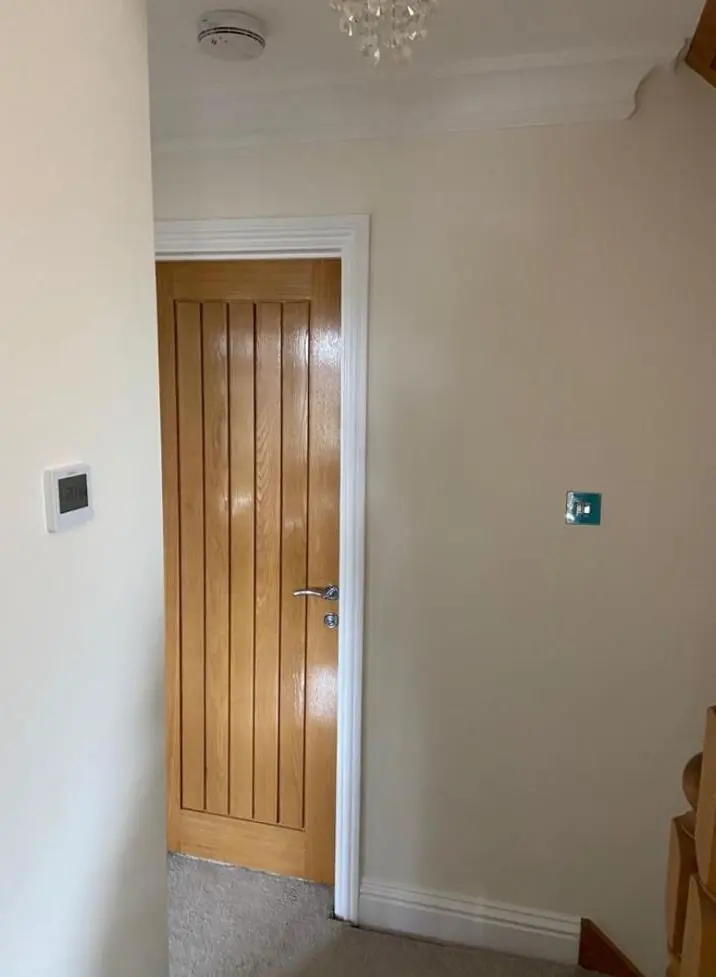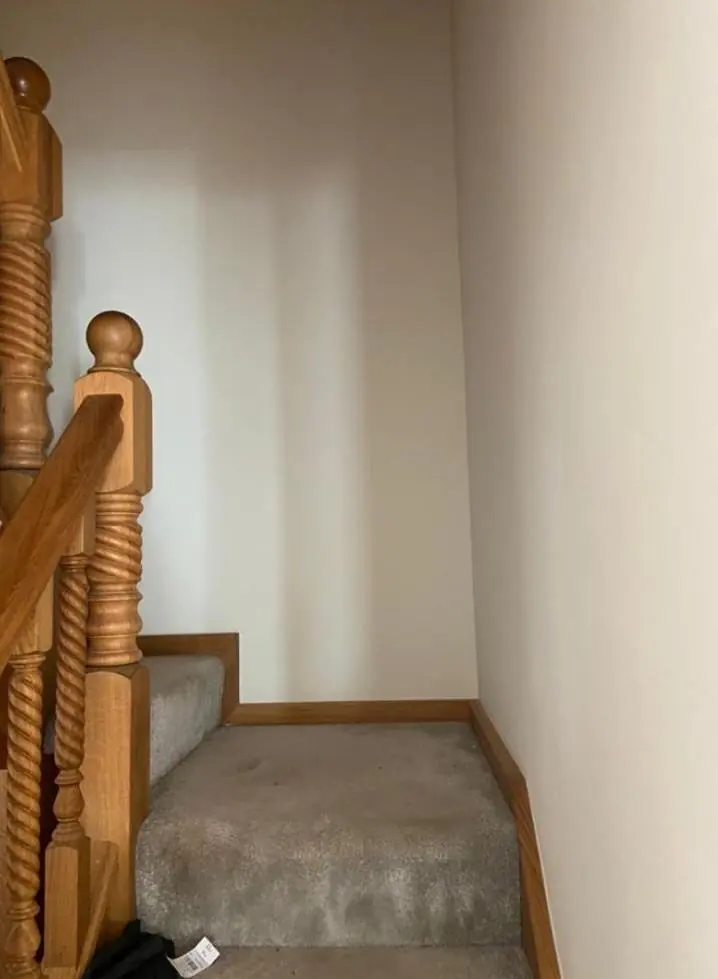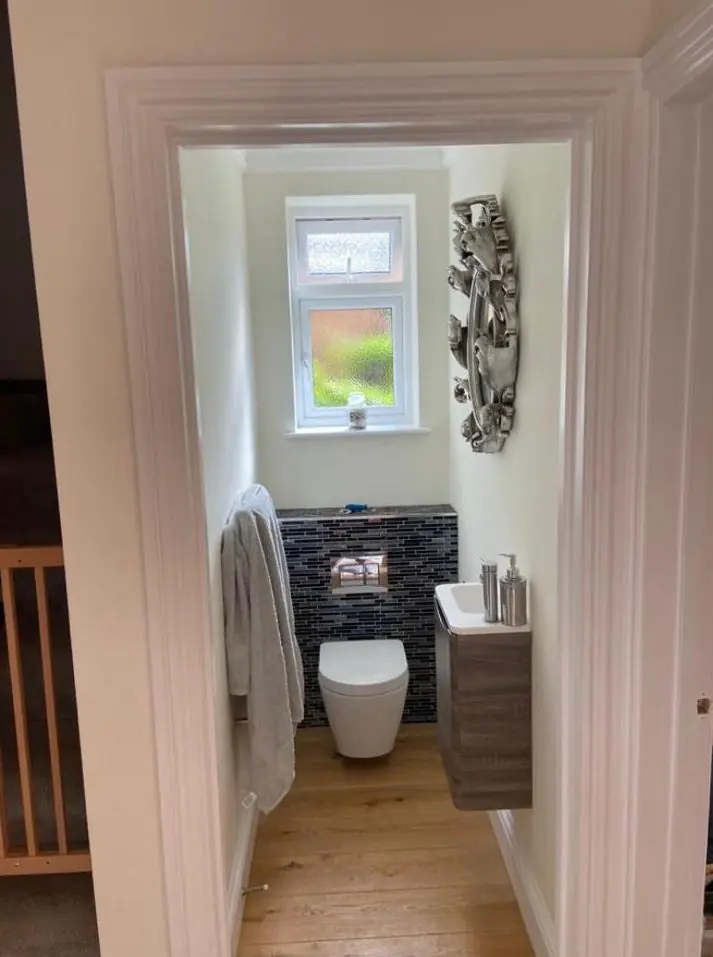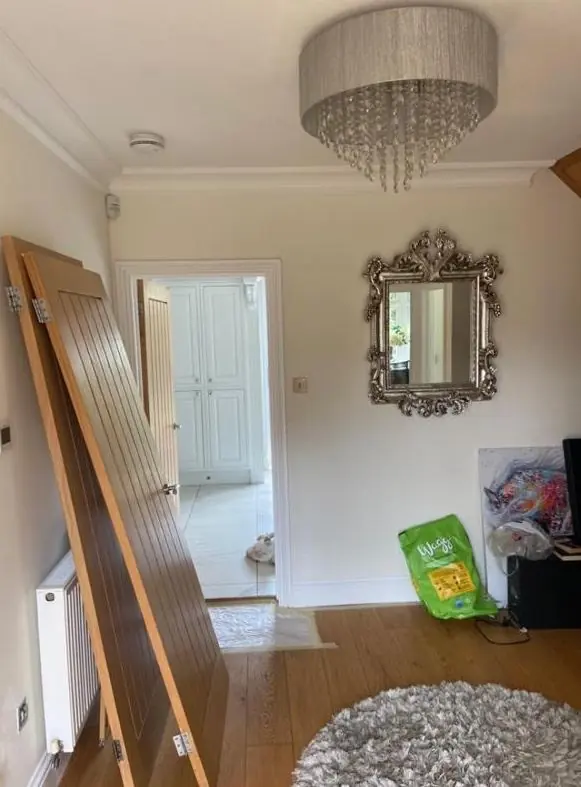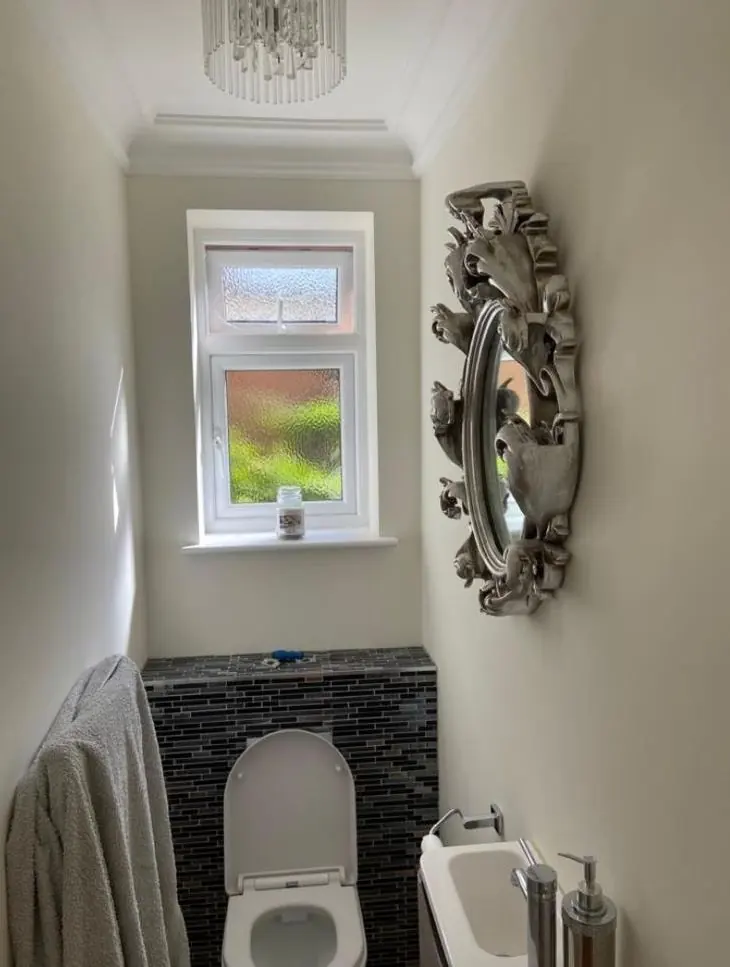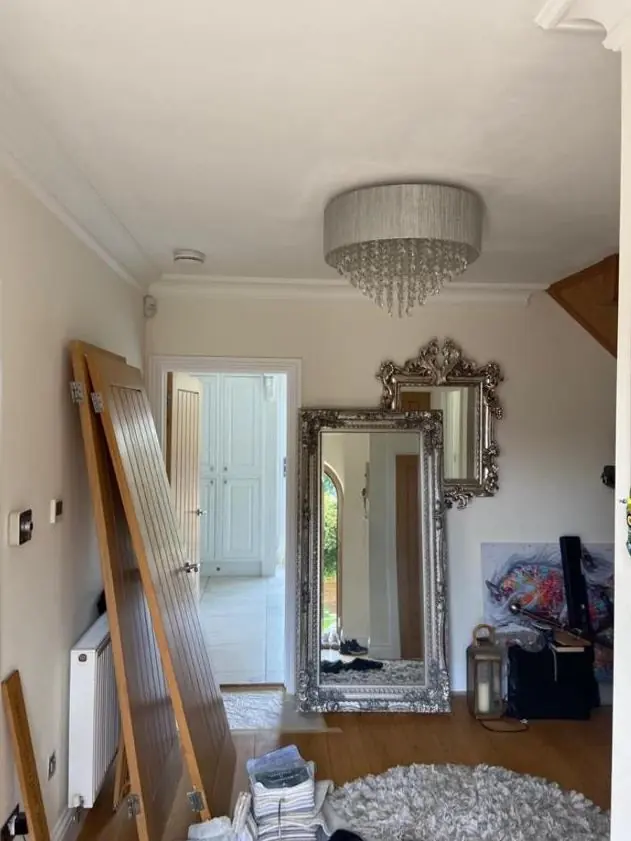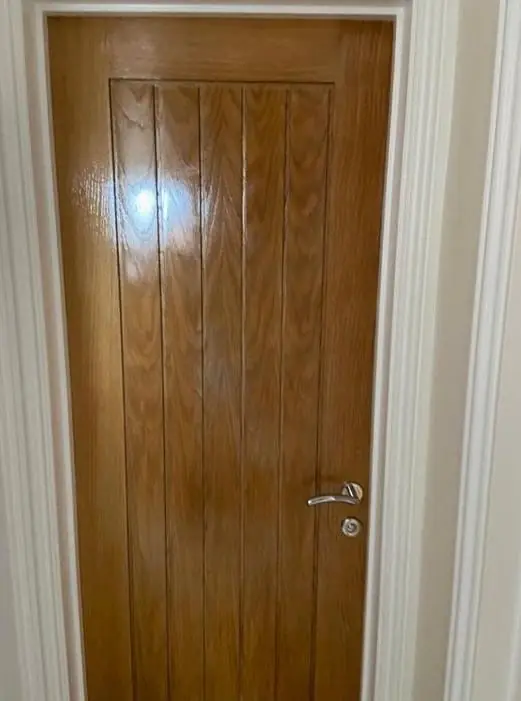
DH Painter & Decorator paints doors, frames, skirtings, architraves and stair spindles in Semilong, NN2. It is a 0.8-mile hop north of the town centre, and a free quote can cover one room's doors, a whole house or a shared landing.
What survives in a Semilong terrace
Semilong’s terraces date mostly from the 1880s to the 1910s, and plenty of their original joinery is still in place: panelled doors, deep moulded skirtings, architraves and turned stair spindles. Much of it carries many decades of paint, and on older layers that build-up softens the mouldings and stops doors closing cleanly. Before we put anything new on, we check whether the old coats are sound or flaking, how much the door is binding in its frame, and whether a panel has split.
Where a door sticks because of paint on the edges, we cut back the edges and rehang it rather than planing off original timber. Where the paint is sound, we key it, fill the dents, and build up new coats over the top. Full stripping is rarely needed. We only suggest it when the mouldings have lost their shape or the old coats are coming away in sheets.
Woodwork that lives in a shared house
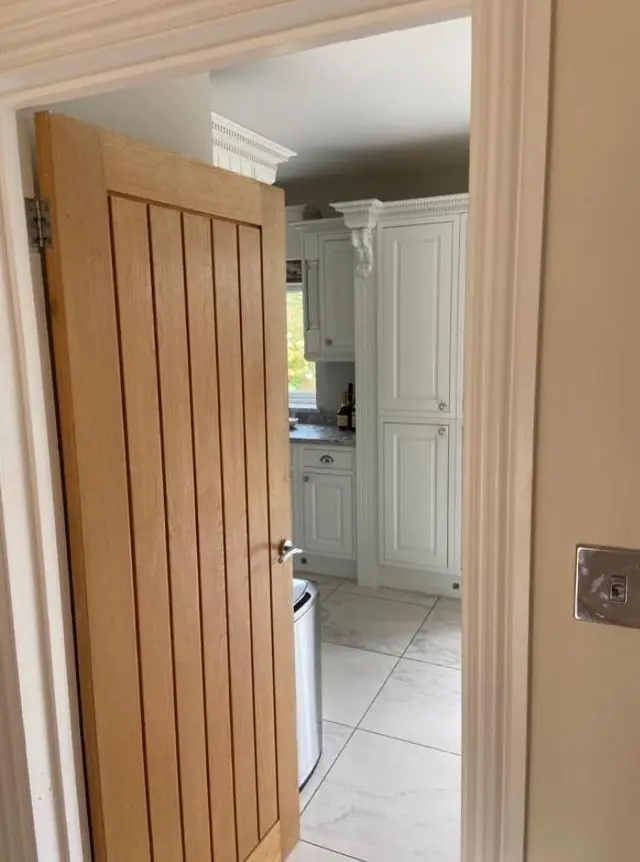
Semilong has a high number of houses in multiple occupation, and residents come and go often. That shows up on the woodwork. Bedroom doors get kicked shut, keys gouge round the locks, bikes come in along the hall skirting, and the bottom of every spindle gets scuffed by bags going up the stairs.
For this kind of use we lean towards harder finishes:
- Water-based satin or eggshell on skirtings and architraves, which stays white rather than yellowing in dark terrace halls, and is easy to wipe.
- A tougher enamel on bedroom doors and frames, especially round the handle and lock plate.
- Extra coats on the lower spindles and the newel post, where hands and bags rub.
Fire doors fitted in shared houses need care too. We paint them without filling the intumescent strips or the gaps the closer relies on, and we leave the labels showing.
Sash windows and front doors on the eastern edge
The red brick terraces on Marriott Street are within the Barrack Road designation, whose Article 4 direction puts street-facing paintwork, front doors included, under planning control. A new front door colour there needs clearing with West Northamptonshire Council first. Inside, nothing changes, but outside we repaint in the existing colours unless you have that permission.
Timber sash windows are protected on this edge and still turn up across the wider terraced grid. Repainting a sash means cleaning out the runners, keeping paint off the meeting rails and easing each sash once it is dry so it still opens. The painted stone sills, lintels and architraves around those windows stay in their current scheme too. More on how we prepare and finish woodwork is on our door and skirting painting page.
Cellar heads and the lower half of the house
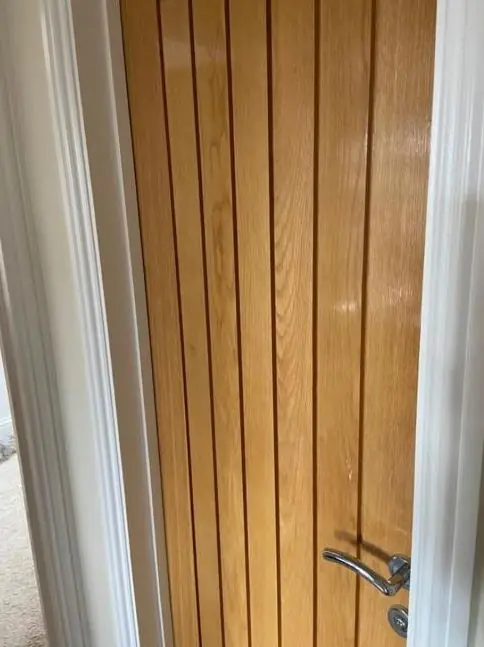
Many houses have cellars; agents mention them on Cambridge Street and Gordon Street, among others. The cellar door and its frame, and the skirting along the cellar head, often sit against walls that carry some damp. Gloss over damp timber blisters within months. We check moisture with a meter, let the timber dry, and use a primer that suits bare or patched wood before any top coat. Ground-floor skirtings on the streets nearest the river get the same check.
Planning the visit
Front doors here open onto the footway and kerb space is scarce. Woodwork is a clean job compared with walls, but every door we take off its hinges to paint has to come through the house and back. We protect the stairs and hall floor before anything else. If several tenants share the house, we agree which doors can be off at any one time so nobody is left without a lockable room.
Doors and skirtings often go alongside walls and ceilings. If that is the plan, pair this with interior painting, or see the Semilong area page for everything else we cover.
Last updated by Dean, DH Painter & Decorator.