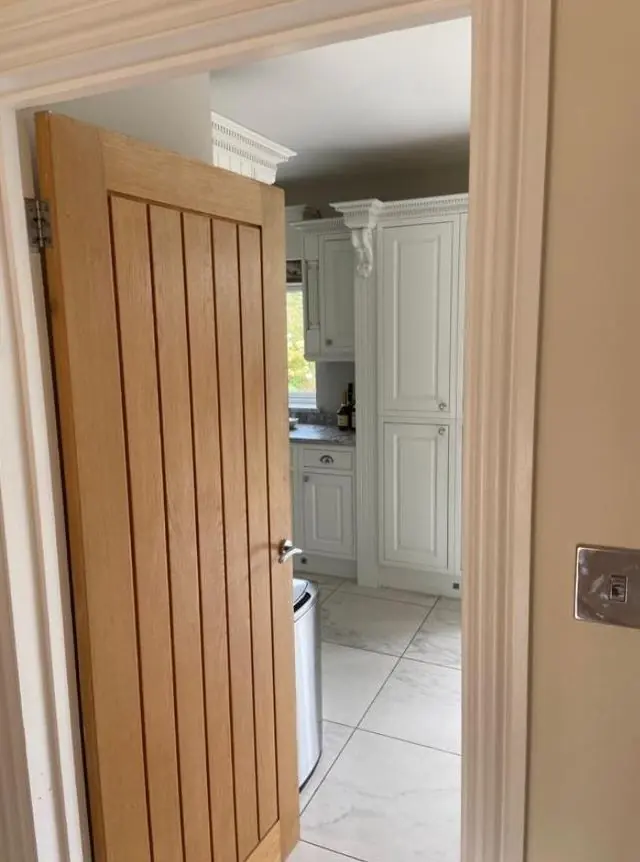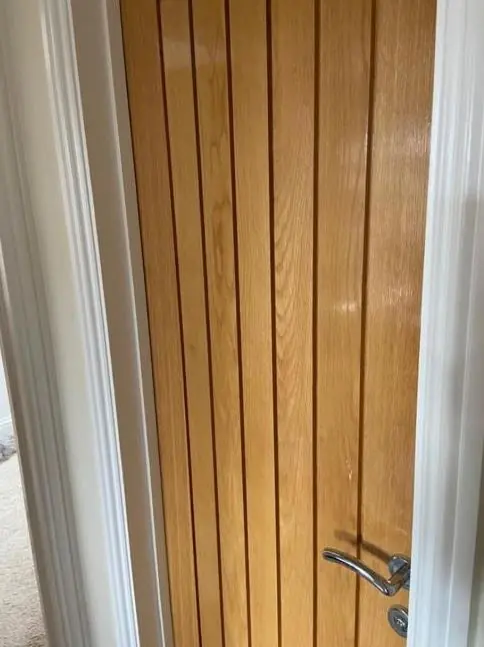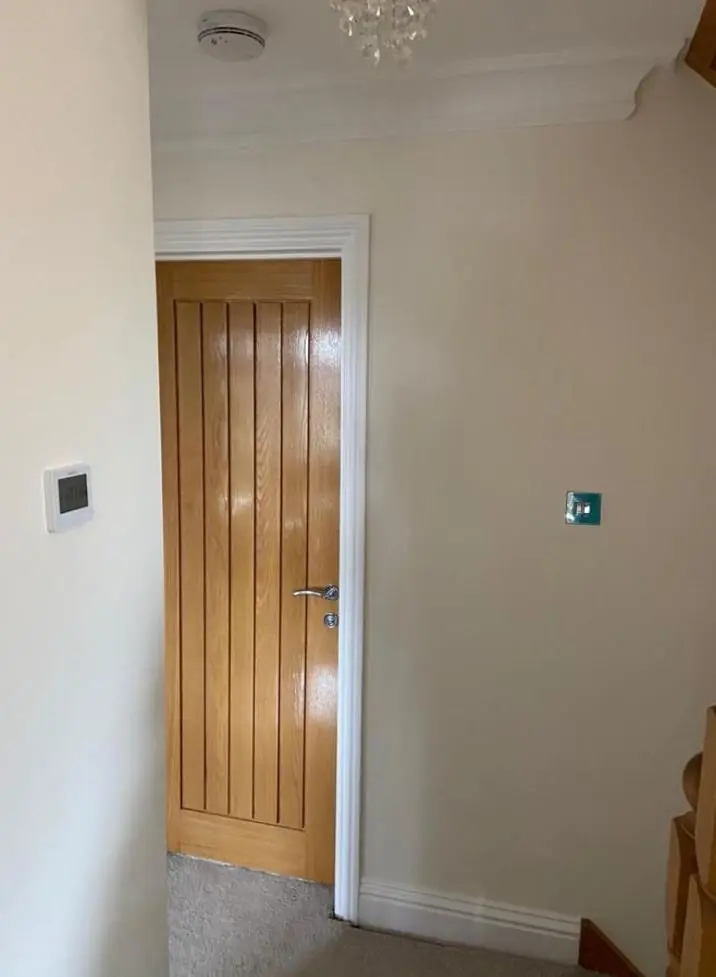
Dean paints internal doors, frames, skirtings, architraves and stair spindles in Southfields, NN3, which we reach from our Northampton base about 4 miles to the south-west. Most of the joinery here is original new-town-era softwood with several old coats on it, so the work centres on sanding back, filling and refinishing rather than a quick top coat.
Softwood on its third or fourth coat
The exact build date of Southfields is not recorded, but its terraces, semis and detached houses fit the new-town era of north-east Northampton, and many still have their original softwood internal doors, skirting boards and stair spindles. After several owners and the odd tenant changeover, that joinery is often on its third or fourth layer of paint. You can see it in the detail: panel mouldings filled up and rounded off, door edges that catch on the frame, drips frozen down the face of a skirting, and spindles with a thick ridge where each coat has pooled.
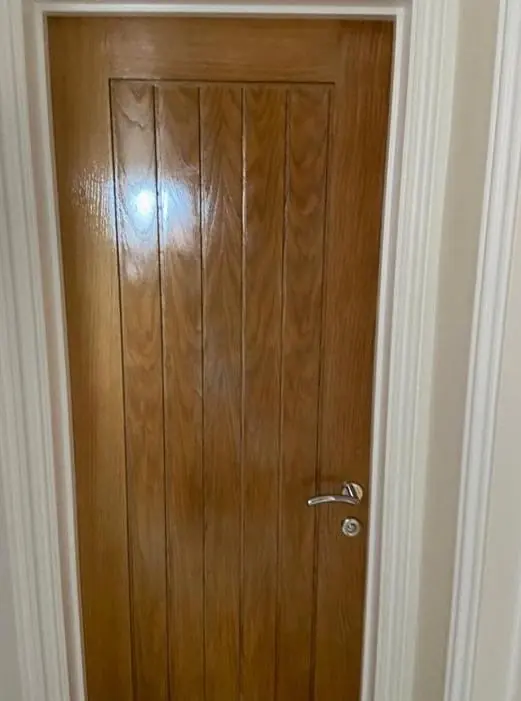
Another coat on top makes all of that slightly worse. On joinery like this we sand back hard enough to cut through runs and ridges and restore a crisp edge on the mouldings. Where a door sticks because of paint build-up on the hanging edge, we take that edge back too so it closes cleanly once it is painted. Older layers in a house of this age are likely to be oil-based, so we key them thoroughly and use an adhesion primer before any waterborne finish goes on. The full preparation sequence is set out on our door, skirting and woodwork painting page.
The gap above the skirting in timber-frame terraces
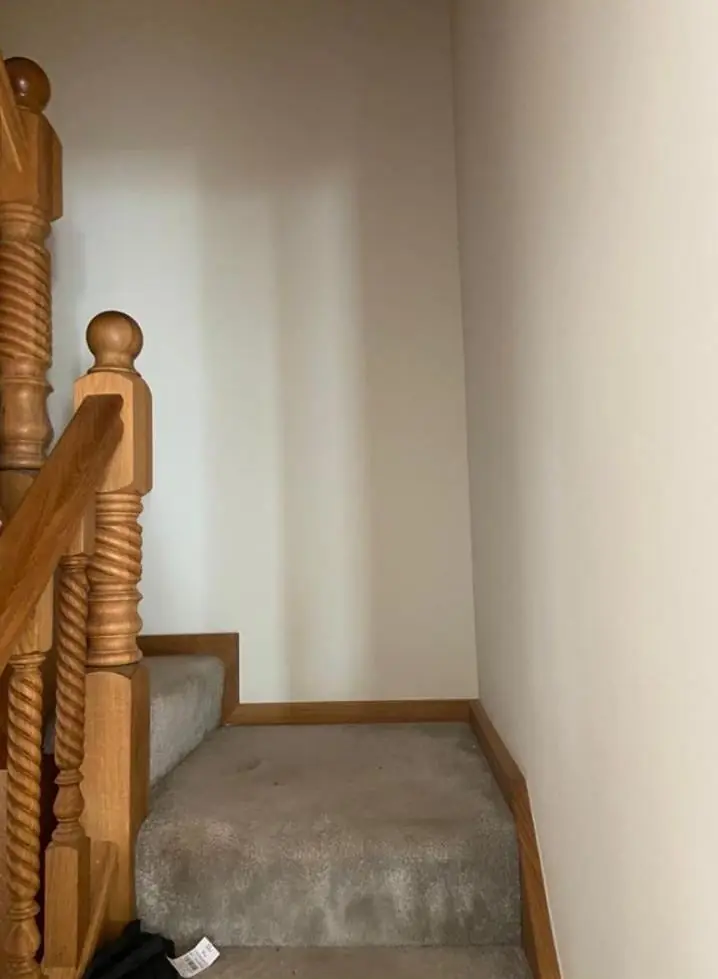
The mid- and end-terraces around Micklewell Lane and Brackenfield Square are recorded on the EPC register as timber frame. Timber-frame walls move a little as the seasons change, and the first place that shows is the line where the skirting meets the plasterboard. A rigid filler pressed into that joint cracks again within a year. We clean the old split caulk out and run a flexible decorators’ caulk that can take the movement, then paint over it once it has cured. Architrave joints around door frames get the same treatment, because the frame and the wall lining move at different rates.
The cavity-wall houses on Gallery Close, Ludlow Close and Farmhill Road are steadier, so there the gaps tend to come from old shrinkage rather than ongoing movement and usually only need one careful round of filling.
Small rooms, doors off their hinges
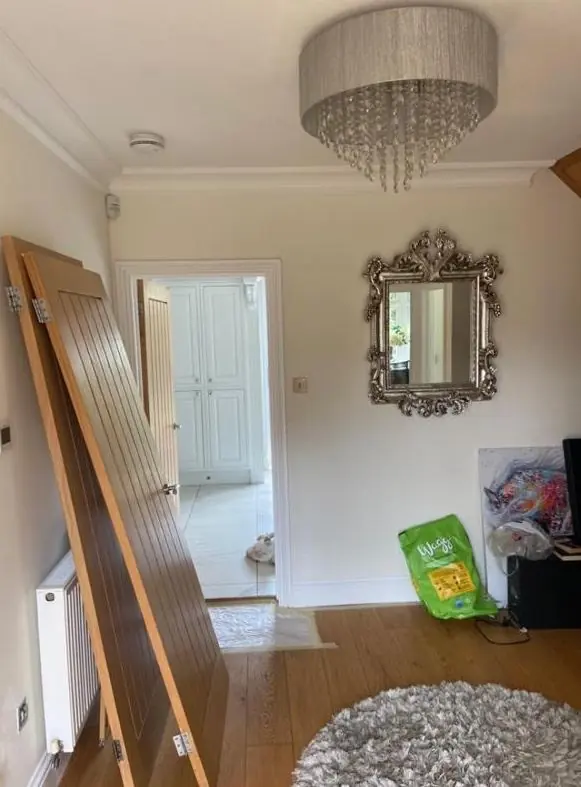
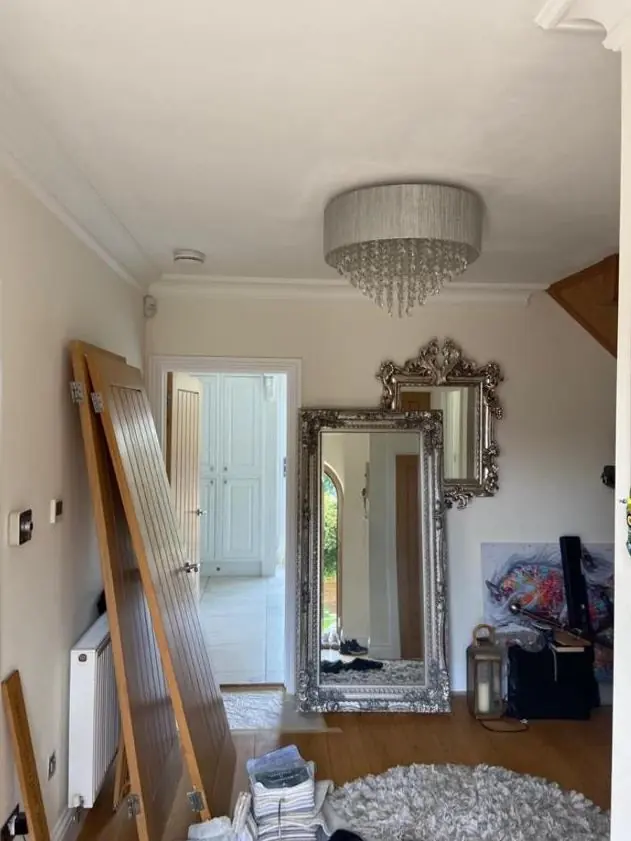
Barley Hill Road’s homes are among the smallest on the estate: on the EPC register, 44-45 sq m terraces and 34 sq m bungalows. In homes that size there is little room to lay doors flat and work round them, and the furniture has nowhere to go but the next room. We work through the house in a planned order, shifting furniture inside rather than out, and where it helps we take doors off and paint them on trestles in whichever room is already finished. It keeps every opening usable at night, which matters when a two-bedroom house has only two or three internal doors to begin with.
- Doors are rehung the same day where the finish allows, or propped open with a clear gap overnight.
- Handles, hinges and latches come off rather than being masked, so no paint lands on the ironmongery.
- Stair spindles are done in batches so the stairs can still be used.
Choosing a sheen for a Southfields interior
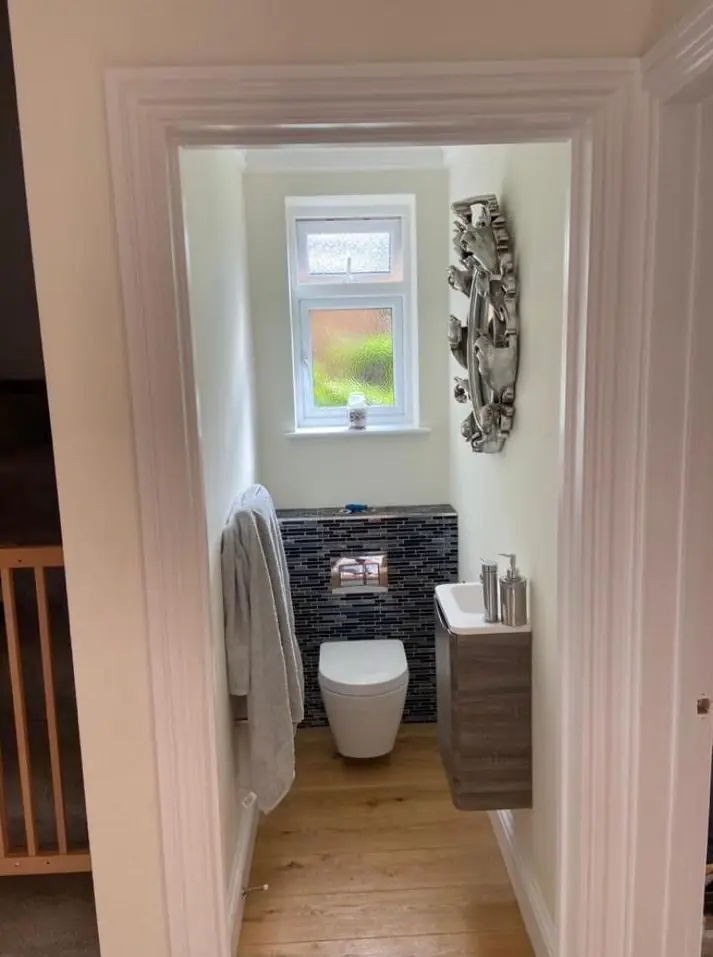
There are no conservation rules inside or outside the estate, so the choice is entirely yours. In rooms that back onto the broadleaved tree belts at Pine Ridge or Brittons Drive, a north-facing room can look dull, and a white or off-white satin on skirtings and doors gives a cleaner edge without the yellowing older solvent gloss shows in low light. If you prefer a coloured door or a darker skirting, the same preparation applies; only the top coat changes. We can talk this through when Dean visits, and you can read more about the area on our Southfields page. For how pricing is worked out, see the painter and decorator cost guide.
Last updated by Dean, DH Painter & Decorator.