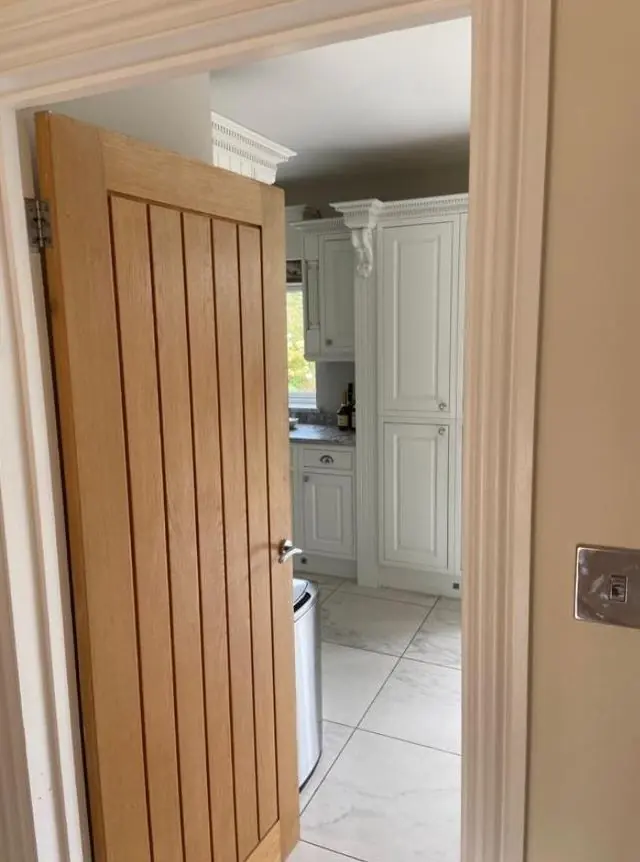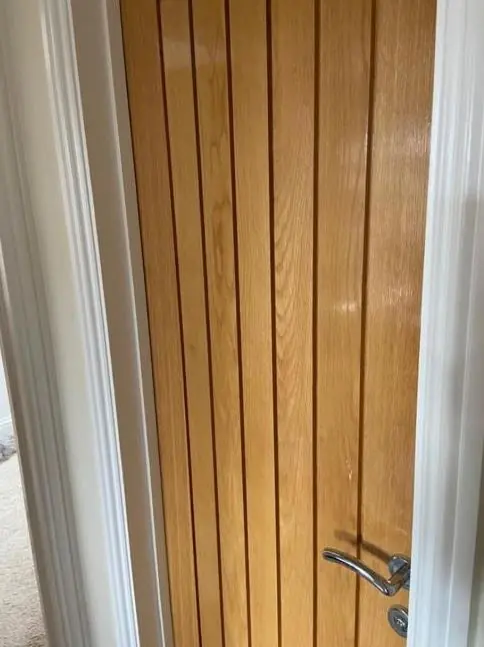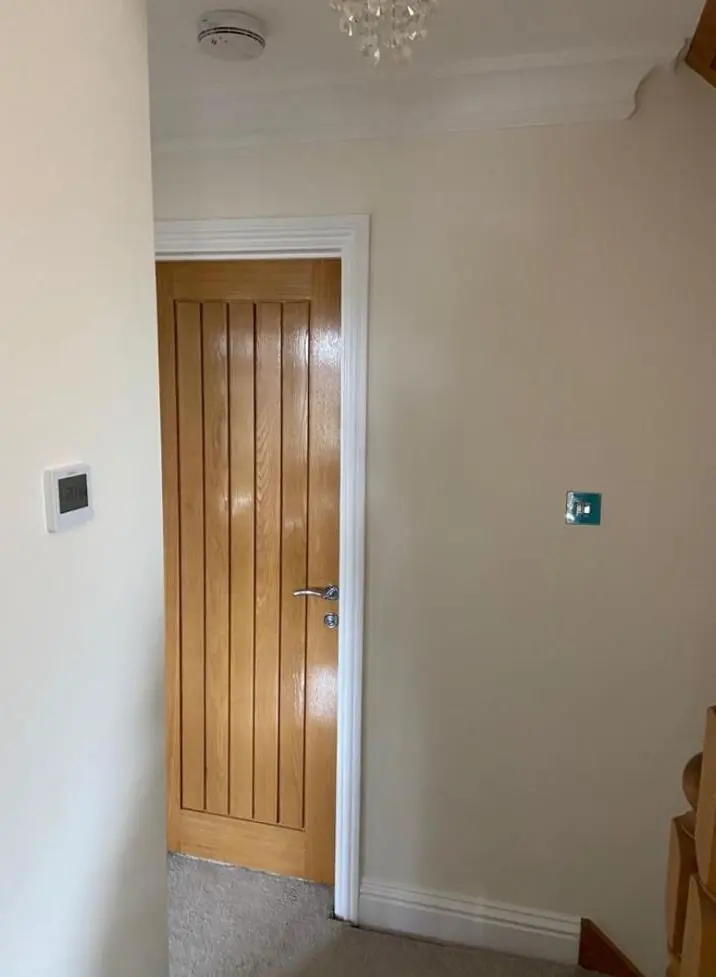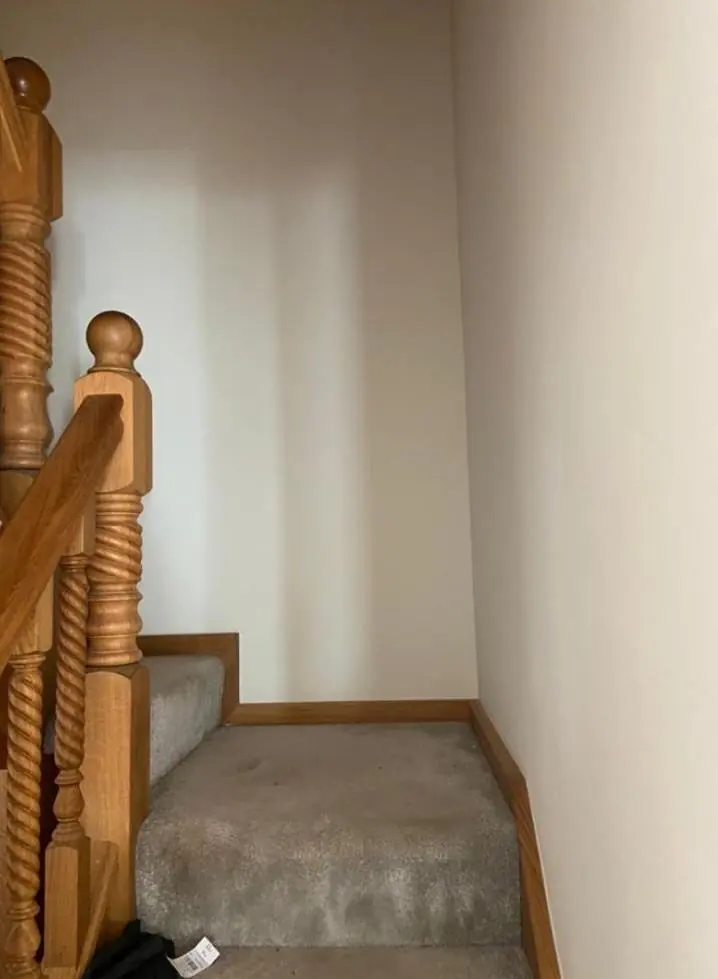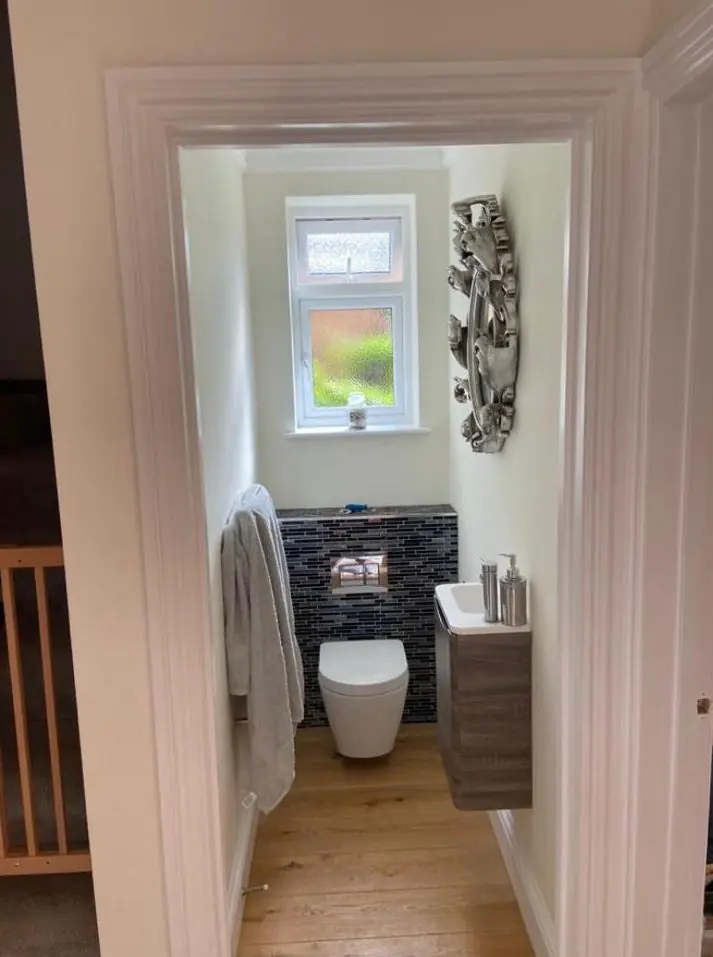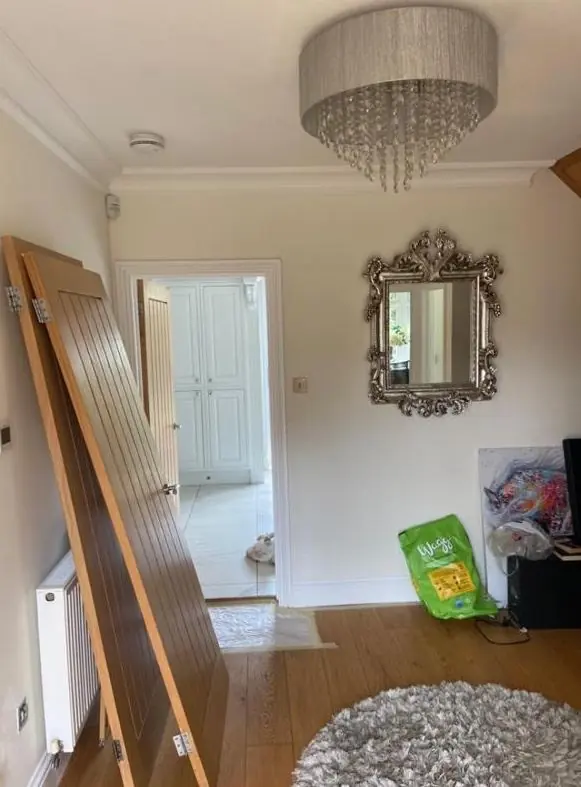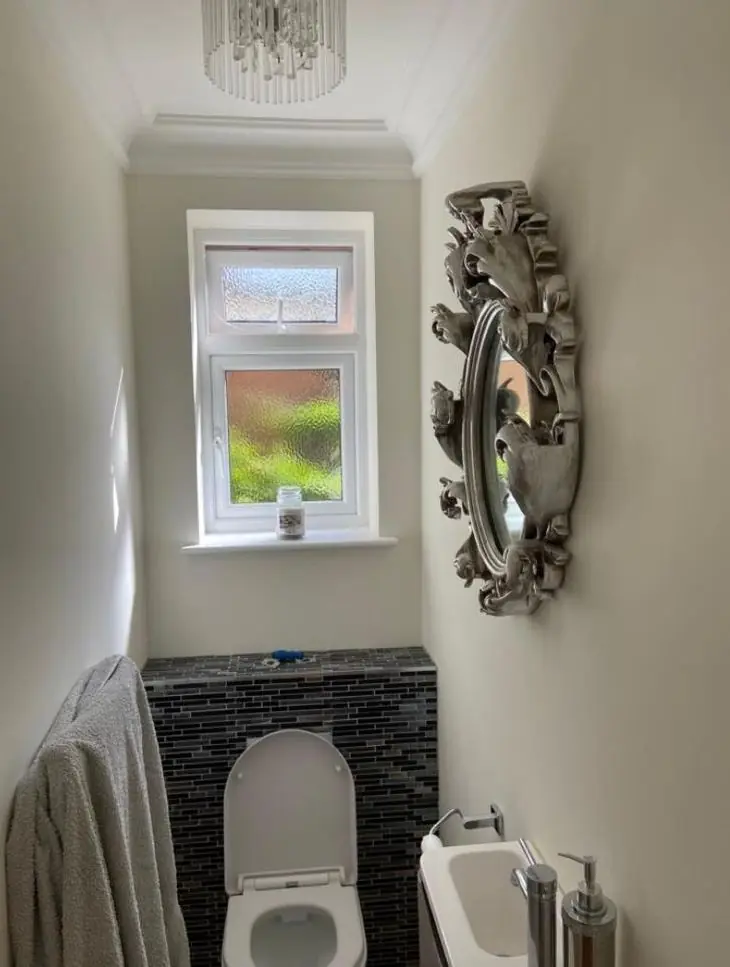
Dean paints internal doors, skirtings, architraves and stair joinery in Overstone Leys, 4.6 miles north-east of Northampton town centre. Most homes here date from 2016 onwards, so the work is usually upgrading the housebuilder's first coat rather than stripping old paint.
What the housebuilder left on the woodwork
Overstone Leys has gone up in phases since its mid-2010s outline permission, each parcel finished by a volume builder’s site crew. That gives the joinery a very particular starting point. Internal doors usually arrive factory primed or with one basic satin coat, while skirtings and architraves are often finished on site with a single thin coat applied quickly before handover. It looks smart at first. Then a year of hoovers, buggies, shoes and dogs leaves the door edges and the bottom of the skirting chipped back to primer.
The upgrade most owners ask for is a harder-wearing finish: usually a waterborne satin or eggshell, chosen because it does not yellow the way oil-based gloss does in rooms that get little daylight. On a newly built house there are no layers of old paint to remove, so the work is about getting proper adhesion over a thin, sometimes slightly powdery first coat.
Gaps that open as a new house dries out
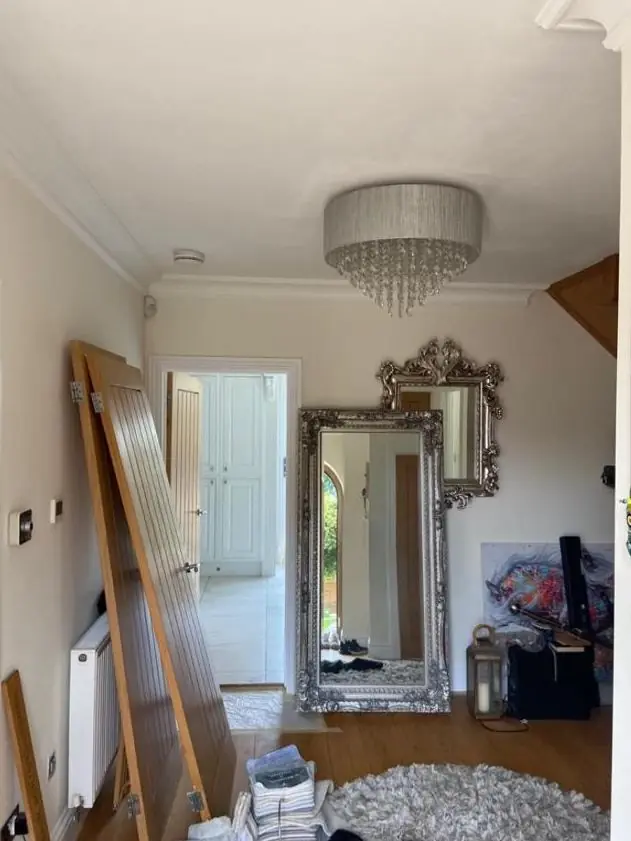
For the first year or two a new house is still drying. The timber in skirtings and door linings shrinks a little as the heating runs, and plaster moves too. On a house this young it usually shows up as a fine line along the top of the skirting, a split where architrave meets the frame, and mitres that have opened at the corners. Painting over those gaps simply traps them.
- We rake out failed builder’s caulk and re-caulk with a flexible decorator’s caulk that can take a little more movement.
- Opened mitres are filled with a two-part or flexible wood filler, then sanded flush.
- If the developer’s warranty still runs and there are open snagging items, such as a door that binds or a lining that has twisted, it makes sense to let the builder deal with those first. We would rather paint once, after the snagging is closed.
Sequence for a new-build door set
| Item | Usual condition here | What we do |
|---|---|---|
| Internal doors | Factory primed or single satin coat, chipped at edges | Light key, spot-prime bare patches, two coats of waterborne satin |
| Skirtings | Thin site-applied coat, scuffed along the base | Degrease, sand, re-caulk top edge, two finish coats |
| Architraves and linings | Split joints and open mitres | Fill, sand flush, caulk to the wall, finish to match doors |
| Stair spindles and handrail | Thin coat, worn on the rail | Key and recoat; varnished rails can be kept clear if preferred |
Hinges and handles come off or are masked, and doors are laid flat where space allows so the finish levels without runs. The full preparation method, including how we deal with knots and resin, is on our main door, skirting and woodwork painting page.
Front doors without conservation limits
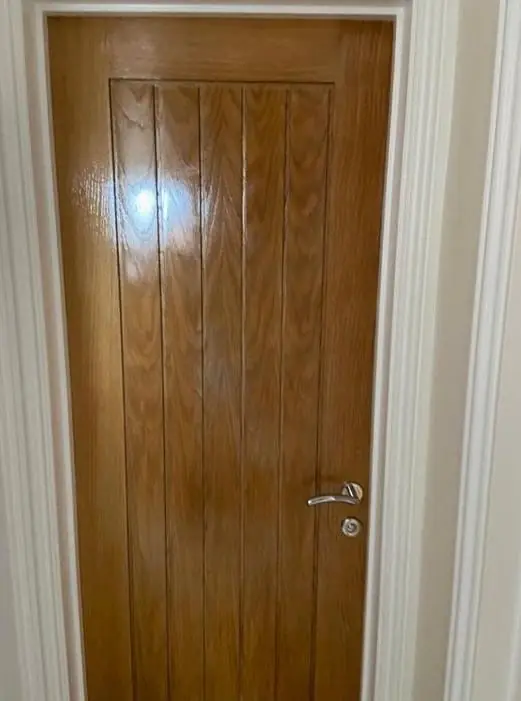
Unlike Moulton village over the dual carriageway, the estate carries no conservation designation, which means you are free to repaint a timber front door, or a timber porch, any colour you like. Many front doors on modern estates are composite or uPVC and are not suited to ordinary paint, so we check what yours is made of before quoting. Timber doors facing the A43 Kettering Road side tend to collect traffic grime, so they get a proper wash and degrease before any sanding.
Arranging the work
Dean comes out from Northampton for this work, and joinery jobs are easy to slot in. Woodwork is a good job to book on its own, or alongside wall painting once you have settled on a colour scheme. Waterborne finishes are low in odour and touch-dry fairly quickly, which helps when bedrooms are in use. More about the area is on our Overstone Leys area page, and the cost guide explains what affects the price of a woodwork job.
Last updated by Dean, DH Painter & Decorator.