
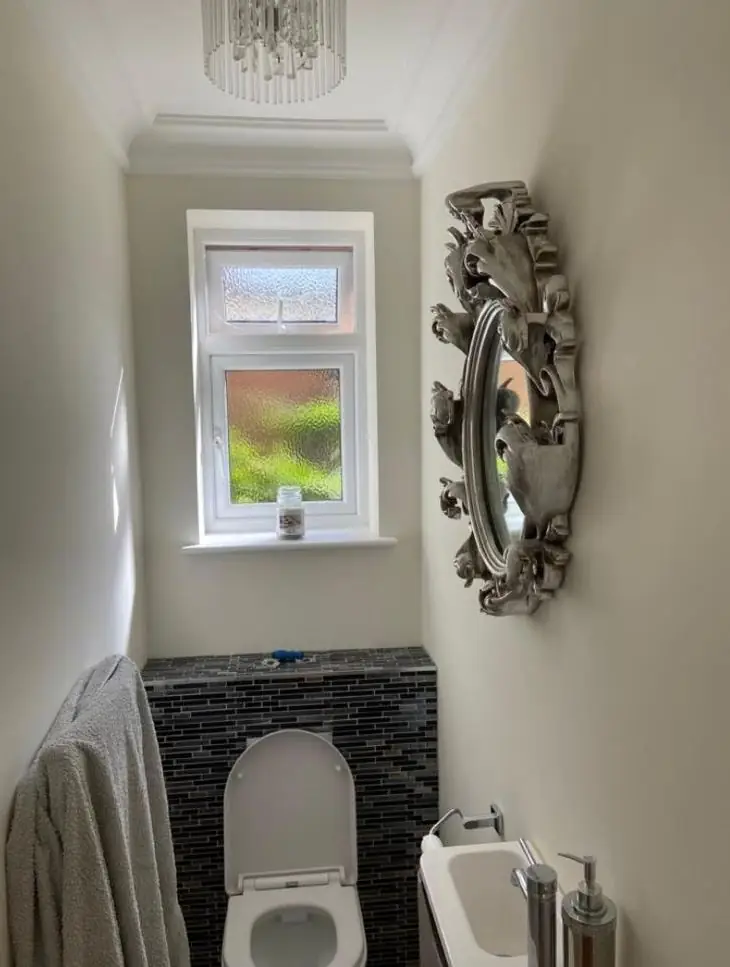
DH Painter & Decorator paints internal doors, skirting boards, architraves and other woodwork in Blackthorn, NN3, about 3.8 miles north-east of Northampton town centre. About 93% of the estate's homes date from 1973-82, so much of the woodwork here is likely to be original softwood under around half a century of gloss.
Half a century of gloss on 1970s softwood
The Valuation Office Agency’s council tax records date about 93% of the homes in the two statistical areas covering Blackthorn to 1973-82, with a smaller group of about 60 built in 1993-99. The county Historic Environment Record shows the ground for the first phase being prepared for houses in September 1974. So in many Blackthorn homes the skirtings, architraves, door linings and many of the internal doors are the joinery the Development Corporation put in, and they have had somewhere between 45 and 50 years of repainting.
Gloss of that age has usually yellowed and rounded off the profiles, and doors that stick often have paint build-up on their edges, so we ease and seal those edges as part of the job; the general method is on the main woodwork painting page. About 60 homes in one of the two statistical areas (014D) date from 1993-99, so their joinery is some twenty years newer than the rest and has had fewer coats. There the first job is a check of what is on the wood, not a strip.
| Fact | Detail | Source |
|---|---|---|
| Homes built 1973-1982 | About 93% of homes in LSOAs 014B and 014D (VOA, 2026) | GOV.UK |
| Homes built 1993-1999 | About 60, all in LSOA 014D (VOA, 2026) | GOV.UK |
| First house plots | Ground terraced for houses at Blackthorn 1, September 1974 | Northamptonshire HER |
| Private renters | 17.8% of households (Census 2021) | Nomis (ONS) |
| Heating at skirting level | 7 warm-air and 4 storage-heater homes in a 111-certificate EPC sample | EPC register |
What each piece of woodwork usually needs
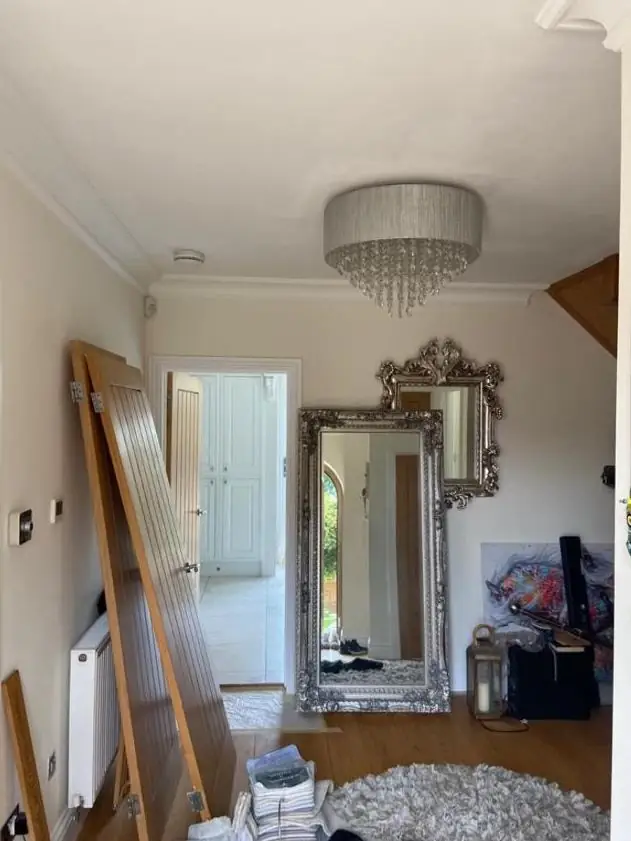
| Item | Typical state in a 1970s Blackthorn house | What we do |
|---|---|---|
| Skirting boards | Many coats of gloss, chipped along the top edge, gaps where floors have moved | Sand to key, fill chips, caulk the top and corner joints, spot-prime bare wood |
| Architraves and door linings | Paint built up in the corners, knocks at hand height | Scrape back the worst build-up so the door closes cleanly, fill, prime, finish |
| Original flush doors | Smooth faces, yellowed gloss, edges worn | Key the whole face, fill dents, two finish coats laid off in one direction |
| Moulded or panel doors | Paint gathered in the mouldings | Clean out the profiles, then paint panels first and stiles last |
| Stair spindles and handrail | Heavy wear on the rail, runs on the spindles | See our Blackthorn stairs page |
Knots that were primed in the 1970s can still bleed resin through pale paint once the old coats are sanded thin, so any knot that shows is sealed with knotting before primer. We then move you onto a modern satin or eggshell system. Water-based satinwood keeps its colour far better than old oil gloss in a dim hall; an oil-based finish is still the harder choice for a door that takes a lot of knocks. We talk through which suits each room, and keep one sheen throughout so doors and skirtings match from the hall to the bedrooms.
Is there lead in the paint on my doors?
On joinery first painted in the mid-1970s, the risk is low, because lead had largely gone from household paints by then. It is not zero. Some early components, reclaimed doors brought in by a later owner, or older items fitted during repairs could carry earlier paint. Where there is any doubt we test the bottom layers before heavy sanding, and we use wet abrasion and dust extraction rather than dry power sanding on old coats as a matter of course.
Matching original doors with replacements
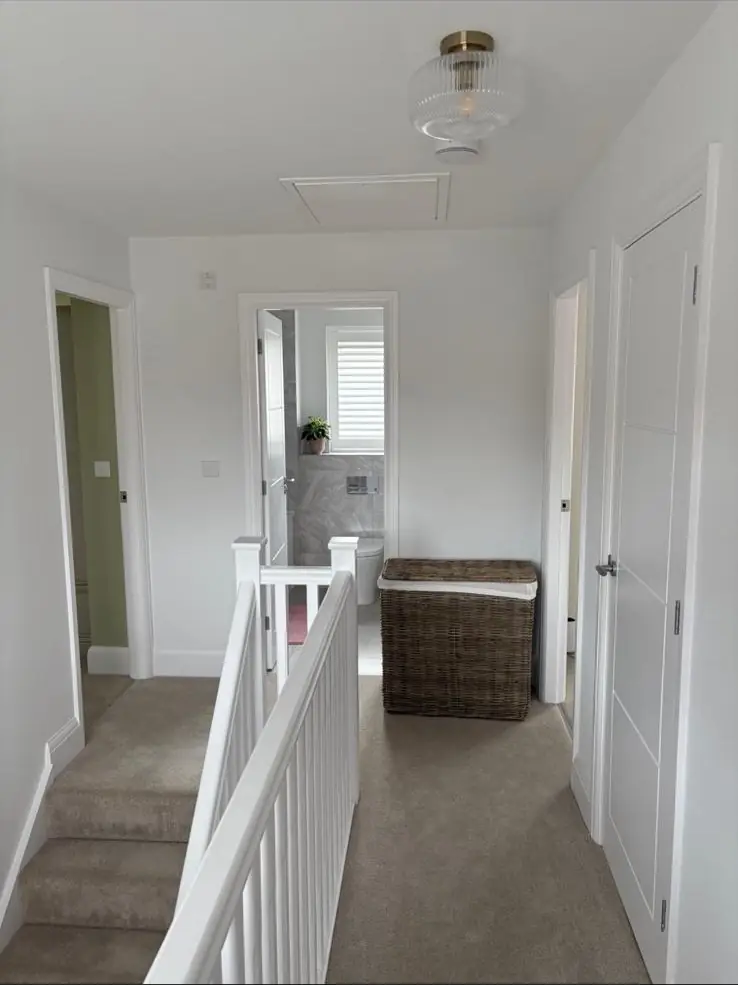
Many homes on the estate have changed hands since they were built: Census 2021 found 40.5% of households owning, 40.6% renting from a social landlord and 17.8% renting privately. Ex-council homes bought under right to buy, and houses that have been through several tenancies, often end up with a mix of original and replacement doors. Different timbers, factory primers and door styles take paint differently, so we prepare each one according to what it is and finish them all in the same colour and sheen so the landing reads as one.
A few homes have heating at skirting level. In a sample of 111 energy certificates, seven recorded gas warm-air systems and four electric storage heaters, so floor or low-wall grilles and heater casings are masked off before skirting work starts. For costs, see the decorating cost guide. The estate overview is on the Blackthorn page.
Sources
- Council Tax stock of properties 2026, table CTSOP4.1, Valuation Office Agency (accessed 2026-11-16)
- Blackthorn 1, topsoil stripping, September 1974 (ENN8557), Northamptonshire Historic Environment Record (accessed 2026-11-16)
- Census 2021 TS054 tenure, LSOAs 014B and 014D, ONS via Nomis (accessed 2026-11-16)
- Energy Performance Certificates, NN3 8 postcodes, EPC register (GOV.UK) (accessed 2026-11-16)
Last updated .


