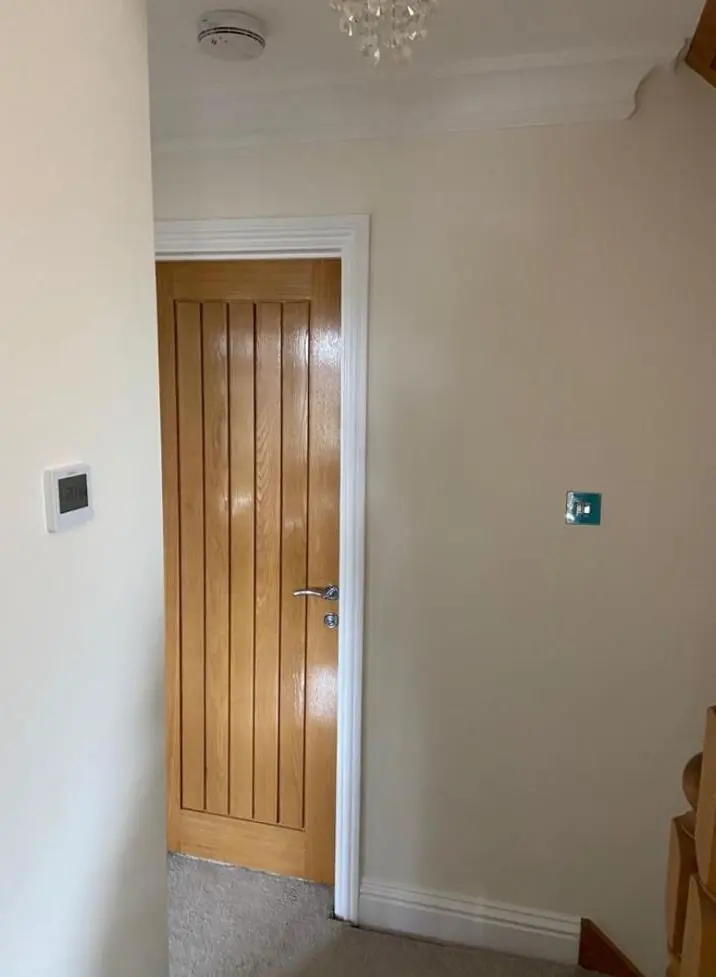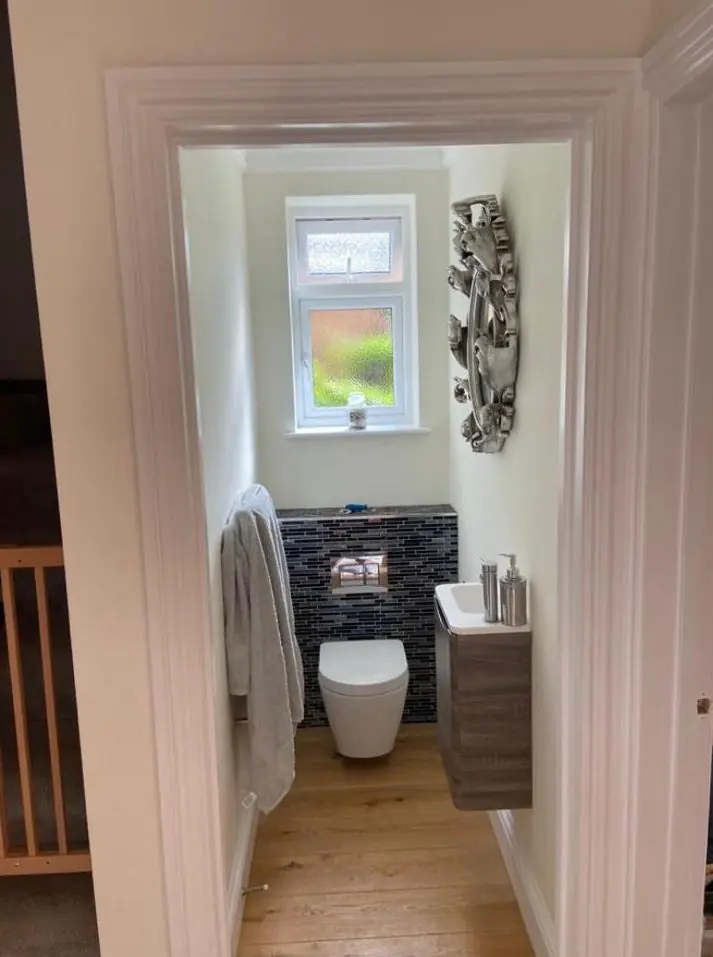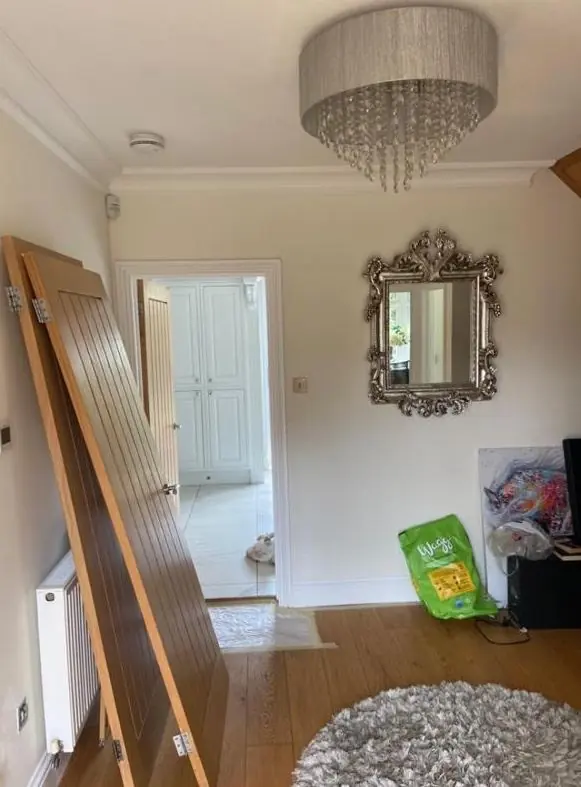
DH Painter & Decorator paints doors, frames, skirtings and window boards in Thorplands, NN3, about 3.3 miles north-east of Northampton town centre. Most homes here date from around 1971, so the work is mainly preparing and refinishing original softwood that has carried decades of gloss.
Fifty years of gloss on 1971 softwood
Across the five main courts and Holmecross Road, the typical Thorplands home was finished around 1971. Original softwood skirtings, door linings and window boards from that build are now around fifty years old, and where they survive they have often never been stripped. Every change of occupant, and on the heavily rented courts every change of tenancy, has tended to add one more coat on top of the last.
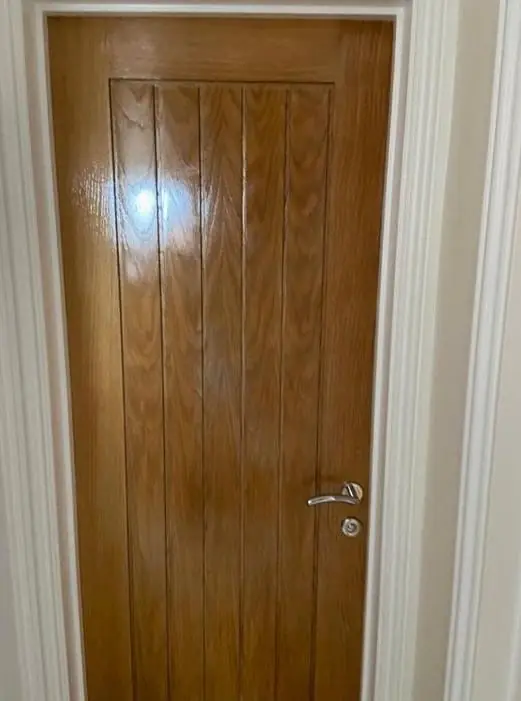
You can usually see it at a glance: gloss that has yellowed in hallways with little daylight, square edges rounded over by build-up, runs set hard on the bottom of flush doors, and a hairline crack along the top of the skirting where it meets the wall. Another quick top coat simply repeats those faults. What makes the difference on this stock is cutting back the old film, levelling the runs and filling the dents before anything new goes on.
How we refinish layered joinery in a Thorplands terrace
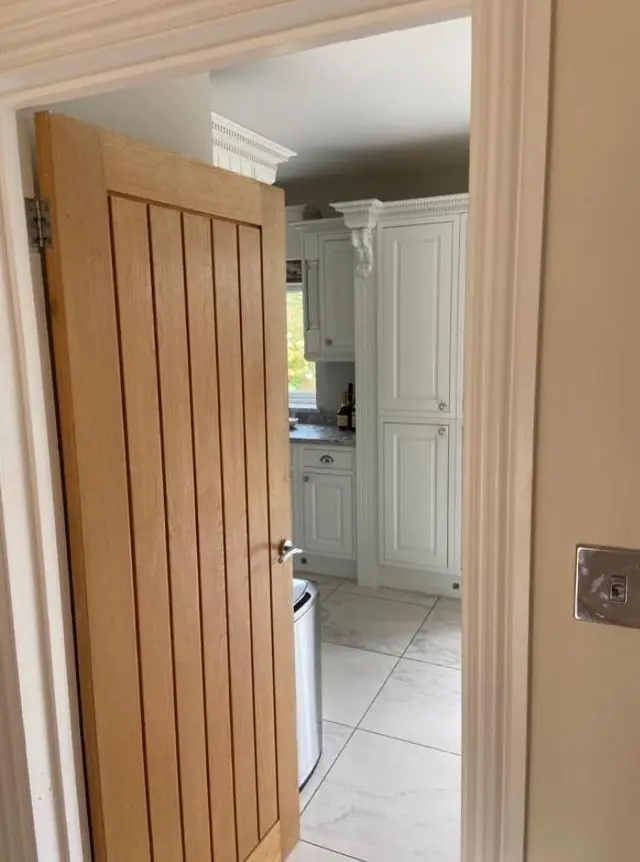
- Wash down with sugar soap, concentrating on door edges by the handles and kitchen skirtings where grease collects.
- Abrade the existing gloss so the new paint can grip. Where thick paint on door edges and stop beads makes a door bind, we cut it back so it closes freely.
- Fill dents, open mitres and gaps in architraves, then run flexible caulk along the joint between skirting and plaster.
- Spot-prime bare timber and seal any knots that have bled through.
- Finish in a waterborne satin or gloss, which stays whiter than oil-based gloss in the darker inner hallways of these houses.
Homes of this age are less likely than Victorian houses to have lead in their paint, but some primers of the period did contain it. If a door or frame is going back to bare wood, we test the lower layers before sanding. The full sequence and the products we use are on our main door and skirting painting page.
Flat entrance doors and the later houses
The courts contain a lot of flats: 42 on Great Holme Court, 34 on Waterpump Court and 11 on Midfield Court. A flat front door that opens onto a shared stair or walkway is often a fire door, and the housing provider or managing agent may have rules about it. Typically that means no paint over the intumescent strips or smoke seals, the self-closer left in place, and sometimes a set colour on the corridor side. We ask about those rules before quoting and mask the seals rather than painting over them.
Joinery is not the same across the whole estate. Huxloe Rise has a median build year of 1979, and build years on Pindar Rise run from 1971 to 1986. A later house may have moulded skirtings or panel doors fitted during a refit next to the plain, square-edged boards of the original core. We look at each profile as we find it, because a moulded architrave takes longer to prepare than a flat one and the quote should reflect that.
Working in a two-storey house in the courts
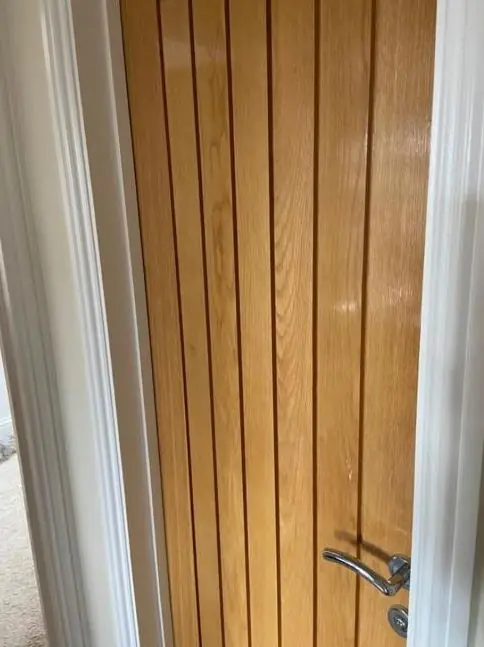
From Great Field Court to Waterpump Court, the van is usually parked in a shared bay some way from the front door. Carrying every door out to a van to spray it is impractical here. In a compact terrace we normally paint doors in place on their hinges, wedged open on dust sheets, and work one room at a time so the household can keep using the house.
On a Thorplands repaint the woodwork often takes more hours than the walls, especially in rented homes where skirtings and doors take the knocks between tenancies. Thorplands is about 3.3 miles out from the town centre, within our usual area. You can read more about the estate’s housing on our Thorplands area page, and our cost guide explains what affects the price of a woodwork job.
Last updated by Dean, DH Painter & Decorator.