DH Painter & Decorator hangs wallpaper in Southfields, NN3, an estate about 4 miles north-east of central Northampton. Many homes here have plasterboard walls and compact rooms, so we seal the board before papering and usually recommend a single feature wall over a fully papered room.
Why bare plasterboard needs sealing before it is papered
The timber-frame terraces on Micklewell Lane and Brackenfield Square, and the internal partitions in many of the cavity-wall semis, are lined with plasterboard. Plasterboard has a paper face of its own. If wallpaper paste goes straight onto it, the paste bonds to that face, and when the paper is stripped in ten years’ time the board’s own paper tears away with it. The result is a furred, damaged wall that needs re-skimming before anything else can go up.
To avoid that, any bare or freshly painted board gets a coat of size or a wallpaper primer first. That gives the paste a sealed surface to grip and lets the paper release when it is steamed or soaked off later. If the walls have already been emulsioned several times, we check the paint is sound, key any sheen with abrasive paper and still prime where the old coating is thin or chalky. It takes very little time on a single wall and saves the next owner of the room a great deal.
Seams on walls that move
A timber-frame wall moves a little through the year. Under paint, that shows as a hairline crack at a board joint. Under wallpaper it can open a seam or crease the paper along the same line. A few choices help:
- We find the board joints first and fill and tape any that have cracked, so the paper is not hung over a gap that is still opening and closing.
- Where a whole wall has a history of cracking, cross-lining it with lining paper gives a more stable base.
- Non-woven papers, pasted on the wall rather than the back, cope with slight movement better than traditional pulp papers and are easier to remove dry.
- Seams are kept clear of the joint lines where the pattern repeat allows.
On the cavity-wall houses on Barley Hill Road, Gallery Close and Ludlow Close, the outside walls are typically plastered masonry, so this is less of a concern there, although partition walls are often still board.
Which wall to paper in a compact room
Southfields rooms are modest. A small terrace on Barley Hill Road is around 44-45 sq m in total, and the semis and detached houses on the register run to about 99 and 121 sq m. In rooms of that size a strong pattern on four walls can feel close, while a single papered wall gives the room a focal point and leaves the others plain. Good candidates here are:
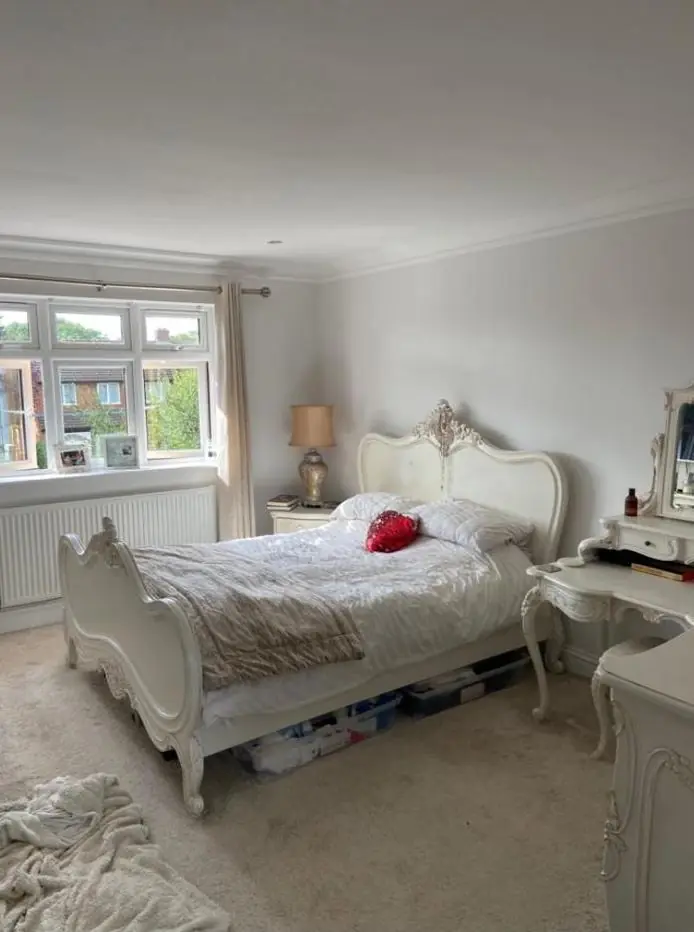
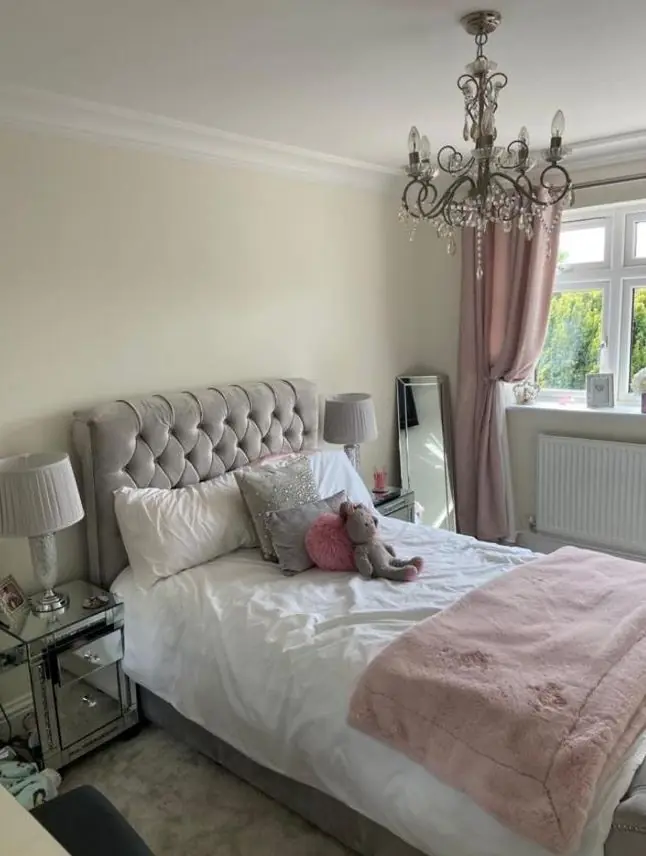
- the wall behind a bed, where the headboard breaks up the pattern;
- the end wall of a through lounge, seen from the front door;
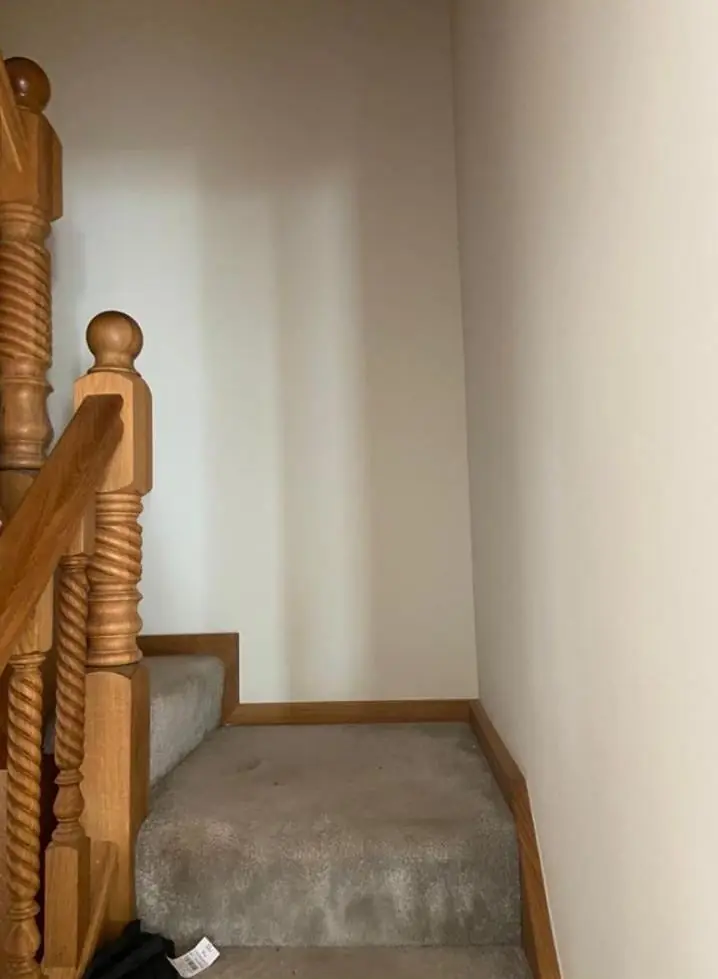
- the short wall at the top of an open-plan staircase, where it is visible from below but rarely touched.
Bold, large-scale patterns can still work in a small room if the colours are close in tone. Rooms at the back of houses that face the Pine Ridge and Brittons Drive tree belts get dimmer light, and a paper with a light ground or a slight sheen will lift them better than a dark, flat design. If you are still choosing between a pattern and a painted colour, the main wallpaper hanging page explains the paper types we hang and how they differ.
Rolls, batches and getting them to the door
Some front doors in the pedestrian squares, such as Foxwell Square and Saddlers Square, open onto footpaths with no road alongside. Wallpaper rolls are bought in batches, and a slight shade difference between batches shows on the wall. We check the batch numbers before cutting the first length. Once the rolls are carried in from the van, they stay inside and flat, so they do not get damp or crushed on a wet walk across a square.
We cover Southfields from our Northampton base. Other decorating on the estate is covered on the Southfields area page, and the cost guide explains how a papering quote is built up.
Last updated by Dean, DH Painter & Decorator.