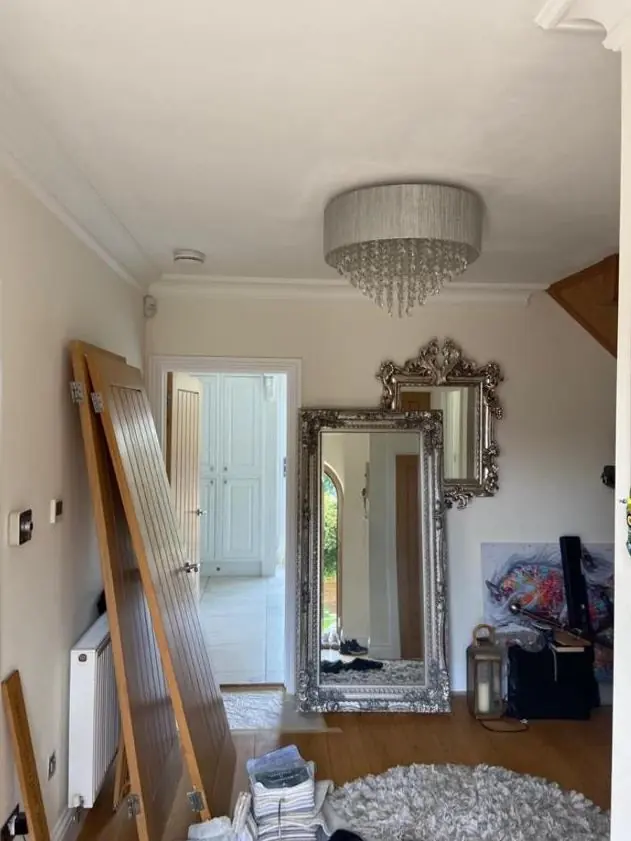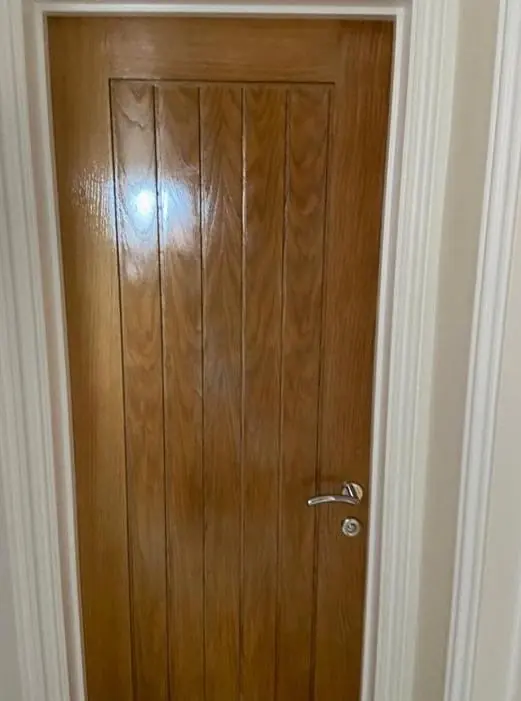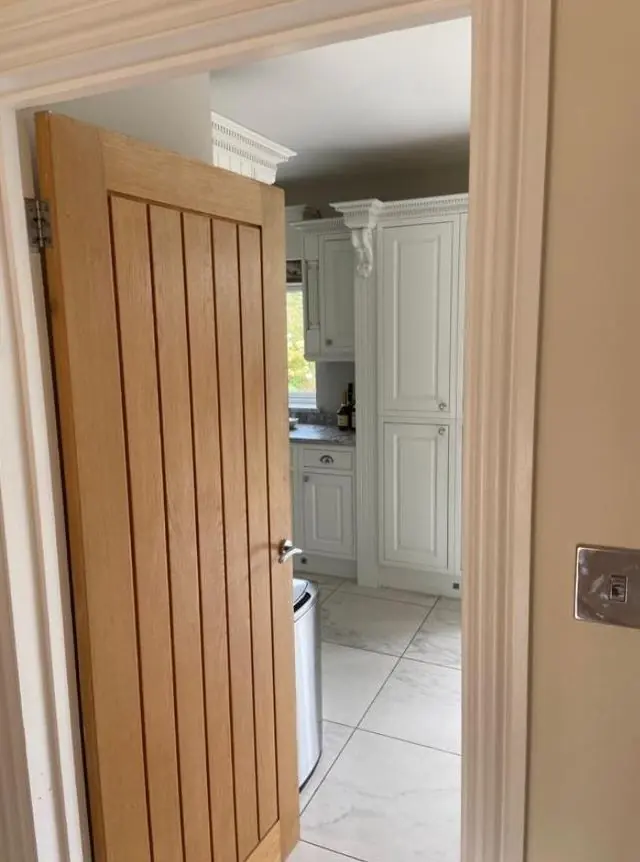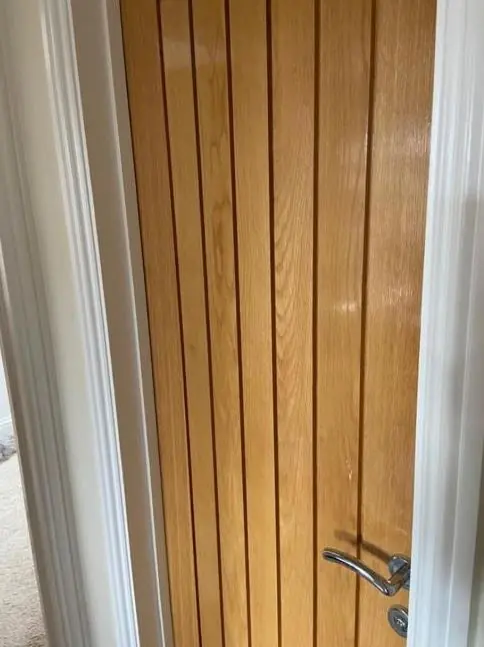
DH Painter & Decorator paints doors, skirtings, architraves and casements in Little Billing, NN3, about 3.2 miles north-east of Northampton town centre. Dean handles both the listed joinery of the old village core and the standard woodwork in the later houses around Valley Road.
Two very different kinds of woodwork in one small village
Little Billing’s woodwork splits sharply in two. In the old core on Church Lane and Orchard Hill there are ten listed buildings, and most of them are 17th and 18th century cottages of coursed rubble under thatch. Their joinery is what the listing descriptions record: ledged doors, casement windows set under wooden lintels, a thatched timber porch at Pyket Cottage and a thatched door hood at Knight’s Cottage. Around that core, the later housing on the closes (Codlin Close, Russet Drive, Pippin Lane, Pear Tree Close, Home Farm Close and the rest) has standard internal doors and skirtings.
The trade method for both is on our main door, skirting and woodwork painting page. This page is about what changes when the door in question is on a listed building in this particular village.
Ledged doors and casements under deep thatch
A ledged door is a set of vertical boards held by horizontal ledges on the back, so it has a lot of end grain and board joints where water can get in. On the Little Billing cottages these doors and the casements beside them sit under thatch overhangs, which keeps rain off the face but leaves the timber slow to dry once it does get wet. For that reason we use microporous or linseed-type coatings that let moisture out, rather than a hard, thick gloss that cracks along the board joints and traps water behind it.
- Old coatings come off by hand scraping and careful abrading, because heat strippers are not used within reach of thatch.
- Steps are set clear of the thatch, never leaning into it.
- Existing profiles are matched and repaired, not swapped for new or uPVC pieces.
- Leaded casements, such as those at Church Lane Cottage, are masked and cut in by hand.
Changing the colour or the type of finish on a listed building can need listed building consent. If you are thinking about a new colour for a cottage door, we suggest checking with West Northamptonshire Council’s conservation officer before any work is booked.
The Old Rectory’s door, fanlight and cornice
The Old Rectory on Church Lane, Grade II and now a day nursery, has the most formal joinery in the village: a six-panel door with a fanlight above, sash windows in two-storey bays and a bracketed timber cornice. Work like this is slow, careful sanding of the panel mouldings and fanlight glazing bars, spot priming of bare timber and thin coats so the detail stays crisp. Because the building is in daytime use by young children, any work there has to be timed around opening hours and done with low-odour products.
Skirtings and doors on the newer closes
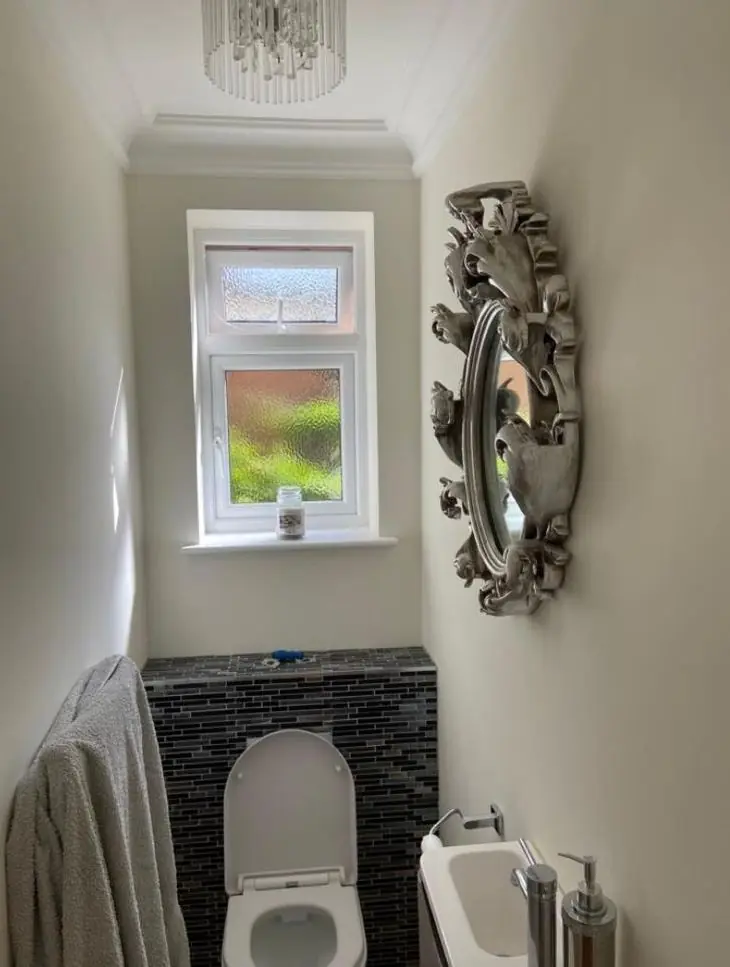
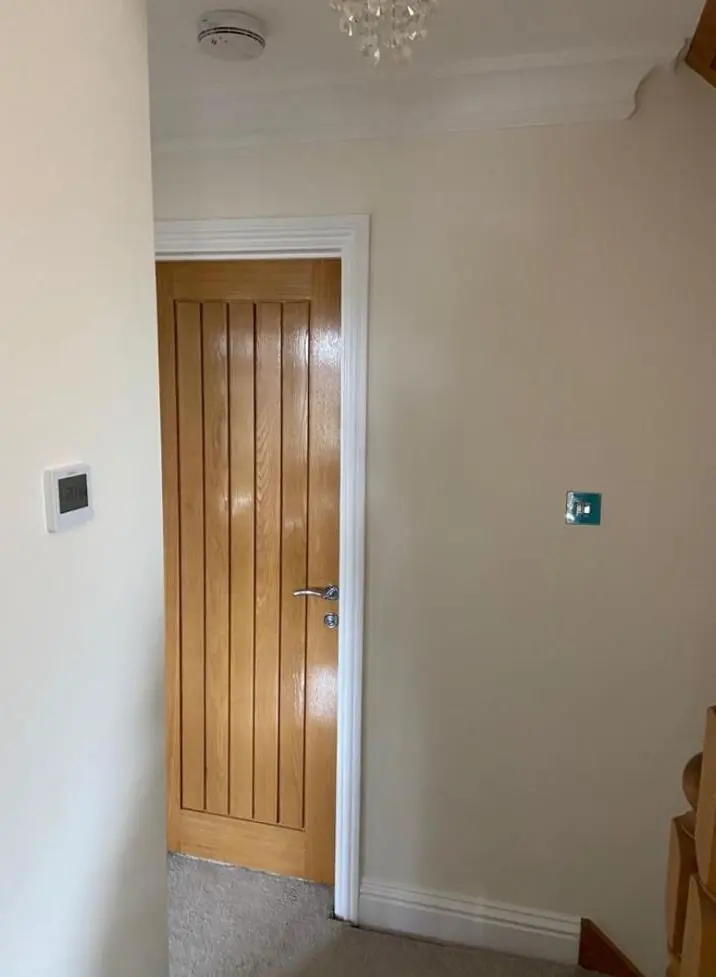
In the later houses the questions are the familiar ones: yellowed oil gloss on landings, scuffed skirting in hallways, and doors that need easing before they are repainted. These streets sit outside the listing that governs Church Lane, so doors and frames can go any colour or sheen. On landings that get little daylight, a water-based satin that stays white is often a better choice than another coat of oil gloss.
The houses backing onto the brook corridor behind Valley Road and Codlin Close have a different problem at the back door. That side is shaded and damp, so external back doors and frames there often show green growth and failing paint at the bottom rail first. We clean them with a fungicidal wash, let them dry for longer than usual, and pay extra attention to sealing the end grain at the foot of the door.
Arranging a visit
We cover Little Billing from our Northampton base. Tell us whether the work is inside or out, and whether the house is one of the listed cottages, and we will quote to suit. More about the village is on our Little Billing area page, and the cost guide explains what affects a woodwork quote.
Last updated by Dean, DH Painter & Decorator.