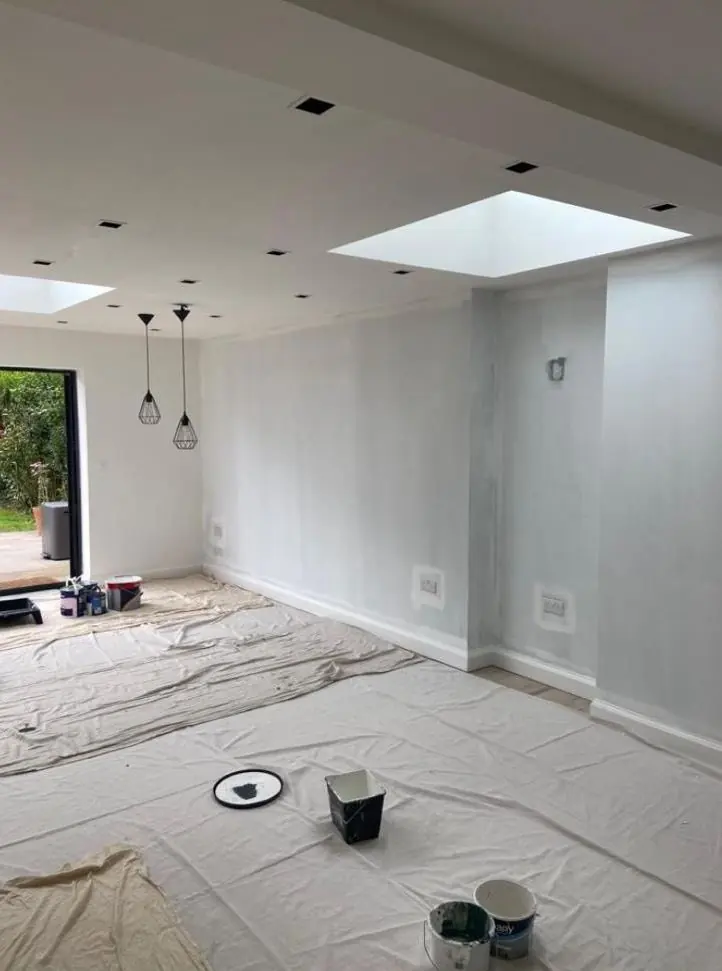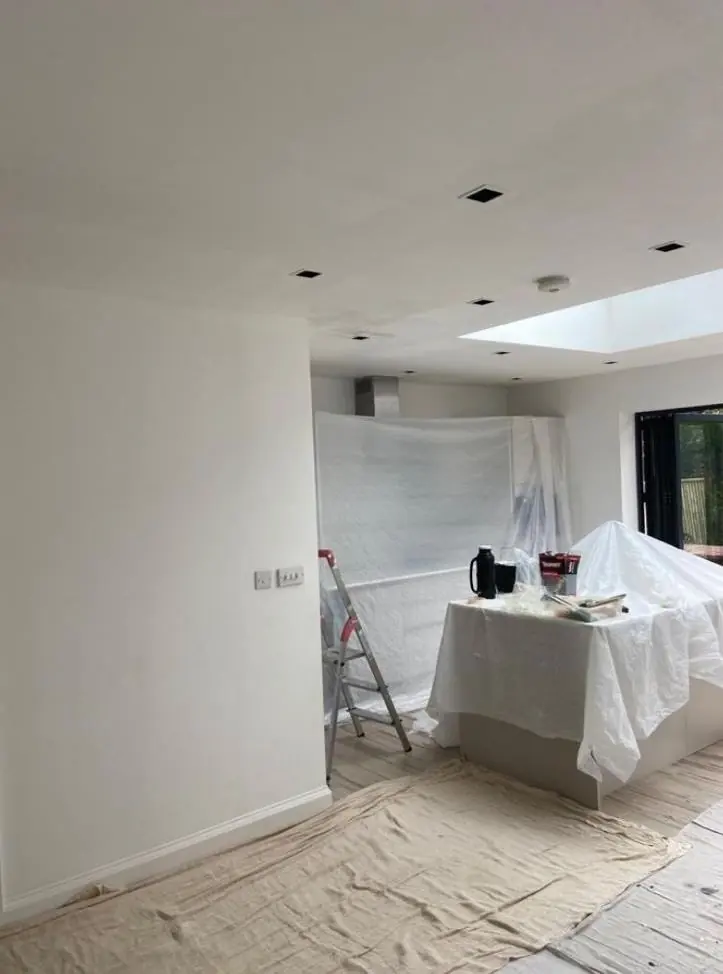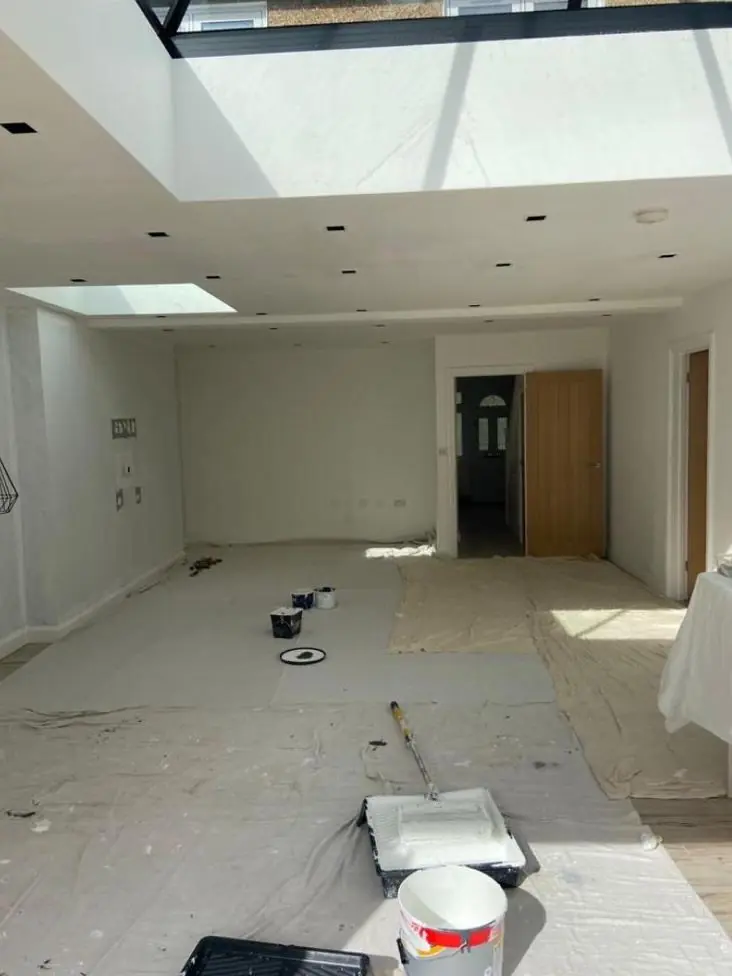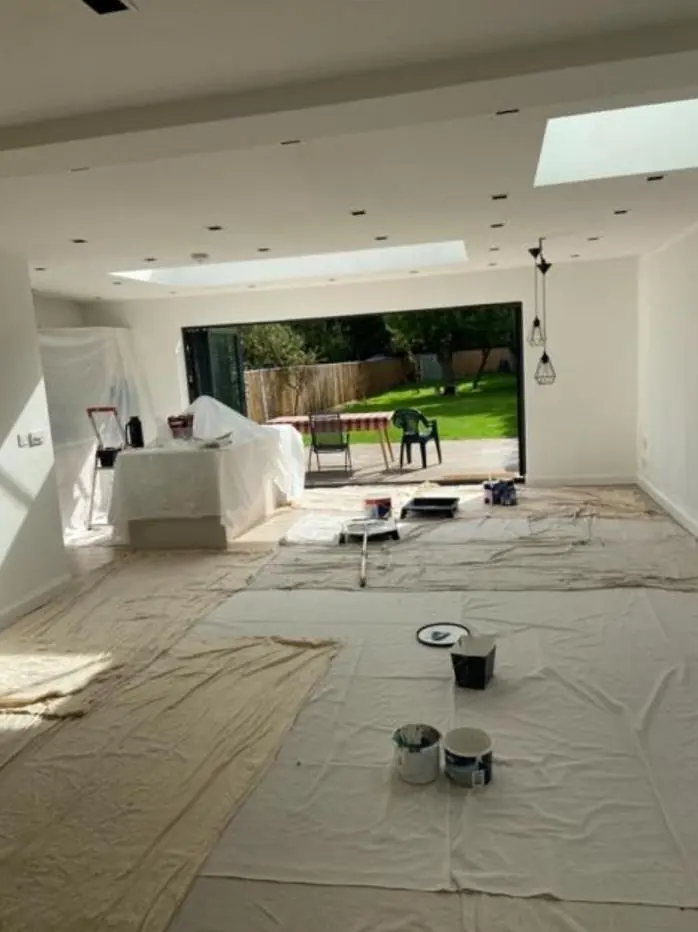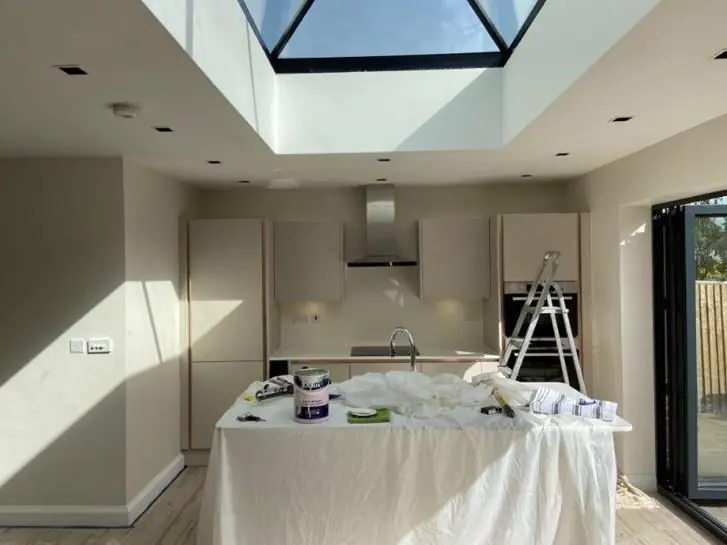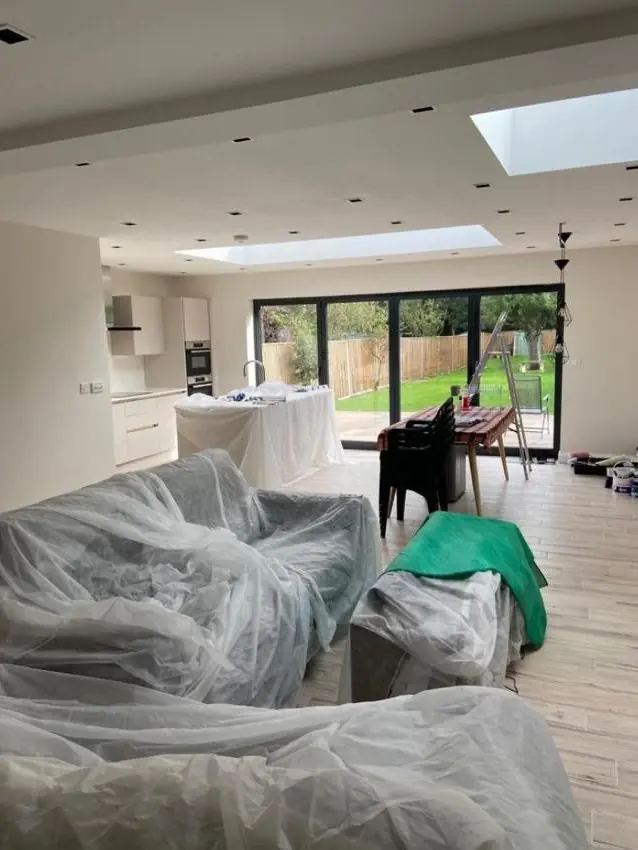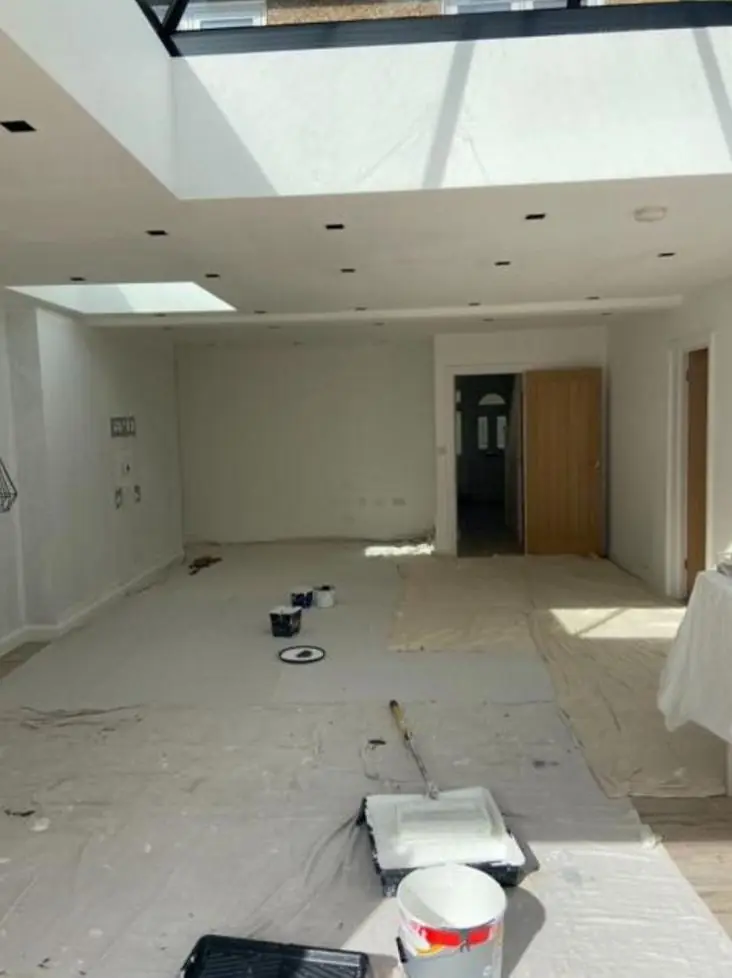
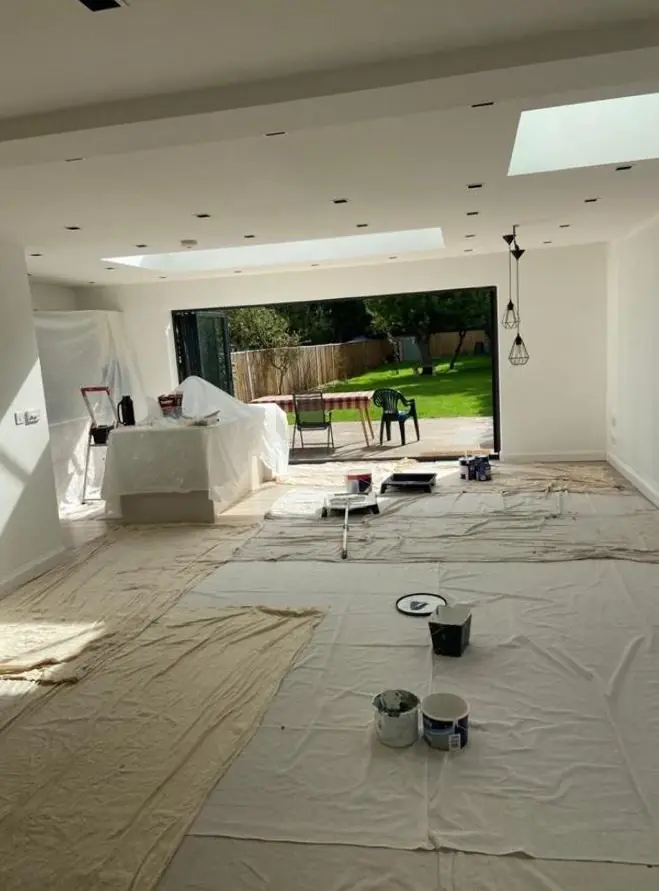
Dean decorates new plaster in Southfields, about 4 miles north-east of Northampton town centre. That covers rear extensions and garage or loft conversions on the semis and detached houses, plus patched walls in the timber-frame terraces. Each job starts with a drying check and a breathable mist coat before the finish coats.
What gets built on in Southfields
The later phases of Southfields are cavity-wall semis and detached houses: Gallery Close, Little Gull Close, Farmhill Road and Ludlow Close on the EPC register, with 3-bedroom detached homes of up to about 121 square metres on Ludlow Close and Brittons Drive. Some of the semis are as small as 49 square metres, so owners who need more space tend to build a single-storey rear extension, turn a garage into a room or go up into the loft. Each of those leaves a room of new plaster, new skirtings and new door linings that needs decorating once the builder has gone.
A loft conversion brings sloping ceilings and dormer cheeks in fresh skim. A garage conversion often has a freshly boarded and skimmed wall where the garage door used to be, alongside older painted walls that only need preparation. We treat the two surfaces differently rather than painting the whole room as one.
Where new skim meets a timber-frame wall
The terraces in the pedestrian courts around Micklewell Lane and Brackenfield Square are timber frame. When a wall is opened up for a new doorway or a stud partition is moved, the repair is usually new plasterboard and skim butted against the original lining. The frame keeps moving a little through the year, so the joint between old and new is where cracking will appear. We make sure that junction is taped before the skim goes on, if we are involved early enough, and finish internal corners with a flexible caulk rather than relying on paint alone to hide the line.
Drying time, and the light from the tree belts
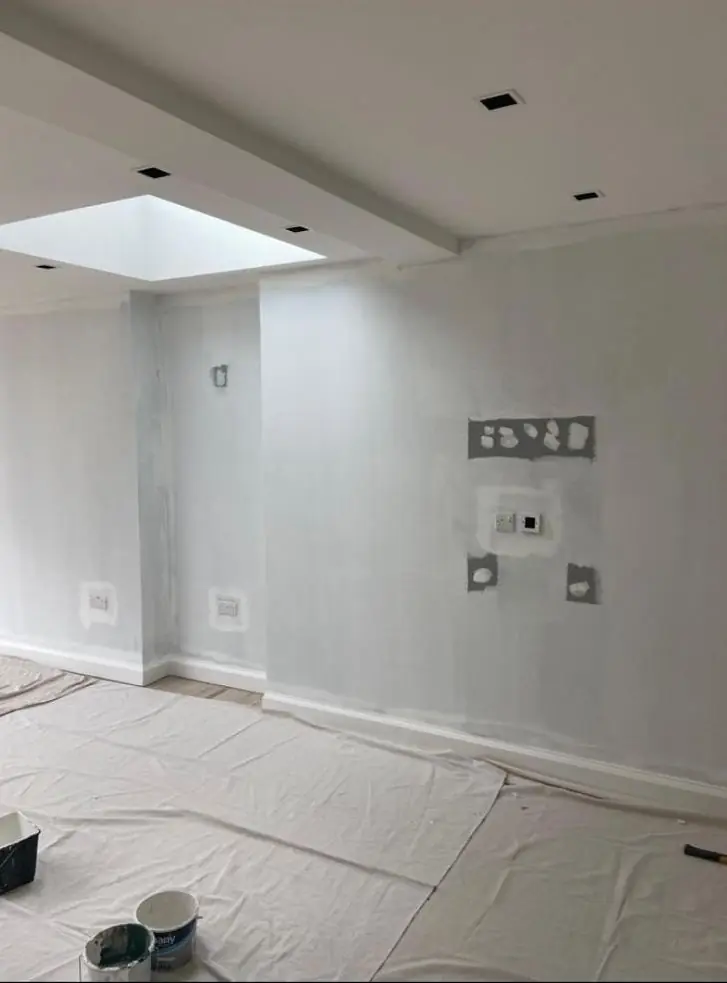
New plaster has to dry out before it is sealed. A garage conversion with no heating yet, or an extension whose rear wall faces the Pine Ridge or Brittons Drive woodland belts, will dry more slowly than a sunny south-facing room, because shade keeps the air in the room cooler and damper. We check the colour and dampness across every wall, paying attention to corners, reveals and the area behind where radiators will go, before a diluted mist coat is applied. The reasoning behind that step is explained in our guide to mist coats on new plaster.
The same shade influences the finish. Rooms that look out onto mature trees can feel dim, so many owners pick a lighter, warmer white for the ceiling and a colour with some reflectance on the walls. We will take you through options on the visit.
Southfields has no conservation area, so any new window or door opening in an extension is a building control matter rather than a heritage one, and nothing restricts the colours you choose inside. Exterior timber on a new extension, such as a fascia or a cladding panel to match the timber-frame terraces, is a separate exterior job that we can price alongside the interior.
Sequence on a typical Southfields job
| Stage | What happens |
|---|---|
| Survey | Check plaster dryness, look at joins to existing walls and agree start date with your builder |
| Mist coat | Breathable diluted emulsion on all new plaster walls and ceilings |
| Snagging | Fill trowel marks and fine cracks the mist coat shows, caulk corners and joinery |
| Joinery | Knot, prime and finish new skirtings, architraves and door linings |
| Finish | Two coats on walls and ceilings in your chosen colour |
Our main new plaster and extension painting page explains the full process in more depth, and our Southfields page covers the rest of the work we do across the estate.
Last updated by Dean, DH Painter & Decorator.