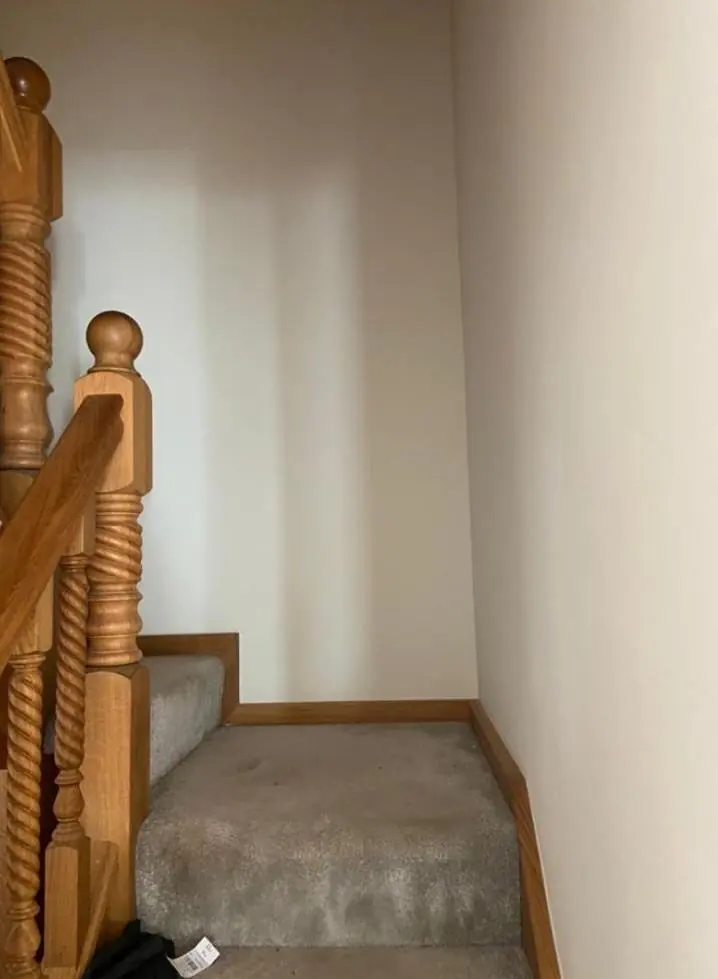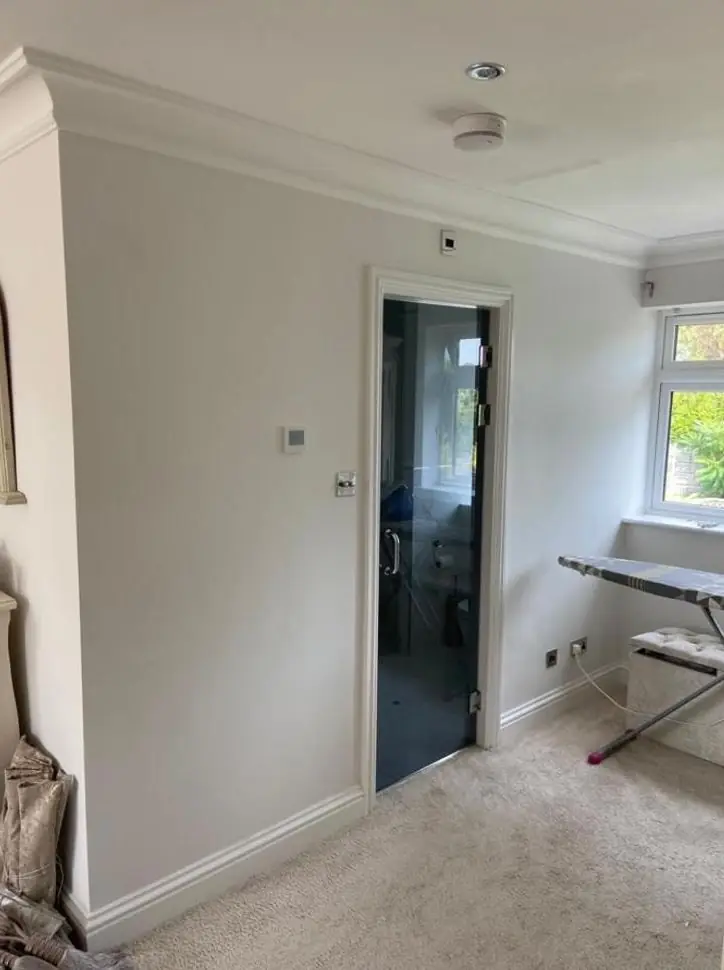
Dean hangs wallpaper and lining paper in Thorplands, the NN3 estate about 3.3 miles north-east of Northampton town centre. In homes built around 1971, the first job is usually getting a wall flat after earlier paper has come off, and in small rooms a single feature wall often works better than papering all four.
Walls with a history under them
Most houses and flats in Thorplands were built between 1967 and 1975, and the median build year on the main courts is 1971. Half a century of different occupiers means many walls have been papered, stripped, painted and sometimes papered again. When paper is pulled off in a hurry, the surface underneath tends to come with it: torn facing, gouges from a scraper, filler that was never sanded and old paste left behind. Once paint goes over that, every ripple shows when the light catches it.
Before we quote, Dean checks what is on the wall now. Painted-over paper is common in older homes and needs scoring and steaming, which takes longer than stripping a plain vinyl. If it turns out that the paper is the only thing holding a weak surface together, we will tell you before we start pulling, because that changes the job.
Why we often line first in Thorplands
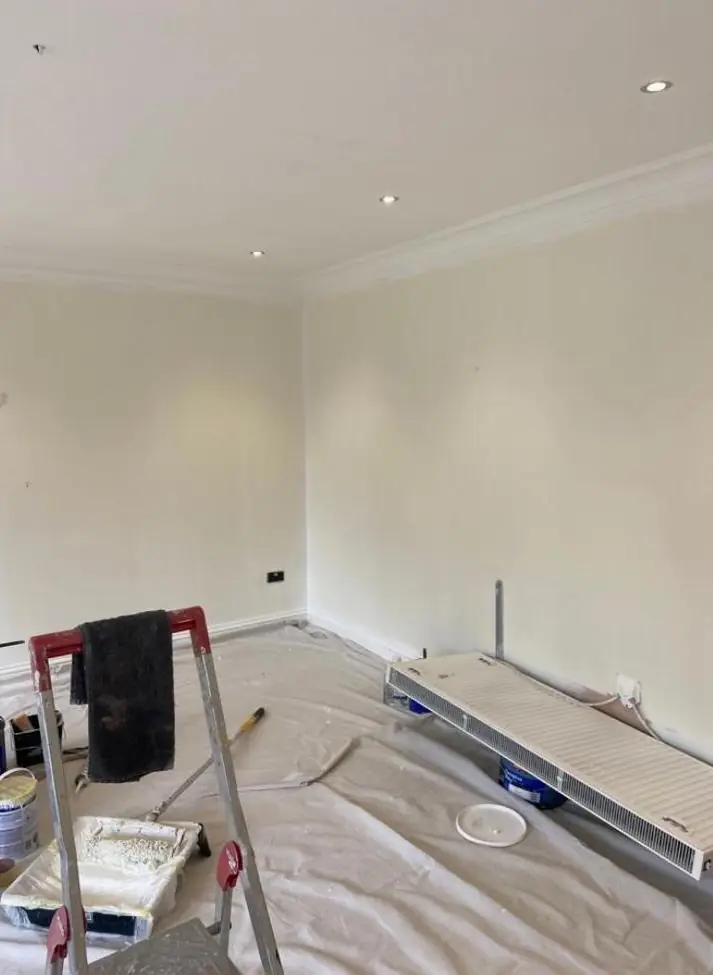
Lining paper is a plain, heavy paper hung horizontally under the finish paper. On a wall that has been stripped more than once it does three things: it evens out small dips and scars, it gives the finish paper a consistent surface to grip, and it stops a thin wallpaper showing the patchwork beneath. On these walls it is often the difference between paper that looks flat and paper that looks lumpy.
Lining paper also works on its own. A cracked or scarred ceiling or wall can be lined and painted, giving a smooth emulsion finish without a full re-skim. For rooms that just need to look plain and tidy, that is often the most sensible fix, and you can read about the full process on our wallpaper hanging service page.
Choosing where paper goes in a compact room
Rooms in the 1970s terraces and the flats on courts such as Great Holme Court and Midfield Court are compact. A busy pattern on all four walls can close a small room in, and a large repeat wastes more of each roll at every cut, which costs more in a room with short runs. A feature wall usually gives more effect for the money:
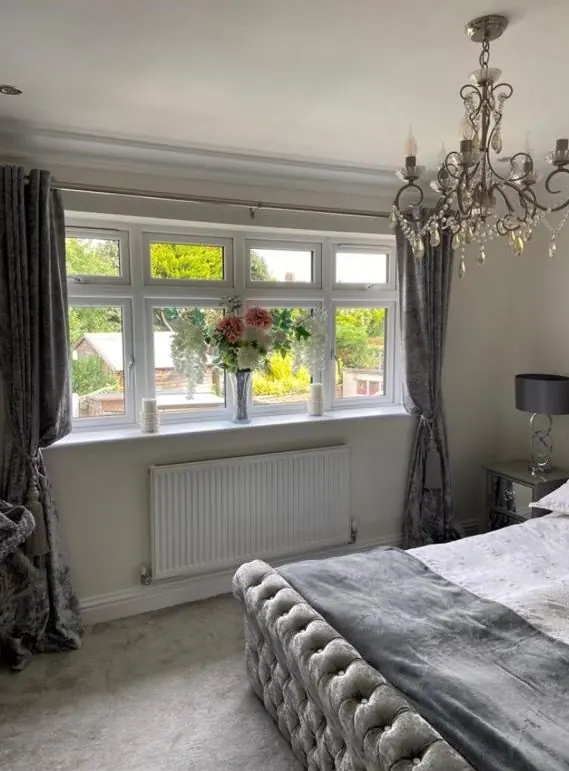
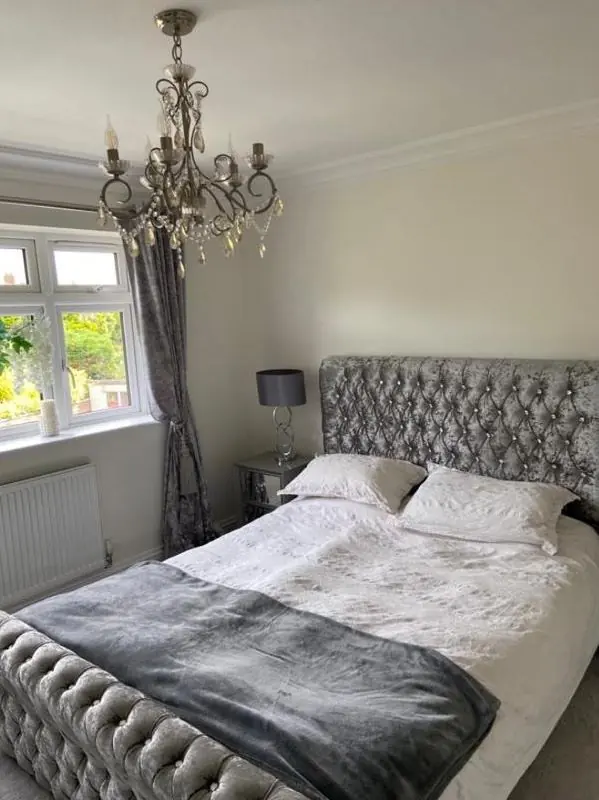
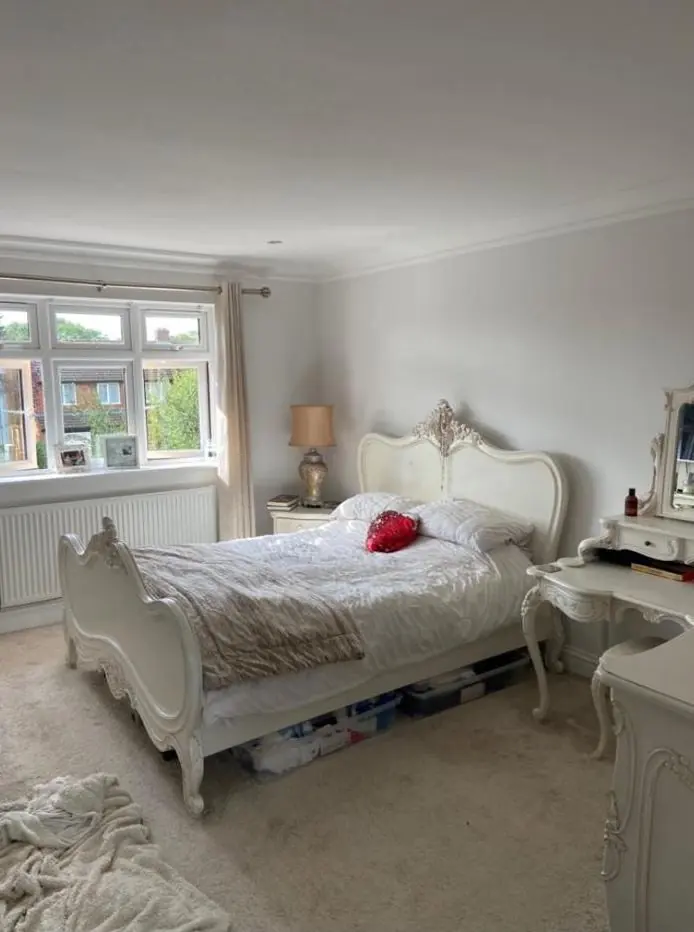
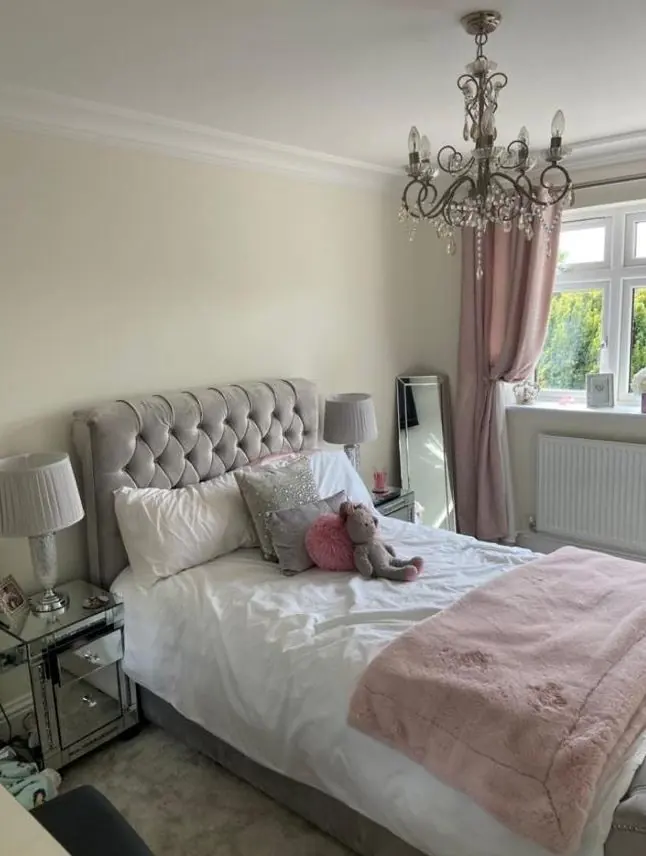
- the wall behind the bed in a small bedroom, where the pattern is seen from the door but not on top of you
- the end wall of a through lounge, which draws the eye to the far side of the room
- one side of a dining space in a kitchen-diner, kept away from splashes and steam
- a short alcove or recess, where a bold design can be used without overpowering the room
The remaining walls are then painted in a colour picked out of the paper. If you have not settled on that colour yet, our colour and finish advice can help.
Paper in a rented home
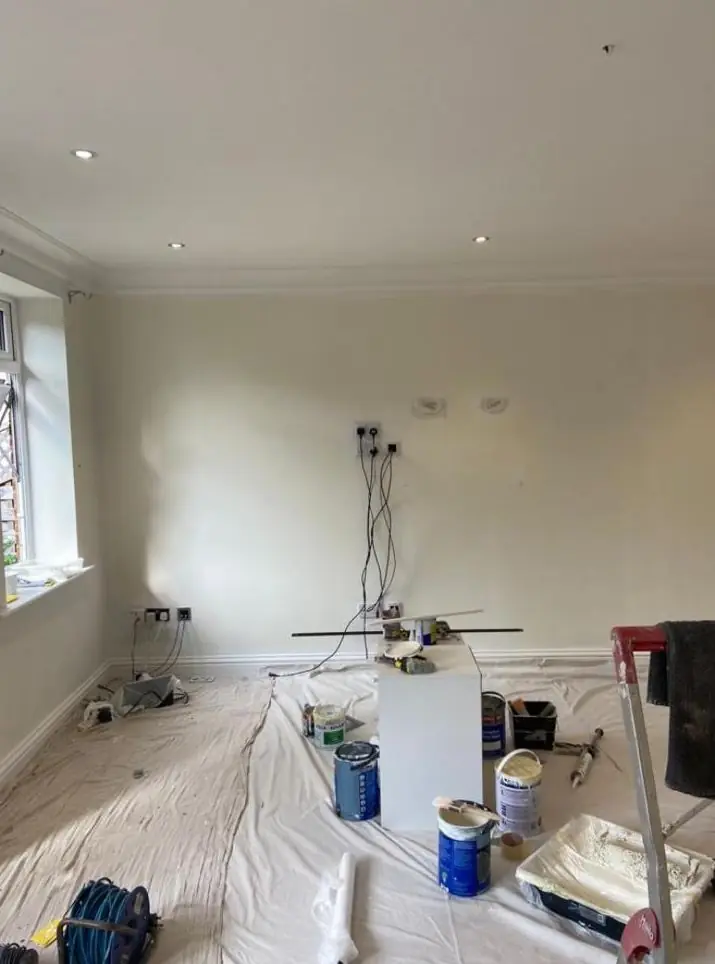
Thorplands has a high share of rented homes, from social housing on Great Holme Court and Waterpump Court to private lets on Holmecross Road and Pindar Rise. Many tenancies do not allow tenants to hang wallpaper, so check first. For landlords, patterned paper is harder to patch than paint after a tenancy, so lined-and-painted walls are often the more practical choice. They give a smooth finish over tired plaster and can be touched up with the same emulsion at each change of tenant.
Booking
Dean comes out from Northampton, 3.3 miles away, to look at the walls, tell you whether lining is needed, and work out roll quantities with you before you order, so you buy the right amount from one batch. Ring 07539 779 036, or go back to the Thorplands page to see the other services we offer there.
Last updated by Dean, DH Painter & Decorator.