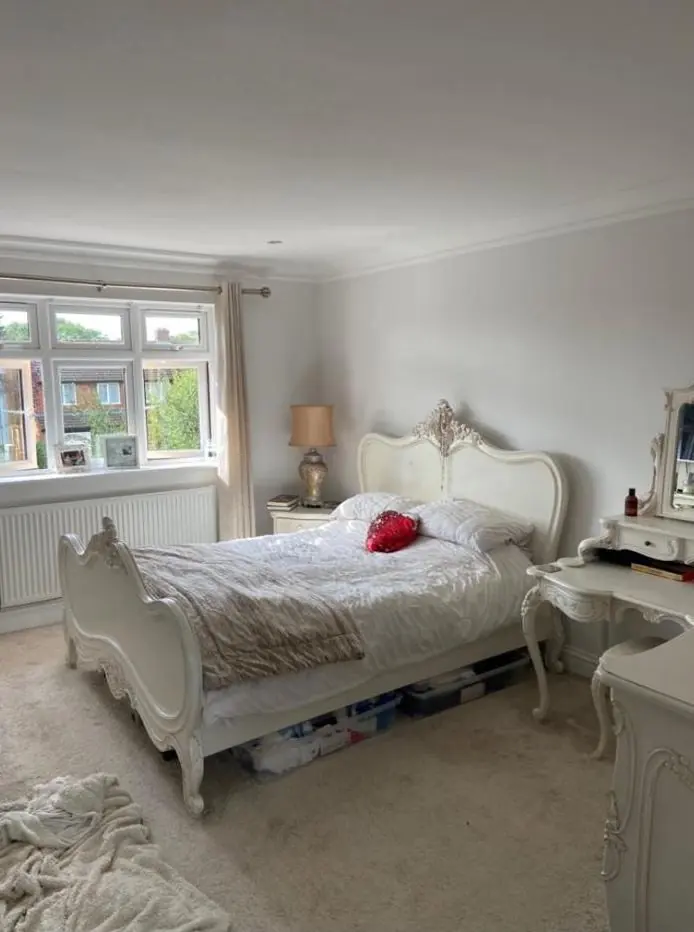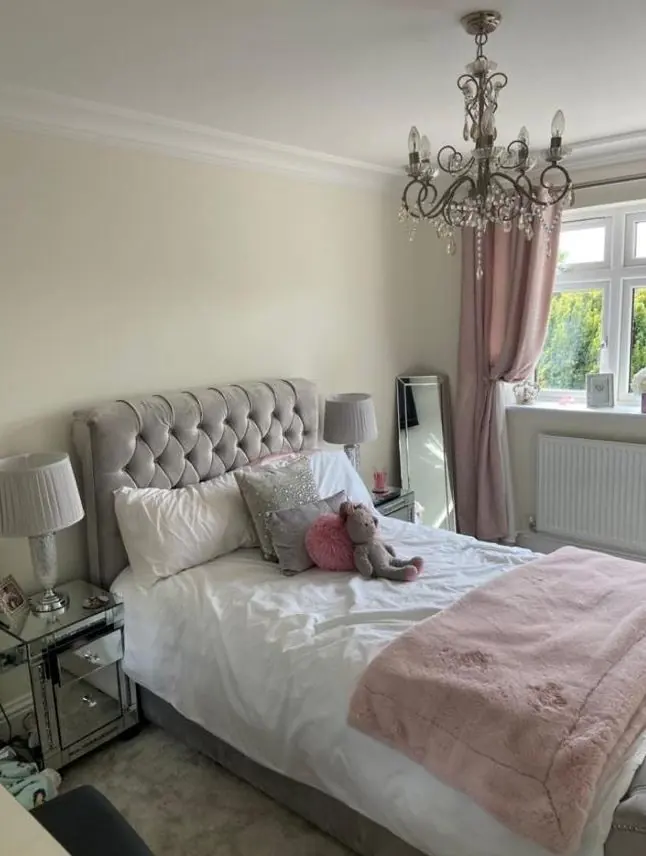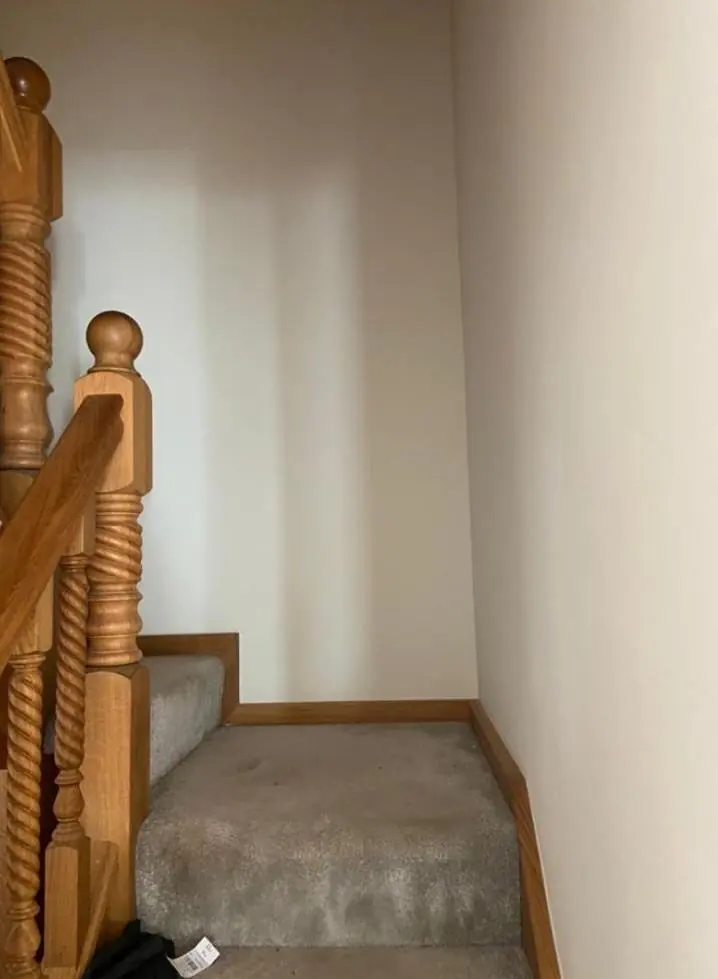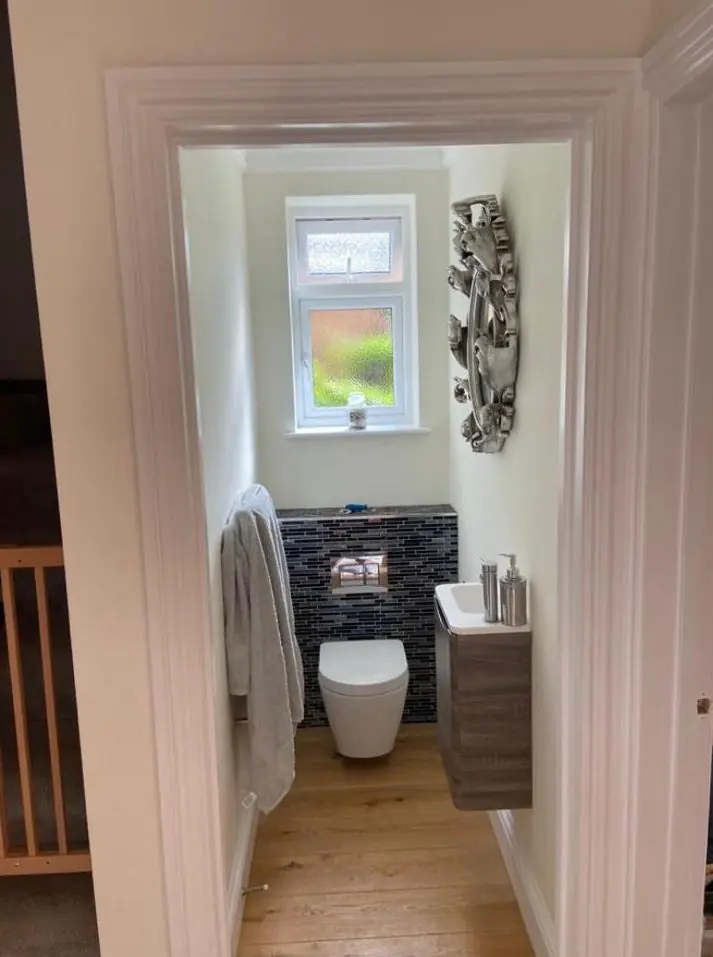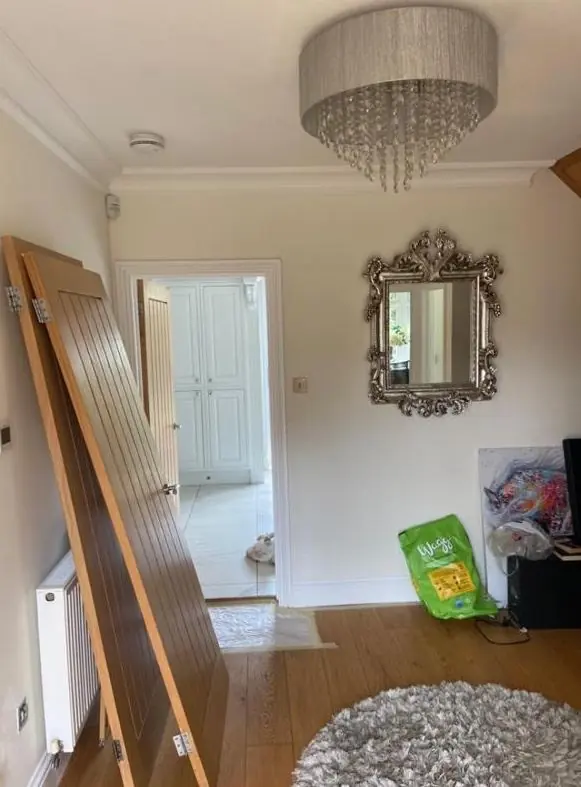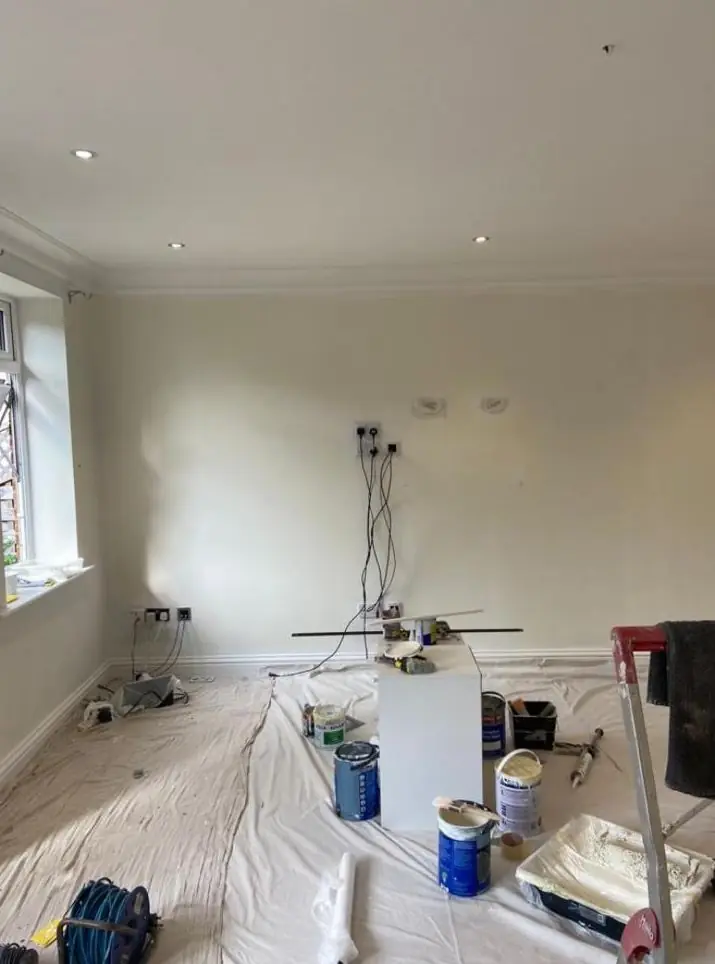
We strip and hang wallpaper and lining paper in Rectory Farm, NN3, about 4.2 miles north-east of Northampton town centre. Most papering here suits the long-term owners of the 1980s detached houses, while the colder 1970s terrace walls need extra care.
Who papers, and where, on Rectory Farm
Wallpaper is a long-term choice, and the long-term owners on this estate are concentrated in one corner of it. Around Deansway and the closes named after car makers, 89.8% of homes were owner-occupied at the 2021 Census, and most are detached houses built between 1983 and 1992. In those homes a papered wall behind the bed, a dining room hung in a full pattern or a hard-wearing textured paper up the stairs makes sense, because whoever chooses it will probably still be living with it in ten years.
The northern half around Olden Road and Crowthorp Road is different. More than a third of homes there were socially rented in 2021 and almost a tenth were in shared ownership. Paper in those houses is more likely to be a single feature wall, or plain lining paper used as a smooth base for paint over tired walls. Council and housing association tenants should check their tenancy terms before choosing paper, as some agreements ask you to return walls to a plain finish when you leave.
Stripping walls that are 30 to 40 years old
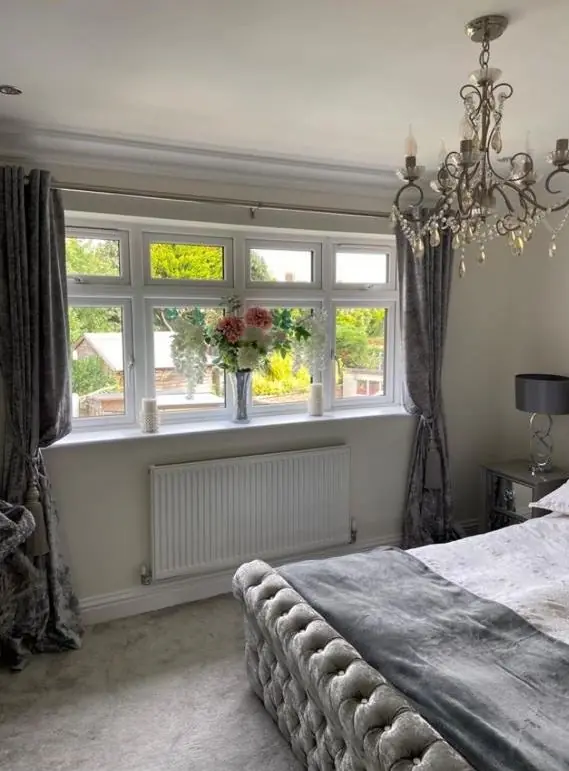
A house on Daimler Close or Allard Close is now somewhere between 33 and 43 years old, so it may already have been papered two or three times. Heavy blown vinyls and woodchip were common choices when these houses were new, and painted-over woodchip is still found in many homes of this age. Each takes a different approach. Vinyl faces peel off dry and leave a backing paper to soak. Woodchip under emulsion needs scoring and steaming, slowly.
Some houses of this period have dry-lined plasterboard walls rather than wet plaster. Plasterboard has a paper face of its own, and too much steam soaks through it and tears it away with the old wallpaper. On those walls Dean scores lightly, steams in short bursts and stops as soon as the face starts to lift. Any scuffed areas are sealed with a primer before lining or hanging, so the new paste does not soak in unevenly. Shelf holes, TV-bracket fixings and cracks along board joints are then filled, sanded and sized.
Cold outer walls in the northern terraces
Energy certificates for some 1970s terraces on Mortar Pit Road and Collyweston Road record cavity walls with little or no insulation. Paper on a cold outside wall of a bedroom is at risk: condensation dampens it, the paste feeds mould from behind, and the seams start to curl. In those houses we would normally suggest putting the feature paper on an internal or party wall and painting the outer wall in a mould-resistant emulsion.
If an external wall is the one you want papered, the plaster is treated with fungicide first, the paste has a fungicide in it, and a breathable non-woven paper is a safer choice than a solid vinyl that traps moisture. Bathrooms in these terraces are better painted than papered.
Ordering for small, broken-up rooms
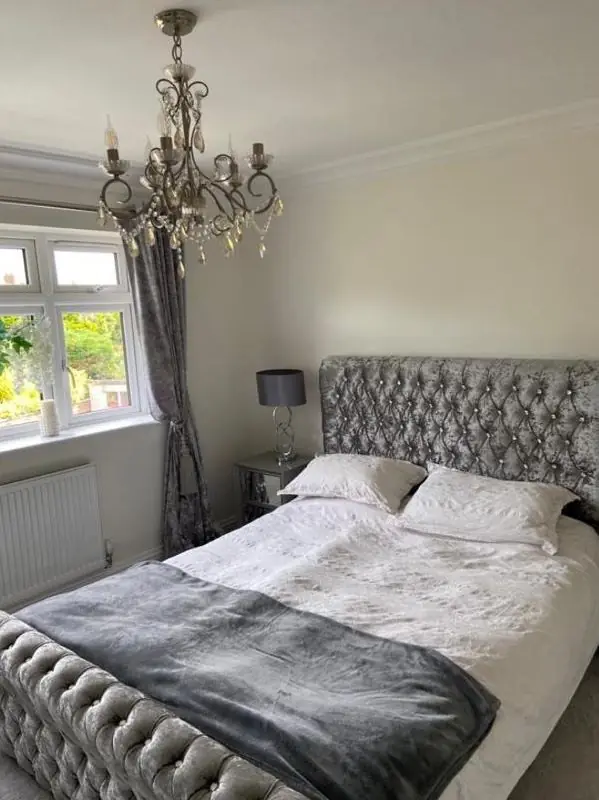
Even in the detached closes, rooms are modest by today’s standards. A semi on Morgan Close is recorded at 66 square metres in total. Rooms that size are broken up by doors, windows, radiators and, in many 1970s bedrooms, a boxed-in bulkhead over the stairs. Every one of those interruptions costs part of a drop, and a half-drop match can use more than a roll calculator suggests.
- Note the pattern repeat and match type from the label before you order.
- Buy every roll from a single batch and keep one spare for repairs.
- Pick a paste-the-wall non-woven paper if you may sell or move within a few years, as it strips off dry.
Our wallpaper hanging page covers paper types and our hanging method in more detail, and the Rectory Farm area page explains how we cover the rest of the estate. Dean can check the walls, test-strip a corner and give a written quote that shows stripping and hanging as separate lines.
Last updated by Dean, DH Painter & Decorator.