Dean hangs wallpaper in Overstone Leys, reached up the A43 some 4.6 miles from central Northampton. Most requests are feature walls in houses that came with plain painted plasterboard, and the main judgement is when the walls are settled enough to paper.
Paper on walls that are only a few years old
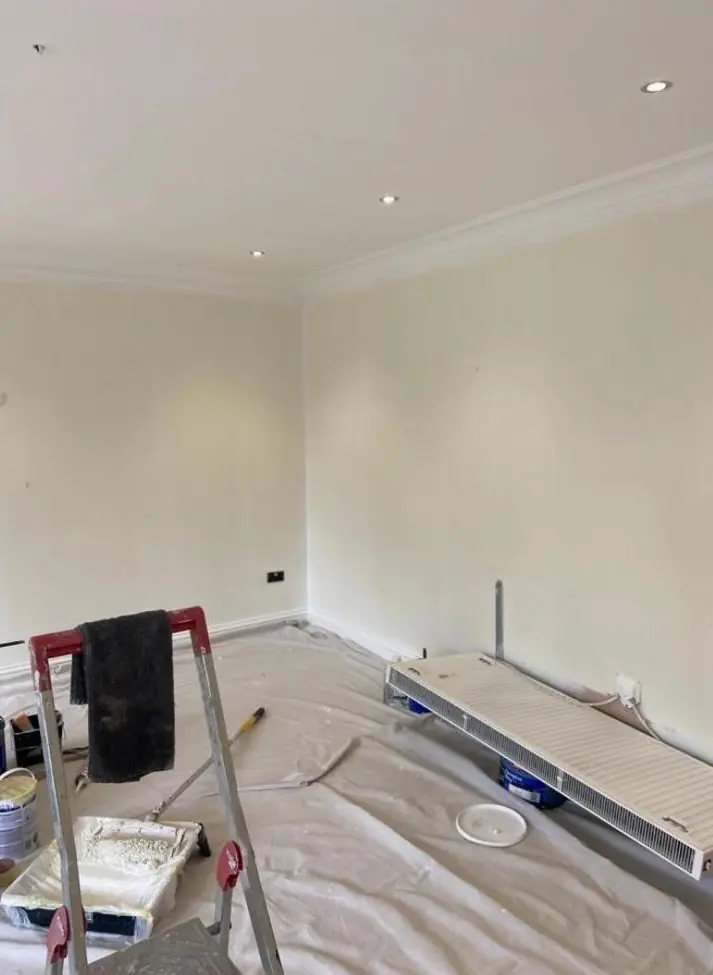
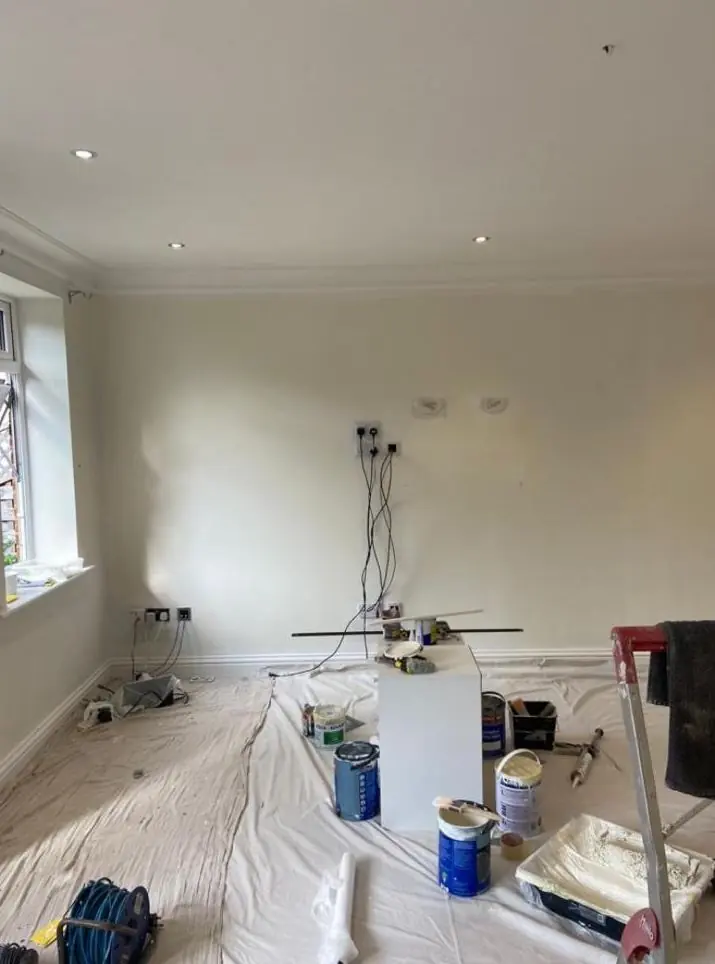
Older Northampton terraces bring wallpaper problems of their own: layers to strip, blown plaster, crooked corners. The houses in Overstone Leys bring almost the opposite. Built from 2016 onwards by volume housebuilders, they mostly have flat, square plasterboard walls with nothing on them but contract emulsion. That is a good starting point for paper, with two catches.
The first is the paint. Builders’ contract matt is porous and weak, and wallpaper paste soaks into it unevenly. When paper dries and shrinks slightly, it can pull that loose paint layer away and the seams lift. We seal the wall first so the paste grips a stable surface and the paper can be stripped cleanly in years to come without tearing the plasterboard’s face paper.
The second is movement, which deserves its own section.
Waiting out the drying period
As the first year or two of heating dries a new house, fine cracks appear at ceiling lines, corners and around door frames as they do. On a painted wall that is a quick fill and touch-up. Under wallpaper, a crack that opens behind a seam pulls the joint apart and leaves a line you cannot hide without re-hanging that length.
So timing is the main advice we give owners on Lilac Way, Sunflower Way, Drury Way and the rest of the estate:
- If the house is less than a year old, consider a painted feature wall now and paper later.
- Let the housebuilder’s snagging visits finish, so any wall they repair is done before it is covered.
- Fill and caulk any settlement cracks first, then line the wall if movement is still a worry; lining paper bridges hairline cracks better than a printed paper alone.
Where paper tends to go in these houses
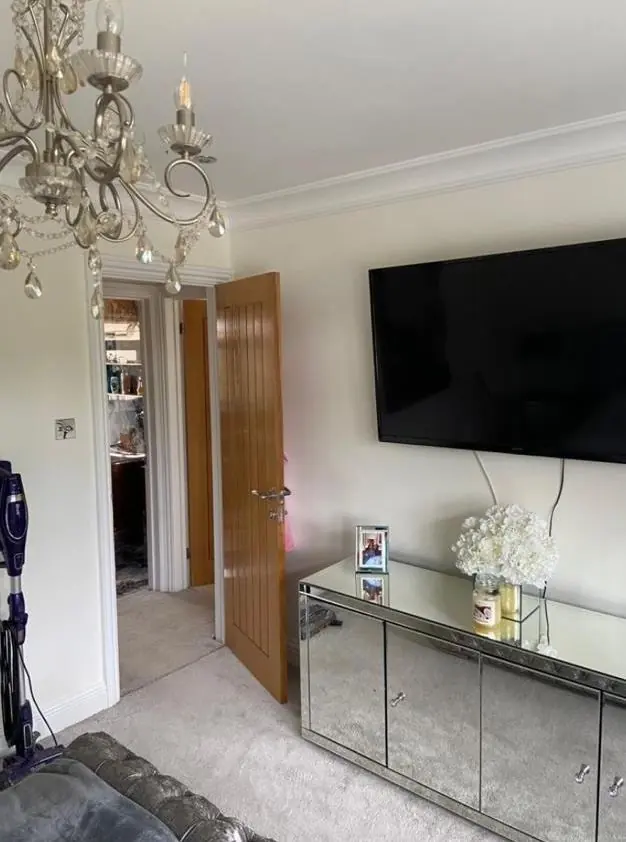
New houses here are two to five bedrooms and tend to share the same plain finish throughout, so wallpaper is usually used to give one area some character rather than to paper whole rooms. Common choices are the wall behind a bed, the end wall of a dining area, a chimney-breast-style wall in the lounge where a media unit sits, and the downstairs cloakroom, where a bold pattern on a small space works well.
Non-woven papers suit these walls; they are hung by pasting the wall and come off dry when you change your mind. Heavier vinyls make sense in a cloakroom or a kitchen-diner where splashes happen. In a stairwell, which in a three-storey townhouse can be a tall run, we use a tower for safe access and plan the drops so the pattern lines up from the hall to the top landing.
Shared ownership and rented homes
A sizeable share of the homes here are affordable: just over a quarter of the 350 Taylor Wimpey homes in the south, split between affordable rent and shared ownership, plus Accent Group’s 19 affordable houses. If you are a shared owner, interior decoration is generally yours to choose, so a feature wall is no different to any other home. Housing association tenants should read the association’s wallpaper rules before we quote, since some ask for walls to be returned to a plain painted finish when you move out.
For papers, stripping and lining in more depth, see our wallpaper hanging service. Our Overstone Leys page covers the rest of the decorating we do on the estate.
Last updated by Dean, DH Painter & Decorator.